
Chow Chows are prone to eye conditions like entropion, joint disorders such as hip and elbow dysplasia, bloat from their deep chest, thyroid problems, and skin issues hidden under all that fur. Catching these early, before your Chow starts showing pain, is honestly the biggest thing you can do as an owner.
The Health Problems To put On Your Radar First
Three categories of Chow Chow health issues cause the most vet visits and heartbreak: entropion and other eye conditions that can lead to blindness, hip dysplasia and elbow dysplasia that show up as subtle stiffness long before obvious limping, and gastric dilatation-volvulus (bloat) that can kill a deep-chested breed like a Chow within hours if you miss it.
Eye Trouble That Shouldn’t Wait
It’s painful, and Chow Chows are one of the breeds most affected because of their loose facial skin folds and short muzzles. Signs to watch for include squinting, excessive tearing, redness around the eye, and your dog pawing at their face.
If one eye looks more closed than the other for more than a day, get to your vet.
Glaucoma and cataracts also hit this breed harder than average. Glaucoma causes pressure buildup inside the eye and can lead to permanent vision loss fast.
Cataracts cause a cloudy look in the lens, sometimes tied to genetics or diabetes.
Just a quick look for redness, discharge, or swelling. That 10-second check catches problems days before you’d normally notice them.
Corrective surgery for entropion is common and effective. The earlier your vet catches it, the better the outcome.
Joint Problems That Show Up As Limping Or Stiffness
Hip dysplasia and elbow dysplasia are developmental joint disorders where the bones don’t fit together properly. This leads to pain, arthritis, and reduced mobility over time.
Chow Chows carry a genetic predisposition for both.
Symptoms often appear between 6 months and a year old.
- Stiffness when getting up after rest
- A bunny-hop gait on the back legs
- Reluctance to climb stairs or jump onto furniture
- Sitting with one leg kicked out to the side
- Decreased interest in walks or play
The tricky part with Chow Chows is that their thick coat and naturally stiff-legged gait can hide limping for weeks.
Weight management and controlled exercise are the two biggest protective factors. Your vet can also do early screening X-rays, especially if you got your Chow from a breeder who didn’t test the parents.
Bloat Signs You Need To Treat As An Emergency
Gastric dilatation-volvulus, or bloat, is when a dog’s stomach fills with gas and twists on itself, cutting off blood flow. It can be fatal in under an hour.
Chow Chows qualify as deep-chested breeds, which puts them in a higher risk category. If you see your Chow retching without producing vomit, pacing with a hard or swollen belly, drooling heavily, or acting restless for no obvious reason, drive to the emergency vet immediately. Not in 20 minutes. Now.
Preventive steps that actually make a difference:
- Split meals into two or three smaller portions per day
- Don’t let your Chow gulp water right after exercise
- Avoid heavy activity for at least 30 minutes before and after meals
- Skip elevated food bowls, which may increase GDV risk
Bloat isn’t something you can treat at home. But you can lower the odds significantly with feeding habits.
Calm, measured mealtimes matter more than most people realize.
What Makes This Breed A Little Tricky To Monitor
A Chow Chow’s dense double coat hides skin conditions and weight changes that would be obvious on a short-haired breed. Their naturally aloof temperament means pain signals are easy to misread as “just being a Chow.”
Even their famous blue-black tongue can mask gum color changes that signal illness. It’s wild how much you can miss if you rely on looks alone.
How Coat, Build, And Face Shape Change Daily Care
The Chow Chow breed has one of the thickest double coats of any dog. That coat is gorgeous, but it also creates a barrier between you and your dog’s actual body.
You can’t just look at a Chow Chow and know if they’re gaining or losing weight.
You need to feel. Run your hands along the ribs regularly.
If you can’t feel them without pressing hard, your Chow is carrying extra pounds. If the ribs are sharp and prominent, something’s off.
Their short snout creates breathing challenges in heat. The loose facial folds trap moisture, which leads to skin infections and irritation around the eyes and mouth.
Daily face checks and wipe-downs prevent a lot of vet visits.
Behavior Changes That Are Easy To Miss In A Reserved Dog
The Chow Chow temperament leans independent and reserved. They’re not dogs who whine loudly when something hurts.
A Chow in pain might simply become quieter, eat a little less, or avoid being touched in one spot.
A Chow that normally greets you at the door but suddenly stays on their bed? That’s worth noting. A Chow that used to tolerate grooming but now snaps when you touch their hips? That’s your cue to call the vet.
This breed won’t tell you they’re hurting. You have to notice.
Normal Breed Traits Vs Red Flags
Some things about Chow Chows look alarming but are actually just breed traits. The blue-black tongue is normal and one of the breed’s most distinctive features.
A stiff, slightly stilted walk is typical of the breed’s rear leg structure. Aloofness with strangers is standard Chow Chow behavior, not necessarily aggression.
But here’s where it gets tricky:
- Normal: Blue-black tongue and gums. Red flag: Pink spots appearing on a previously solid tongue, which can signal health changes.
- Normal: Reserved around new people. Red flag: Sudden aggression or guarding behavior with family members.
- Normal: Thick coat that sheds seasonally. Red flag: Patchy hair loss, excessive flaking, or a dull, brittle coat, which could point to hypothyroidism.
- Normal: Preference for cooler spots in the house. Red flag: Heavy panting at rest, even in mild temperatures.
Learning the difference between “that’s just a Chow” and “something’s wrong” takes time and close observation.
It makes spotting changes much easier later.
How To prevent Small Issues From Turning Into Big Ones
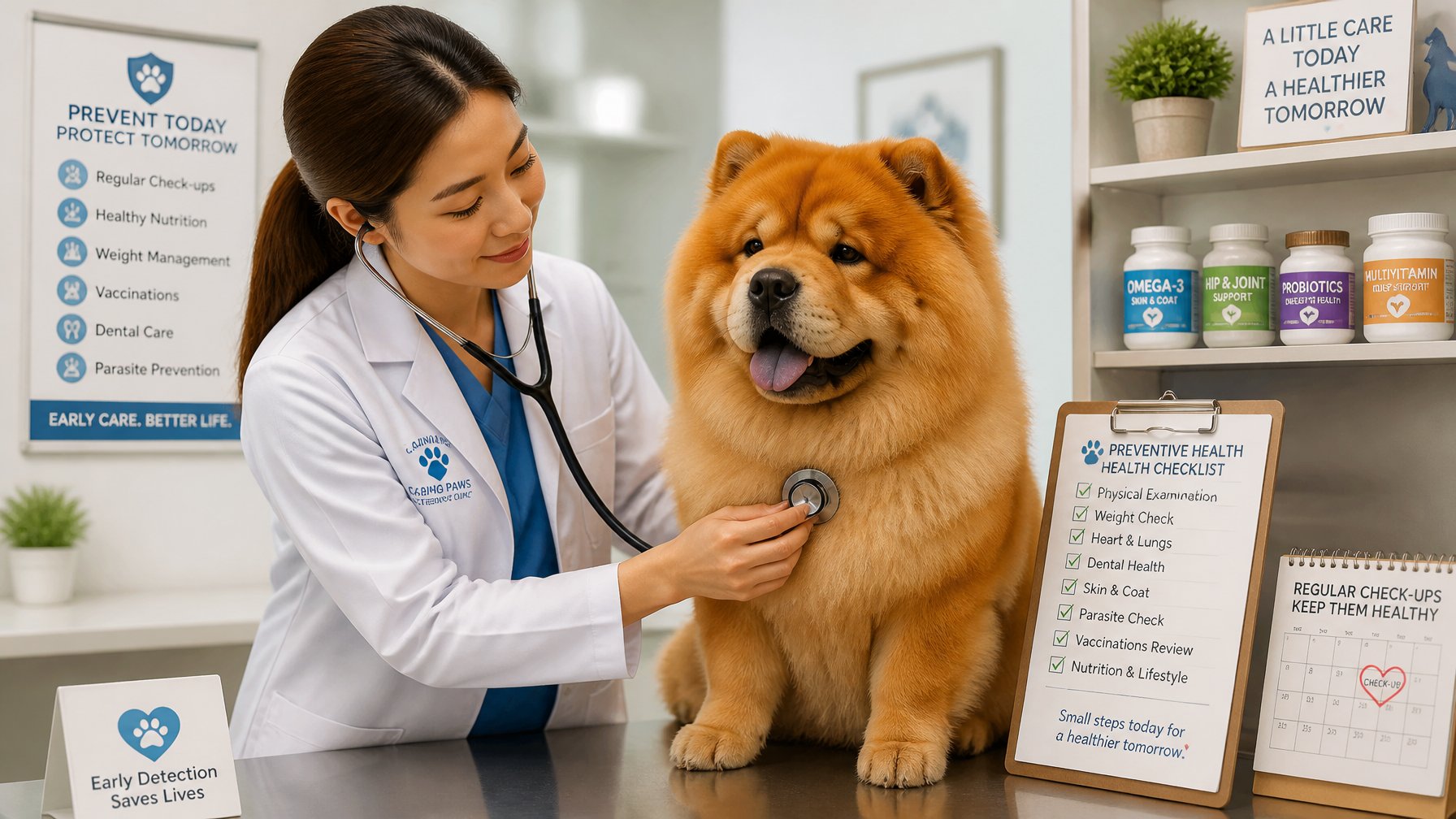
Chow Chow health issues don’t usually appear overnight. They build slowly under that thick coat, inside quietly deteriorating joints, and behind stoic behavior.
The best results come from consistent weight monitoring and grooming sessions that double as health checks. Ask your vet the right screening questions before symptoms show up.
Weight Control, Exercise, And Joint Protection
Keeping a Chow Chow lean is one of the most impactful things you can do for their joints and overall health. Obesity worsens hip dysplasia, elbow dysplasia, and even breathing difficulties.
This breed doesn’t need intense exercise. In fact, too much high-impact activity on a growing Chow’s joints can do more harm than good.
Swimming is excellent for joint health if your Chow tolerates water.
Avoid long runs on pavement, especially in warm weather. Portion control matters more with this breed than many others.
Chow Chows are prone to weight gain that’s hidden by their coat, so weigh your dog monthly rather than relying on visual cues. A kitchen scale and measured scoops beat eyeballing every time.
Grooming Checks That Catch Skin And Ear Problems Early
Every grooming session doubles as a free health exam—if you know what to look for.
- Part the coat and check the skin for redness, flaking, or sores.
- Look inside the ears for dark buildup, odor, or swelling.
- Check around the eyes for discharge or signs of entropion.
- Run your hands along the spine and hips, noting any flinch response.
- Inspect paw pads for cracks, cuts, or nail issues.
Brushing every other day keeps mats away and stops moisture from getting trapped against the skin, which often causes bacterial infections in thick-coated breeds.
Vet Screening Questions To Ask Before Problems Escalate
Don’t wait until your Chow is limping or squinting before you start conversations with your vet. Proactive questions save you money, stress, and your dog’s comfort.
- “Can we do hip and elbow X-rays to check for early dysplasia?”
- “Should we run a thyroid panel? Chow Chows are prone to hypothyroidism.”
- “Are there any early signs of entropion or other eye changes?”
- “Is your dog’s weight where it should be for their frame?”
- “Do you recommend a gastropexy to reduce bloat risk?”
Gastropexy tacks the stomach to the abdominal wall to stop it from twisting. Some vets suggest it for at-risk, deep-chested breeds, sometimes during a spay or neuter. It’s worth talking about before an emergency crops up.
It takes 30 seconds and has caught two problems early. Make your own list. Your Chow will thank you.
Vet Costs, Planning, And Pet Insurance
The two bills that define this breed sit at opposite ends of a Chow’s life, and neither one gives you time to get ready.
Entropion arrives early. Rolled-in eyelids are hereditary in Chows and often need surgery inside the first year — which means it is frequently diagnosed before the owner has given insurance a single thought. Once it is on the record, an insurer can treat it, and sometimes the whole eye, as pre-existing for life.
Bloat arrives in one night. No build-up, no warning, and a deep-chested breed is exactly the shape it happens to. That is a five-figure night at a specialist hospital, decided in the hour you notice something is wrong.
What Chow problems actually cost
- Entropion surgery — roughly $600 to $2,000, depending on one eyelid or several, and whether a specialist does it.
- Bloat (GDV) surgery — roughly $3,000 to $8,000 for the operation, and $5,000 to $12,000 once intensive care is counted.
- Hip dysplasia surgery — roughly $1,200 to $7,000, with a full replacement at $3,500 to $7,000 per hip.
One more thing specific to the breed: Chows are known for sensitivity to anaesthetic. Nearly everything on that list is surgical, and a dog that needs careful anaesthesia tends to be handled at a specialist practice rather than a general one — which pushes you toward the top of every range above rather than the bottom. Ask your own vet what these cost locally.
And what insuring one costs
Chows sit in the middle of the price range: commonly $82 to $157 a month across the US, averaging around $121, with budget plans quoted lower. Where you live and how old the dog is at enrolment move that figure more than anything else.
What to check before you sign anything
- Is the annual limit big enough for one bad night? A bloat admission can reach $12,000 on its own. A low annual cap is spent in a single visit and then you are uninsured for the rest of the year.
- Is a preventive gastropexy covered? Usually not — insurance pays for illness, not prevention. That is worth knowing before you count on it, because it is the one procedure that most reduces the risk described above.
- Are hereditary and congenital conditions included? Entropion and hip dysplasia are both. A policy that excludes them excludes most of this breed’s risk.
- How are puppy-stage diagnoses treated? Ask this one directly if you are buying a Chow puppy. It is the question that decides whether the eyes are ever covered.
Coverage varies by insurer, plan, and where you live, and none of this replaces reading the policy wording or talking to your vet about your own dog. Prices and availability differ by country — if you’re outside the US, check what’s offered where you are.
Frequently Asked Questions
What health problems do Chow Chows get most often as they age?
Older Chow Chows often develop hip dysplasia, hypothyroidism, cataracts, and arthritis. Weight gain speeds up joint problems, so keeping your senior Chow lean really matters. Annual bloodwork and thyroid panels help you catch metabolic shifts early. Eye exams get more important after age five, since glaucoma and cataracts both creep up with age in this breed.
Why does my Chow Chow keep getting itchy skin and hot spots?
That dense double coat traps heat and moisture against the skin, making a perfect setup for bacterial infections and hot spots. Brush every other day, keep the coat dry after baths or rain, and check the skin underneath during each grooming session. Food allergies or hypothyroidism can also trigger chronic itching.
How can I tell if my Chow Chow’s breathing is normal or a vet-level issue?
Chow Chows pant more than some breeds, especially when it’s warm. But heavy panting at rest, wheezing, or noisy breathing in cool weather isn’t normal. If your Chow’s gums look pale or bluish instead of their normal dark color, or if breathing doesn’t settle within a few minutes of resting, call your vet that day. Better safe than sorry.
What joint problems should I watch for in Chow Chows, like hip or elbow issues?
Hip dysplasia, elbow dysplasia, and patellar luxation are the top joint problems in this breed. Early signs include stiffness after rest, reluctance to jump or climb, and that weird bunny-hop gait. Ask your vet about screening X-rays by age one, especially if your breeder didn’t provide OFA or PennHIP results.
Are there health differences I should expect between black Chow Chows and other colors?
Coat color doesn’t cause different health problems. Black, red, cream, cinnamon, and blue Chow Chows all share the same breed-level risks for dysplasia, entropion, and thyroid issues. Lighter-coated Chows might show skin irritation or staining more clearly, so it’s sometimes easier to spot hot spots or allergies than on a darker coat. But otherwise, the risks are the same.
What can make a Chow Chow snap or bite, and when is it a safety red flag?
Chow Chows tend to be reserved and protective. Sometimes, a snap during grooming or handling means your dog feels pain from joint issues or irritated skin, not just aggression. If your Chow starts snapping more often, or does it without warning—especially toward family—it’s time to talk to your vet and a certified behaviorist. Pain-based aggression and true behavioral aggression need totally different approaches. Has your Chow Chow struggled with any of these health problems?


