Chow Chow Nutrition
Is your Chow Chow getting the nutrition it needs?
Chow Chows require a balanced diet rich in vitamins and minerals to maintain their distinctive coat and overall health.
Chow Chows need a diet rich in vitamins and minerals.
What should you feed your Chow Chow, and how can you optimize their health through their diet?
Wondering about special dietary considerations or supplements for your furry friend?
From understanding their nutritional needs to making the right food choices, this guide will cover it all.
Stick around to learn everything you need to keep your Chow Chow healthy and happy.
Key Takeaways
- Chow Chows need a diet rich in vitamins and minerals.
- Homemade and commercial diets have pros and cons.
- Special dietary considerations can optimize your Chow Chow’s health.
Understanding Chow Chow Dietary Needs

Chow Chows have unique dietary needs due to their specific breed characteristics. Ensuring a balanced intake of proteins, carbohydrates, fats, vitamins, minerals, and water is critical for their health.
Macronutrient Balance: Proteins, Carbs, and Fats
Chow Chows need the right balance of macronutrients.
Proteins are crucial for muscle development and repair. Typical sources include chicken, beef, and fish.
Carbohydrates provide much-needed energy but should be quality sources like brown rice or sweet potatoes. Too many low-quality carbs can lead to obesity, a common issue in this breed.
Fats are essential for a healthy coat and skin. Look for sources like fish oil and flaxseed.
Balancing these macronutrients helps in maintaining optimal health.
The Significance of Vitamins and Minerals
Vitamins and minerals play a vital role in keeping Chow Chows healthy.
Vitamins like A, D, and E support vision, bone health, and immune function.
Minerals such as calcium and phosphorus are essential for bone health. Zinc and iron boost the immune system and prevent anemia.
Consult your vet to determine the right vitamin and mineral mix for your Chow. A deficiency or excess can lead to health problems.
Hydration and Water Intake
Adequate water intake is non-negotiable for a Chow Chow. Dogs need constant hydration to regulate body temperature and support metabolic functions.
Dehydration can lead to serious issues like kidney stones, so always monitor their water intake. A good rule of thumb is about one ounce of water per pound of dog daily.
Optimizing Chow Chow Health Through Diet
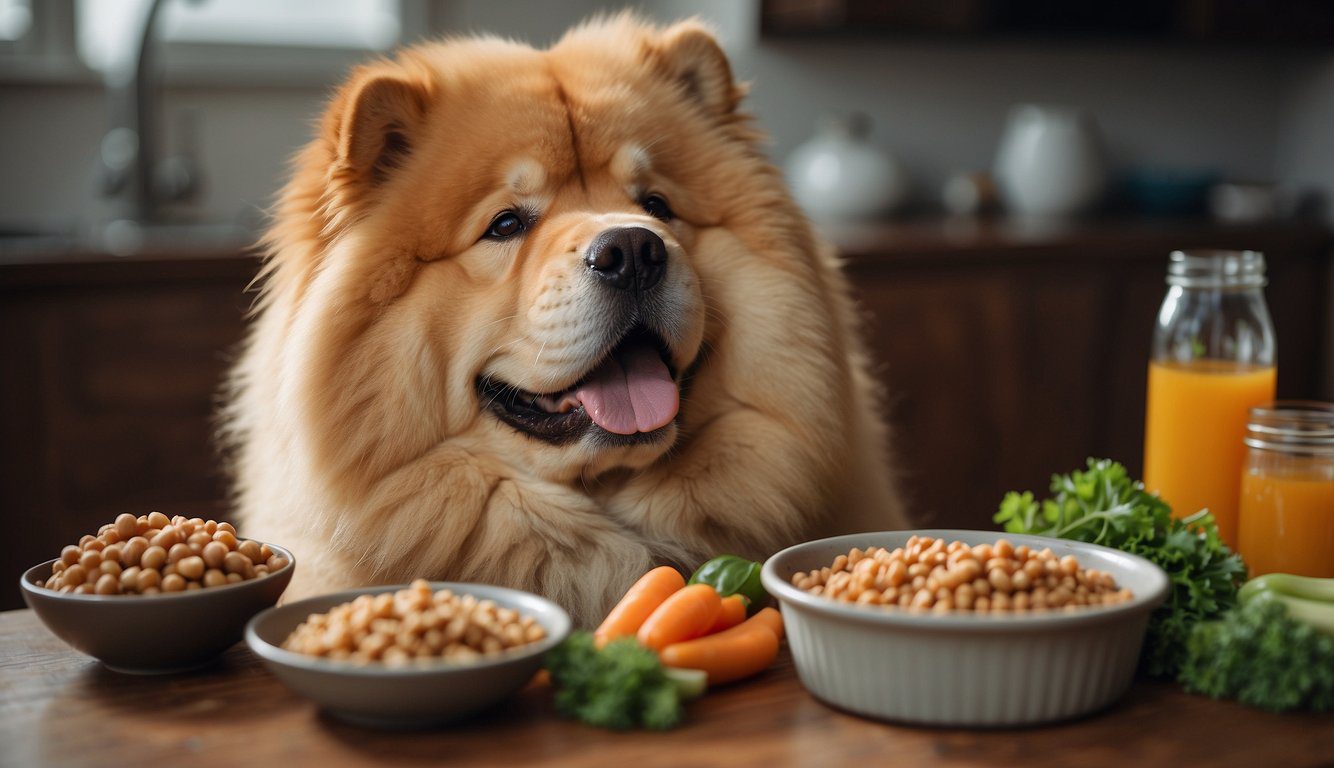
Nutrition plays a big part in keeping a Chow Chow healthy. Focusing on calorie intake, dietary fiber, and avoiding harmful foods can make a huge difference.
Weight Management: Calorie Intake vs. Activity Level
Keeping a Chow Chow’s weight in check is all about balance. They need enough calories to fuel their energy, but not so much that they gain too much weight.
Related reading: this feeding guide.
If you’re unsure about how many calories your Chow Chow needs, talk to your vet. They can suggest the right amount based on your dog’s size, age, and activity.
Importance of Dietary Fiber
Fiber is essential for a Chow Chow’s digestion and blood sugar levels. It helps with weight management by making them feel full longer.
Chow Chows are prone to digestive issues, so high-fiber foods like sweet potatoes and carrots can be very helpful. They’re nutritious, too, without adding excessive calories.
Also, fiber helps in maintaining a balanced diet by promoting healthy gut bacteria. Always introduce new high-fiber foods slowly to avoid upsetting their stomach.
Foods to Avoid for Optimum Health
Certain foods can be harmful to Chow Chows. Foods like chocolate, garlic, and too much salt can lead to serious health issues.
Garlic is one of the most common accidental exposures — garlic bread, leftovers, seasoned scraps — and it is genuinely toxic to dogs rather than merely upsetting, so any known ingestion is worth a call to your vet rather than a wait-and-see.
Use caution with artificial additives and fillers found in low-quality dog food; these can trigger allergies and digestive problems.
Avoid giving them table scraps and foods high in fat or sugar, which can cause weight gain. Stick to high-quality dog foods and natural treats to keep your Chow Chow healthy and happy.
Homemade vs. Commercial Diets
When deciding between homemade and commercial diets for your Chow Chow, it’s important to consider the benefits and challenges associated with each option.
Pros and Cons of Homemade Dog Food
Homemade dog food allows for control over ingredients, ensuring your Chow Chow gets fresh vegetables, fruits, and whole grains. This is great for those with allergies or specific dietary needs.
You can include high-quality proteins and avoid fillers common in some commercial diets.
However, creating a balanced homemade diet can be tricky. Chow Chows need adequate vitamins and minerals, such as vitamin C and fatty acids. Without proper planning, deficiencies can occur.
Cooking the food ensures hygiene, but raw food advocates argue that raw diets preserve more nutrients. Either way, it requires time and commitment to prepare these meals consistently.
Selecting the Best Commercial Dog Food
Commercial dog food is convenient and often nutritionally balanced.
It’s crucial to choose high-quality products, focusing on those with real meat as the first ingredient.
Avoid foods with excessive fillers like corn or soy, as these can cause allergies and digestive issues in Chow Chows.
Look for foods enriched with vegetables and fruits to provide necessary vitamins and minerals.
Fatty acids, like omega-3 and omega-6, are essential for skin and coat health, so select brands that include these.
Always check the ingredient list and research brands to ensure you’re providing the best for your pet’s specific needs.
Special Dietary Considerations and Supplements
Feeding your Chow Chow is not just about picking any dog food. It’s essential to cater to their unique needs, particularly if they have allergies or require supplements.
Allergy Management Through Diet
Chow Chows can be prone to food allergies. This often affects their skin and digestive system.
Vets commonly suggest avoiding foods heavy in fillers or artificial additives, which can worsen the condition.
The usual recommendation is high-quality, protein-rich dog food that lists real meat as the first ingredient.
Foods with Omega-3 and Omega-6 fatty acids, found in fish oil and flaxseed, can also help maintain a healthy coat and reduce skin irritation.
It’s like a magic remedy for their coat and skin!
For some dogs, grains can be a trigger. If that’s the case, look for grain-free formulas. Always keep an eye on your dog’s reaction to new foods and consult your vet if you notice any adverse effects.
Use of Supplements: When Necessary?
Supplements can be beneficial but are not always needed.
The vet added glucosamine and chondroitin supplements to her diet to support her joints.
Vitamins and minerals also play a vital role.
Selenium, which is found in some dog supplements, acts as an antioxidant that supports the overall immune system.
A balanced multivitamin might be necessary if your pet’s diet lacks specific nutrients.
However, it’s important not to go overboard. Too many supplements can do more harm than good. Always consult a vet to determine if supplements are needed and to get the correct dosage.
FAQs
You’ll find information on the benefits, potential issues, and essential nutrients related to incorporating chow chow into your dog’s diet.
What are the nutritional benefits of adding chow chow to your diet?
Chow Chows need a balanced diet to stay healthy. This includes a mix of proteins, fats, carbohydrates, vitamins, and minerals.
For example, lean meats and fish are great choices as they are excellent sources of protein. This helps with muscle development and growth in dogs.
Can consuming chow chow regularly be advantageous for your overall well-being?
Feeding your Chow Chow a well-balanced diet can improve its coat, boost energy levels, and maintain a healthy weight.
Regular meals with proper nutrients also support their immune system, which helps them avoid illnesses. Each dog is unique, so consult your vet to tailor the diet accordingly.
How many calories does a single serving of chow chow contain?
The calorie count for Chow Chows varies by age and activity level. Puppies need about ¾ to 4¼ cups of dry food daily. Meanwhile, adults need around 2¾ to 3¾ cups. Senior dogs generally do well with 2¼ to 3 cups per day. Always check the calorie content on the food packaging for accuracy.
Are there any negative effects to be aware of when eating chow chow frequently?
Feeding your Chow Chow improperly balanced meals can lead to weight gain and other health problems. It’s important to avoid overfeeding and stick to a recommended diet plan. Some dogs may also have allergies, so monitor their reactions when introducing new foods and consult a vet if necessary.
What essential nutrients can be found in chow chow and their significance?
Chow Chows benefit from a diet rich in protein, healthy fats, carbohydrates, vitamins, and minerals. Proteins from lean meats like chicken or turkey help build muscle. Meanwhile, healthy fats are essential for energy and coat health. Lastly, vitamins and minerals support overall well-being, prevent deficiencies, and improve immune function.
How does chow chow compare to other green vegetables in terms of caloric content?
Chow Chows thrive on a diet consisting of protein sources. However, green vegetables can also be a part of their diet.
While they rarely eat vegetables as a main calorie source, including a small amount of low-calorie greens, provides vitamins and fiber. Always balance their diet according to their needs and preferences.