Shih Tzus are widely celebrated as low-shedding dogs, making them a top choice for apartment dwellers and people with mild pet allergies. However, believing that a Shih Tzu never sheds is a common misconception that often leads to neglected coat care and severe matting.
Quick Answer: Yes, Shih Tzus shed, but very minimally compared to most breeds. Because they possess a continuously growing hair coat rather than traditional fur, shed hairs get trapped within the surrounding coat instead of dropping onto furniture. Daily brushing is essential to remove trapped hairs and prevent severe matting.
The Shih Tzu Coat: Why Hair Behaves Differently Than Fur
To understand Shih Tzu shedding, you must understand the biological difference between canine fur and hair. Most shedding dog breeds (such as German Shepherds, Labs, or Huskies) possess fur that grows to a predetermined genetic length, dies, and falls out onto your floors in seasonal cycles known as “blowing coat.”
In contrast, the Shih Tzu has a continuously growing double coat composed of fine, human-like hair. This hair features a prolonged anagen (growth) phase. While individual hairs still reach the end of their life cycle (telogen phase) and detach from the follicle, they rarely fall freely to the ground. Instead, the detached hairs remain trapped within the surrounding outer coat and dense undercoat.
This trapped hair creates two distinct realities for owners:
- Your floors stay remarkably clean: You will rarely find clumps of dog hair on clothes, rugs, or upholstery.
- Your grooming obligations are intensive: If trapped dead hairs are not systematically removed with daily line brushing, they tangle with living hairs, forming dense mats and felting against the skin.
How Much Do Shih Tzus Actually Shed?
Under normal conditions, an adult Shih Tzu sheds about the same volume of hair as an adult human with long hair. When you brush a healthy Shih Tzu, you will observe a modest accumulation of loose strands in the pins of your brush or the teeth of your metal comb. This is healthy, expected shedding.
Shih Tzus do not experience dramatic seasonal shedding spikes like Nordic breeds or heavy double-coated working dogs. Because they are indoor companion dogs bred for royal households, their indoor lifestyle and consistent ambient temperatures minimize photoperiod-induced seasonal hair release. However, slight increases in shedding can occur during spring and autumn as environmental temperatures shift.
The 9-to-12 Month Puppy Coat Transition
The single biggest spike in Shih Tzu shedding occurs during the adolescent transition from puppy fuzz to adult double coat. When your puppy is between 9 and 14 months old, their soft, single-layer puppy coat sheds rapidly to make way for the thicker, coarser adult hair and dense undercoat.
During this 2-to-3-month window, grooming demands triple:
- Puppies that previously required only light brushing every few days will suddenly develop mats overnight, especially behind the ears, in the armpits, and around the groin.
- Daily line combing becomes mandatory to pull out the dying puppy coat before it felts against the emerging adult hair.
- You can check your dog’s developmental stage against their equivalent human age using our Shih Tzu age in human years calculator to anticipate when adolescent hormone shifts and coat transitions begin.
Causes of Excessive or Abnormal Shedding
If your adult Shih Tzu is suddenly losing noticeable clumps of hair, leaving bald patches, or shedding excessively onto furniture, it is not normal breed shedding. Abnormal shedding (alopecia) is a clinical symptom requiring veterinary investigation. Common underlying causes include:
1. Allergies and Atopic Dermatitis
Shih Tzus are genetically predisposed to environmental allergies (pollen, dust mites, mold) and food sensitivities (animal proteins such as chicken or beef). Chronic itching, face rubbing, and paw licking inflame hair follicles, causing premature shedding and secondary bacterial or yeast skin infections.
2. Fleas and Parasites
Even a single flea bite can trigger Flea Allergy Dermatitis (FAD) in sensitive Shih Tzus, leading to frantic scratching, hot spots, and rapid hair breakage along the lower back and base of the tail.
3. Hormonal and Endocrine Disorders
Endocrine conditions such as hypothyroidism (underactive thyroid) or hyperadrenocorticism (Cushing’s disease) disrupt follicular growth cycles, resulting in symmetrical, non-itchy hair thinning along the flanks and trunk.
4. Stress and Life Changes
Dogs experience physiological telogen effluvium—a sudden shedding episode triggered by severe physiological or psychological stress, such as surgery, illness, rehoming, or changes in family dynamics.
5. Hormonal Shifts in Intact Females
Female Shih Tzus frequently experience substantial hair shedding following an estrus cycle (heat) or several weeks after whelping and nursing a litter due to sharp drops in estrogen and progesterone.
How to Manage and Minimize Shih Tzu Shedding
While you cannot stop biological shedding entirely, a structured grooming and nutritional routine ensures shed hairs are cleanly captured before causing skin issues.
1. Daily Line Brushing Technique
Surface brushing only glides over the outer coat while mats build invisibly at the skin line. Practice line brushing:
- Part the coat horizontally with your hand down to the bare skin.
- Use a pin brush (without protective ball tips, which can snag and pull hair) to gently brush small sections downward from root to tip.
- Follow every brushed section with a stainless steel greyhound comb. If the comb catches, gently work through the knot with your fingers or a slicker brush rather than pulling.
- Always mist the coat lightly with a leave-in conditioning spray before brushing; brushing dry hair causes static, breakage, and split ends.
2. Avoid De-Shedding Blade Tools
Common commercial de-shedding rakes designed for shedding breeds (such as the Furminator) feature micro-blades that cut the coat. On a Shih Tzu’s fine drop coat, these tools slice healthy living hairs and shred the delicate topcoat, causing permanent frizz and coat damage. Stick strictly to pin brushes, soft slicker brushes, and steel combs.
3. Bathing and Blow-Drying Routine
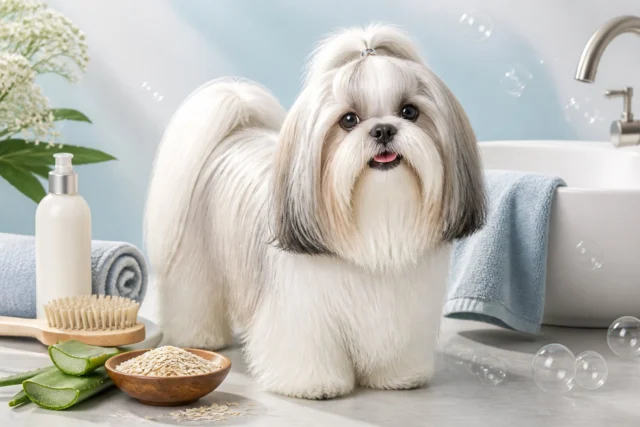
Bathe your Shih Tzu every 3 to 4 weeks using a soap-free, oatmeal or moisturizing canine shampoo followed by a restorative conditioner. Never allow a long-coated Shih Tzu to air dry—damp hair contracts and forms tight knots. Blow-dry the coat thoroughly using a high-velocity dryer on a cool-to-warm setting while brushing simultaneously.
4. Clipping and Low-Maintenance Cuts
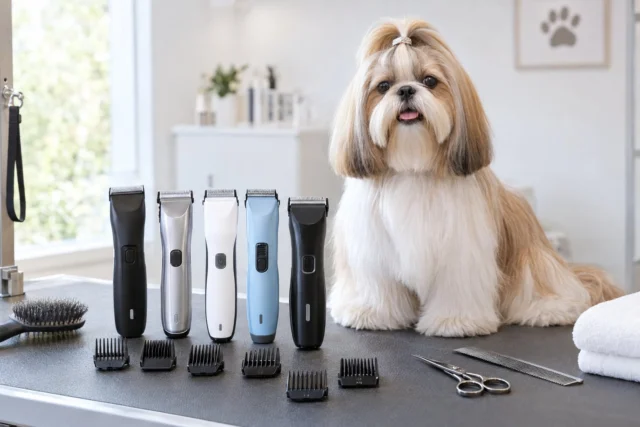
Many pet owners opt for a low-maintenance trim (such as a Puppy Cut or Teddy Bear Cut) to reduce daily combing time. While a shorter clip does not stop hair from shedding from the follicle, it makes trapped dead hairs much easier to remove during weekly maintenance.
When selecting clipper lengths for your dog’s maintenance clip or performing sanitary trims at home, consult our hair length dog grooming blade chart to choose the exact blade numbers (such as a #10 blade for sanitary areas and #4F or #7F for body lengths) that prevent skin irritation and clipper burn.
Are Shih Tzus Truly Hypoallergenic?
No dog breed is 100% hypoallergenic. Human dog allergies are triggered by proteins (predominantly Can f 1 and Can f 2) present in canine saliva, urine, and dander (microscopic dead skin flakes), not by dog hair itself.
However, because Shih Tzus shed so little hair into the surrounding living environment, they release significantly fewer dander-laden airborne particles than furred breeds. Frequent bathing, daily brushing to capture dander, and keeping the coat clean make the Shih Tzu one of the best-tolerated breeds for allergy sufferers.
Veterinary Disclaimer: This article is for informational and educational purposes only and does not constitute veterinary medical advice. While the breed coat characteristics discussed align with American Kennel Club (AKC) breed standards, sudden or patchy hair loss, severe dandruff, erythema (redness), or intense pruritus (scratching) should always be evaluated by a licensed veterinarian or a board-certified veterinary dermatologist accredited by the American College of Veterinary Internal Medicine (ACVIM).
Frequently Asked Questions
Do Shih Tzus shed more in the summer?
Shih Tzus do not experience heavy seasonal shedding spikes like undercoated double-fur breeds, but warmer weather can stimulate a slight increase in natural hair turnover. Maintaining a regular brushing routine or choosing a summer trim easily manages this seasonal shift.
Why is my Shih Tzu shedding large clumps of hair?
Healthy Shih Tzus never shed in visible clumps. Clump shedding, patchy bald spots, or excessive thinning indicates an underlying medical issue such as a fungal infection (ringworm), bacterial folliculitis, severe flea allergy dermatitis, or an endocrine disorder like hypothyroidism.
How can I stop my Shih Tzu from shedding on clothes and furniture?
You cannot stop natural follicular renewal, but five minutes of daily line brushing with a pin brush and steel comb will capture virtually all loose hairs before they can fall onto furniture or transfer to clothing.
Does clipping a Shih Tzu short stop them from shedding?
Clipping reduces hair length, not hair turnover. A shaved or short-trimmed Shih Tzu sheds the exact same number of hairs as a full-coated one; the shed hairs are simply shorter, less noticeable, and much less likely to form severe mats.