As an Amazon Associate I earn from qualifying purchases.
French Bulldog hot spots appear faster than most owners expect. This guide covers spotting, preventing and handling them.
Here’s what you’ll find about dealing with hot spots on your Frenchie:
Below are the warning signs, the common triggers, and what actually keeps a French Bulldog’s skin healthy.
What are French Bulldog Hot Spots?
French Bulldog hot spots look like red, moist, inflamed patches on your pup’s skin. They often ooze pus or fluid, and honestly, they’re about as nasty as they sound.
A French Bulldog with a hot spot is in real pain, and the licking and scratching makes it spiral quickly.
Here’s why hot spots are such a headache:
- They spread quickly if you don’t treat them
- They cause a lot of discomfort and pain
- Your bulldog will keep licking the spot, making it worse
- Moisture and bacteria just feed the infection cycle
French Bulldogs have super sensitive skin. They’re prone to about 30 different health issues, and skin stuff is near the top.
As soon as you see a hot spot on your French Bulldog, jump on it. Fast treatment stops it from spreading.
If you try home remedies for skin allergies and nothing changes in a few days, call your vet. Your dog’s comfort really depends on handling it right.
Reasons for French Bulldog Hot Spots
Hot spots seem to appear out of nowhere, but they almost always begin with itchiness. Licking, chewing or scratching one area is the first clue that something is wrong with your French Bulldog.
Hot spots create inflammation, and the more they scratch, the worse it gets. It’s a vicious cycle that can turn into a bacterial infection before you know it.
So what causes the itch in the first place? The usual culprits:
Common Causes of Hot Spots:
- Food allergies — certain proteins or ingredients can mess with their skin
- Parasites — fleas, ticks, and mites love hiding in skin folds
- Ear or skin infections — especially in brachycephalic breeds like French bulldogs
- Flea allergy dermatitis — even one flea bite can set off a storm of itching
- Anal sac disease — leads to licking back there
- Atopic dermatitis — environmental allergies that irritate the skin
- Dirty coat — dirt and oil buildup can bother sensitive skin
- Excessive licking from boredom — sometimes it’s just anxiety or boredom showing up as licking
- Contact irritants — harsh cleaners or lawn chemicals
- Moisture left in the coat after a bath or swim
That last one matters most. A dog who swims or is bathed often traps moisture in the coat, and bacteria follow. Dry a French Bulldog thoroughly, especially in the wrinkles.
Hot spots flare up more when it’s warm or humid. If you catch a moist, oozing spot with a funk, that’s probably a bacterial infection. Some of these causes just keep coming back, so if you’re stumped, don’t wait—let your vet take a look.
Symptoms of French Bulldog Hot Spots
If your French Bulldog keeps licking or scratching one spot, you may be looking at a hot spot. They appear fast — often overnight — which is what makes them such an unpleasant surprise.
Hot spots look like red, swollen patches with hair loss around them. They feel moist and sometimes ooze pus or clear fluid that dries into a crust.
Where to look for hot spots:
- Head and facial folds
- Limbs and paws
- Hips and rear end
The discharge mats the hair and crusts up around the sore. The tough part? Your Frenchie will want to scratch like crazy, but that just spreads the infection and ramps up the pain.
Watch for these signs:
- Constant licking or biting at a spot
- Wet, oozing patches
- Matted fur with yellow or clear crust
- Your dog whining if you touch the area
Since French Bulldogs often get bad lesions in their facial folds, catching these symptoms early really matters. If you see any of this, it’s time to talk to your vet.
French Bulldog Hot Spots Location
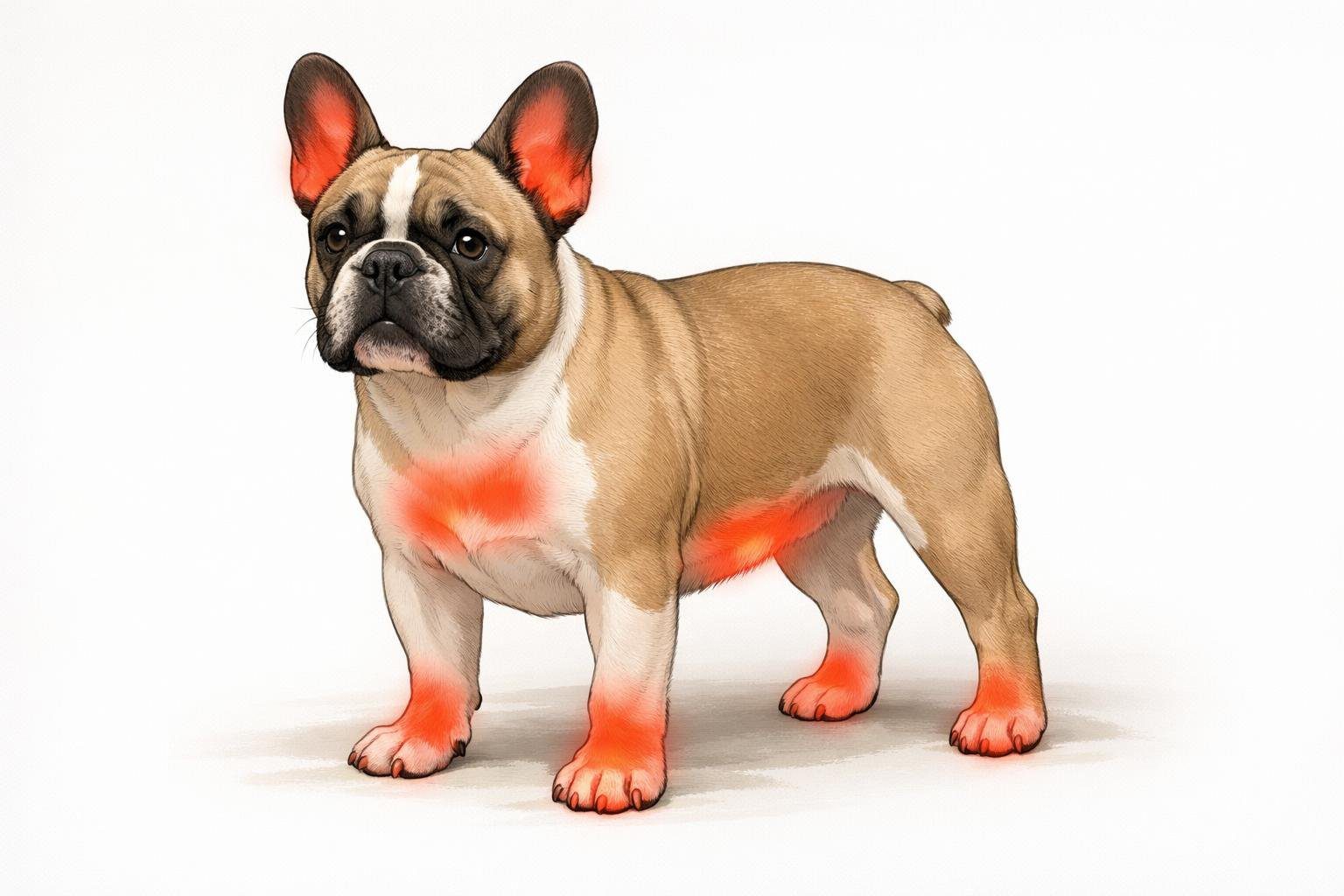
Hot spots can appear anywhere, but certain zones are far more common on a wrinkly breed — under the ear flap and along the neck above all.
Here’s why those spots get hit:
- Skin wrinkles and folds soak up moisture
- Bacteria and yeast thrive in those damp, warm folds
- Bulldogs are just more prone to skin problems because of their body shape
Honestly, those cute wrinkles are like little hotels for germs. Moisture gets trapped and bacteria move right in.
Keep your Frenchie clean and dry if you want to stop these painful spots. Regular wrinkle care really does make a difference in keeping your pup happy and hot spot-free.
Test for Allergies
Allergy testing is worth discussing with your vet. It is the most direct route to what is driving recurring symptoms.
Testing kits online make this whole thing pretty easy and affordable. You can do it all from your living room—no need to drag your pup anywhere.
Here’s what these at-home kits can do:
- Test for food-related allergens
- Check environmental triggers
- Identify causes of itchiness and redness
- Save you a trip to the vet
French Bulldogs often struggle with food allergies, so testing really matters for this breed. The results lay out exactly what’s bugging your dog, so you can make better choices about their food and surroundings.
You can also test your dog at home with simple collection steps. Most kits guide you through it all, and it’s usually pretty quick.
The results show up in a few weeks and give you a clear look at your Frenchie’s allergen sensitivities. It’s honestly a relief to know what you’re dealing with.
Preventive Measures for French Bulldog Hot Spots
Preventing hot spots in French Bulldogs really starts with figuring out what makes your pup itch. Is it parasites? Skin infections? Allergies? You’ve got to know the cause before you can stop those nasty, painful spots from popping up.
Key prevention strategies I recommend:
- Use effective parasite prevention treatments consistently
- Manage allergies with your vet’s guidance
- Keep up with regular grooming routines
- Maintain proper hygiene for your Frenchie’s skin folds
Stopping the scratching matters as much as treating the spot — the more a dog scratches, the more hot spots follow.
Regular bathing with the right product helps. Arava Natural Medicated Dog Shampoo is one option aimed at reducing infection risk.
If your Frenchie loves swimming or gets bathed a lot, dry their coat completely. Moisture in those adorable skin folds is just asking for trouble—hot spots love damp spots.
French Bulldogs struggle with skin issues because of their folds, so keeping them dry is key.
Boredom and stress make a lot of French Bulldogs lick themselves nonstop. That habit can turn into skin problems fast.
Try puzzle toys or the Outward Hound Fun Feeder to keep their mind busy, especially at mealtime.
Dietary additions that help prevent hot spots:
| Supplement | Benefits |
|---|---|
| Fish oil (Omega-3 fatty acids) | Promotes healthier skin and reduces inflammation |
| DHA and EPA | Makes dogs less susceptible to allergies and infections |
| Aloe Vera (topical only) | Soothes damaged skin and decreases itchiness |
Adding fish oil to your Frenchie’s meals gives them those omega-3s that keep skin healthy. Omega-3s are anti-inflammatory, so they help keep hot spots at bay.
Aloe vera gel is sometimes used on irritated skin, but it is not a treatment for a hot spot — these are infected lesions and need proper veterinary treatment. Aloe also causes vomiting and diarrhoea if licked off, which a dog with an itchy patch will certainly try to do. Our guide on what dogs eat covers this.
More exercise and playtime also help cut down on stress-licking. A tired Frenchie is usually a happy, less-itchy one.
French Bulldog Hot Spots Treatment
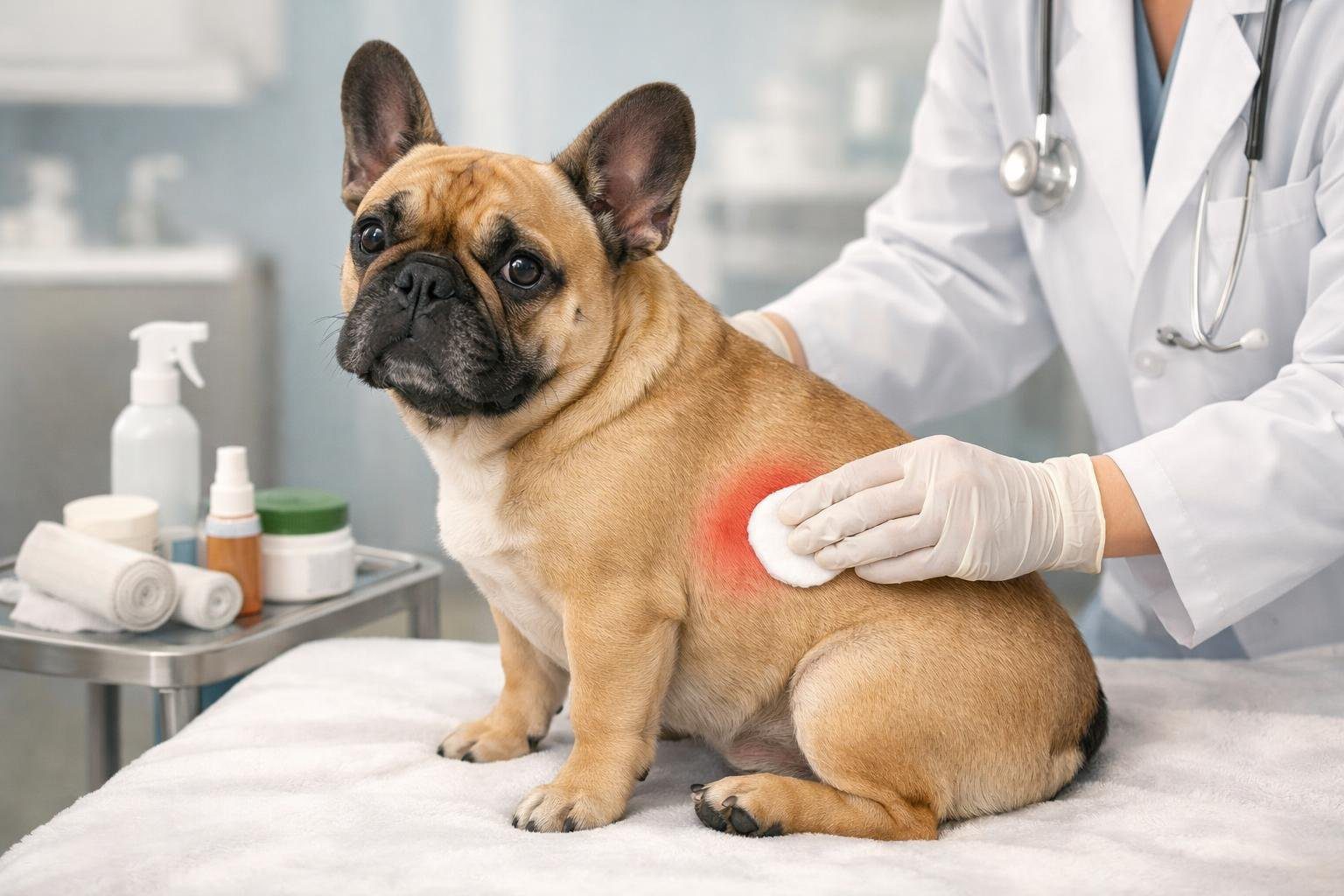
It’s honestly stressful when you spot a red, oozing patch on your Frenchie’s skin. Hot spots show up fast and can make your pup miserable.
But if you act quickly, you can help them heal and get back to their goofy self.
Clipping and Cleaning
The first step is clipping the fur around the hot spot. It looks drastic, but it stops further irritation and lets the skin dry.
Next, clean the area gently with warm water to remove debris. Everything after this works better on a clean surface.
Scrubbing and Rinsing
Use a clean cloth or gauze and a light touch — the skin is already inflamed.
Then apply an antiseptic to reduce bacterial load and stop the spot spreading.
Topical Antiseptic
Antiseptic shampoo and gel are worth keeping in the house. Used at bath time they lower irritation and infection risk.
Skin folds in Frenchies make antiseptic care extra important.
Cortisone
A vet may suggest a cortisone injection for quick relief. It calms the inflammation and makes the dog considerably more comfortable while the skin heals.
Antibiotics
Ask your vet about antibiotics. Hot spots are usually infected by the time they are noticed, and these treat the infection — as tablets or by injection.
E-cone
Hot spots itch badly, and a Frenchie will lick non-stop given the chance. An Elizabethan collar (cone) is what actually lets the skin heal; without it, the licking reopens the wound faster than treatment can close it.
Before You Go
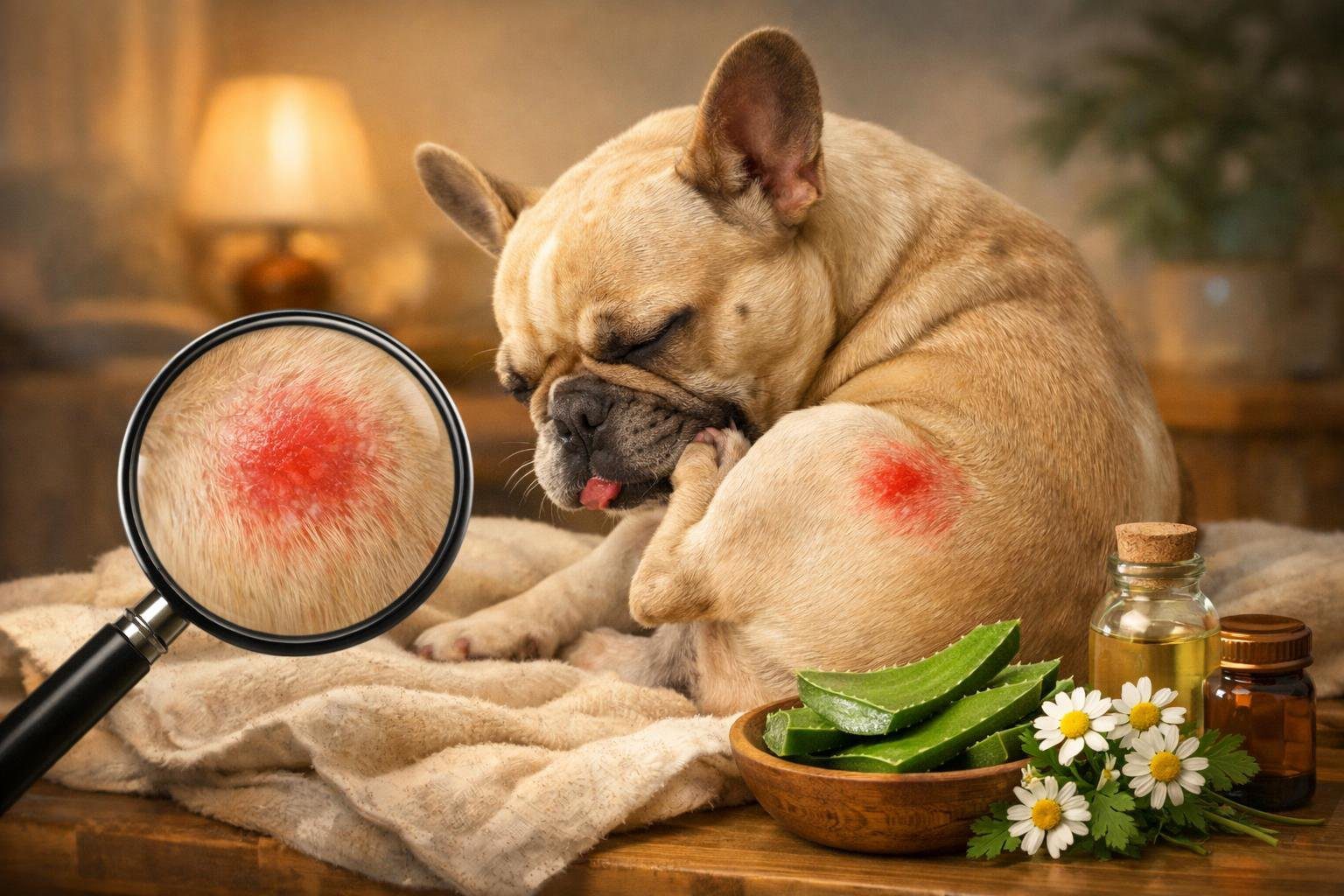
French bulldog hot spots can be just as frustrating for you as they are for your pup. Watching them scratch and squirm is tough, honestly.
French Bulldogs have sensitive skin and those adorable short noses, but it makes them prone to infections. All those wrinkles and folds? Perfect hiding spots for hot spots, unfortunately.
What matters most? Figure out the cause and treat your dog quickly. That’s how you get your Frenchie back to their silly, happy self.
If you spot a raw, wet patch, what’s the safest first thing to do before it gets worse overnight?
Stop the itch-scratch cycle immediately—that’s your first mission.
The First 30 Minutes: What To Do When You Find A Raw, Wet Patch
step
1
Prevent further damage
Put an e-collar (cone) on your dog right away.
Do not skip the cone thinking you will just watch them — they will lick the moment you look away.
step
2
Gently clip the area
Use blunt-tip scissors or clippers.
Trim the fur around the hot spot (about half an inch around the edges).
This lets air reach the wound and keeps hair from matting into it.
step
3
Clean it carefully
Use lukewarm water and a clean cloth.
Pat—don’t rub—to remove debris and discharge.
If you have diluted chlorhexidine solution, you can use it (ask your vet for the right dilution).
step
4
Dry thoroughly
Pat dry with clean gauze or a soft towel.
Don’t use a hair dryer—it can burn inflamed skin.
Make sure it’s totally dry before moving to the next step.
What NOT to DO
What to DO
If the patch is larger than a quarter, spreading rapidly, or your dog seems lethargic or feverish—don’t wait. Head to an emergency vet.
When Should I Take My French Bulldog to The Vet for Hot Spots?
While mild hot spots can sometimes be managed at home, there are clear warning signs that tell you it’s time to skip the DIY approach and get professional help — fast.
🚨 See Your Vet Immediately If You Notice:
- 🔴 Rapid spreading — the hot spot is growing larger within hours or a day
- 🔴 Deep skin infection — the area looks severely inflamed, swollen, or has thick discharge
- 🔴 Foul odor — a strong, unpleasant smell coming from the affected area
- 🔴 Extreme pain — your Frenchie cries, snaps, or flinches when the area is touched
- 🔴 Fever or lethargy — your dog seems unusually tired, weak, or loses appetite
- 🔴 No improvement — home treatment shows zero progress after 48–72 hours
- 🔴 Recurring hot spots — the same spots keep coming back repeatedly despite treatment
🩺 What Will the Vet Do?
When you visit the vet for French Bulldog hot spots, here’s what you can typically expect:
| Treatment | Purpose |
|---|---|
| Shaving & cleaning the area | Removes bacteria and allows skin to breathe |
| Topical antiseptic treatment | Kills surface bacteria immediately |
| Oral or topical antibiotics | Treats deeper bacterial infections |
| Steroid medication | Reduces severe inflammation and itching |
| Allergy testing | Identifies underlying triggers causing recurring hot spots |
| E-collar fitting | Prevents your Frenchie from making things worse |
💊 Common Medications Your Vet May Prescribe:
- ✅ Neopredef Powder — a popular drying agent that vets frequently recommend for French Bulldog hot spots (Source: Reddit/r/Frenchbulldogs)
- ✅ Chlorhexidine solution — an antiseptic wash to clean infected areas
- ✅ Apoquel or Cytopoint — for Frenchies whose hot spots are triggered by allergies
- ✅ Cephalexin — a common oral antibiotic for bacterial skin infections
⚠️ The Golden Rule:
“When in doubt, always check it out.”
French Bulldog hot spots can go from minor irritation to serious infection in as little as 24–48 hours. Never wait too long — your Frenchie’s comfort and health are always worth that vet visit!
Frequently Asked Questions
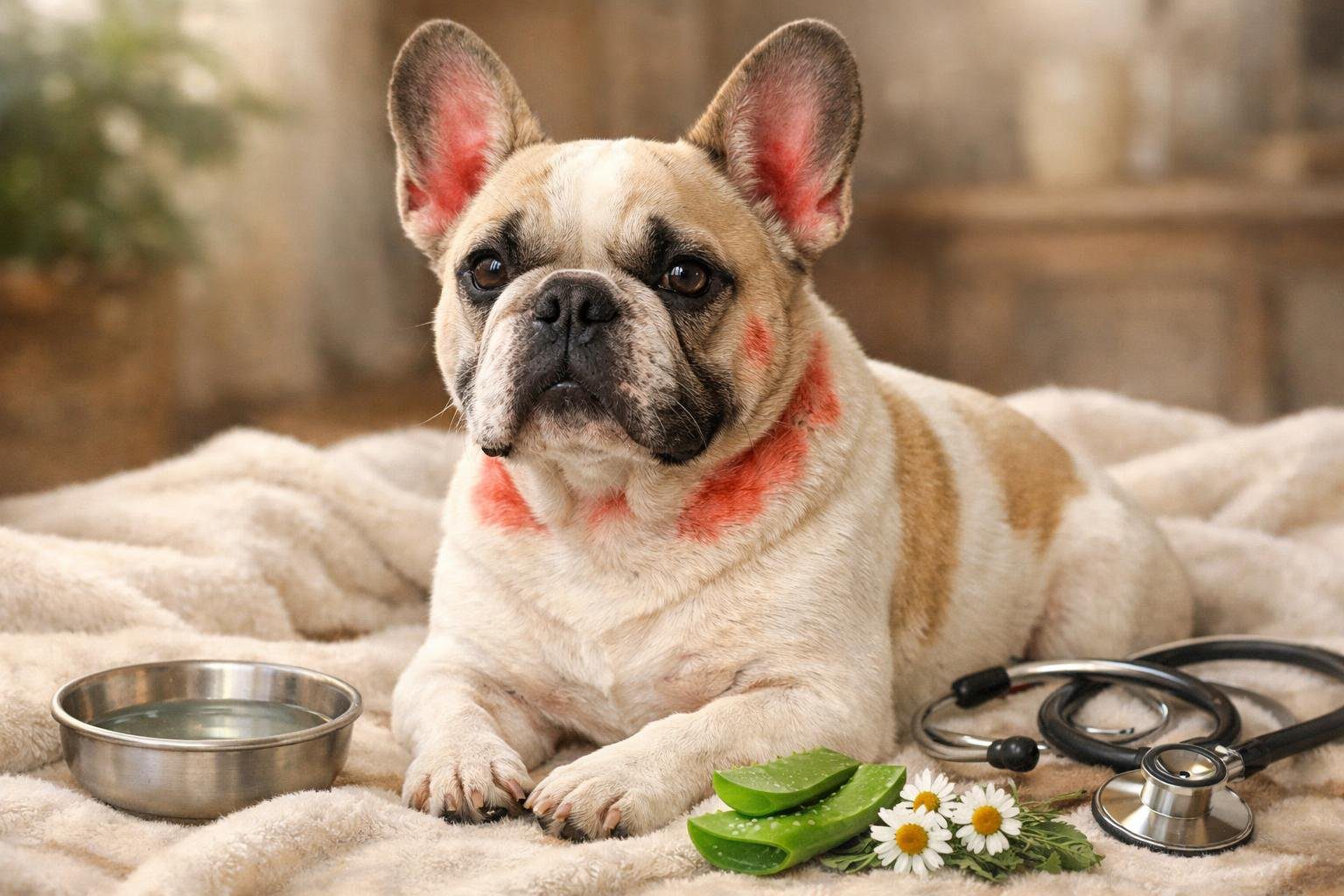
What do hot spots look like on a French Bulldog?
Hot spots on French Bulldogs appear as red, moist, irritated patches of skin that can show up suddenly. They’re often warm to the touch, may ooze pus or fluid, and can cause noticeable hair loss around the affected area. You’ll most commonly find them on the:
🐾 Head and face
🐾 Hips and tail area
🐾 Limbs and paws
Your Frenchie will likely scratch, lick, or bite at the spot obsessively, which sadly makes it spread faster and get worse.
What causes hot spots on French Bulldogs?
Several triggers can cause French Bulldog hot spots, including:
🔴 Allergies (food or environmental)
🔴 Flea or insect bites
🔴 Trapped moisture in skin folds
🔴 Poor grooming habits
🔴 Underlying skin conditions
French Bulldogs are especially vulnerable due to their sensitive skin and deep skin folds, which create warm, moist environments where bacteria thrive. (Source: DialaVet)
How do I treat my French Bulldog’s hot spots at home?
For mild cases, here are some safe at-home steps:
✅ Trim the fur around the hot spot gently to allow airflow
✅ Clean the area with a mild antiseptic or chlorhexidine solution
✅ Apply a vet-approved hydrocortisone spray or cream to reduce inflammation
✅ Use an E-collar (cone) to stop your Frenchie from licking or scratching
✅ Keep the area dry and monitor it daily for improvement
⚠️ Important: If the hot spot is large, spreading rapidly, or your dog seems to be in severe pain, skip the home remedies and visit your vet immediately.
How long does it take for hot spots to heal on a French Bulldog?
With proper treatment, most mild hot spots begin to improve within 3–7 days. However, healing time depends on:
📌 Severity of the infection
📌 How quickly treatment was started
📌 Whether your Frenchie stops scratching the area
📌 Underlying causes being addressed
More severe or infected hot spots treated with antibiotics prescribed by a vet may take 2–4 weeks to fully heal. The sooner you catch and treat them, the faster your Frenchie recovers!
How can I prevent hot spots on my French Bulldog?
Prevention is always better than cure! Here’s how to keep hot spots away for good:
🛡️ Regular grooming — keep your Frenchie’s coat clean and well-maintained
🛡️ Keep skin folds dry — wipe and dry between folds daily
🛡️ Flea prevention — use vet-recommended flea treatments year-round
🛡️ Healthy diet — address food allergies with a balanced, vet-approved diet
🛡️ Routine vet checkups — catch skin issues before they escalate
🛡️ Manage stress — anxious Frenchies tend to scratch and lick more
Staying proactive with grooming and skin care is the single most effective way to prevent French Bulldog hot spots from ever developing. (Source: Vet4Bulldog)