As an Amazon Associate I earn from qualifying purchases.
A sound temperament is the single most important thing in a German Shepherd Dog (GSD).
By sound, we mean a dog that is steady and predictable: calm and safe around the family at home, and alert when it genuinely needs to be. That stability matters more than coat colour, size or pedigree. This page is a general guide to the breed, not veterinary advice; ask your vet about your own dog.
Basic Information About The German Shepherd Dog
- Height: 22–26 inches (about 56–66 cm)
- Weight: 75–95 pounds (about 34–43 kg)
- Life expectancy: 10–12 years
- Bred for: herding, then service work
Figures are from the VCA breed page; individual dogs vary.
Training
The VCA rates the German Shepherd as very easy to train and says reward-based training with food or games works best. It also says the breed needs early socialisation so that it willingly accepts new people, is generally gentle with children but may be overly protective, and is often aloof with strangers. Start puppy classes early and keep training positive; a dog that works for praise and play keeps working when you run out of treats.
If your dog pulls on the lead, a front-clip harness can help with steering while you train. The Funfox Dog Harness for Large Dogs listing describes a no-pull vest with a front clip and a back ring, rustproof metal D-rings, reflective strips and a handle; measure your dog’s neck and chest against its size chart first.
Funfox Dog Harness for Large DogsA no-pull vest harness with a front clip and a back ring, rustproof metal D-rings, reflective strips and a handle. Measure your dog’s neck and chest against the size chart first.Check price on AmazonAffiliate link — Dog Fluffy may earn a commission, at no extra cost to you.Nutrition
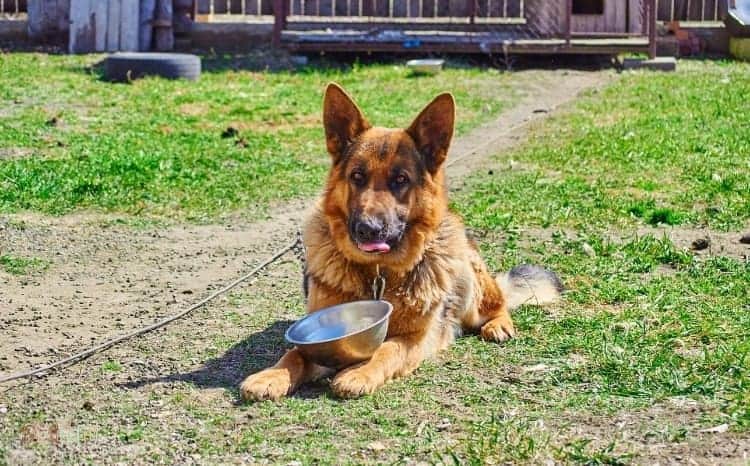
A complete diet suited to your dog’s age is the basis. The VCA says feeding a large-breed puppy growth food has been shown to decrease the incidence or severity of hip dysplasia in adults, and that adults need a balanced diet with calories limited if they start gaining weight. Ask your vet which food and portion suit your dog before you change anything or add supplements.
Royal Canin German Shepherd Adult
Royal Canin German Shepherd AdultA dry food for purebred German Shepherds aged 15 months and older, with a kibble shaped for the breed’s muzzle and added glucosamine and chondroitin. Ask your vet which food and portion suit your dog.Check price on AmazonAffiliate link — Dog Fluffy may earn a commission, at no extra cost to you.The listing describes a dry food for purebred German Shepherds aged 15 months and older, with a kibble shaped for the breed’s muzzle, digestible proteins, and glucosamine and chondroitin for the joints.
Royal Canin German Shepherd Puppy
Royal Canin German Shepherd PuppyA dry food for purebred German Shepherd puppies from 8 weeks to 15 months, with antioxidants and vitamin E and added glucosamine and chondroitin. Ask your vet which food and portion suit your puppy.Check price on AmazonAffiliate link — Dog Fluffy may earn a commission, at no extra cost to you.The listing describes a dry food for purebred German Shepherd puppies from 8 weeks to 15 months, with antioxidants and vitamin E, digestible proteins, and glucosamine and chondroitin for bones and joints.
Grooming
The German Shepherd has a medium-length double coat. The VCA rates its shedding 5 out of 5, the highest, and its grooming needs 2 out of 5. The AKC says the double coat shouldn’t be shaved or cut, so brush out the loose undercoat instead.
FURminator Large Dog Undercoat deShedding Tool
FURminator Large Dog Undercoat deShedding ToolA deshedding tool for dogs over about 23 kg with long hair, which removes loose undercoat without cutting the topcoat when used as directed. Check that you have the version for your dog’s coat.Check price on AmazonAffiliate link — Dog Fluffy may earn a commission, at no extra cost to you.The listing describes a tool for dogs over 50 pounds (about 23 kg) with long hair that removes loose undercoat without cutting the topcoat when used as directed, with a button that releases the hair. Check that you have the version for your dog’s coat.
Exercise
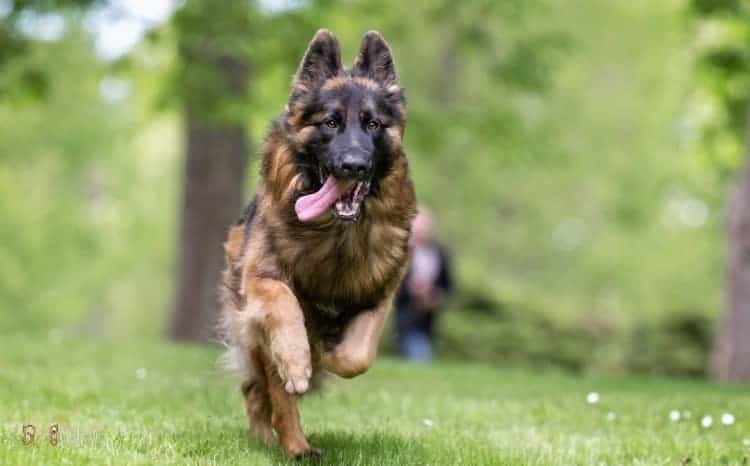
The VCA says the breed needs daily walks, jogs, hikes or play sessions, and mental exercise such as obedience or agility. Keep your dog on a lead in unfenced areas: even a well-trained dog can be distracted. Dog sports such as agility, herding and tracking give both physical and mental work.
Health
Many German Shepherds are healthy, but the AKC says hip dysplasia is most common in large breeds including the German Shepherd Dog, with signs such as a swaying “bunny hopping” gait and hind-end lameness; your vet diagnoses it with an X-ray, and keeping your dog lean takes stress off the hips. Ask any breeder which health tests they do on their breeding dogs.
Bloat (a swollen, twisted stomach) is an emergency. The AKC lists an enlarged abdomen, retching, drooling and restlessness as signs, says deep, narrow chests raise the risk, and says to take the dog to a vet or emergency clinic immediately. It does not name German Shepherds, so ask your vet whether your dog’s build puts them at higher risk, and learn the signs.
History
The AKC says Captain Max von Stephanitz, a German cavalry officer, set out to create a formal herding breed. In April 1899 he acquired a dog he renamed Horand von Grafrath, who became the first registered German Shepherd Dog, and within a month he co-founded the world’s first German Shepherd Dog club. He promoted the breed as a “peerless service dog”, and the breed moved from herding into police, military and guide work.
Facts About The German Shepherd Dog
- The first registered German Shepherd, Horand von Grafrath, was bought in 1899 for 200 German gold marks (AKC).
- Dogs of the breed once managed flocks of as many as 1,000 sheep (AKC).
- In 1928 a German Shepherd Dog named Buddy became a Seeing Eye dog for Morris Frank (AKC).
- In World War I anti-German feeling led the AKC to have the club and the breed renamed; in Britain the breed became known as the Alsatian (AKC).
- Rin Tin Tin, found as a puppy in France by an American soldier after the war, appeared in 23 silent Warner Bros. films (AKC).
- The breed has stayed in the top ten of US breeds for decades (AKC).
- The “von” in a dog’s registered name traditionally suggests German noble ancestry (AKC).
- Head tilting may help the dog track sounds (AKC).
- The double coat should not be shaved or cut (AKC).
Final Words
The German Shepherd is a large, agile, muscular and intelligent dog that has been prized as a working partner for well over a century. A healthy, well-socialised German Shepherd with a steady temperament makes a loyal companion, but the breed needs daily exercise, training and company. Talk to your vet about your own dog’s health.