Fluffy puppies are adorable, but their soft coats and playful nature can create unique training challenges that catch many new owners off guard.
The key to successfully training fluffy puppies lies in using positive reinforcement techniques while addressing their specific needs like coat care during training sessions and preventing matting from outdoor activities.
The biggest mistake owners make with fluffy breeds is treating all puppies the same way.

Your fluffy pup isn’t just cute – they’re also incredibly smart and eager to please once you understand how their breed characteristics affect their learning style.
Long-haired breeds like Golden Retrievers, Poodles, and Shih Tzus need special training approaches that work with their fluffy coats rather than against them.
You’re about to learn practical methods to turn even the most stubborn fluffy puppy into a well-behaved companion.
Puppy training can be quick and fun when you use the right techniques.
You’ll see how to handle grooming breaks during training, prevent your pup from getting distracted by their own fluffy tail, and use their coat type to your advantage during outdoor training sessions.
Fluffy Puppy Training Tips – Key Takeaways
- Positive reinforcement works best for fluffy puppies when combined with regular grooming breaks during training sessions
- Basic commands like sit, stay, and come should be taught before addressing breed-specific challenges like coat maintenance
- Early socialization helps fluffy puppies build confidence and prevents anxiety around grooming and handling
Setting the Stage for Fluffy Puppy Training
Fluffy puppies need extra care during training because their thick coats can hide body language cues.
They often require different approaches than short-haired breeds.
Building trust early and adapting your space sets the foundation for success.
Why Fluffy Puppies Need Special Attention
Let’s be real — that adorable fluffy coat makes everything harder to read.
Dog owners often miss important signals because they can’t see their pup’s body language clearly.
Visibility challenges are huge with fluffy breeds.
You can’t always tell if your puppy is tense, relaxed, or even properly positioned during training.
Their eyes might be hidden behind hair, making eye contact nearly impossible.
Developmental periods are crucial stages of a dog’s behavioral development.
For fluffy puppies, these stages require extra attention because traditional visual cues don’t work the same way.
Heat regulation becomes a training factor too.
Fluffy puppies overheat faster during active sessions.
Keep training sessions shorter and watch for heavy panting.
Here’s what makes fluffy puppy training different:
- Grooming needs affect training schedules
- Matting prevention requires daily handling practice
- Temperature sensitivity limits outdoor training time
- Visibility issues make body language harder to read
Building Trust and a Positive Bond
Ever tried to train a puppy who won’t even look at you?
That’s what happens when trust isn’t there first.
Start fluffy puppy training with gentle handling exercises.
These babies need to get comfortable with being touched all over — especially around their face and paws.
Daily grooming sessions become your best bonding tool.
Start with just a few gentle brush strokes while offering tiny treats.
This isn’t about making them perfect — it’s about making them comfortable.
Training must be gentle and positive for all dogs, but fluffy puppies seem especially sensitive to harsh corrections.
Voice matters more with these pups.
Since they can’t always see your facial expressions clearly, your tone carries extra weight.
Use a happy, encouraging voice for everything positive.
Try this bonding routine:
- Morning cuddles with gentle face touching
- Mealtime handling — touch paws while they eat
- Evening brush time with high-value treats
- Bedtime belly rubs to end on a positive note
Adapting Your Home and Routine
Your fluffy puppy needs a completely different setup than other breeds.
Create grooming stations throughout your home.
Keep brushes in multiple rooms so you can do quick touch-ups anywhere.
This prevents matting and keeps training sessions productive.
Setting up regular opportunities for positive experiences helps prevent behavioral issues later.
For fluffy puppies, this includes daily coat maintenance.
Temperature control is non-negotiable.
These pups overheat quickly, so always have:
- Cool water available during training
- Air conditioning or fans running
- Shaded outdoor areas for potty breaks
- Cooling mats for rest periods
Flooring considerations matter too.
Slippery floors are harder for fluffy pups to navigate because you can’t see their paw placement clearly.
A good fluffy puppy home setup:
| Area | Adaptation | Why It Helps |
|---|---|---|
| Training Space | Non-slip mats | Better footing visibility |
| Eating Area | Easy-clean surfaces | Catches food in face fur |
| Sleep Zone | Breathable bedding | Prevents overheating |
| Play Area | Regular vacuuming | Reduces coat debris |
Routine timing needs adjustment too.
Schedule training sessions during cooler parts of the day and include grooming time in your daily routine.
Positive Reinforcement: Your Secret Weapon
Positive reinforcement turns training sessions into fun bonding time while helping your fluffy puppy learn faster than traditional methods.
The key lies in timing your rewards perfectly, avoiding punishment mistakes that confuse puppies, and finding treats that make your pup’s tail wag with excitement.
How Rewards Boost Learning Fast
Puppies can transform from chaotic fur balls into well-behaved companions in just weeks using positive reinforcement.
The science is simple: when you reward good behavior immediately, your puppy’s brain creates strong connections that make them want to repeat that action.
Timing is everything.
You have about 3 seconds to reward your puppy after they do something right.
Miss that window, and they won’t connect the treat with their behavior.
Here’s what works best:
• High-value treats (tiny pieces of chicken or cheese)
• Enthusiastic praise with a happy voice
• Quick play sessions with their favorite toy
• Physical affection like belly rubs
Every time your puppy’s bottom hits the ground, immediately say “Yes!” and give a treat.
Many puppies are soon sitting on command.
Positive reinforcement training opens doors to your dog’s mind and creates eager learners instead of fearful ones.
The magic happens because rewards trigger dopamine release in your puppy’s brain.
This feel-good chemical makes them crave more training sessions with you.
Avoiding Common Punishment Pitfalls
Let’s be real—yelling at your fluffy puppy for accidents or mistakes just creates more problems. Too many owners accidentally teach their puppies to fear them instead of respect them.
Punishment backfires in three major ways:
- Creates anxiety that makes learning harder
- Damages your bond with your puppy
- Teaches avoidance instead of good behavior
If your boss screamed at you every time you messed up, would you feel motivated to try harder? Your puppy feels the same confusion and stress when you punish instead of teach.
Instead of punishment, lean on positive alternatives that actually work.
• Redirect bad behavior to something good, then reward.
• Remove attention when they’re being naughty.
• Use management tools like baby gates to prevent trouble.
If your puppy keeps chewing shoes, skip the scolding. Offer chew toys and celebrate every time they pick those instead.
Dogs who get positive reinforcement learn to think and offer behaviors instead of just dodging consequences.
Choosing Treats Your Puppy Loves
Not all treats are equal in your puppy’s mind. Some puppies ignore store-bought biscuits but will do backflips for tiny cheese cubes.
Test different reward types to find your puppy’s favorites.
| Treat Type | Best For | Example |
|---|---|---|
| High-value food | New commands | Chicken, cheese, hot dogs |
| Medium-value treats | Practice sessions | Training treats, kibble |
| Toys | Active puppies | Rope toys, balls |
| Praise | Confident pups | “Good boy!” with pets |
Try this treat testing method: Offer five different options and see which one gets your puppy bouncing. The winner becomes your training jackpot reward.
Size matters too. Use treats smaller than your pinky nail so training doesn’t turn into a snack fest. Your puppy should swallow quickly and get right back to learning.
Some puppies are toy-motivated instead of food-driven. A squeaky ball can work better than any treat for these dogs.
Toys can be powerful training tools if you use them right.
Pro tip: Keep treats fresh and switch up varieties so your puppy stays interested. Stale rewards? You’ll have a bored student who’d rather sniff the grass than pay attention.
Must-Know Basics: Key Commands for Fluffy Pups
Training fluffy puppies starts with three core commands. These solve your biggest headaches: getting them to come back when they bolt, making them sit still for guests, and handling their collar without a wrestling match.
Teaching ‘Come When Called’ (So They Never Dash Away Again)
Ever watched your fluffy pup sprint toward traffic while you’re shouting their name? It’s terrifying.
The “come when called” command isn’t just convenient. It’s a lifesaver.
Your puppy needs to link coming to you with amazing things happening, not bath time or the end of fun.
Start indoors where it’s quiet. Get down to your pup’s level and use your happiest voice. Say “come” once and reward with treats and praise the second they move toward you.
Never call your puppy to come for something they hate. If you need to end playtime, just go get them. Keep the “come” command positive.
Try the two-person game with family. Stand across the room and take turns calling your pup back and forth. Make it fun—treats, celebration, the whole deal.
Gradually add distance and mild distractions. Teaching basic commands takes patience and consistency as you build this life-saving skill.
Pro tip: Use a 20-foot training leash in your yard. That way, your pup can’t just ignore you while learning.
Mastering ‘Sit’ and ‘Stay’ for Real-Life Situations
Picture this: the doorbell rings, guests come in, and your fluffy tornado is leaping all over everyone’s nice clothes. Sound familiar?
The sit-stay combo is your secret weapon for real-world control. It stops jumping and creates calm greetings.
Teaching “sit” is pretty simple. Hold a treat close to your pup’s nose, then slowly lift it over their head. Their bottom will naturally hit the floor as they follow the treat.
The moment they sit, say “yes” and reward right away.
Practice sit before everything good happens: meals, walks, treats, playtime. Sitting becomes your pup’s go-to move when they want something.
“Stay” builds on sit. Start with your pup sitting. Hold your palm up like a stop sign, take one small step back, wait two seconds, then return and reward.
Add distance and time a little at a time. Most people rush this step and confuse their puppy. Increase distance or time, but not both at once.
Real-life practice ideas:
- Sit-stay while you prep their food
- Stay at doorways until you release them
- Sit for greetings with strangers
Collar Handling Without Drama
Let’s be honest—most puppies act like their collar is made of lava when you reach for it. This causes real problems during grooming, vet visits, and emergencies.
Introducing puppies to collar handling early saves you years of struggle.
Start by just touching your pup’s collar area during the day. Make it positive with treats and gentle praise. Don’t grab or restrain—just touch and reward.
Once they’re cool with that, practice the “collar grab and release” game. Gently take hold of their collar for a second, then let go and treat.
Never use collar grabs for corrections or dragging your puppy. That just creates negative associations you don’t want.
Practice collar pressure slowly. Hold the collar and add slight pressure in different directions—up, down, sideways. This mimics what happens during real handling.
Work up to holding their collar while you check ears, paws, and mouth. Fluffy breeds need regular grooming, so this pays off later.
Advanced tip: Train a “collar” cue so your pup moves toward your hand when you reach for them. It turns a stressful moment into teamwork.
Solving Tricky Fluffy Puppy Challenges
Fluffy puppies bring extra challenges that smooth-coated breeds just don’t. Managing their wild energy bursts, dealing with those needle-sharp teeth, and conquering potty training all need strategies that fit their unique coats and personalities.
Managing Zoomies and Puppy Energy Surges
Ever watched your fluffy pup suddenly sprint around like they’re being chased by invisible bees?
These are called “zoomies,” and honestly, they’re totally normal.
Your puppy’s brain just gets overstimulated. It’s like when a toddler sits too long and suddenly needs to run wild.
The energy’s gotta go somewhere, so it explodes in these hilarious running sessions.
When Zoomies Strike:
- Don’t chase or yell—it only ramps things up
- Move breakables out of the way
- Let them run it out safely
- Stay calm and just wait it out
Scheduled energy outlets can save your sanity most days.
Here’s what actually helps:
Daily Energy Management:
- Morning play session—15 minutes before breakfast
- Midday training—10 minutes of basic commands
- Evening exercise—20 minutes of fetch or walks
- Mental stimulation—puzzle toys during downtime
Fluffy Breed Considerations:
Your long-haired puppy overheats faster than short-coated dogs. Watch for heavy panting and take breaks often.
Indoor activities work great for fluffy breeds.
Try hide-and-seek with treats or “find the toy” games. These puppy training techniques tire out their brains without overheating their bodies.
Biting, Chewing, and Teething Hacks
Those tiny needle teeth hurt way more than they should.
Many owners end up covered in scratches from a “playful” fluffy puppy.
Puppies bite because it’s how they figure out the world. Add teething pain, and suddenly you’ve got a furry little piranha.
- Say “ouch” in a high-pitched voice
- Stop playing right away
- Turn away and ignore for 30 seconds
- Resume play when they’re calm again
Redirect, Don’t Punish:
Keep chew toys close. The second those teeth hit your skin, swap in a toy.
Best Teething Solutions:
- Frozen carrots (just supervise, obviously)
- Rope toys soaked in water and frozen
- Puzzle toys stuffed with treats
- Bully sticks for heavy chewers
Fluffy Puppy Special Needs:
Long fur around their mouth gets messy during teething. Keep unscented pet wipes handy for quick cleanups after chew sessions.
Some training approaches for difficult dogs work wonders for mouthy puppies. The key is consistency—everyone in your house needs to follow the same rules.
What NOT to Do:
- Never hit or tap their nose
- Don’t yank your hand away fast (it just triggers chasing)
- Avoid yelling—it only excites them more
Potty Training Without Tears
Potty training a fluffy puppy feels impossible some days.
The biggest challenge? All that fur makes it tough to spot “the signs.” Plus, their fluffy bottoms need extra cleaning after each potty break.
A Simple Schedule:
- First thing in morning—straight outside
- 15 minutes after eating—every single time
- After naps—no exceptions
- Every 2 hours during the day
- Last thing at night—final potty break
Accident Management for Fluffy Breeds:
Clean their fur right away with unscented baby wipes. Dried mess in long fur is a nightmare later.
Success Indicators to Watch For:
- Sniffing around in circles
- Whining or scratching at the door
- Sudden restlessness during play
- Heading for their usual accident spots
Cleanup Strategy:
- Use enzyme cleaner on the spot
- Wash puppy’s fur with warm water
- Dry thoroughly to avoid skin issues
- Don’t scold—just clean up and move on
Raising puppies takes patience and consistent routines.
Pro Tip: Keep grooming scissors handy for “sanitary trims” around their bottom. It makes cleanup easier and helps prevent infections.
Socialization and Confidence for Fluffy Adventurers
Building confidence in your fluffy puppy means early exposure to different people, places, and situations. You want them to handle everyday challenges without freaking out.
The trick is making every new thing a positive experience so fear-based behaviors never get a foothold.
Meeting People, Pets, and New Environments
Fluffy puppies can turn into anxious adults if they miss critical socialization windows.
Your puppy’s brain is like a sponge between 3-14 weeks old. That’s prime time for learning.
Start with controlled introductions.
Invite calm friends over to meet your pup. Let them offer treats and speak softly—this builds good vibes with strangers.
For other pets, pick well-behaved dogs first. A confident pup moves with ears up and tail wagging.
Watch your puppy’s body language closely. You’ll spot signs of stress or excitement if you pay attention.
New environments need gradual exposure:
- Start with quiet parks during off-peak hours
- Visit pet-friendly stores when they’re empty-ish
- Take short car rides to new neighborhoods
- Practice walking on grass, concrete, and gravel
Try the “two-second rule.” If your puppy shows stress—panting, trembling, hiding—give them space. Don’t force it.
Building Everyday Resilience
Everyday sounds and activities can overwhelm sensitive fluffy breeds if they’re not ready.
Build resilience by making new things positive, not scary.
Sound desensitization helps a ton.
Play recordings of thunderstorms, vacuums, and doorbells at low volume during meals. Slowly turn it up as your puppy stays relaxed.
Get them used to grooming tools. Fluffy coats need regular brushing, so start early. Let your puppy sniff the brush, then give treats.
At first, just brush for 30 seconds. That’s enough.
Practice handling exercises every day:
- Touch paws and nails gently
- Peek inside ears and mouth
- Pick up and hold briefly
- Reward calm behavior with treats
Well-socialized puppies grow up more confident when they get variety early. Mix up your routine so your puppy learns to roll with change.
Preventing Fear and Separation Anxiety
Dogs who never learn independence can become destructive and anxious. Prevention starts from day one.
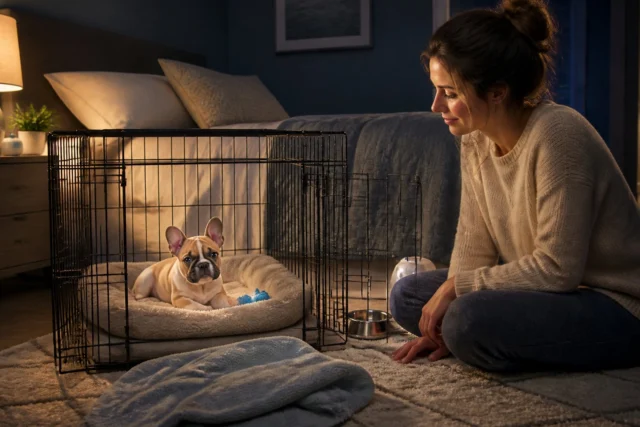
Teach alone time gradually. Start with 5-minute separations while you’re home.
Put your puppy in a safe room with toys and ignore any whining. Return only when they’re quiet.
Use baby gates instead of closing doors completely. This way, your puppy can see you’re nearby, but not right next to you.
Create positive alone-time associations:
- Special toys that only come out during separation
- Puzzle feeders to keep minds busy
- Calming music or white noise
- Comfortable bedding in their designated space
Never make departures or arrivals dramatic. Slip out quietly and return calmly.
Big emotional goodbyes just teach your puppy that leaving is scary.
A happy and confident puppy is much easier to train. If your puppy shows anxiety like drooling, destructive chewing, or house accidents when left alone, act fast.
FAQ Section:
1. When should I start socializing my fluffy puppy?
Start right after bringing your puppy home, even before vaccinations are done. Stick to controlled environments and only let them meet vaccinated dogs until your vet says public spaces are safe.
2. How do I know if my puppy is overwhelmed during socialization?
Look for stress signals like panting, drooling, trembling, hiding, or losing bladder control. If you spot these, remove your puppy and try again later with a gentler approach.
3. Can I socialize an older puppy or adult dog that missed early socialization?
Yes, but it’ll take more patience and time. Go slow with adult dogs and use really tasty treats.
Some fears might stick around, but you can still help them improve with steady, positive experiences.
4. How long should socialization sessions last?
Keep early sessions short—just 10 to 15 minutes for young pups. Quality beats quantity every time.
Several quick positive experiences work way better than one long, stressful session.
5. What’s the difference between socialization and just exposure?
Socialization means making new things feel good with treats, play, and calm energy. Just exposing your puppy without rewards can actually make them scared.
Always pair new stuff with something your puppy loves.
Taking Fluffy Puppy Training Further
Advanced puppy training takes basic obedience and turns it into real communication and lifelong habits. Teaching fun tricks while staying consistent helps you raise a confident companion who thrives as an adult.
Tricks That Strengthen Your Bond
Ever watch your fluffy pup’s eyes light up when they master something new? That’s the magic of trick training—it’s not just about showing off cute party tricks.
Teaching shake hands or roll over boosts your dog’s confidence. Start with treats your puppy can’t resist and use clear, simple commands.
Here’s what works best:
• High five – Hold a treat above their head, say “high five,” and reward when their paw lifts.
• Spin – Lure with a treat in a circle, add the cue.
• Play dead – From down, move the treat to the side until they roll.
Positive reinforcement training builds the behaviors you want to see more of. Each new trick adds a little more trust between you and your puppy.
Pro tip: Keep training sessions short—no longer than 5 to 10 minutes. Puppies have short attention spans, and you want to finish while they’re still having fun.
The real payoff? Your fluffy friend learns to focus on you, even with distractions swirling around.
Maintaining Good Habits as They Grow
Let’s be real—your adorable 8-week-old fluffball won’t stay tiny for long. The habits you build now shape your adult dog’s behavior.
Consistency is everything. If the couch was off-limits at 3 months, it stays off-limits at 8 months.
Mixed messages just confuse your growing pup. Try these daily habit reinforcers:
• Morning routine check – Practice sit, stay, and come before breakfast.
• Walk manners – No pulling, no matter how tempting the smells.
• Greeting visitors – Four paws on the floor means attention and treats.
Structured puppy training sessions that focus on regular practice help keep good behaviors strong as dogs grow up.
The teenage phase hits around 6-12 months. Your perfect puppy might suddenly “forget” everything.
Stay patient and keep reinforcing those basics. Watch for regression signs: ignoring commands, testing limits, or acting like they can’t hear you.
Double down on positive reinforcement during these wild phases. Every interaction is a training opportunity—your fluffy companion is always watching and learning from you.
Frequently Asked Questions
New puppy parents always have questions about timing, techniques, and dealing with common training hiccups. Here are the top questions from fluffy puppy owners starting their training journey.
Got a new furball at home? Wondering when to start training your cuddly companion to follow commands?
You can start training your fluffy puppy as early as 7-8 weeks old. It sounds early, but puppies are like little sponges at this age.
Their brains soak up new things so fast in those first months. Basic commands like “sit” and “come” are great places to start.
If your pup seems too young or distracted, don’t stress. Short 5-minute sessions are perfect for tiny attention spans.
The key is consistency, not perfection. Even if your fluffy bundle only sits for half a second, that’s still progress worth a happy dance.
How do you housebreak a young pup to do their business outdoors — without all the messy mistakes?
Accidents will happen, no matter how careful you are. The trick is building a routine your puppy can count on.
Take your fluffy friend outside first thing in the morning, after meals, and before bed. Puppies usually need to go potty every 2-3 hours.
Watch for sniffing, circling, or whining—these are your puppy’s way of saying “I need to go now!” Rush them outside as soon as you spot these signs.
Never punish accidents inside. Just clean up with enzyme cleaner and celebrate like crazy when they go in the right spot outdoors.
Here’s the kicker—what’s a realistic training schedule to keep a spirited, fuzzy little guy disciplined?
Your energetic fluffball needs structure, but not boot camp. Aim for 3-4 short training sessions a day, each just 5-10 minutes.
Morning is great for basic commands. Afternoon can be leash walking or socialization.
Evening sessions should be calm and quiet—perfect for practicing “stay” or gentle handling. This helps your puppy wind down before bed.
Remember, puppy-friendly training techniques work best when you keep things positive and fun. Frustrated puppies just don’t learn well.
Ever had that ‘aha’ moment when you realized the trick to stopping a puppy from biting during playtime?
Puppy biting is normal, but wow, those teeth hurt! The secret is teaching bite inhibition by redirecting play.
When your fluffy pup bites too hard, let out a high-pitched “ouch!” and stop playing right away. Turn away and ignore them for 10-15 seconds.
This mimics how puppies learn from their littermates. When one bites too hard, the other stops playing—it’s puppy language for “that hurt!”
Right after the timeout, offer a chew toy. This teaches your pup what they can bite instead of your hands or ankles.
Any tips on how to teach a bubbly, bushy-tailed pup to stay calm when they meet new furry friends or people?
Socialization is huge for fluffy puppies who get over-excited. Start with controlled introductions at a distance where your pup can notice but not lose their mind.
Practice the “look at me” command before meeting new friends. This gives your puppy a job to do instead of jumping or barking.
Invite family and friends to help with supervised meet-and-greets. The more positive experiences your puppy has, the more chill they’ll get over time.
Reward calm behavior right away with treats and praise. Never force interactions if your puppy seems scared or overwhelmed.
What can you do to make sure your furry buddy doesn’t turn into a fluffy tornado every time you’re out of sight?
Separation anxiety can turn sweet puppies into little hurricanes. But honestly, you can head this off with some gradual alone-time training.
Start small. Leave your fluffy friend alone for just five minutes while you’re still at home.
Maybe hide behind a door or just step outside for a bit. It doesn’t have to be dramatic.
Make departures boring and returns calm. Skip those dramatic goodbyes and over-the-top hellos—it really helps dial down the stress.
Give your pup something special to look forward to when you leave. Maybe a toy or treat they only get during alone time.
A puzzle toy stuffed with peanut butter? That’s a winner for keeping busy paws out of trouble.
Practice every day. Slowly bump up the time you’re away.