Welcoming a Poodle puppy into your home gives you the opportunity to train one of the most brilliant canine minds in the world. Ranked second only to the Border Collie in working intelligence, Poodles learn commands with astonishing speed—but without structure, they can quickly train you instead.
Quick Answer: Training a Poodle puppy requires positive, reward-based methods, short micro-sessions (5 to 10 minutes), and consistent structure. Because Poodles possess exceptional working intelligence, they excel when challenged with mental games, clicker training, early crate conditioning, and a strict 2-hour outdoor housebreaking schedule.
The Poodle Mind: Why Intelligence Requires Structure
In Dr. Stanley Coren’s classic study The Intelligence of Dogs, the Poodle ranks #2 out of 138 evaluated breeds:
- They understand a new cue in under 5 repetitions.
- They obey first-time commands with over 95% consistency.
However, high intelligence does not guarantee good behavior. An under-stimulated Poodle puppy will invent their own entertainment: figuring out how to unlatch trash cans, opening sliding doors, or demand-barking to get attention. Training a Poodle is about channeling their athletic energy and mental processing power into positive habits.
The 4 Core Training Priorities for Poodle Puppies
1. Clicker Training and Operant Conditioning
Because Poodles process human signals rapidly, clicker training is the most effective method for them. The audible “click” bridges the exact microsecond the puppy performs the correct behavior (such as sitting), followed immediately by a pea-sized high-value treat. Poodles grasp the connection within a single session.
2. Clockwork Housebreaking and Crate Training
A 2-month-old puppy’s bladder is tiny. Follow a rigid schedule:
- Take your puppy outside immediately upon waking, 15 minutes after meals, after vigorous play sessions, and every 2 hours during the day.
- Escort them to the exact same elimination spot on a leash.
- When they finish, praise enthusiastically and reward with a high-value treat within 3 seconds.
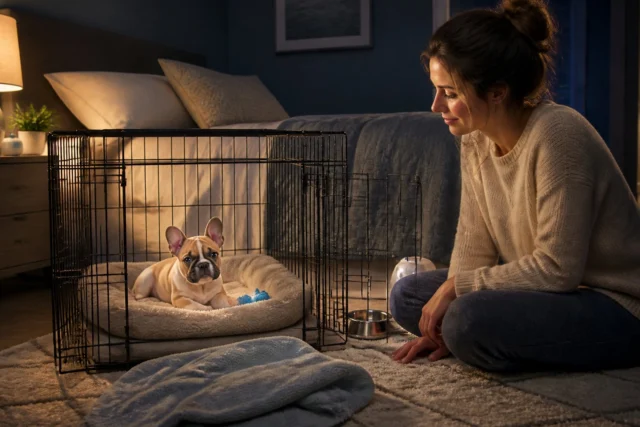
- Use an appropriately sized crate as a comforting, den-like sleeping area that prevents overnight accidents.
3. Early Grooming and Handling Desensitization
Because Poodles require lifelong clipping and scissoring, cooperative care training must begin in early puppyhood. Handle their paws, touch their toenails, lift their ears, and introduce the vibration of clippers with positive treat pairings before their first professional haircut.
4. The Critical Socialization Window (8 to 16 Weeks)
Expose your puppy in a safe, controlled manner to diverse sounds (vacuums, thunder recordings), varied surfaces (tile, grass, gravel), and novel sights (umbrellas, hats, bicycles) to prevent adult fear-based reactivity.
Caloric Balance During Puppy Training
With high intelligence comes the need for frequent training rewards, but treat calories must not unbalance their nutrition. Treats should never exceed 10% of total daily calories. Calculate exact daily feeding portions, grams, and treat allowances using our dog food portion and calorie calculator.
Tracking Puppy Growth Trajectory
Monitor your puppy’s physical development and adult weight trajectory against verified breed curves with our puppy growth tracker, and cross-reference cognitive development using our Poodle age in human years calculator.
Veterinary Disclaimer: Puppy training guidelines adhere to positive reinforcement standards supported by the American Kennel Club (AKC). Never use physical punishment, shock collars, or dominance maneuvers on a Poodle; harsh methods damage trust and trigger defensive fear reactivity. For persistent aggression or severe behavioral distress, consult a certified veterinary behaviorist via the American College of Veterinary Internal Medicine (ACVIM).
Frequently Asked Questions
Why is my Poodle puppy biting and nipping so much?
Puppy nipping is normal teething and exploratory behavior. When your puppy’s teeth touch human skin, emit a calm, high-pitched “ouch,” redirect them immediately to a textured chew toy, and praise them for chewing the toy.
How long should training sessions be for a Poodle puppy?
Keep sessions between 5 and 10 minutes, two to three times daily. Ending the session while your puppy is still enthusiastic and successful keeps their motivation high for the next session.
When can a Poodle puppy start puppy training classes?
Puppies can start structured indoor puppy kindergarten classes between 8 and 10 weeks of age, provided they have received their first round of distemper/parvovirus vaccinations and a clean fecal screening.