As an Amazon Associate I earn from qualifying purchases.
The first groom is a training session, not a haircut. What you are teaching is that being handled, restrained and buzzed at is boring and safe. Get that right and you have a dog who is easy to groom for fifteen years. Get it wrong and every appointment for the rest of their life is a fight.
When to Book the First Groom
Most groomers will see a puppy from around 12 to 16 weeks, once the vaccination course is complete. Check with your own vet and groomer, since schedules vary by country and by vaccine.
Earlier is better than later, and the reason is behavioural rather than cosmetic. Puppies pass through a socialisation window in the first few months where new experiences are absorbed easily and with little fear. A puppy who meets clippers at four months treats them as normal. A dog who first meets them at eighteen months has every reason to think something alarming is happening.
This matters most for coats that will need lifelong professional grooming — Poodles, Doodles, Shih Tzus, Bichons, Schnauzers, Yorkies. A Labrador can wait; a Doodle genuinely cannot.
What to Do at Home First
Start the week you bring the puppy home. Two minutes a day, kept relentlessly boring.
- Handle everything. Paws, between the toes, ears, tail, muzzle, under the chin, the belly. These are the places a groomer must touch and the places dogs most object to.
- Brush daily, even a puppy coat that does not need it. You are building tolerance, not removing hair.
- Introduce the sound. Run an electric toothbrush or beard trimmer near them, then further away if they react. Treat, then stop while it is still going well.
- Touch with the tool switched off, then switched on and resting against the shoulder so they feel the vibration.
- Practise standing still on a non-slip surface — a bath mat on a table. Slipping frightens puppies more than clippers do.
- Touch the nails with clippers without cutting. Then one nail. Then stop.
Always finish before the puppy has had enough. A session that ends while they are still relaxed teaches “that was fine”. A session that ends with wriggling teaches “struggling makes it stop”.
What the First Appointment Should Be
A good first groom is short and unambitious. Expect something like: a bath, a blow-dry, nails, a tidy of the face, paws and sanitary area, and a light all-over trim. Twenty to forty minutes, not two hours.
Do not ask for a full breed cut at the first visit. The goal is that the puppy leaves thinking grooming is uneventful. A groomer who sends a nervous puppy home early, unfinished, has done the job correctly — even though the haircut is imperfect and you have paid for it.
Some salons offer a “puppy introduction” — a short, no-cut visit to meet the room, the table and the dryer. If yours does, take it.
Questions Worth Asking a Groomer
- Do you offer a shorter first appointment for puppies?
- How do you handle a puppy who becomes frightened — do you stop?
- Are dogs kennelled and dried with a cage dryer, or hand-dried and finished in one go?
- How long will your puppy be with you in total?
The answers matter less than the willingness to answer. A groomer who welcomes the questions is usually one who will stop when your puppy has had enough.
On the Day
- Walk first. A puppy who has emptied and burned some energy copes far better.
- Light meal, not a full one, a couple of hours ahead.
- Arrive calm and hand over briskly. Long emotional goodbyes teach a puppy that something worth worrying about is happening.
- Do not stay to watch unless invited. Most puppies settle faster without their person in sight.
- Be reachable in case they need to stop early.
Book the next appointment before you leave. Regular short visits normalise the whole thing; a six-month gap resets the training.
Afterwards
A tired puppy is normal. So is some scratching for a day — a new short coat feels strange, and shampoo and clipper work leave the skin briefly sensitive.
What is not normal is broken skin, weeping or raw patches, a nail bleeding for more than a few minutes, or a puppy who is quiet and withdrawn well into the next day. Those warrant a call — to the groomer, and to your vet if the skin is involved. There is more on telling ordinary post-groom irritation from a genuine problem in our guide to skin problems after grooming.
Keep brushing at home between appointments. The professional groom is maintenance; the daily two minutes is what actually keeps the coat workable — and the schedule depends on coat type more than breed, which is covered in how often to groom, by coat type.
One Thing Nobody Warns You About
Somewhere between eight and twelve months, most fluffy breeds swap their soft puppy coat for a denser adult one. During that changeover the coat mats faster than at any other point in the dog’s life, often dramatically, and many owners are caught out — the puppy who needed brushing twice a week suddenly needs it daily.
This is the stage where a lot of young dogs get clipped short because the coat has pelted. Increase brushing before it happens rather than after, and use a steel comb to check right down to the skin — the adult coat comes in underneath the puppy coat, so the tangle forms where you cannot see it.
This article is general guidance on grooming and handling, not veterinary or behavioural advice. Ask your vet about vaccination timing before any first visit, and if your puppy is genuinely panicked rather than merely unsure, speak to a qualified behaviourist early — fear at this age is far easier to prevent than to undo.
Teaching a Puppy to Enjoy Being Brushed
The goal in the first months is not a tidy puppy. It is a dog that does not mind being handled, and that is built in sessions of thirty seconds rather than thirty minutes.
- Start with no brush at all. Touch the paws, ears, tail and belly for a few seconds, then stop and pay them. Stopping while they are still happy is the whole technique
- Let them investigate the brush on the floor before it touches them
- Two or three strokes, then finish. Build over weeks, not within one session
- Brush somewhere they feel secure — the floor, not a table, and never a slippery surface
- Feed something genuinely good during, not after. Lickable food on a mat keeps them still without restraint
- End before they wriggle. Stop when they struggle and struggling is what gets rewarded
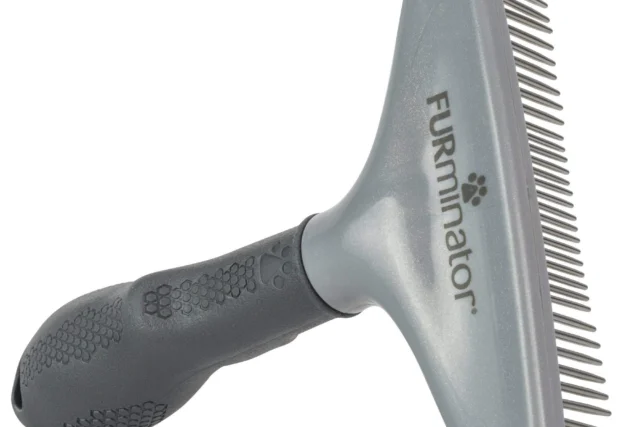
On the brush itself: a soft slicker or a pin brush with coated tips suits almost every puppy coat. A puppy coat rarely needs the tool the adult coat will need, and at this stage the brush is about acclimation rather than results. Do not start with an undercoat rake or a deshedding blade — both are designed to pull, and one bad experience at twelve weeks is remembered.
Handle the feet more than feels necessary. Nail trims are the single most common thing adult dogs refuse, and it almost always traces back to nobody touching their paws when it did not matter.
Which Brush To Start With
The brush matters less than how it is used, but it matters more at this age than at any other, because the first few sessions decide whether your puppy thinks brushing is fine or frightening. Three things to look for: soft pins or rounded bristle tips, a head small enough to control near a face and legs, and a handle you can hold loosely. Anything that pulls will cost you months of goodwill.
Warren London Gentle Touch Slicker Brush
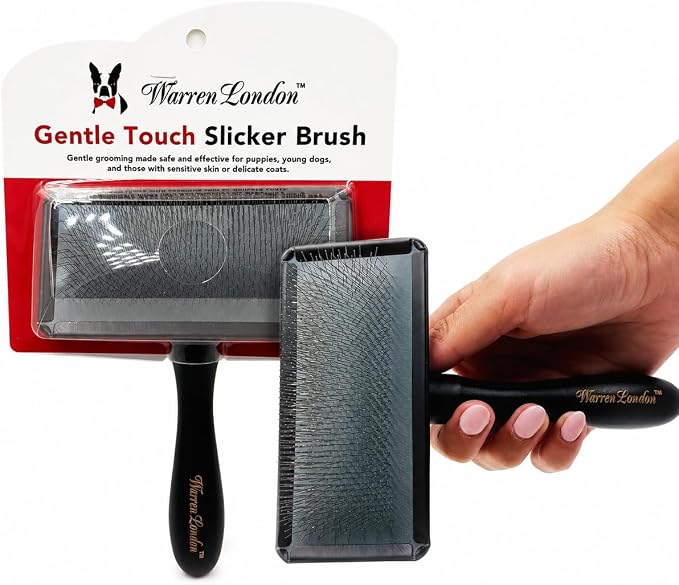
A slicker with soft pins and a compact head, roughly four inches by two, which is the part that matters for a squirming puppy. It is built for fine and soft coats, so it lifts loose fur and light tangles without the scratchy drag a stiff adult slicker gives. If you have a Shih Tzu, Maltese, Bichon or a fluffy Frenchie puppy, this is the shape to start with.
Coastal Pet Safari Soft Slicker Brush
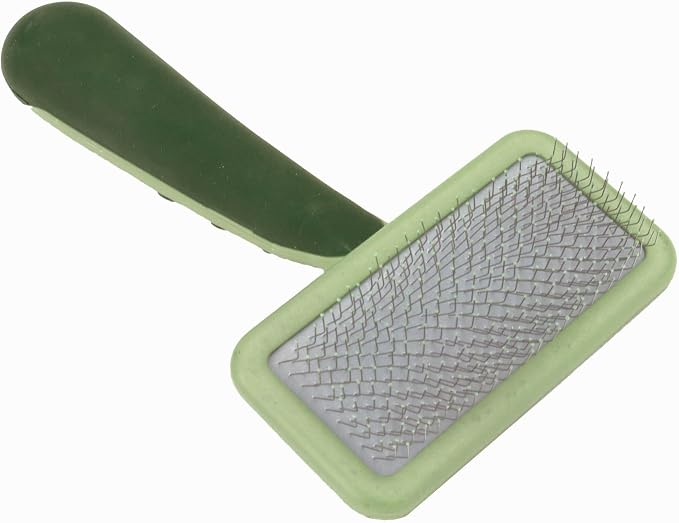
The small size is 6.5 by 2.5 inches with a no-slip handle, and it is the one to buy if you want a single brush that will still be useful when the puppy is grown. Stainless steel pins on a soft-slicker backing — more brush than the Warren London, so go gently and keep sessions short until your puppy is happy standing for them.
Round Bristle Brush For Face And Paws
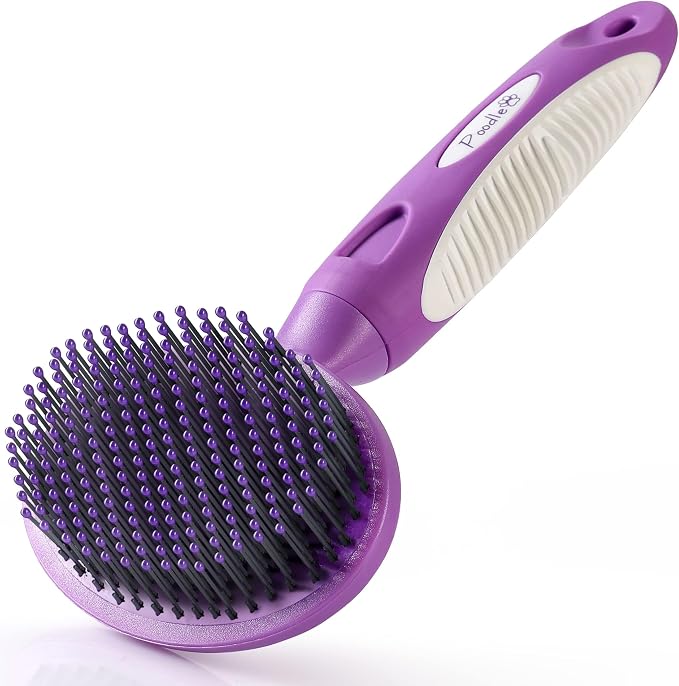
Not a detangler, and not trying to be. The bristles are rounded at the tips, which makes it the one you can use on a face, ears and paws — exactly the places a puppy needs to learn to tolerate being handled before a groomer ever picks them up. Use it for the training half of the job and a slicker for the coat.
One caution worth more than any of the three: do not buy a de-shedding blade or a de-matting rake for a puppy. Those cut coat, they are unforgiving in an inexperienced hand, and nothing about a puppy coat needs them yet.