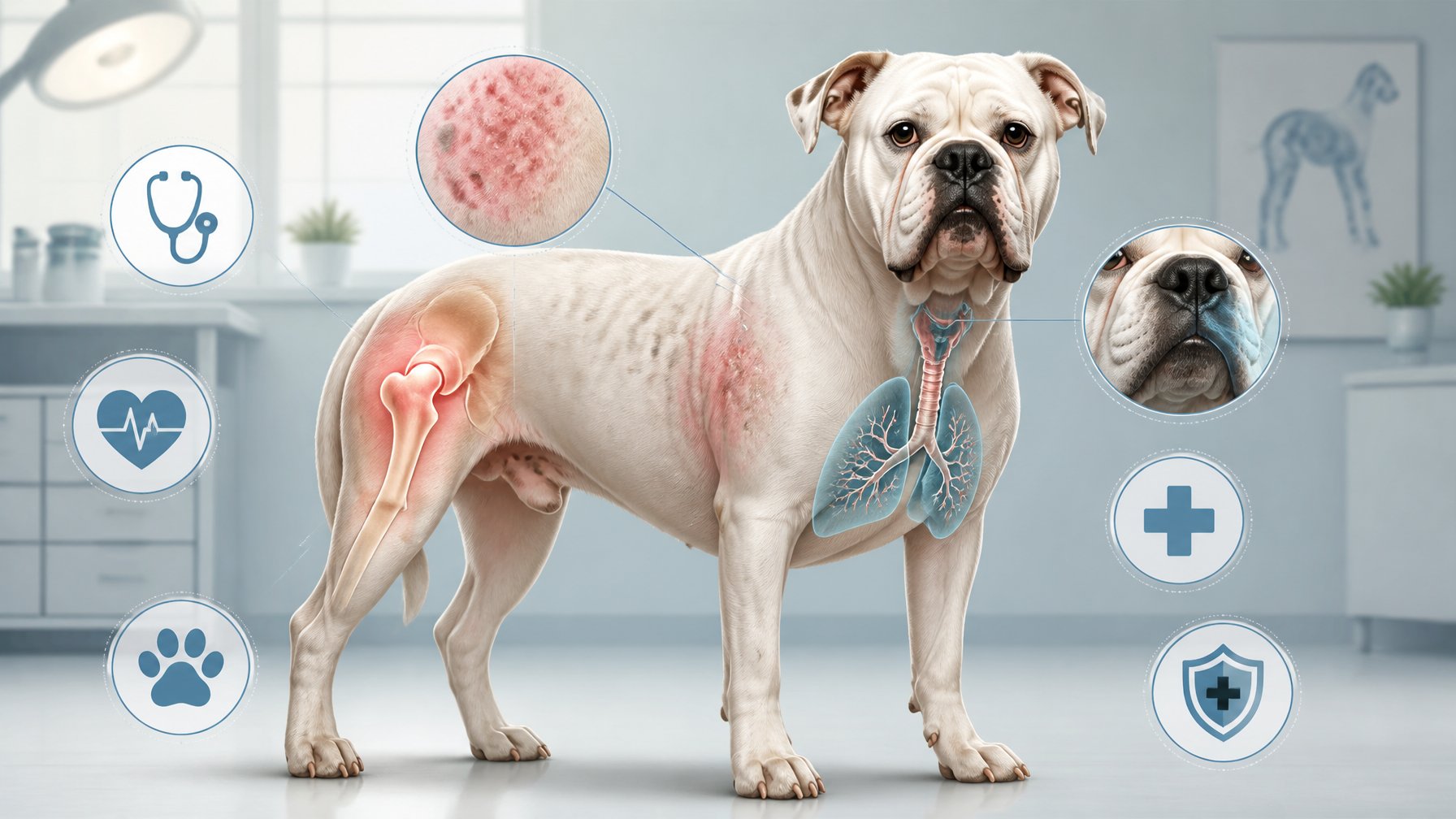
The most common American Bulldog health issues include hip dysplasia, skin allergies, breathing difficulties, cherry eye, and bloat.
These dogs are muscular and strong, but their genetics set them up for joint, skin, and breathing problems that every owner should know how to spot early.
This guide breaks down which American Bulldog health problems show up first, which ones sneak in later, and the daily habits that can keep your dog out of the vet’s office.
The Health Problems To watch For First
American Bulldog health issues really cluster around five main areas: joint degeneration in the hips and elbows, breathing trouble (especially with heat), recurring skin flare-ups, eye conditions like cherry eye and entropion, and gastric dilatation-volvulus (bloat).
Bloat can kill within hours if you miss it.
Joint Trouble: Hip And Elbow Changes
Hip dysplasia means the hip joint doesn’t fit into its socket right, so you get pain, arthritis, and lameness over time.
According to the Orthopedic Foundation for Animals, 10–20% of American Bulldogs are affected by hip dysplasia. That’s about one in five dogs.
Elbow dysplasia works the same way but in the front legs.
Both conditions have a genetic side, but environment matters too.
- Stiffness after naps or long rest
- A bunny-hop gait when running
- Reluctance to climb stairs or jump into the car
- Shifting weight off one leg
A friend’s American Bulldog started limping at 14 months. X-rays confirmed mild hip dysplasia.
Catching it early meant physical therapy instead of surgery.
Keeping your dog at a healthy weight and avoiding intense exercise before 18 months can slow things down a lot.
Breathing Strain And Heat Risk
American Bulldogs aren’t as flat-faced as English Bulldogs, but many still have shortened airways.
Brachycephalic obstructive airway syndrome (BOAS) is a group of upper airway problems that make breathing harder, especially in heat.
Signs to listen for:
- Loud snoring that gets worse over time
- Gagging or retching after excitement
- Blue-tinged gums during exercise
- Collapsing or refusing to walk in warm weather
American Bulldogs can’t tolerate heat or humidity well, so summer walks need to happen early or after sundown.
Even though she’s a small fluff ball, the principle is the same for any breed with breathing limitations.
Cool tile floors and a fan make a real difference.
If your dog’s breathing sounds wet or strained at rest, not just after a sprint, that’s a vet visit, not something to wait out.
Skin And Coat Problems That Keep Coming Back
Skin allergies are one of the most frustrating health problems in American Bulldogs.
They show up as red, itchy patches, recurring ear infections, and constant paw licking.
Common triggers include:
- Seasonal pollen and dust mites
- Certain proteins in commercial dog food
- Flea saliva (even one bite can trigger a reaction)
- Moisture trapped in skin folds
Approximately 15–20% of American Bulldogs experience skin problems.
A diet rich in omega fatty acids can help skin health, and regular fold cleaning prevents bacterial buildup.
One thing that keeps coming up: owners treat the symptoms (medicated shampoo, antihistamines) without figuring out the trigger.
An elimination diet or allergy test from your vet is worth every penny.
Eye Problems You Shouldn’t Ignore
Cherry eye happens when the gland in the third eyelid swells and pops out, creating a red, fleshy lump in the corner of the eye.
It looks alarming but it’s treatable, usually with surgery to tuck the gland back in place.
Entropion is different.
Entropion is when the eyelid rolls inward, causing the lashes to scratch the surface of the eye.
Left alone, it leads to ulcers and chronic pain.
Watch for:
- Excessive tearing or squinting
- A visible red mass near the inner eye
- Pawing at the face repeatedly
- Cloudy or swollen-looking eyes
Both conditions show up more in bully breeds.
If you see either one, don’t wait for it to “resolve on its own.” It won’t.
Bloat Signs That Need Emergency Care
Gastric dilatation-volvulus (GDV), or bloat, is a life-threatening emergency where the stomach fills with gas and twists on itself.
Large, deep-chested breeds like the American Bulldog are at higher risk.
- The dog becomes restless, paces, and can’t settle down.
- The abdomen looks swollen or feels hard to the touch.
- The dog tries to vomit but nothing comes up (unproductive retching).
- Breathing becomes rapid and shallow.
- Gums turn pale or grayish.
If you see steps 1 through 3 happening together, drive to the emergency vet immediately.
Bloat can kill a dog in under two hours. There’s no home remedy for this one.
Feeding two smaller meals instead of one big one, using a slow-feeder bowl, and avoiding hard exercise right after eating all help reduce the risk.
Fluffy eats from a puzzle feeder every night. Good habits transfer across sizes.
Which Problems Start Young And Which Show Up Later
Some American Bulldog health issues are visible in puppies as young as a few months old.
Others, like heart disease and certain cancers, don’t show up until age five or later.
Genetic screening before purchase and age-appropriate vet checks catch the biggest risks at each stage.
What To Ask About Before Bringing Home A Puppy
The breeder conversation matters more than most people realize.
American Bulldog puppies from untested parents carry hidden risks that won’t show symptoms for months or years.
Ask every breeder these questions before putting down a deposit:
- Have both parents been OFA-screened for hip and elbow dysplasia?
- Has either parent tested positive for NCL (neuronal ceroid lipofuscinosis)?
- What skin or allergy issues have appeared in previous litters?
- Can you provide vet records for the parents and the litter?
- Do you offer a health guarantee, and what does it cover?
A breeder who gets defensive about health testing is a breeder to walk away from.
Good breeders welcome these questions because they’ve already done the work.
The pattern is always the same: the pups that come from health-tested parents cost more upfront but save thousands in vet bills later.
Genetic Conditions Linked To This Breed
Neuronal ceroid lipofuscinosis (NCL) is a fatal neurological disease in American Bulldogs that usually appears between one and three years old.
Early signs include rear leg weakness, balance problems, and behavioral changes.
There is no cure, but a genetic test can identify carriers before breeding.
Ichthyosis is another inherited condition. It makes the skin dry, thick, and flaky, almost like fish scales.
It’s not life-threatening, but it requires lifelong management with moisturizing treatments and medicated baths.
Both conditions are avoidable through responsible breeding.
If you’re adopting a rescue American Bulldog with unknown parentage, ask your vet about DNA testing. It’s usually under $200 and gives you a clear picture of what to watch for.
Age-Based Changes Owners Often Miss
Puppies (0–12 months): Cherry eye often shows up here. Skin allergies may start around 6 months. Watch for limping or weird gait as bones grow.
Young adults (1–4 years): NCL symptoms surface now if the gene is present. Joint issues start becoming noticeable, especially if the dog is overweight or over-exercised.
Middle-aged dogs (5–8 years): Heart conditions like dilated cardiomyopathy tend to show up between ages 5 and 7. Exercise intolerance, coughing, and belly swelling are the early red flags.
Seniors (9+ years): Arthritis gets worse. Cancer risk goes up. Cognitive changes, like confusion or restlessness at night, can mimic other conditions.
By that age, an American Bulldog needs twice-yearly vet visits, not just the annual checkup.
Daily Habits That Lower The Odds
Obesity in American Bulldogs speeds up joint damage and makes breathing tougher. That’s why weight control is at the heart of any good prevention plan.
Add joint-friendly exercise, regular skin and fold care, and vet screenings, and you’ll trim down the risk for almost every issue on the list.
Weight Control Without Overfeeding
Obesity is the most preventable risk factor for American Bulldog health issues. Extra weight puts pressure on their hips and elbows, and it makes breathing even harder for a breed that already has airway struggles.
They’ll finish every crumb and then stare at you like you forgot to feed them. Fluffy’s guilty of this too, though she’s a little smaller.
The fix isn’t complicated:
- Measure meals with a cup. Guesswork leads to overfeeding.
- No free-feeding. Two scheduled meals a day is plenty.
- Keep treats to 10% or less of daily calories.
- Weigh your dog monthly, not just once a year at the vet.
Healthy adult American Bulldogs usually weigh between 60 and 120 pounds, depending on sex and build. Your vet can show you a body condition chart and tell you where your dog stands.
If you can’t feel the ribs with light pressure, it’s time to cut back.
Exercise That Protects Joints And Airways
American Bulldogs need daily movement, but the wrong exercise can do more harm than good. High-impact stuff, like jumping for frisbees or running on pavement, really stresses their joints—especially in puppies and older dogs.
Here’s what works better:
- Two 20–30 minute leash walks per day on grass or dirt
- Swimming (it’s easy on joints and most dogs love it)
- Short play sessions, with built-in rest breaks
- Mental enrichment toys to burn energy without pounding their joints
Skip exercise when it’s hotter than 80°F.
Early morning and evening walks help protect their joints and airways.
Puppies under 18 months? Stick with the “5 minutes per month of age” rule for walks. So, a 4-month-old pup gets about 20 minutes—not an hour-long trek.
Skin, Fold, And Grooming Care
American Bulldogs have short coats, but their skin folds create warm, damp spots where bacteria love to hang out. Cleaning between folds two or three times a week with a damp cloth and drying well helps prevent most infections before they even start.
A basic weekly routine:
- Wipe skin folds with unscented baby wipes or a damp cloth
- Dry every fold completely (moisture is the enemy)
- Check ears for redness, odor, or waxy gunk
- Brush the coat to get rid of loose hair and spread skin oils
- Look over paws for cracks, redness, or too much licking
If your dog’s skin stays red or itchy even with regular cleaning, ask your vet about a diet rich in omega fatty acids. Sometimes, food allergies are the real culprit behind those flare-ups.
Routine Vet Checks And Screening Tests
Preventive vet care finds problems long before you notice symptoms.
- OFA hip and elbow evaluation at 24 months (or a preliminary check at 12 months).
- Annual heart screening starting at age 4, especially for dilated cardiomyopathy.
- NCL genetic test at any age if you don’t have breeder records.
- Thyroid panel at age 3, then every two years after.
- Full exams twice a year once your dog turns 6.
Don’t wait for symptoms. Sometimes, a dog looks perfectly healthy but already has Grade 1 hip dysplasia or early heart changes that only show up on scans. Spending a few hundred dollars on screening now can save you thousands in emergencies later.
Regular veterinary check-ups are crucial for diagnosing conditions early. Your vet can adjust the schedule based on your dog’s risks.
Start one for your American Bulldog. Seriously, it’s worth it.
What These Problems Cost, And The Two Clauses That Decide If You Are Covered
Two things make an American Bulldog different from the small breeds when it comes to vet bills, and neither is about how healthy the dog is.
The first is size. Anaesthetic, painkillers, implants and physiotherapy are all dosed or sized by weight. The same operation on a 100-pound bulldog and a 12-pound Pomeranian is not the same bill, and it is not close.
The second is that the signature injury of a big athletic dog tends to happen twice. A torn cruciate ligament in the knee is the classic one — and published veterinary research consistently finds that 30 to 50% of dogs that rupture one cruciate rupture the other within two years. Two reasons: the same degenerative process was quietly under way in both knees, and after surgery the dog loads the good leg harder while it recovers, which accelerates it.
So the number to plan around is not one knee. Realistically it is one and a half.
What the common problems cost
- Cruciate (TPLO) surgery — roughly $2,500 to $6,000 per leg for the operation, and about $2,900 to $8,100 once diagnostics, aftercare and physiotherapy are counted. Some 2026 quotes for large dogs run higher again.
- Both knees — done together, around $8,000 to $13,000. Done as two separate operations, more, because you pay for anaesthesia, surgeon and hospitalisation twice.
- Hip dysplasia surgery — roughly $1,200 to $7,000, with a full replacement at $3,500 to $7,000 per hip.
- Bloat (GDV) surgery — roughly $3,000 to $8,000, and $5,000 to $12,000 with intensive care. A deep-chested breed carries this risk.
Ask your own vet what these run locally — city practices sit well above national averages, and that is the figure that will actually apply to you.
The two clauses that decide whether you are covered
For this breed the policy questions are unusually specific, and both of them are easy to get wrong.
- How long is the orthopaedic waiting period? Most insurers hold orthopaedic claims — cruciate, hip, elbow, patella — behind a waiting period of six to twelve months, far longer than the ordinary illness wait. Taking out cover the week your dog starts limping buys you nothing at all for the thing you took it out for.
- Is the second knee a new condition, or the same one? This is the question almost nobody asks and it is worth thousands. If both cruciates are treated as one bilateral condition, a per-condition limit that comfortably covered the first surgery may be largely spent by the time the other goes. Ask, and get the answer in writing.
- Are hereditary and congenital conditions included? Hip and elbow dysplasia both have a breed component.
- What counts as pre-existing? Ask about notes on the vet record, not only formal diagnoses. An early stiffness noted at a routine check can matter later.
And the part that is free: keep this dog lean and keep the exercise sensible. Every extra kilo goes through the same joints, and weight is the one risk factor here that is entirely in your hands. It will not prevent a rupture, but it does more than any supplement on the market.
Coverage varies by insurer, plan, and where you live, and none of this replaces reading the policy wording or talking to your vet about your own dog. Prices and availability differ by country — if you’re outside the US, check what’s offered where you are.
Frequently Asked Questions
What health problems do American Bulldogs tend to get as they age?
Older American Bulldogs often deal with arthritis from hip or elbow dysplasia. Heart problems like dilated cardiomyopathy show up, usually after age 5.
The risk of cancer goes up, and some seniors over 9 start to show cognitive decline. Twice-yearly vet visits after age 6 help catch these changes before they turn into emergencies.
How can I tell if my American Bulldog’s breathing sounds normal or like a real issue?
Some snoring and mild snorting when excited is normal for this breed. But if your dog’s breathing sounds wet, strained, or raspy when resting, that’s not good.
Watch for blue or pale gums, collapsing during mild activity, or frequent gagging after exercise. These could mean brachycephalic obstructive airway syndrome—see your vet right away.
Why does my American Bulldog get itchy skin and ear infections so often?
Recurring skin and ear issues usually come from environmental allergens (like pollen or dust mites), food sensitivities, or moisture stuck in skin folds.
About 15–20% of American Bulldogs have chronic skin problems. An elimination diet or allergy test from your vet can help you find the root cause instead of just treating flare-ups.
What joint and hip problems should I watch for, and when should I call my vet?
Hip and elbow dysplasia are the main joint concerns. Look for limping, stiffness after rest, a bunny-hop gait, or reluctance to climb stairs.
Call your vet if these signs last longer than two days or get worse after activity. Early X-rays and weight management can make a big difference in how things turn out.
What is rage syndrome, and how do I tell it apart from normal guarding or bad training?
Rage syndrome is a super rare neurological condition. Dogs with it can suddenly act aggressively, without warning, and then look confused right after.
This isn’t like resource guarding or bad socialization, which usually have clear triggers and build up slowly. If your American Bulldog lashes out with no obvious reason and you notice a glazed look in their eyes, it’s time to call a veterinary behaviorist right away.
What’s the first health issue you noticed with your American Bulldog? How did you handle it? Always check with your vet about your own dog’s situation.