Mango is rarely an allergen for dogs. The danger is the stone: it is the right size to block a dog’s gut, which is a surgical problem, and it contains cyanide compounds. Peel the fruit, cut the flesh off, and put the pit somewhere the dog cannot reach.
Dogs can be allergic to mango, though it’s pretty rare. Most pups enjoy small bits of mango flesh just fine when you prep it right.
Just like people, dogs can develop sensitivities to certain foods. Mango allergies in dogs do exist, even if they’re not common.

Plenty of pet parents panic when their dog snatches a dropped fruit slice.
Here’s the lowdown: Mango can be included in dog nutrition for most dogs, but some parts of the fruit are riskier than others.
The real danger? It’s usually the pit and skin, not the mango flesh itself.
Are Dogs Allergic to Mango – Key Takeaways
- Most dogs can safely eat small amounts of mango flesh, but allergic reactions are possible
- The mango pit and skin pose the greatest risks and should always be avoided
- Watch for symptoms like itching, digestive upset, or breathing difficulties after your dog eats mango
Can Dogs Be Allergic to Mango?
Yes, dogs can be allergic to mango, though it’s not super common.
Symptoms can range from mild skin irritation to serious digestive upset, so knowing what to watch for could save your pup from a rough time.
How to Spot a Mango Allergy in Dogs
Mango allergies in dogs aren’t always obvious at first. That’s the tricky part.
Symptoms might show up minutes or even hours after your dog munches on that tropical fruit.
Physical signs to watch for:
- Red, inflamed skin or rashes
- Excessive scratching or licking
- Swollen face, especially around the eyes or muzzle
- Hives or raised bumps on the skin
Behavioral changes to watch for:
- Restlessness or seeming uncomfortable
- Pawing at their face or mouth
- Whimpering or signs of distress
The mango allergens that cause reactions in humans include proteins like Man i 1, Man i 2, and Man i 4. Dogs may react to these compounds too.
If you just introduced mango to your dog’s diet, keep a close eye on them for the next 24 hours. Always start with tiny amounts when trying any new food.
Common Reactions: From Itchy Skin to Tummy Troubles
Mango allergies in dogs can show up in ways that might surprise you. The most common reaction is digestive upset.
Digestive symptoms include:
- Diarrhea (sometimes severe)
- Vomiting within hours of eating
- Gas or bloating
- Loss of appetite
Can mango cause diarrhea in dogs? Definitely. Even dogs without allergies might get loose stools from too much mango because of the fiber and sugar.
Skin reactions are sneaky:
- Itchy, red patches that your dog can’t stop scratching
- Hot spots from excessive licking
- Ear infections (allergies can trigger these!)
Severe allergic reactions from mango are rare but possible. If your dog has trouble breathing, extreme lethargy, or collapses, that’s an emergency.
What to Do if Your Dog Has a Mango Allergy
First things first—don’t panic.
Most mango allergies in dogs are manageable once you know what’s happening.
Immediate steps:
- Remove all mango from your dog’s reach
- Give fresh water to help flush their system
- Monitor closely for worsening symptoms
- Call your vet if things don’t improve
For mild reactions:
- Withhold food for 12–24 hours to let their stomach settle
- Offer bland food like boiled chicken and rice
- Try a cool bath if they’re itchy
When to call the emergency vet:
- Difficulty breathing or excessive drooling
- Severe vomiting that won’t stop
- Signs of dehydration (sticky gums, lethargy)
- Facial swelling that’s getting worse
Dog health experts say avoidance is the best treatment for food allergies. Once you know mango is the culprit, read ingredient labels carefully. Some dog treats and foods sneak mango in as a flavoring.
Keep a food diary when trying new treats. It helps you track what your dog ate and when symptoms showed up—super helpful for the vet.
How to Safely Enjoy Mango with Your Dog
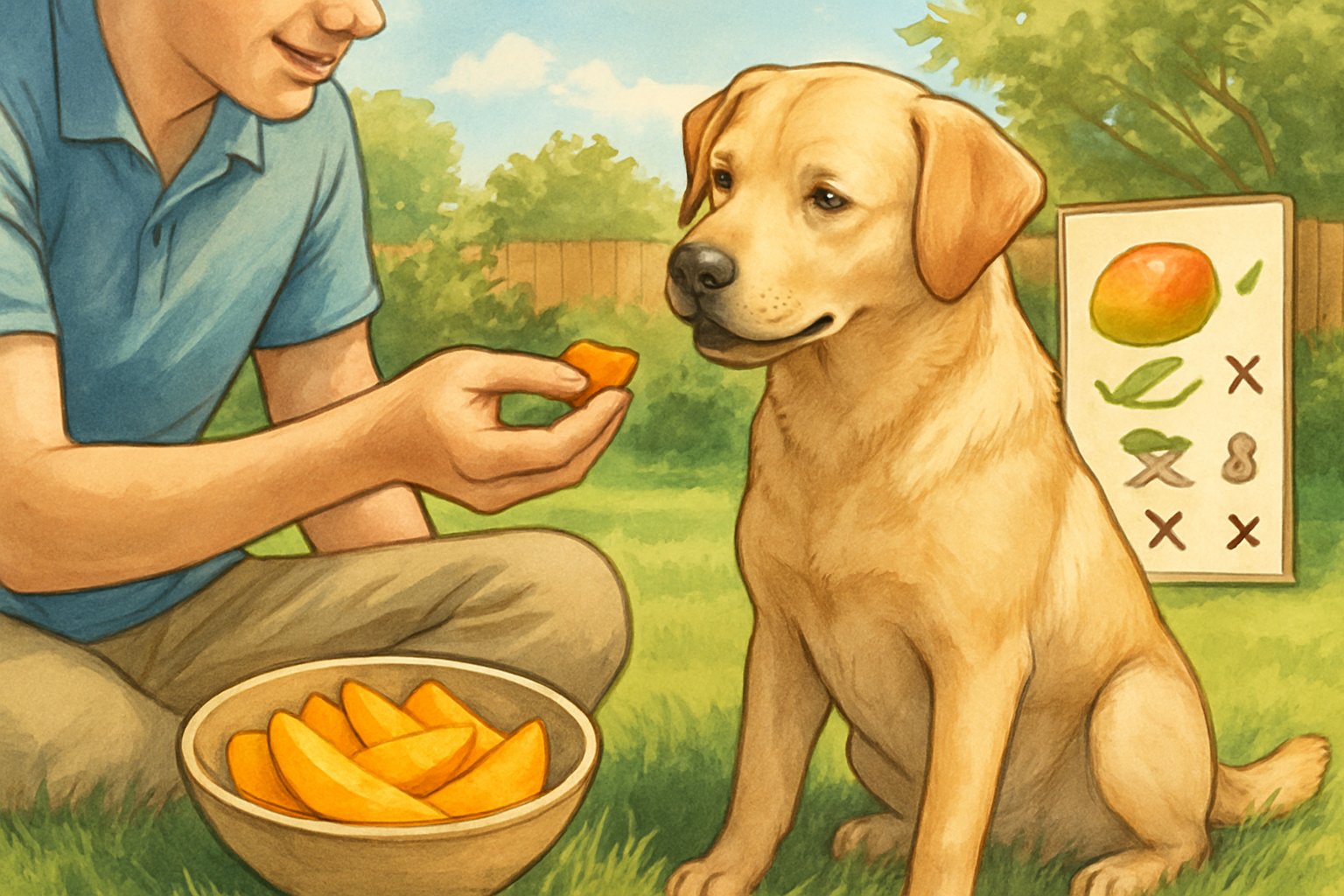
Want to share that sweet mango with your furry friend? Here’s the safest way to prepare this tropical treat.
Let’s talk about dealing with that tough skin and getting the portion sizes right.
Is Mango Skin Safe for Dogs?
Let’s be real—the mango skin needs to go before your dog gets anywhere near it.
Never let your dog eat mango skin. The peel is tough and fibrous. It’s a major choking hazard and can cause intestinal blockages that might need emergency surgery.
Mango skin also has higher levels of urushiol—the same stuff in poison ivy. Sensitive dogs can get:
- Itchy, red skin around the mouth
- Digestive upset
- Vomiting or diarrhea
Always peel mangoes completely before offering them to your dog. Use a sharp knife and remove every bit of that outer layer.
Don’t risk it—even small pieces of skin can cause problems.
Pro tip: Wash the mango thoroughly before peeling to get rid of any pesticides that might transfer to the flesh.
Serving Mango: Portion Size and Preparation Tips
Here’s how to prep mango treats for dogs at home.
Remove the pit completely—it’s toxic and a choking risk. Cut around it carefully and check for leftover bits.
Portion sizes matter:
- Small dogs (under 20 lbs): 2–3 small cubes
- Medium dogs (20–50 lbs): 4–6 small cubes
- Large dogs (over 50 lbs): 6–8 small cubes
Cut mango into bite-sized pieces that fit your dog’s mouth. Aim for the size of your dog’s regular treats.
Start small—give just one or two pieces the first time. Watch for any tummy trouble over the next 24 hours before offering more.
Frequency matters too. Mango should be an occasional snack, not a daily thing. The sugar can add up fast.
Try freezing mango cubes for a refreshing summer treat that’ll keep your pup cool and entertained!
Frequently Asked Questions
Dogs can safely enjoy mango flesh in small amounts, but certain parts like the skin and pit are risky. Most dogs tolerate this tropical fruit, though some may have digestive upset or rare allergies.
If you’ve ever wondered, can your fur buddy munch on that mango flesh without worries?
Yes, dogs can eat mango flesh safely—it’s actually packed with vitamins A, C, and fiber that are good for them.
The sweet flesh won’t hurt most dogs when given in moderation. Treats should make up no more than 10% of their daily calories.
Start with just a few bite-sized pieces to see how your dog’s tummy handles it. Some pups get loose stools from too much fruit sugar, especially their first time.
Puzzling over what to do if your pooch just slurped up some mango skin?
Don’t panic if your sneaky pup grabbed some mango peel—most dogs will be fine. The skin isn’t toxic, but it’s tough to digest and could cause some tummy troubles.
Watch for vomiting, diarrhea, or loss of appetite over the next 12–24 hours. These signs usually mean their digestive system is working through the fibrous skin.
Keep fresh water available and stick to their regular food for the next day or two. If symptoms persist or get worse, call your vet for guidance.
Most dogs pass mango skin without issues, but every pup’s different in how they handle new foods.
Curious about dogs and tropical fruits? How about dried mango snacks – yay or nay for pups?
Dried mango is trickier territory for dogs. While plain, unsweetened dried mango won’t harm dogs, most commercial versions pack added sugars and preservatives that aren’t ideal for pups.
The concentration of natural fruit sugars in dried mango is much higher than fresh fruit. Even small amounts can upset your dog’s stomach or add extra pounds.
If you’re set on dried mango, choose organic varieties with no added ingredients. Offer just tiny pieces as an occasional treat.
Let’s be real: what’s the deal with mango seeds and our canine friends?
Mango pits are a hard no for dogs — they’re genuinely dangerous. The large seed poses a serious choking hazard and can cause intestinal blockages that require emergency surgery.
Beyond the physical risks, mango seeds contain small amounts of cyanide compounds. It’s not as concentrated as in other stone fruits, but it’s still not something your dog should chew on.
Always remove the entire pit before sharing mango with your pup. Cut the flesh away completely — those seeds are surprisingly large and tough.
If your dog somehow gets hold of a mango pit, contact your vet immediately. Don’t wait to see what happens with potential blockages.
Think your dog’s tummy is upset after a mango treat? Could it be more than just a fruits’ richness factor?
Sometimes what looks like a simple case of “too much fruit” might actually signal a mango allergy in dogs. True food allergies are rare in dogs, but they do happen.
Watch for symptoms beyond typical digestive upset: excessive scratching, red or watery eyes, swelling around the face or paws, or difficulty breathing. These signs need immediate veterinary attention.
Most dogs experience stomach issues after mango because they ate too much too fast. The high fiber and natural sugars can overwhelm sensitive digestive systems.
Keep a food diary if you suspect allergies. Note what your dog ate, when symptoms appeared, and how long they lasted — this helps your vet identify patterns.
Ever seen your dog eyeing that juicy pineapple slice? Here’s how it stacks up against mango for your pet.
Both mango and pineapple are safe fruits for dogs. Mango is often the gentler choice.
Pineapple’s higher acidity can irritate sensitive stomachs more than mango’s milder flesh. That tangy bite in pineapple just doesn’t always sit well with every pup.
Pineapple brings bromelain to the table, which helps with digestion, but it might also cause mouth irritation in some dogs. Mango, on the other hand, has a softer texture and less acid, so it’s usually easier on most pups’ systems.
Both fruits come packed with natural sugars. So, it’s best to stick with just a few small pieces as an occasional treat.
If your dog deals with a sensitive stomach or has had digestive issues, mango is usually the safer bet over pineapple.