At first glance, the Shih Tzu and the Havanese appear remarkably similar: both are compact, long-haired toy companions with royal ancestry and affectionate personalities. However, distinct differences in facial anatomy, coat texture, energy levels, and trainability define each breed.
Quick Answer: While both are affectionate toy companion breeds with flowing coats, the Shih Tzu is calmer, sturdier, and has a flat brachycephalic face with lower exercise needs. In contrast, the Cuban Havanese has a longer muzzle, a springy gait, higher energy, and greater trainability, thriving in active households.
At a Glance: Shih Tzu vs. Havanese Comparison
Both breeds are classified within the Toy Group by the American Kennel Club (AKC), yet their ancestral functions produced different traits:
| Characteristic | Shih Tzu | Havanese |
|---|---|---|
| Country of Origin | Tibet / China (Imperial Court) | Cuba (National Dog) |
| Adult Weight | 9 – 16 lbs (4.1 – 7.3 kg) | 7 – 13 lbs (3.2 – 5.9 kg) |
| Adult Height | 9 – 10.5 inches | 8.5 – 11.5 inches |
| Muzzle & Skull | Brachycephalic (flat face, undershot jaw) | Mesocephalic (moderate muzzle, scissors bite) |
| Coat Structure | Dense, heavy double coat; straight or slight wave | Soft, lightweight double coat; silky and distinctly wavy |
| Energy Level | Low to Moderate (couch companion) | Moderate to High (bouncy and playful) |
| Trainability | Independent; food-motivated | Eager to please; quick study in agility |
| Average Lifespan | 10 – 16 Years | 14 – 16 Years |
Facial Anatomy and Physical Build
The most defining structural difference lies in the skull conformation:
- The Shih Tzu: A true brachycephalic breed with a flat face, short snout, and prominent eyes set in shallow sockets. This facial structure gives them their beloved “chrysanthemum” expression, but limits heat regulation and requires careful breathing management during exercise.
- The Havanese: Features a moderate, naturally tapered muzzle and almond-shaped eyes. Because they have unrestricted airways, Havanese breathe comfortably, tolerate warm weather better, and suffer far fewer respiratory and corneal complications than flat-faced breeds.
Their movement also differs. The Shih Tzu moves with a smooth, effortless, rolling stride with strong rear drive. The Havanese possesses a unique, playful springy gait resulting from slightly shorter front legs and a lively upward bounce.
Coat Texture and Grooming Demands
Both breeds possess continuously growing hair rather than shedding fur, but coat maintenance differs in weight and texture:
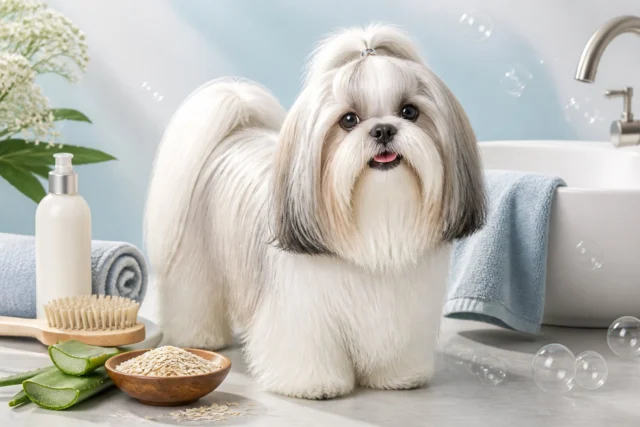
The Shih Tzu’s double coat is denser, heavier, and significantly coarser. When kept in a full show coat, daily line brushing is required to prevent deep undercoat mats from pulling against the skin.
The Havanese coat is remarkably light, soft, and wavy, resembling raw silk. While less prone to dense undercoat felting than the Shih Tzu, the Havanese coat still requires brushing two to three times weekly or cords if allowed to cord naturally.
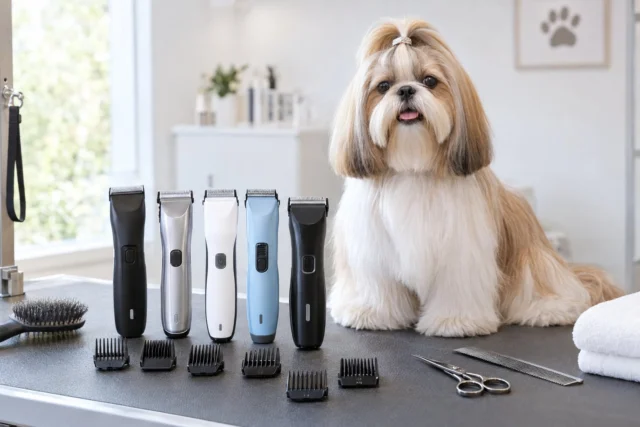
Most pet owners keep both breeds in a manageable pet trim (such as a Puppy Cut or Teddy Bear Cut). If you maintain your dog’s clip at home, consult our hair length dog grooming blade chart to choose the exact clipper blades (such as a #4F or #7F blade) that safely clip dense Shih Tzu hair or silky Havanese waves.
Temperament and Daily Energy Needs
While both breeds are renowned for affection, their behavioral personalities suit different family dynamics:
The Shih Tzu: The Serene Royalty
Shih Tzus carry an easygoing, aristocratic temperament. They are delighted to play short indoor games but are equally content spending the afternoon curled up on a sofa cushion. They rarely demand intense exercise and are rarely neurotic, making them ideal for apartment living, retirees, and quieter households.
The Havanese: The Social “Velcro” Clown
The Havanese is lively, inquisitive, and relentlessly playful. Known as the “velcro dog,” they attach themselves intensely to their owners, following from room to room. They possess a natural clownish flair, often inventing games to entertain family members. However, their high sociability makes them significantly more vulnerable to separation anxiety if left alone for prolonged workdays.
Trainability and Intelligence
If ease of obedience training is your priority, the Havanese has a clear advantage. Ranked in the top tier of toy dog working intelligence, Havanese are eager to please, attentive to verbal praise, and thrive in agility, rally obedience, and interactive canine sports.
The Shih Tzu is intelligent but possesses an independent, royal mindset. They evaluate human instructions based on self-interest and will ignore commands unless motivated by high-value food rewards. Housebreaking also takes longer with a Shih Tzu due to their smaller bladder capacity and stubborn aversion to wet grass.
Health Vulnerabilities and Longevity
Both breeds enjoy long, healthy lifespans often exceeding 14 years. To compare how each breed ages through developmental milestones and geriatric stages, use our Shih Tzu age in human years calculator.
However, their anatomical differences produce distinct clinical profiles:
- Shih Tzu Vulnerabilities: Brachycephalic Obstructive Airway Syndrome (BOAS), corneal ulcers, Intervertebral Disc Disease (IVDD), and dental overcrowding from an undershot jaw.
- Havanese Vulnerabilities: Patellar luxation, hereditary cataracts, progressive retinal atrophy (PRA), and congenital deafness.
Veterinary Disclaimer: Breed comparison information adheres to official conformational and health standards established by the American Kennel Club (AKC). Before purchasing or adopting either breed, consult with a licensed veterinarian or a board-certified specialist through the American College of Veterinary Internal Medicine (ACVIM) to review parentage health clearances (OFA eye, cardiac, and patellar certifications).
Frequently Asked Questions
Which breed sheds less: Shih Tzu or Havanese?
Both breeds are exceptionally low shedders because both possess continuously growing hair rather than shedding fur. However, the Havanese has a slightly lighter, silkier undercoat, which some allergy-sensitive owners find easier to maintain without dander accumulation.
Are Shih Tzus or Havanese better for busy owners?
Shih Tzus tolerate moderate alone time much better than Havanese. The Havanese forms profound attachment bonds and frequently develops vocal or destructive separation anxiety if left alone for full 8-hour workdays.
Which breed is better with young children?
Both breeds are gentle family dogs, but the Havanese is typically more interactive and enthusiastic about playing games with respectful children. The Shih Tzu is sturdy but prefers calm petting over rowdy play.