As an Amazon Associate I earn from qualifying purchases.
The best slicker brush for poodles is the Chris Christensen Baby G Dog Slicker Brush, because its extra-long angled pins sit in a flexible cushioned pad that reaches through dense curls without scraping skin. Owners of large doodles who want more coverage per stroke should look at the Paw Brothers Professional Grade Extra Long Slicker Brush instead.
Daily poodle grooming requires tools that handle dense curls without irritating sensitive skin. Finding the right poodle pet slicker brush protects sensitive poodle skin, creates fluffy coats, and makes daily coat maintenance much simpler for overall coat health.
Caring for curly coats also involves regular deshedding to pull out loose hairs trapped near the roots. Choosing the best slicker brush for poodles makes removing tangles fast and painless.
Consistent coat maintenance through regular brushing keeps curls fluffy and prevents mats from forming.
Effective poodle grooming relies on reaching deep down to the roots rather than merely skimming the curls. Choosing a high-quality poodle pet slicker brush ensures pins penetrate dense curls smoothly without scratching.
When comparing the best dog brushes for poodles, pin length and cushion flex are crucial for removing tangles cleanly. A dedicated poodle brush keeps tight curls springy and free of debris during daily grooming.
Investing in a high-performing poodle pet slicker brush keeps the coat looking salon-fresh between appointments. A specialized poodle brush penetrates to the skin without causing irritation.
These picks come from Amazon listing specifications, pin lengths, head sizes, handle materials and recurring buyer reviews. This guide maps each dog grooming brush to coat type, dog size and grooming zone.
Best Slicker Brushes for Poodles
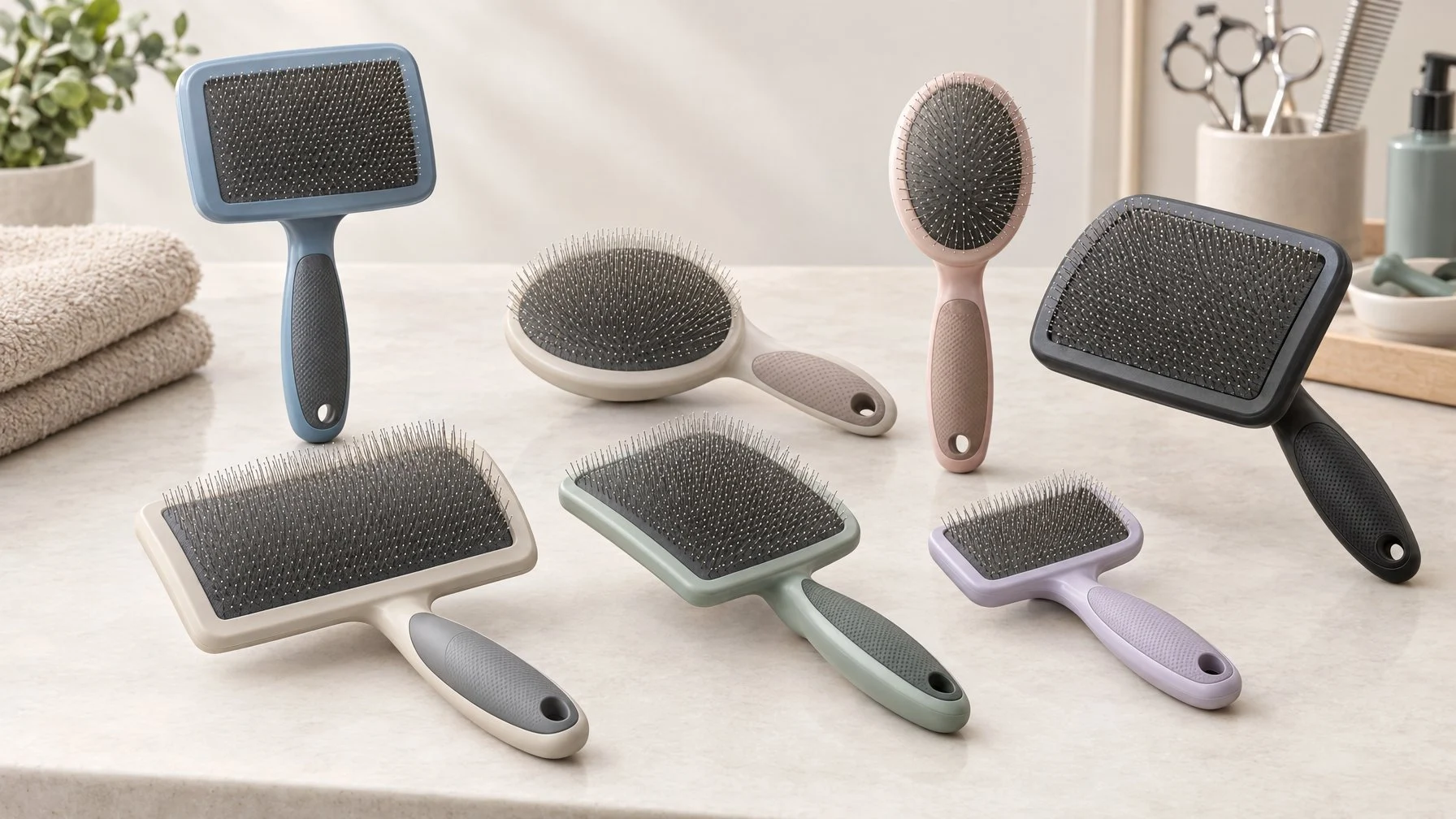
Best for curly poodle coats overall: Chris Christensen Baby G Dog Slicker Brush
Best for large dogs and dense undercoat: Paw Brothers Professional Grade Extra Long Slicker Brush
Best for faces, feet and small dogs: Chris Christensen Mark II Slicker Brush
Best brush-and-comb bundle: Saccison 2PCS Slicker Brush and Pet Comb
Best budget brush for big doodles: Petqueen Dog Slicker Brush for Large Dogs
A slicker brush features a flat or curved brush head set with rows of fine, bent wire pins that lift out loose hair and separate tangles.
Dog Fluffy focuses on the tools that keep poodle and doodle coats brushed, fluffy and manageable between grooming appointments, and a slicker brush is the one item that does the most work at home.
For both standard poodle care and doodle grooming, overall grooming efficiency depends on pin design and brush construction. Readers who want the wider picture can compare dog brush types before buying.
Chris Christensen Baby G Slicker Brush — Best for Curly Poodle Coats
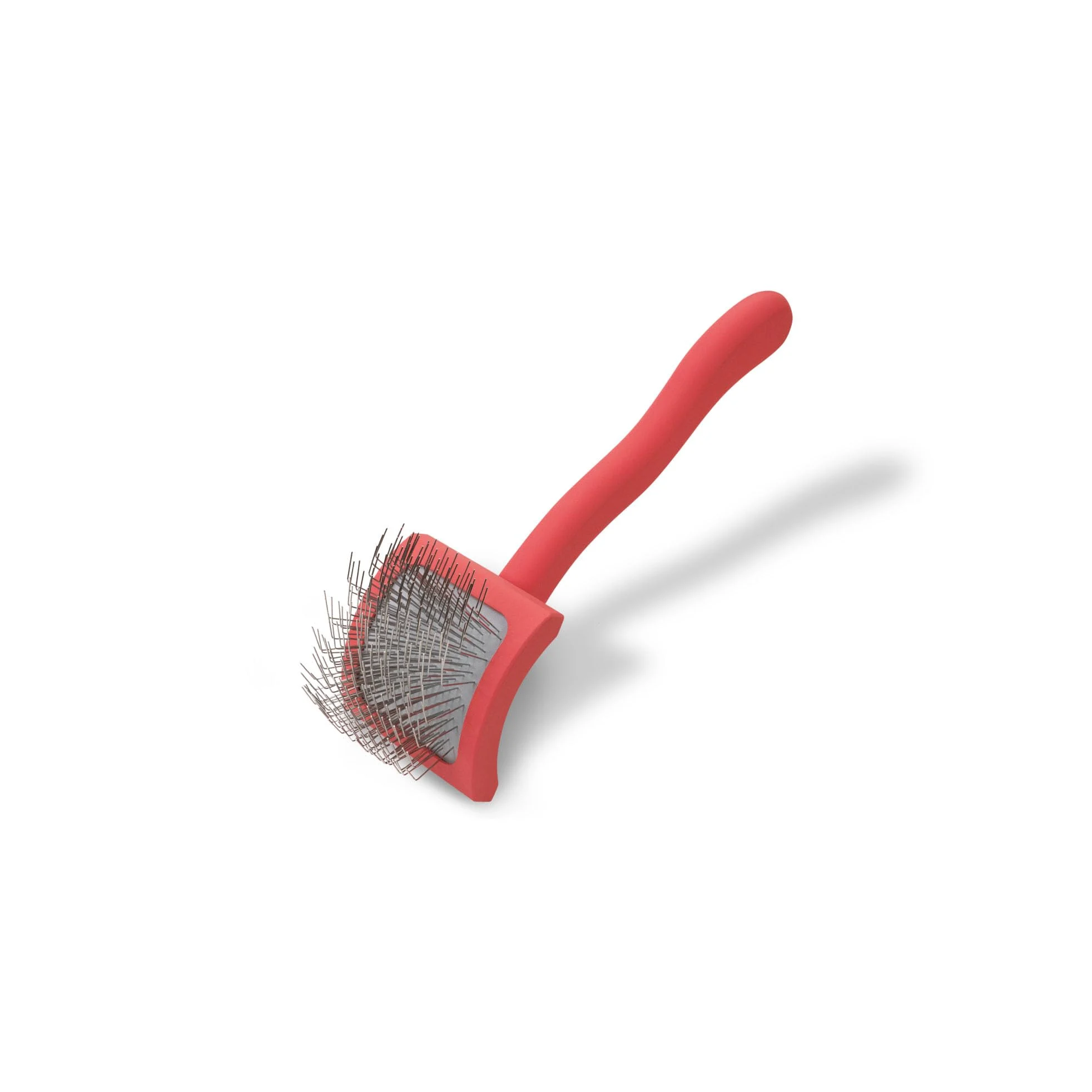
The Chris Christensen Baby G Slicker Brush suits poodles, Bichons and doodle crosses with curly or cottony coats, because its long angled pins sit in a flexible cushioned pad that flexes as it glides through tight curls. The Baby G is the small size in a three-size range.
Its extra-long angled pins reach straight to the roots, lifting packed hair without scratching tender skin.
Pros
- Long angled pins reach the undercoat in fewer strokes
- Flexible cushioned pad softens pressure on skin
- Handmade in Germany with a 6-month defect warranty
Cons
- Priced well above basic slickers
- Small head slows full-body work on large doodles
- One buyer reports the pad edge flaking after weeks of use
The high pin density features 30% more pins than comparable slickers, which is why owners of Aussies, Pomeranians and Great Pyrenees describe finishing a brush-out faster. The curved brush head gives the wrist more angles to work with, which helps on legs and topknots.
Its ergonomic handle fits comfortably in the palm, reducing wrist strain during long grooming sessions.
A lightweight non-slip handle ensures steady control when brushing delicate areas. The ergonomic grip and anti-slip handle provide steady control while removing tangles around delicate areas like the ears and muzzle.
Poodles with sensitive skin benefit from the gentle pad flex, which prevents scratches while lifting tight curls. Its gentle flexible pins yield against resistance, protecting dogs with delicate coats.
While the Chris Christensen Big G slicker brush is famous for large standard poodles, the Baby G offers identical pin benefits in a nimbler size. Groomers who love the Chris Christensen Big G dog slicker brush appreciate having the smaller Baby G for precise work.
Popular alternatives like the We Love Doodles slicker brush or the Freshly Bailey doodle brush also target curly coats, but Christensen remains the gold standard. Like the We Love Doodles slicker brush, this tool reaches deep through dense waves to separate snarls.
Reviews repeat two things: hesitation over the price, then surprise at how much dead coat comes out. One buyer with two long-haired German Shepherds bought it after seeing groomers use it online.
Paw Brothers Extra Long Slicker Brush — Best for Large Dogs and Dense Undercoat
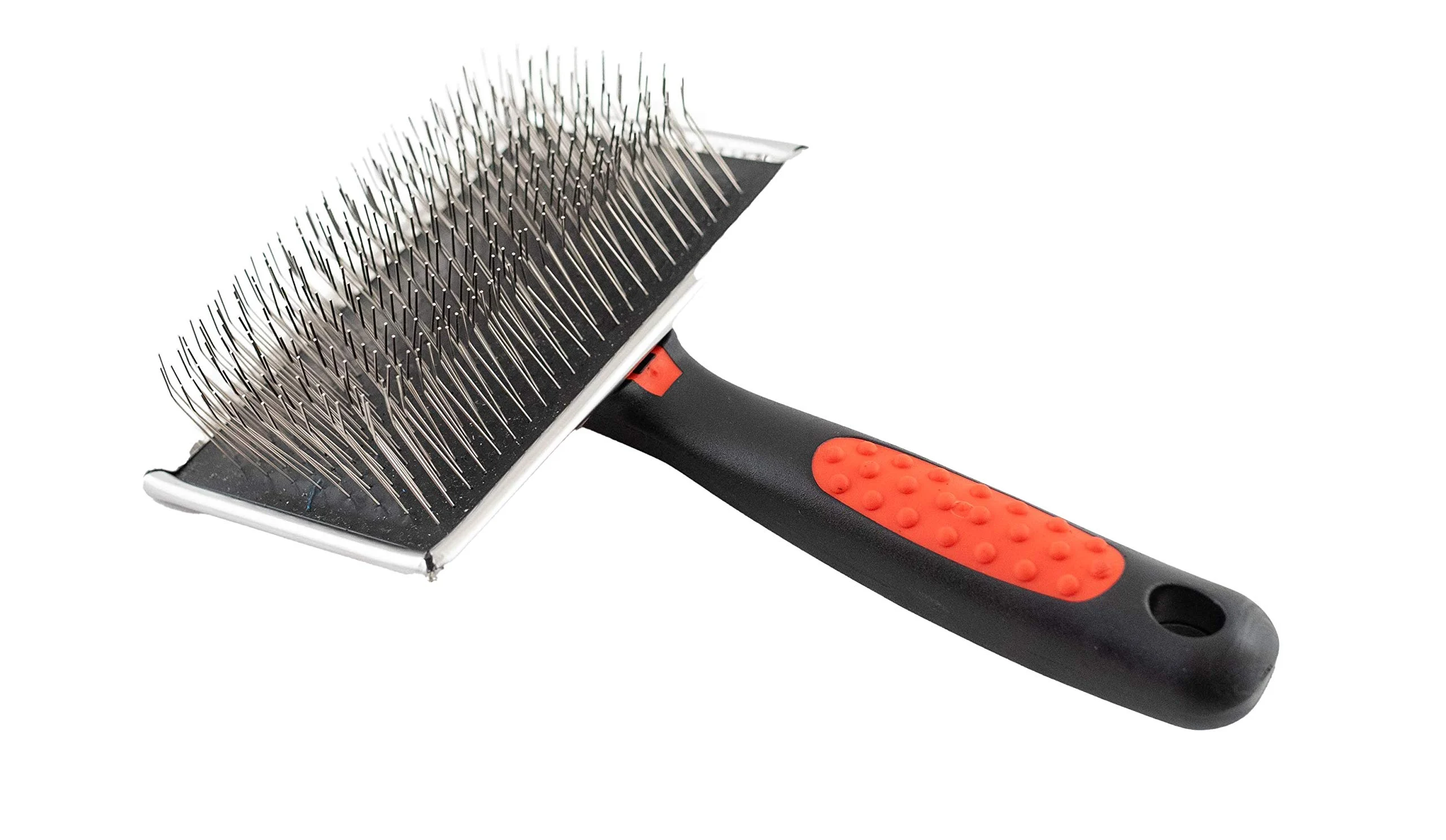
The Paw Brothers Professional Grade Extra Long Slicker Brush suits standard poodles, large doodles and double-coated dogs, because its 2.5 cm (1 in) stainless steel pins and 11.4 x 7.6 cm (4.5 x 3 in) head cover more coat per stroke than a small slicker.
The firm stainless-steel pins excel at undercoat removal and deshedding in thick-coated doodle mixes. These 1-inch pins penetrate dense curls effortlessly, while flexible pins yield just enough to prevent scraping.
Standard poodles, thick doodles, and double-coated breeds all benefit from pins that reach deep without flattening coat volume. Dogs from double-coated breeds and dense doodle crosses gain exceptional lift from this design.
Its extra-long pins and stainless steel bristles are built to power through thick coats and dense coats without bending. For thick curly coats, brushes with extra-long pins penetrate all the way to the dermis for thorough deshedding.
These pins also glide through the dense waves of standard poodles and large long-haired dogs prone to matting.
Dogs that shed heavily during shedding season also benefit from the deeper reach. Managing dense coats during peak shedding season is much easier when sturdy 1-inch pins can reach trapped undercoat.
An ergonomic handle, often enhanced with an anti-slip handle or comfortable TPR handle grip, gives owners steady control during heavy brushing sessions.
Resilient stainless-steel pins hold up against stubborn tangles without bending under pressure.
Pros
- Longest pins in this group at 2.5 cm (1 in)
- Wide flat head speeds up body work
- Stainless steel pins resist bending
Cons
- Head is too wide for armpits and inner legs on toy poodles
- Sharp pins need a light hand
- One buyer found hair harder to pull out of the pad
The first review on the listing opens with a warning to learn proper slicker technique first, because the pins are sharp and will irritate skin if used with too much pressure. That advice fits every brush here.
Owners of Great Pyrenees and huskies say the pad holds shed hair together instead of spraying it around the room. A cavapoo owner found the head slightly too big for work between the legs, and wanted a smaller version for detail zones.
Ryan’s Pet Supplies has been selling to pet professionals since 1959.
Chris Christensen Mark II Slicker Brush — Best for Faces, Feet and Small Dogs
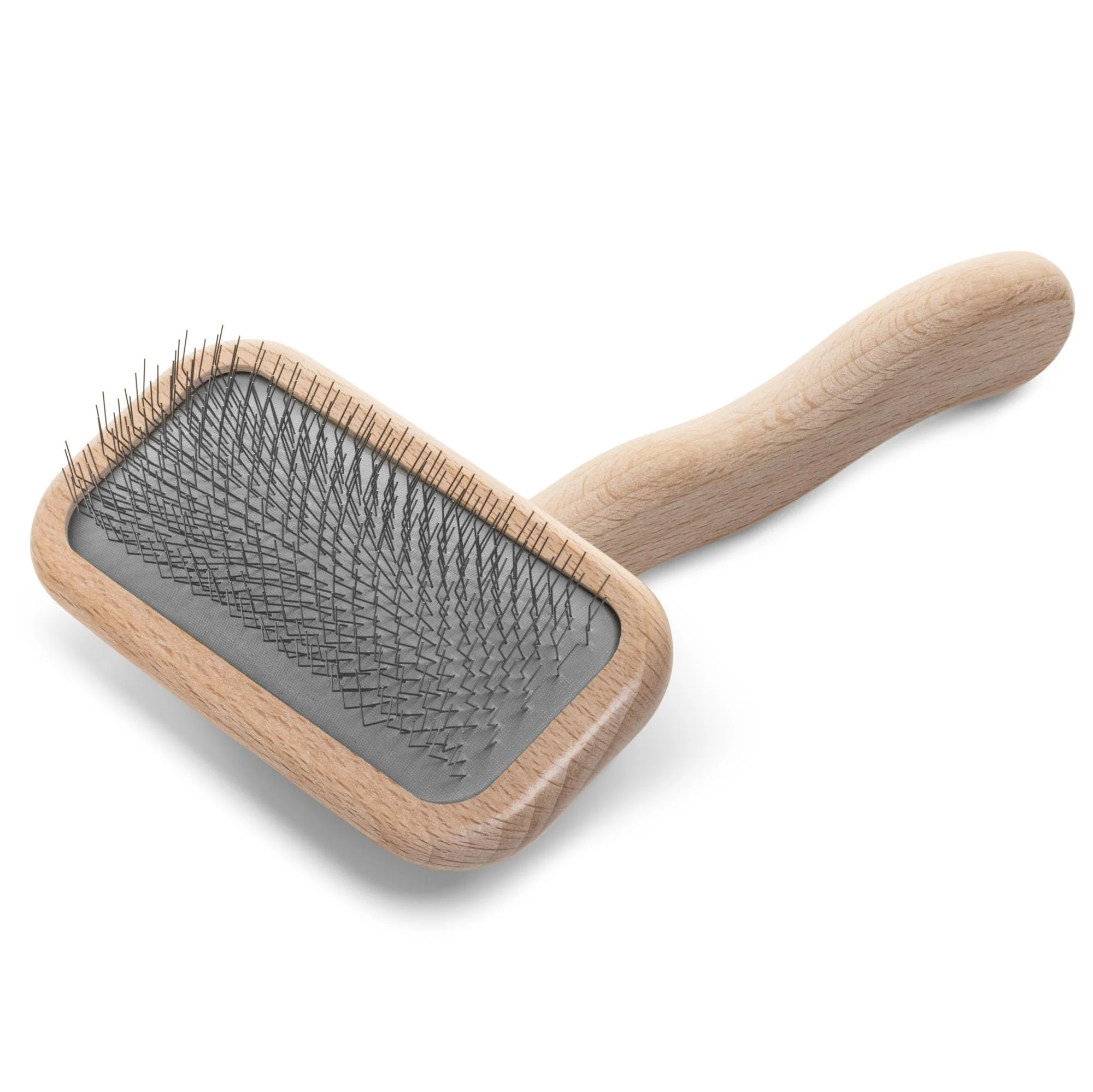
The Chris Christensen Mark II Slicker Brush suits toy poodles, puppies and the small zones on bigger dogs, because its 12 mm pins and 8.9 x 5 cm (3.5 x 2 in) head fit around ears, feet and beards where a full-size slicker cannot reach.
Pros
- Small head reaches feet, ears and under the beard
- 12 mm pins are shorter and less likely to dig on thin coats
- Lightweight beechwood handle at 45 g (1.6 oz)
Cons
- Pins are too short for a thick, grown-out standard poodle coat
- Small head makes full-body brushing slow
- Newest of the Chris Christensen slickers, so fewer buyer reports exist
The Mark II body measures 15.9 cm (6.25 in), and the pins sit in a soft, highly flexible pad over a 6 mm (1/4 in) foam base.
Chris Christensen recommends it for Maltipoos, Cavapoos, Cockapoos, and a Yorkie, as well as puppy coats that have not yet changed. Professional groomers also use it on cats, rabbits, and small long-haired dogs.
Owners of long-haired cats also find the petite head perfect for working around the neck and behind ears. Small pets like rabbits also benefit from the soft pad and short wire length.
Its fine, flexible pins bend gently to protect sensitive skin while removing tangles from fine fur on cats and small dogs alike.
Unlike pin brushes with rounded pin tips that simply slide over snarls, these fine wires gently separate puppy fluff right down to the skin.
On a standard poodle, the Mark II works best as a second brush: the Baby G or a wide slicker handles the body, then the Mark II tidies legs, feet and the head. Pair it with poodle mix grooming styles if a pet trim is the goal.
Chris Christensen backs it with a 6-month warranty against manufacturer defects.
Saccison 2PCS Slicker Brush and Pet Comb — Best Brush-and-Comb Bundle
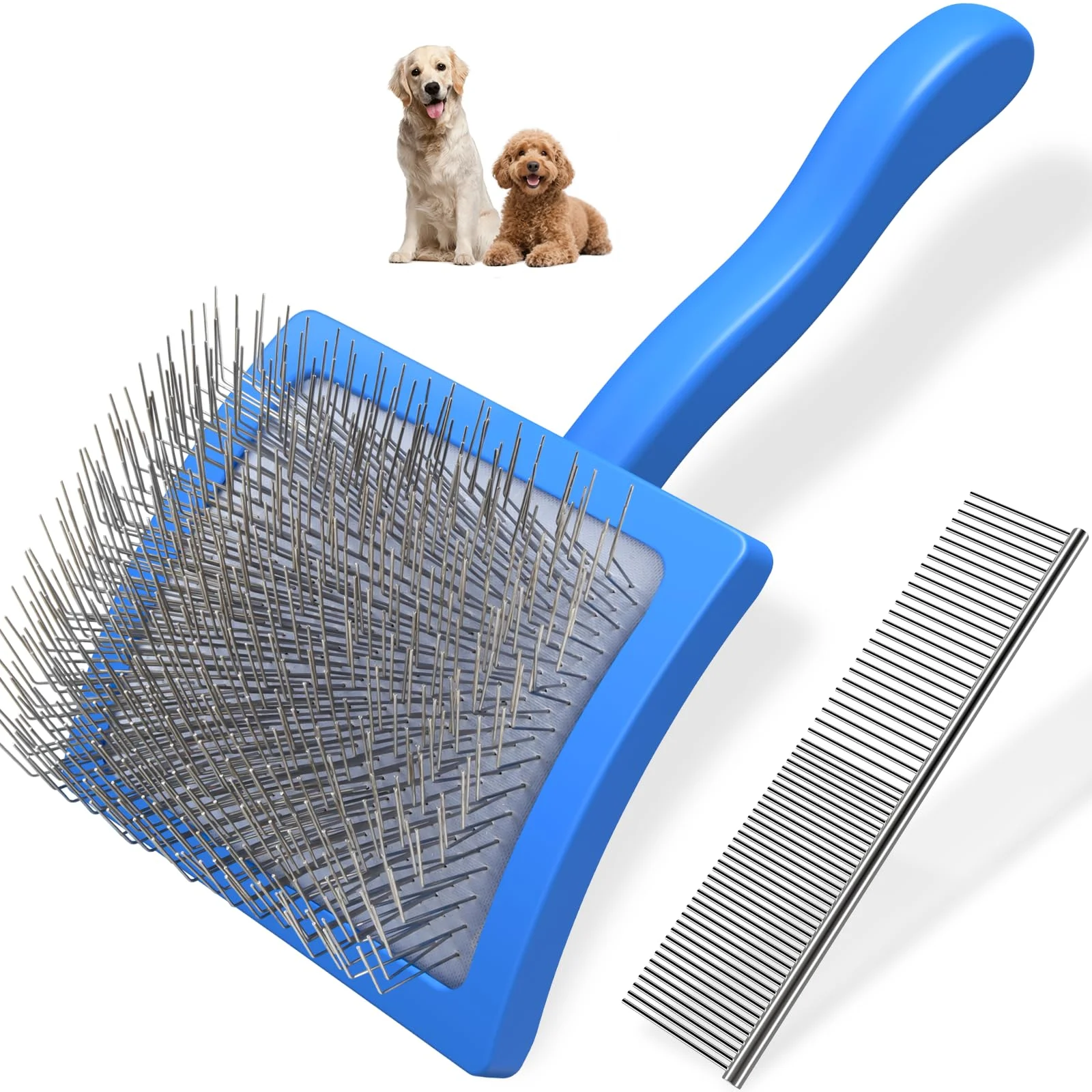
The Saccison 2PCS set suits poodle and doodle owners who need both tools at once, because a stainless steel comb is included alongside the large slicker, and the comb is the tool that proves whether a mat is fully brushed out.
Pros
- Slicker and steel comb in one purchase
- Pins run about 2.5 cm (1 in) at a 45° angle
- Backed by a 2-year manufacturing defect guarantee
Cons
- Newer listing with far fewer buyer reports than the established brands
- Large head only; no small size for feet and ears
- Comb quality is described by the seller, not by long-term owner reports
The 45° pin angle is the same idea behind the pricier German-made slickers: angled pins slide into the coat rather than stabbing straight down. Featuring extra-long angled pins measuring roughly 1 inch, Saccison markets the set for Goldendoodles, Poodles and Labradoodles.
These 1-inch pins glide into dense coats smoothly, separating knots without irritating delicate skin.
Its long stainless steel pins glide through thick curls to loosen debris without snagging. An ergonomic handle provides a comfortable grip during extended brushing sessions.
The comb matters more than it sounds. Brushing with a slicker can leave the top layer looking fluffy while a mat stays hidden underneath, and a steel comb finds it. Running a sturdy metal comb through the coat confirms that no hidden knots remain, and Saccison notes it helps avoid static.
Always glide a metal comb through dense curly coats to catch residual knots. The slicker brush’s extra-long pins reach deep into thick hair, aiding in deshedding and removing tangles.
Using a reliable detangling brush paired with a metal detangling comb ensures every layer of hair stays knot-free. Pairing your slicker with a fur rake comb allows you to lift out deep snarls before fine-tuning.
A sturdy fur rake comb is especially helpful for clearing compacted undercoat before you begin detailed line brushing.
When removing mats during severe mat removal, applying a detangling spray for matted dog fur loosens tight knots safely. Early mat removal keeps the hair shaft intact before knots felt together.
Gentle dematting protects the coat from breakage while loosening tight tangles. Following up with a stainless steel comb ensures that dematting is thorough down to the skin level.
Using specialized dematting tools, such as a dematting fur rake, prevents painful pulling before either brush or comb touches the coat. A dematting fur rake slices through stubborn clusters that wire bristles cannot safely penetrate.
Petqueen Dog Slicker Brush for Large Dogs — Best Budget Brush for Big Doodles
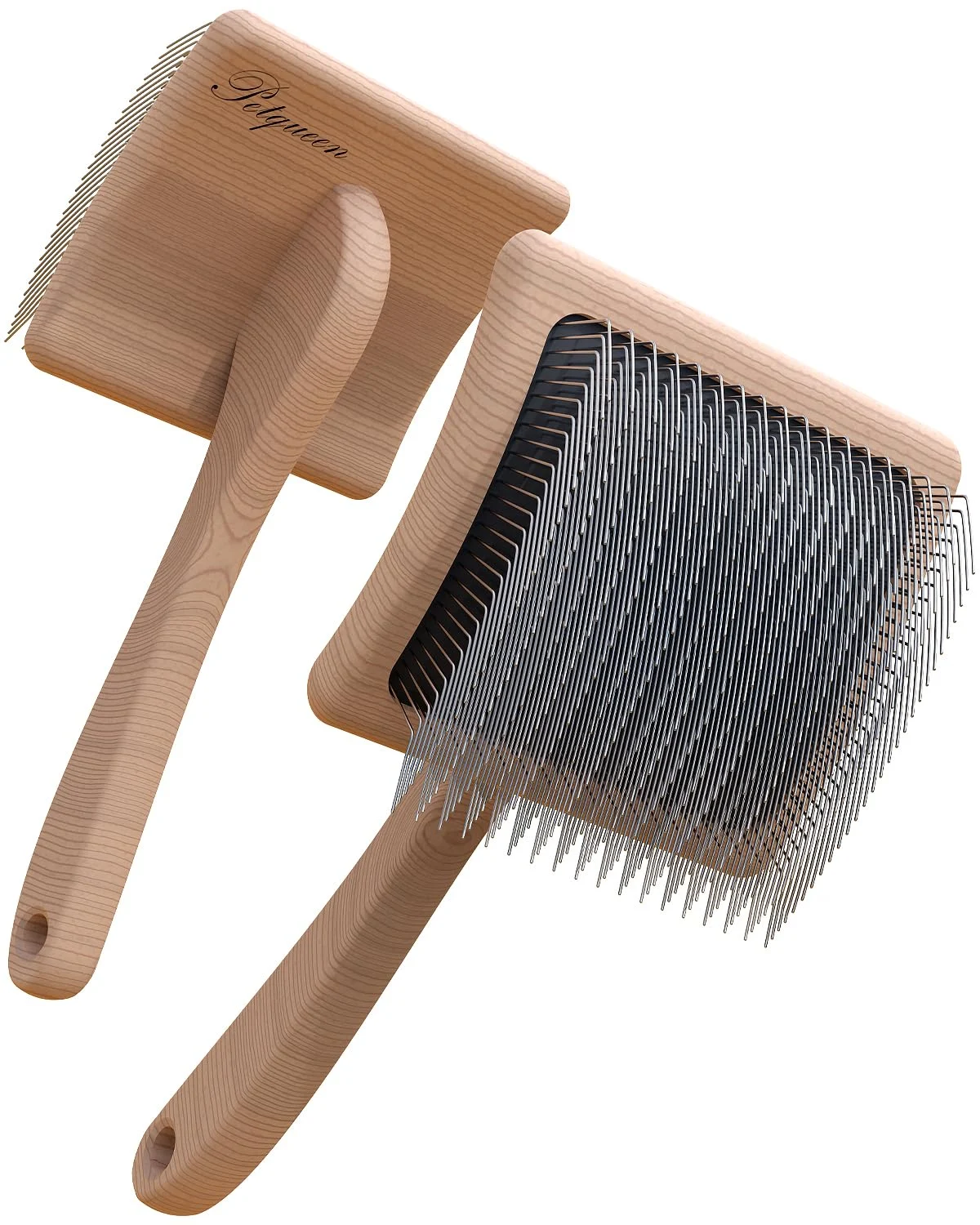
The Petqueen Dog Slicker Brush suits owners of large doodles who want a wide head without a professional price, because its 9.7 x 8.1 cm (3.8 x 3.2 in) head and 20 cm (8 in) wooden body cover a lot of coat and a cleaning comb is included.
Pros
- Large head plus long wooden handle for full-body work
- Bonus steel comb doubles as a pad cleaner
- Well rated by owners of Great Pyrenees and Cocker Spaniels
Cons
- Head is too large for toy poodles and tight zones
- Less buyer feedback than the long-established brands
- Long-term durability is unproven by owner reports
Petqueen markets the brush across the doodle range, from Cavapoos up to Saint Berdoodles and Pyredoodles. The included steel comb is designed to rake collected hair off the pins, which keeps sessions moving.
Owners who prefer a self-cleaning slicker brush often look at models featuring a press-button base and an easy self-cleaning mechanism, such as the Hertzko self-cleaning slicker brush.
Pet parents also consider the Swihauk self-cleaning slicker brush for quick cleanup. The convenient Swihauk self-cleaning design makes clearing trapped hair effortless between strokes.
By relying on an integrated self-cleaning mechanism, the Swihauk self-cleaning slicker brush retracts its wires so shed curls fall straight into the trash.
Budget-friendly alternatives like the Lbmbaic slicker brush for poodles or the Four Paws Magic Coat slicker brush also attract pet parents seeking wide heads. The Lbmbaic slicker brush provides an accessible way to keep curls fluffed on a budget. However, fixed-pin wooden brushes provide extra sturdiness for thick doodle curls.
Its wide pin coverage aids in gentle undercoat removal across thick coats. One owner of a nine-year-old Great Pyrenees called it the best of many brushes tried over the years.
Another bought it to manage undercoat and mats between professional groomer visits, which is exactly the job most poodle owners need a slicker to do.
Regular brushing at home does not replace a groomer. It keeps the coat brushable so the groomer can scissor a shape instead of clipping short. Grooming fluffy dogs covers the rest of the routine.
How Should Poodle Owners Choose a Slicker Brush?
Poodle owners should choose a slicker brush by matching three numbers to their dog: pin length to coat thickness, head size to the dog’s body and the areas being brushed, and handle shape to the length of a typical session. Pin material and pad flex decide how it feels on skin.
Selecting the right dog grooming brush preserves coat health by removing trapped shed hair before mats form. Routine brushing is an essential part of poodle grooming that keeps curly coats soft and clean.
Tools with flexible pins and an anti-slip handle make it easier to work through dense fur without straining your hands. Caring for pets with sensitive skin requires gentle strokes and moderate pressure.
Choosing an appropriate poodle brush tailored to your pet’s size prevents excessive skin tension. A quality poodle pet slicker brush glides smoothly down each strand without snagging.
The points below cover pin length by coat type, head size by dog size and grooming zone, handle and pad design, and the order to use a slicker safely.
Pin Length Should Match Coat Depth
Longer pins reach deeper coat. Pins around 2.5 cm (1 in) suit a grown-out standard poodle or a double coat, while 12 mm pins suit puppy coats, short pet trims and thin-coated toy dogs.
Pins that are too long on a short coat drag on skin. Pins that are too short on a thick coat skim the surface and leave mats sitting underneath.
Head Size Should Match the Dog and the Zone
A wide head of about 11 x 7.5 cm (4.5 x 3 in) finishes a standard poodle’s back and sides quickly. A narrow head of about 9 x 5 cm (3.5 x 2 in) is what fits between the legs, under the ears and around the feet.
Most poodle owners end up with one of each. A single large brush leaves armpits and inner thighs under-brushed, and those are the spots that mat first.
Handle and Pad Design Decide Comfort
An ergonomic handle paired with an anti-slip handle or non-slip handle finish lets the wrist change angle without losing grip, which cuts hand fatigue during a 30-minute session.
Tools equipped with a textured TPR handle offer dependable traction when working through dense tangles. A secure non-slip handle helps you maintain control even if your hands are damp from bath time. Meanwhile, a shaped ergonomic handle reduces strain on your fingers during full-body brush-outs.
Beechwood handles keep weight down; one brush here weighs 45 g (1.6 oz).
A cushioned pad with a foam base lets pins flex when they hit skin. Stiff-backed pads transfer full pressure straight through, which can easily irritate sensitive skin.
Safe Use Order
- Check the coat for mats with fingers or a steel comb before brushing.
- Spray a detangler on any dry, tight sections and let it soak in.
- Brush in small sections, lifting the coat and working from the skin outward, a technique called line brushing.
- Hold the brush lightly, using wrist movement instead of arm pressure.
- Comb each finished section with a steel comb; if the comb snags, the section needs more brushing.
- Clear hair from the pad, then move on. How to clean a slicker brush covers deeper cleaning.
Stop if the skin turns pink. Brush burn comes from pressure and repeated strokes over one spot.
Frequently Asked Questions
What is the best slicker brush for a poodle?
The Chris Christensen Baby G Slicker Brush is the best slicker brush for most poodles, because its long angled pins and flexible cushioned pad move through curly coat without scraping skin. Owners of large standard poodles may prefer the wider Paw Brothers head for faster body work.
What brush should I use on my poodle?
Poodles need a slicker brush plus a metal comb, used in that order. The slicker lifts and separates the curls, while a sturdy metal comb confirms nothing is left matted near the skin.
For standard poodles with massive volume, many groomers choose the Chris Christensen Big G dog slicker brush for efficient brush-outs. A single tool alone leaves hidden tangles behind.
What is the difference between a slicker brush and a pin brush?
A slicker brush has many fine, bent wire pins packed close together, so it grips tangles and pulls out loose undercoat. A pin brush has fewer, thicker, straight pins with rounded pin tips or coated pin tips, which smooth and fluff an already tangle-free coat. Poodles need the slicker for detangling work.
While a standard shedding brush strips loose fur from straight coats, curls require bent wires to lift dead coat. Using a shedding brush alone is ineffective because curls trap shed strands until wire pins lift them free.
A dual-sided combo brush or bristle brush with coated bristle tips only smooths the top layer. Combination tools like the Hartz Groomer’s Best combo dog brush offer both pins and bristles, but curly poodle coats still require bent slicker wire for thorough de-matting.
While the Hartz Groomer’s Best combo dog brush works well on short, flat coats, it cannot reach the skin on curly breeds. While a natural bristle brush works nicely to polish straight coats, it cannot penetrate curly fur. A dedicated dog grooming brush with wire pins is necessary to maintain proper coat health.
What is the best slicker brush for doodles?
The Chris Christensen Baby G is the strongest all-round pick for doodles, and buyers with Goldendoodles, Labradoodles and Bernedoodles report fewer strokes per session. For a Saint Berdoodle or Sheepadoodle, the larger Paw Brothers or Petqueen heads cover ground faster.
How often should a poodle be brushed?
Poodles need brushing every day or every other day once the coat is longer than about 2.5 cm (1 in), because curls trap shed hair that then felts into mats. Committing to consistent daily grooming prevents minor tangles from compacting into painful pelts.
Owners keeping a short pet trim can stretch regular brushing to two or three sessions a week. Diligent coat maintenance minimizes shedding and prevents severe dematting at the salon.
Ask a veterinarian or qualified groomer for advice specific to a dog’s coat and skin.