Nutritional Adequacy: Read This Before You Cook
Home-cooked food is not automatically healthier than commercial food, and the way it goes wrong is specific and well documented.
Most homemade dog food recipes published online are not nutritionally complete. When researchers have assessed recipes from books, websites and even veterinary sources, the large majority were short of at least one essential nutrient, and many were short of several. A commercial complete food is formulated to a standard and tested against it. A recipe from a blog — including the ones below — is not.
Calcium is the one that causes real damage. Meat is high in phosphorus and very low in calcium. A diet of meat and rice with vegetables, fed long term with no calcium source, pulls calcium out of the skeleton to keep blood levels stable. The result is nutritional secondary hyperparathyroidism: weakened, painful bones and, in growing puppies, fractures from ordinary activity. This is the single commonest serious error in home feeding, and it is invisible until it is advanced.
- Get the recipe formulated, not just approved. A board-certified veterinary nutritionist (ACVN or ECVCN) or a reputable formulation service can balance a recipe you like. Your vet can refer you. This is the difference between home cooking that works and home cooking that slowly harms.
- Do not improvise for a growing puppy. Puppies have the tightest calcium and phosphorus requirements and the least margin for error. Getting it wrong during growth causes permanent skeletal problems.
- Supplements are not optional extras. A balanced homemade diet almost always needs added calcium, and usually additional trace minerals, vitamin D, vitamin E and often iodine and choline. Which ones, and how much, depends on the recipe.
- Follow the recipe exactly once it is balanced. Swapping the protein, dropping an ingredient or changing the ratios undoes the formulation. “A bit of whatever is in the fridge” is how a balanced diet stops being one.
- Dogs with a health condition need a diet formulated for it. Kidney, liver, pancreatic and heart disease all place specific demands on a diet, and home cooking for them without professional input is actively risky.
The recipes below are starting points to take to a professional for balancing, not complete diets. They are useful as an occasional meal, as a topper, or as the base of a properly formulated diet. Fed as a dog’s sole food without balancing, they will fall short. This article is general information from a dog owner, not veterinary or nutritional advice.
Homemade Dog Food Recipes for French Bulldogs
Feeding a French Bulldog well matters, and commercial food is convenient but opaque. Homemade dog food gives more control over ingredient quality and lets meals be tailored to the breed — provided the result is properly balanced, which is the whole subject of the section above.
Just like us humans, our French Bulldogs have unique dietary requirements that we need to be aware of.
When creating homemade meals, we must make sure to include essential ingredients that cater to their nutritional needs and promote overall health.
This can lead to numerous benefits such as a shinier coat, better digestion, and increased energy levels.
This article covers beginner-friendly recipes suited to French Bulldogs, along with preparation, storage and how to transition from commercial food without upsetting a dog’s stomach.
Key Takeaways
- Understanding your French Bulldog’s nutritional needs is crucial for creating homemade meals
- Homemade dog food can provide numerous benefits for your Frenchie, including better digestion and increased energy levels
- Simple starter recipes catered to French Bulldogs can make the process easier for beginners
Understanding French Bulldogs’ Dietary Needs
Identifying Common Allergies
French Bulldogs are prone to certain food allergies, which is often what sends owners looking at home cooking in the first place.
Common culprits include beef, chicken, and soy.
Suspected trigger ingredients are removed one at a time, and the dog is watched for a response — though a genuine food allergy needs a proper elimination trial to confirm.
It’s essential to pay close attention to your Frenchie’s skin condition and energy levels while trying various ingredients, as these can indicate possible allergies.
Assessing Nutrient Requirements
A balanced diet matters more here than with commercial food, because nothing else is making up the shortfall. It needs adequate protein, fat, carbohydrate, vitamins and minerals.
One widely used homemade recipe combines ground beef, a whole grain such as millet, and vegetables like carrot, courgette and squash.
Keep in mind that every dog is different, and their nutrient requirements might not be the same as others. So it’s best to tailor their diet according to their specific needs.
Consulting a Veterinarian
Any homemade diet should be discussed with your vet before it becomes your dog’s main food rather than after.
Professional input is what turns a set of ingredients into a diet that meets a dog’s requirements.
Your vet can help identify any deficiencies or nutritional problems they might be facing and suggest appropriate adjustments to their diet.
Benefits of Homemade Meals for Frenchies
Eliminating Preservatives
The clearest advantage of cooking at home is control over ingredient quality.
Preparing meals yourself means you decide exactly what goes in, including avoiding preservatives you would rather not feed.
The food is fresher, and for a fussy dog that alone can make a difference to appetite.
Check out these healthy homemade dog food recipes that your Frenchie will love!
Customizing for Health Conditions
The second advantage is the ability to tailor meals around a specific health condition.
For example, if your Frenchie has allergies or sensitivities, you can use alternative ingredients to accommodate those concerns.
In fact, you can also customize their meals to address specific health conditions such as obesity, arthritis, or kidney issues.
That tailoring is precisely why it should be done with your vet — a diet adjusted for one condition can easily create a different problem.
Promoting Digestive Health
Some owners also report better digestive comfort on home-cooked food.
As you might know, Frenchies can be prone to digestive issues.
Where a dog reacts badly to something in their commercial food, removing it can settle persistent tummy trouble — though loose stools that continue are a vet question, not a recipe question.
This home-cooked dog food recipe is perfect for promoting your Frenchie’s digestive health and overall well-being.
Essential Ingredients for a Balanced Diet
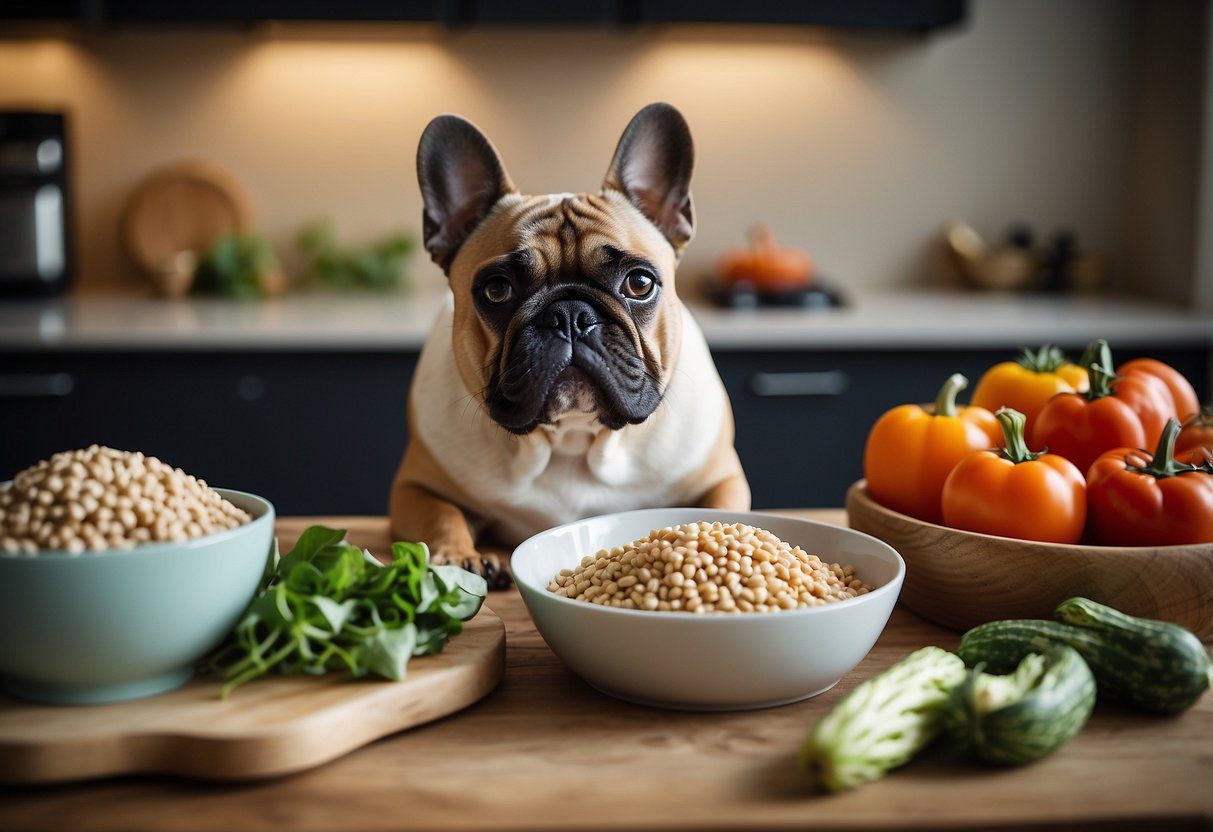
A well-rounded diet is the difficult part of feeding at home, not the cooking.
Let’s dive into the key ingredients that play an important role in making homemade dog food for Frenchies.
Proteins: Selecting High-Quality Sources
Good protein sources for home cooking include ground beef, chicken, turkey and fish.
It’s essential in maintaining their muscle mass and overall health.
Eggs and lamb are also great sources, providing additional nutrients like zinc for a healthy immune system and skin.
Carbohydrates: Understanding the Role
Next on our list are carbohydrates. From my experience, they provide energy and fiber to keep our Frenchies full and active.
Whole grains like brown rice and millet are ideal choices.
Additionally, vegetables such as carrots, zucchini, and squash add essential vitamins and minerals to their diet.
Keep in mind that not all carbs are created equal, so opt for complex carbs over simple sugars to ensure steady energy levels.
Fats and Fatty Acids for Health
Lastly, it’s important to add healthy fats into our Frenchies’ meals.
Olive oil is a common addition as a source of beneficial fatty acids.
Omega-3 and omega-6 fatty acids found in fish and flaxseed help support brain function, a healthy coat, and a strong immune system.
Make sure to maintain a balance between omega-3 and omega-6 to avoid any potential inflammation or health issues related to excessive intake of either one.
Simple Starter Recipes for Beginners

The two recipes below are the usual starting point — straightforward, and built on ingredients most people already buy. Read the nutritional adequacy section above before feeding either as a main diet.
Turkey and Vegetable Mix
This turkey and vegetable mix combines protein, vegetables and rice:
- Combine 3 cups of water, 1 lb of ground turkey, 1 cup of cooked rice, and 1 tsp of dried rosemary in a large pot.
- Bring it to a boil and then simmer for 20 minutes.
- Add 1 cup of frozen vegetables and cook for another 5 minutes.
Once it cools down, it’s ready for your pup to enjoy!
Beef and Sweet Potato Mash
This beef and sweet potato mash uses beef, sweet potato and quinoa:
- First, cook 1 cup of quinoa by boiling it with 2 cups of water, then simmer until the water is absorbed (about 15 minutes).
- In a separate pan, cook 3 lbs of ground beef with 1 tbsp of olive oil.
- Steam 1 cup each of cubed sweet potatoes, shredded carrots, and chopped green beans until soft.
Recipes Catered to French Bulldogs
Two recipes commonly used for Frenchies follow, both aimed at balanced nutrition rather than novelty.
Chicken and Rice for Sensitive Tummies
Does your Frenchie have a sensitive stomach? A simple chicken and rice recipe is gentle while still providing useful nutrients:
- Boil 1 cup of brown rice in 2 cups of water
- Cook 1 lb of chicken breast until fully cooked
- Shred the chicken and mix it with the cooked rice
- Add some steamed vegetables like carrots and green beans for extra vitamins
- Cool and serve to your Frenchie in the appropriate portion size
It is a gentle option for a dog with a sensitive stomach, and generally well accepted.
Fish-Based Recipes for Skin and Coat
Fish-based recipes are the usual choice where skin and coat are the concern. A salmon-based mix is the common version:
- Bake 1 lb of salmon at 375°F for 20-25 minutes, or until fully cooked
- Break the cooked salmon into small pieces and remove any bones
- Mix the salmon with 2 cups of cooked quinoa or another whole grain
- Stir in a handful of chopped spinach and a spoonful of coconut oil for added health benefits
- Cool and serve to your Frenchie in the appropriate portion size
Fish such as salmon supplies omega-3 fatty acids, which have reasonable evidence behind them for coat condition. Improvements take weeks to months, not days.
Preparing and Storing Your Homemade Creations
Cooking Techniques for Safety
Safe preparation matters as much as the recipe — undercooked meat and poor storage cause more problems at home than ingredient choice does.
Cook the protein — ground beef or chicken — thoroughly, to eliminate harmful bacteria.
Boiling is a great method because it ensures the meat is cooked evenly and retains most of its nutrients.
Steam or lightly sauté the vegetables in a little olive oil to preserve their vitamins and minerals.
Storing Food: Refrigeration vs. Freezing
Storage matters as much as cooking, and should be planned before the pan comes off the heat.
Food to be eaten within about four days can be kept in an airtight container in the refrigerator.
For a larger batch, the freezer is the better option.
Divided into portion-sized bags and labelled with the date, homemade food keeps for up to three months frozen.
At mealtime, take a bag out, thaw it in the fridge or at room temperature, and serve.
Feeding Schedule: How Much and How Often

Portion Sizes According to Age and Weight
Getting the nutrition right is the part that takes effort.
When it comes to portion sizes, it’s important to consider your Frenchie’s age and weight. Here’s a table to give you a rough idea of the portions you should be feeding per meal:
| Age Group | Weight Range | Portion Size |
|---|---|---|
| Puppies | 5-9 lbs | 1/2 to 2/3 cup |
| Adults | 9-13 lbs | 2/3 to 1 cup |
| Adults | 13-18 lbs | 1 to 1 1/4 cup |
| Seniors | Varying | Consult your vet |
Keep in mind that these portions are just a guideline; your vet will provide the most accurate recommendations tailored to your Frenchie’s specific needs.
Frequency of Feeding for Optimal Health
Now that we have portion sizes covered, let’s discuss feeding frequency. Once again, age plays a crucial role in this aspect. Here’s a quick guide on how often to feed your Frenchie:
Puppies (under 6 months old): They require more frequent feedings, so divide their daily food intake into 4 meals a day.
Adults (6 months and older): Transition them to 2 meals a day; one in the morning, and one in the evening. This ensures they have a balanced and regular eating schedule.
Remember, each dog is unique, and yours might need adjustments to their feeding schedule. Always consult your vet for the best advice on your Frenchie’s dietary needs.
Supplementing Homemade Meals with Nutritional Boosters
Including Fruits and Vegetables for Vitamins
Including fruit and vegetables adds vitamins and fibre. Apples, carrots and courgette are all reasonable choices, grated and mixed through the protein. Remove apple cores and seeds first.
Fruit and vegetables also add variety and texture. Keep the proportions consistent though — a diet that changes composition every week cannot be assessed for adequacy.
Adding Natural Supplements
Supplements are not optional extras in home-prepared meals — as covered above, a balanced homemade diet almost always needs added calcium and usually trace minerals. Olive oil and coconut oil are commonly added for fatty acids, but they do not address the mineral gap.
A tablespoon of olive oil is sometimes added for skin and coat, and coconut oil is used as an alternative. Both add calories, so account for them rather than adding them on top of a full portion.
To sum it up, it doesn’t take much effort to enhance the nutritional value of your French bulldog’s homemade meals. By simply adding fruits, vegetables, and natural supplements like olive and coconut oil, you’ll be providing your beloved pet with a diet that truly nourishes and supports their overall well-being.
Transitioning from Commercial to Homemade Dog Food
Switching from kibble to homemade food is a process that needs patience and careful monitoring rather than a single changeover day.
Gradual Introduction to New Diet
Transition gradually. A common approach is the 25-75 rule: 25% homemade to 75% existing food for a few days, then 50%, then 75%, reducing the original food as you go. This gives the digestive system time to adapt and avoids the loose stools that a sudden switch usually causes.
- Days 1-4: 25% homemade food, 75% kibble
- Days 5-8: 50% homemade food, 50% kibble
- Days 9-12: 75% homemade food, 25% kibble
- Day 13 onwards: 100% homemade food
Monitoring Your Dog’s Health During Transition
Throughout the transition, it’s crucial to keep an eye on your Frenchie’s health.
Monitor weight, energy levels, coat condition and any change in bowel movements through the transition.
What to watch for:
- Weight: Ensure your dog maintains their healthy weight.
- Energy levels: Check if your dog is more energetic, lethargic, or the same as before.
- Coat condition: Look for improvements or changes in your dog’s coat quality.
- Bowel movements: Pay attention to any changes in frequency, consistency, and odor.
If anything concerning appears during the transition, speak to your vet. Weight, energy, coat and stool quality are the practical things to watch over the first couple of months.
Common Mistakes to Avoid

Inadequate Nutritional Balance
The commonest mistake is failing to provide a balanced diet. French Bulldogs have the same essential requirements as any dog, and home cooking is where those get missed.
The most common mistake is assuming a recipe is complete. Most published homemade recipes are missing at least one essential nutrient, and a meat-and-rice mix with no mineral supplement is deficient in calcium by a wide margin. See the section above — this is the mistake that causes actual disease.
- Proteins: Lean meats such as chicken, turkey, or beef
- Carbohydrates: Whole grains like quinoa, rice, or millet
- Vitamins & Minerals: Supplement with fruits and vegetables, like carrots, zucchini, and apples
Ignoring Specific Health Concerns
The second is ignoring your dog’s specific health concerns. A dog with kidney, liver or pancreatic disease needs a diet formulated for that condition, and getting it wrong at home does real harm.
For instance, if your dog has a food allergy, make sure to consult a vet and avoid using ingredients causing the allergic reaction in their meals.
Here’s a step-by-step tip for addressing specific needs:
- Identify your dog’s health concerns, such as allergies or obesity
- Consult a veterinarian to understand the required adjustments in their diet
- Make suitable ingredient swaps in the recipes you prepare
Avoiding these pitfalls is what separates home feeding that works from home feeding that slowly causes problems. Take any recipe to your vet or a veterinary nutritionist before it becomes your dog’s main food.
Conclusion
Home cooking can work well, and plenty of dogs do well on it. The recipes here are starting points to take to your vet or a veterinary nutritionist for balancing, not finished diets.
By incorporating a variety of ingredients such as ground beef, vegetables, and healthy grains, your French Bulldog will be eating a balanced and tasty diet.
From my experience, the best way to begin is to pick a recipe that suits your dog’s needs and preferences. Then, follow the step-by-step guide provided for guidance on proportions and cooking techniques. Remember, you can always adjust ingredients and portions as needed.
Finally, feel free to share your own recipes and successes with fellow French Bulldog owners. By exchanging ideas and experiences, we can collectively create happy, healthy, and well-fed Frenchies!
FAQs
What are some easy-to-make nutritionally balanced meals for my Frenchie?
A ground turkey, rice and vegetable mix is the most commonly used starting recipe for Frenchies. It is easy to assemble and generally well liked — but as a base to be balanced, not a complete diet on its own.
Could you suggest some healthy ingredients vital for a homemade diet for Frenchies?
Frenchies need protein, carbohydrate and healthy fats like any dog, plus the vitamins and minerals that home-cooked food most often lacks. Lean meats, whole grains such as millet or quinoa and vegetables cover the first three. Always consult your vet before changing your dog’s diet significantly.
I’ve heard beef is great, any vet-endorsed beef meal recipes for French Bulldogs out there?
Yes — a beef recipe with whole grains, vegetables and fruit is a common one, and generally well accepted. Get your vet’s sign-off before introducing any new recipe, and ask specifically about mineral supplementation.
Looking to mix things up, what variety can I add to my French Bulldog’s raw diet?
Raw diets can be a bit controversial, but if that’s the route you’re taking, you can introduce variety by rotating between different protein sources like chicken, beef, or fish. Add in vegetables such as spinach or kale and also fruits like blueberries or apples. Consult your vet for guidance on a well-rounded raw diet for your Frenchie.
What elements are essential for a complete and balanced homemade diet for my French Bulldog?
A balanced homemade diet for Frenchies should include protein (meat, fish, or eggs), carbohydrates (whole grains or starchy vegetables), vegetables (leafy greens, bell peppers, etc.), fruits (berries, apples, etc.), and healthy fats (olive oil, flaxseed). Always double-check with your vet to ensure you’re providing the right balance for your dog’s specific needs.
Are there any no-gos in ingredients when preparing homemade meals for my little buddy?
Certain foods can be harmful to Frenchies and should be avoided. Examples include chocolate, grapes, raisins, onions, and garlic. Also, be cautious with high-fat foods as Frenchies are prone to obesity.
Always consult your vet for a comprehensive list of ingredients to avoid. Then, tailor your homemade meals to your Frenchie’s dietary needs.