As an Amazon Associate I earn from qualifying purchases.
If you’ve ever tried to groom a Shih Tzu face while your pup squirms, licks the scissors, and treats the whole thing like a wrestling match, your pain. That flat little face, those big eyes, and all that fast-growing hair make facial grooming one of the trickiest parts of Shih Tzu care.
The good news? With the right tools and a calm routine, you can keep your dog’s face clean, comfy, and adorable—no meltdowns required (for you or them).

To groom a Shih Tzu face safely at home, start by brushing out tangles with a steel comb. Clean the eye area and beard with grooming wipes, then carefully trim around the eyes using blunt-tipped scissors while holding the muzzle steady.
Do this every week or two to prevent tear stains, matting, and irritation. Not the salon way—the kitchen-counter, treat-in-one-hand, comb-in-the-other way. That’s what you’ll find in this guide.
You’re about to learn how to handle eye gunk, shape that cute muzzle, pick between a puppy cut and other face styles, and fix problems like redness or hair loss before they get serious. If you want more breed-specific grooming help, the Dog Fluffy grooming guides are packed with tips you can actually use. You can always reach the team at [[email protected]] with questions.
But first, let’s talk about what to do when your Shih Tzu’s face needs help right now.
How to Groom a Shih Tzu Face – Key Takeaways
- Brush, clean, then trim—in that order—to avoid nicks and keep facial skin healthy.
- Use blunt-tipped scissors and a steel comb near the eyes, and never rush it.
- Groom the face every 1 to 2 weeks to prevent tear stains, matting, and skin irritation.
Quick Relief for a Messy or Irritated Face

Sometimes you just need to fix what’s bothering your dog right now. Whether it’s matted hair poking an eye, crusty tear stains, or an angry patch of red skin under the chin, here’s how to handle it quickly and safely.
What to Do Right Away if Hair Is Blocking the Eyes
This one can’t wait. Hair pressing against the cornea can scratch the eye, cause ulcers, and lead to real damage. A study on ocular injuries related to grooming visits found Shih Tzus are among the breeds most commonly affected by grooming-related eye injuries, including scissor lacerations near the lower lid.
- Grab a steel comb and gently lift the hair away from the eye, combing upward and outward.
- If the hair is too long to stay out of the way, use blunt-tipped scissors to trim just enough to clear the eye. Always point the tips away from the eyeball.
- Secure the rest of the hair with a small elastic band or clip as a temporary fix.
Don’t rush. Even a tiny slip near the eye can cause real harm.
How to Clean Eye Gunk and Tear Stains Safely
Shih Tzus have shallow eye sockets, so tears overflow and run down the face. That moisture breeds bacteria and causes those dark reddish-brown streaks.
- Use a warm, damp grooming wipe or soft cloth to gently wipe from the inner corner of the eye outward.
- Do this daily if your dog is prone to staining. Keeping facial hair dry helps reduce discoloration.
- Skip hydrogen peroxide and harsh chemicals near the eyes. Stick to wipes made for dogs.
When to Pause Home Grooming and Call a Vet
Not everything can be fixed with a wipe and a comb. Stop grooming and contact your vet if you notice:
- Swelling, pus, or a foul smell around the eyes or muzzle
- Your dog pawing at the face constantly or refusing to let you touch it
- A visible scratch or cut on the eyeball or eyelid
- Skin that looks raw, cracked, or bleeding under the facial folds
Keep styptic powder on hand for minor nicks during trimming. It stops bleeding fast. But if the wound is near the eye or looks deep, just head to the vet.
Tools and Setup for Safe Face Grooming
The right setup makes grooming a Shih Tzu face way easier. A good steel comb, the right scissors, and a calm space can turn a stressful 20-minute struggle into a quick five-minute routine.
Must-Have Brushes, Combs, and Facial Trimming Tools
You don’t need a pro groomer’s toolkit, but a few specific items are a must.
| Tool | What It Does |
|---|---|
| Steel comb (fine-tooth end) | Detangles and separates facial hair safely |
| Pin brush | Smooths the coat before and after trimming |
| Slicker brush | Removes loose hair and minor mats from the cheeks |
| Blunt-tipped scissors | Trims around the eyes and muzzle without sharp points near skin |
| Detangling spray | Loosens knots so combing doesn’t pull or hurt |
| Grooming wipes | Cleans eyes, beard, and skin folds quickly |
| Dog shampoo (tearless) | For deeper face washes during bath time |
The Dog Groomer’s Manual points out that using the right tools safely is one of the most important skills a groomer can have. That goes for home grooming, too.
Skip human scissors. They’re just too sharp and pointed for a Shih Tzu’s face.
Creating a Calm, Non-Slip Grooming Space
A wiggly Shih Tzu on a slippery counter is a disaster waiting to happen. Some tips that help:
- Pick a consistent spot. Dogs feel calmer in familiar places.
- Keep treats nearby so you can reward calm behavior mid-session.
- Make sure the area is well-lit. Shadows make it tough to see what you’re trimming.
- Groom when your dog is relaxed—not right after a walk or play session when energy is high.
Why Shih Tzu Face Shape Changes the Way You Trim
Here’s something a lot of first-time owners miss. A Shih Tzu’s flat, brachycephalic face means the eyes sit more forward and are more exposed than in longer-snouted breeds. The facial wrinkles and folds need regular cleaning to prevent moisture buildup and infection.
That face shape means you’re working in tight spaces. The muzzle is short, the nose is right there, and the hair grows fast around the eyes. You can’t just trim in long straight lines like you might on a Golden Retriever.
Small, careful snips are the way to go. Their double coat adds another layer of complexity.
Facial hair grows in different directions, so always comb first to see which way the hair naturally falls before cutting anything. Otherwise, you risk a choppy look or missing a hidden tangle.
Some links below are Amazon affiliate links. If you buy through them, Dog Fluffy earns a small commission at no extra cost to you.
The face is the one area where the right tool genuinely matters. Everything else on a Shih Tzu can be done with a decent brush and patience.
| Best for | What to get | Why it matters on a face | Rough cost |
|---|---|---|---|
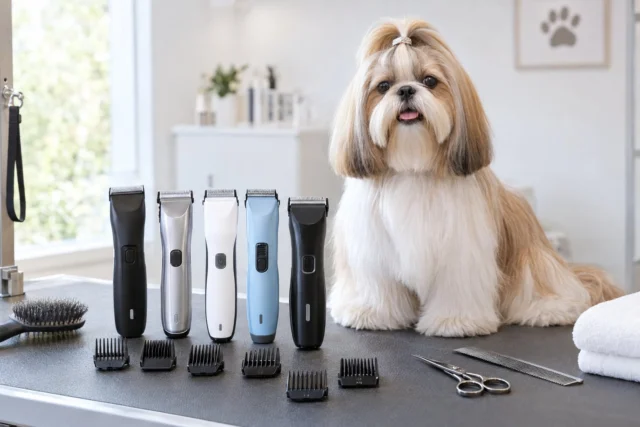
| Trimming Our pick | Cordless face & paw trimmer | Narrow blade, low noise. Full-size clippers are too wide and too loud this close to the eyes. | $$ |
| Shaping | Curved safety-tip scissors | Rounded tips. Straight sharp scissors near an eye are how dogs get hurt — this is the single most important item here. | $$ |
| Tear stains | Tear-stain remover | Shih Tzus stain heavily. Wipe daily — once the coat is dry-stained it will not lift. | $ |
| Finding mats | Fine/coarse steel comb | Catches what a brush skims over. Any mat near the eye must come out before a blade goes near it. | $ |
| Doing this often | Grooming table with arm | Both hands free and the dog held steady. The biggest safety upgrade available, and overkill if you groom twice a year. | $$$$ |
Face work wants small, quiet clippers rather than the set you use on the body — our clippers and trimmers list is a place to start.
Step-by-Step Face Grooming Routine
The order matters—brushing comes before cleaning, and cleaning comes before trimming. Rushing through any step just makes the next one tougher.
Brush and Detangle Before Any Trimming
Start by misting a little detangling spray on the facial hair. Let it sit for about 30 seconds.
Grab your steel comb and work through the hair around the eyes, cheeks, and beard. Go slow.
If you hit a knot, hold the base of the hair near the skin so you’re not yanking on your dog’s face. That’s just mean.
A pin brush works well for a final pass to smooth things out. Never try trimming matted hair—you really can’t see where the mat ends and the skin begins, and that’s how nicks happen.
Clean the Eyes, Beard, and Muzzle First
Once you’ve detangled everything, grab your grooming wipes.
- Wipe around both eyes, starting at the inner corner and moving out. Use a fresh wipe for each eye to avoid spreading bacteria.
- Clean under the chin and along the beard. Food and drool collect here fast.
- Check the folds around the nose. Moisture in those creases leads to irritation and odor.
If the staining is heavy, a gentle tearless dog shampoo with warm water works better than wipes alone. Dry the face fully before you start trimming.
Trimming Around the Eyes Without Nicking the Skin
This part makes most people nervous. Hold your dog’s muzzle gently but firmly with one hand. Use the other for your blunt-tipped scissors, tips pointing away from the eye.
Trim tiny amounts at a time—seriously, just millimeters. Comb the hair above and around the eye downward so you can see the natural growth line. Only trim hair that falls over the eye or touches the eyeball.
Stay at least a quarter inch away from the eyelid. If your dog flinches or pulls away, stop. Give a treat and try again in a minute.
Shape the Muzzle for a Soft, Round Finish
For that classic Shih Tzu look, you want the muzzle to look rounded, not blocky or choppy. Comb the muzzle hair downward and outward. Use your blunt-tipped scissors to trim in a gentle curve, following the natural roundness of the face.
Work in small sections. Let the hair on the sides of the muzzle blend into the cheek hair. Don’t cut straight across; angle your scissors just a bit for a softer edge.
Choose Between a Puppy Cut and Other Face Styles
A puppy cut keeps facial hair about 1 to 2 inches all around. It’s the easiest to maintain at home and works great for dogs who don’t love long grooming sessions. The face looks neat, round, and low-maintenance with this cut.
If you like the traditional Shih Tzu haircut with a longer topknot and flowing facial hair, you’ll need to commit to daily combing. That longer style looks stunning but tangles so fast. You can always grow it out later if you want to get fancy.
Final Touches for a Neat Shih Tzu Haircut
Once you’ve finished trimming:
- Run your slicker brush lightly over the face to catch any loose clippings.
- Do one more wipe around the eyes and nose to clear away trimmed hair.
- Check both sides of the face for symmetry. Step back and look at your dog head-on.
- Give your dog a treat (or three). Positive association with grooming pays off every time.
The whole routine—from brushing to the final wipe-down—should take about 10 to 15 minutes once you get the hang of it.
Common Face Grooming Problems to Watch For
Even with a solid routine, things can go sideways. Knowing what to look for saves you from turning a small issue into a vet visit. Here are the most common causes and symptoms that show up during or after face grooming.
Improper Techniques
They can lead to tiny nicks that get infected, or uneven patches that look bald and ruin the overall appearance. Always use blunt-tipped scissors. Always comb first.
If you’re unsure about a technique, practice on a still dog (or even a stuffed one) before going near the eyes.
Allergic Reactions
Some grooming wipes, shampoos, and sprays have fragrances or chemicals that irritate sensitive Shih Tzu skin. If you notice puffiness, redness, or your dog rubbing their face on the carpet right after grooming, the product might be the problem.
Switch to hypoallergenic, fragrance-free dog shampoo and wipes. Introduce one new product at a time so you can pinpoint the culprit.
Parasitic Infections
Mites, fleas, and fungal infections love warm, moist facial folds. If you see lots of scratching around the face, dark debris in the hair, or small crusty patches, parasites might be involved.
Your vet can do a quick skin scraping to check. Don’t treat for parasites based on a guess—get a proper diagnosis first.
Scratching
Persistent scratching at the face often means irritation from trapped hair, product sensitivity, or an underlying skin condition. Check for stray trimmed hairs stuck in folds or near the eyes. A quick wipe after grooming usually prevents this, but if the scratching continues for more than a day, something deeper is going on.
Redness
Red patches around the eyes, nose, or chin can come from moisture buildup, rough grooming, or allergic reactions. Keep facial folds dry and pat, don’t rub, when cleaning. Chronic redness deserves a vet’s attention, especially if there’s swelling or warmth to the touch.
Hair Loss
Bald spots on the face aren’t normal and shouldn’t be shrugged off as “just a trimming mistake.” Hair loss around the eyes or muzzle can mean fungal infections, mange, or hormonal imbalances. If you notice thinning hair or bare patches that aren’t growing back, skip the home remedies and call your vet. Catching it early makes treatment much simpler.
Frequently Asked Questions
If your Shih Tzu won’t sit still, how do you safely trim the hair around the eyes?
Try grooming right after a meal or a nap when your dog’s energy is lowest. Hold the muzzle gently with one hand and trim tiny amounts with blunt-tipped scissors using the other. If your dog keeps pulling away, break it into two-minute sessions with treats in between. Forcing a full trim all at once just doesn’t work.
Scissors or clippers, what’s actually easier for shaping a neat little muzzle at home?
For most beginners, blunt-tipped scissors give you way more control around the muzzle than clippers. Clippers can be too aggressive in tight spaces and may scare your dog with the vibration. Once you’re confident with scissors, try introducing small cordless trimmers for the cheeks and chin.
What’s the cleanest way to trim the beard and chin without making it look choppy?
Comb the beard hair straight down first, then trim in a slight curve instead of a straight line. Work in small snips, angling the scissors to follow the natural shape of the chin. Avoid cutting too much at once. You can always trim more, but you can’t put it back.
How short is “too short” for a face trim, especially if you want that teddy-bear look?
For a teddy-bear look, keep facial hair at about 1 to 1.5 inches long. Going shorter than half an inch exposes the skin to sunburn, irritation, and scratches. The goal is short enough to stay out of the eyes but long enough to frame the face with that signature roundness.
How do you keep hair out of the eyes between grooms, topknot, bands, or quick touch-ups?
A small topknot or soft elastic band keeps the hair lifted daily without needing to trim. For quick touch-ups between full grooms, just comb the hair upward and snip any strands that droop over the eyes. Rotate between methods so you’re not pulling on the same hair every day.
How often should you do a face tidy-up so it stays clean without irritating the skin?
Trim the face every 1 to 2 weeks. If your Shih Tzu gets tear stains, wipe their eyes daily. Once you go past three weeks without a trim, the hair probably starts poking their eyes or matting under the chin. Sticking to a regular schedule keeps things manageable and honestly just makes life easier for both of you.