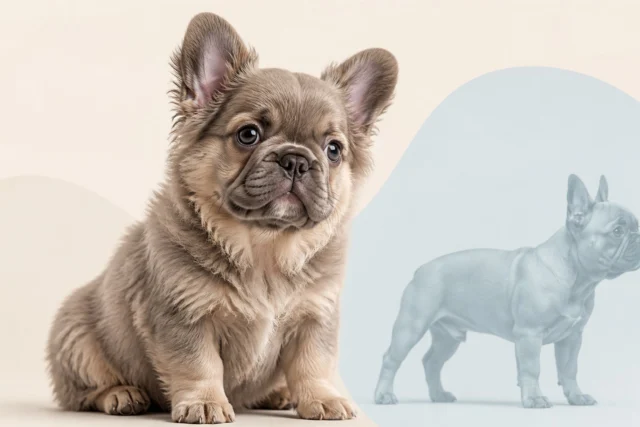
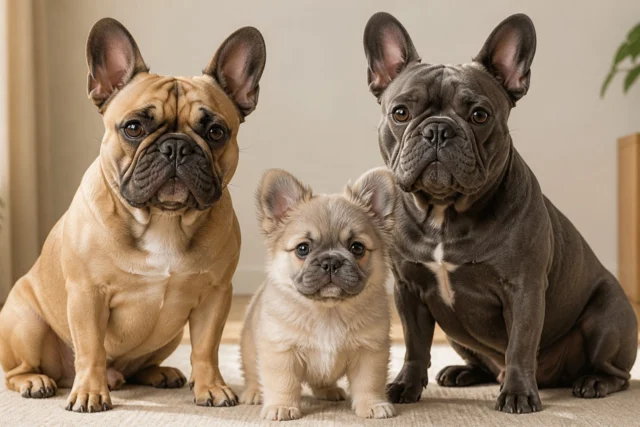
A blue French Bulldog is a color variation of the standard French Bulldog. This unique look comes from a recessive dilution gene that turns black pigment into a silvery blue-gray coat.
The breed has every classic Frenchie trait—bat ears, a chunky build—but that steel-toned coat gets people talking. It’s honestly one of the most debated colors in the Frenchie world.

I’ve spent years at Dog Fluffy writing about fluffy breeds and brachycephalic dogs. My own Fluffy, a solid blue female Frenchie, taught me more than any article ever could.
From color dilution alopecia scares to sketchy breeders I almost missed, I’ve seen a lot. I’ll share the real stuff: coat genetics, health risks like CDA and BOAS, daily care, and how to find a healthy puppy without falling for rare-color hype.
If you’re thinking about bringing one home or already have a blue Frenchie and want honest info, keep reading. It’s not all sunshine, but it’s worth knowing.
What A Blue Coat Really Means
The blue coat color comes from a single recessive gene that dilutes black pigment to gray. It only appears when a puppy gets two copies of that gene—one from each parent.
This same gene creates other French Bulldog color variations, like blue merle or blue fawn. It’s also right in the middle of a long-running AKC controversy.
How The Recessive Dilution Gene Changes Black Pigment
A blue French Bulldog carries two copies of the recessive dilution gene at the D-locus (d/d). That’s all there is to it.
No special breed, no crossbreeding—just genetics doing its thing. The dilution gene works like mixing white paint into black.
Instead of rich black pigment (eumelanin), the gene softens it. The result is that signature blue-gray or steel-silver coat.
Here’s the catch: both parents need to have at least one “d” allele. If just one parent carries it, the puppy won’t be blue but might carry the gene silently.
Two carriers give each puppy about a 25% chance of being blue. I didn’t really get this until Fluffy’s breeder showed me her DNA panel. Seeing “d/d” on paper made it all click.
Why Blue Is Controversial In French Bulldog Colors
Not everyone in the Frenchie world loves blue. Some breeders argue that breeding for the dilution gene narrows the gene pool and ups the risk of color dilution alopecia (CDA).
Others say rare-color demand pushes irresponsible breeders to focus on looks, not health. The debate isn’t just cosmetic.
Puppy mills and backyard breeders have flooded the market with blue Frenchies because they can sell for $2,000 to $4,000 or more, as Canine Scape points out. That price tag attracts people who skip health testing entirely.
I’ve talked to Frenchie owners who paid top dollar for a “rare blue” puppy, only to face skin problems within the first year. The color itself isn’t harmful—it’s what some breeders cut corners on to produce it that causes trouble.
Blue Merle, Blue Pied, Blue Brindle, And Blue Fawn Explained
Blue French Bulldogs don’t all look the same. The dilution gene mixes with other coat genes to create distinct looks:
- Blue solid: Uniform blue-gray all over. That’s Fluffy.
- Blue brindle: Blue-gray base with darker streaks, kind of like tiger stripes.
- Blue pied: Blue-gray patches on a mostly white coat. Each dog’s pattern is unique.
- Blue fawn: Lighter, warmer blue-gray with fawn undertones. The blue fawn French Bulldog looks softer than solid blue.
- Blue merle: Mottled, marbled pattern with blue-gray and lighter spots. This one’s the most controversial because the merle gene brings its own health risks.
Each variation still needs two copies of the dilution gene. The difference is what other genes come along for the ride.
What The AKC And American Kennel Club Actually Recognize
Here’s something most blue Frenchie sellers won’t tell you: the American Kennel Club doesn’t list blue as a standard French Bulldog color.
The AKC standard covers brindle, fawn, white, cream, and combos of those. Blue, lilac, merle, and chocolate are non-standard.
A blue French Bulldog can be AKC-registered, but it can’t compete in conformation shows against the breed standard. Does that matter if you just want a pet? Not really.
But if a breeder charges you a premium by claiming the color is “AKC-approved” or “show quality,” that’s a red flag. Fluffy is AKC-registered. She’ll never win a conformation ribbon, and honestly, that’s fine by me.
Health Questions I’d Ask Before Bringing One Home
Blue French Bulldog health concerns fall into two camps. You’ve got the brachycephalic issues every Frenchie faces (BOAS, heat intolerance, spinal problems), and then the skin-specific risks tied to the dilution gene—especially color dilution alopecia and chronic allergies.
Knowing what to ask before you sign anything can save you a ton of money and, more importantly, spare your dog a lot of suffering.
Common Blue French Bulldog Health Risks Beyond Coat Color
Every French Bulldog is a brachycephalic breed. That flat face is cute, but it comes with real problems.
The most common health risks in Frenchies aren’t about color at all.
- Brachycephalic obstructive airway syndrome (BOAS), which makes breathing tough
- Intervertebral disc disease (IVDD), a spinal issue that can cause pain or even paralysis
- Hip dysplasia
- Chronic ear infections
- Eye problems like cherry eye and corneal ulcers
A blue coat doesn’t make these risks higher or lower. But a breeder who cares more about color than structure can produce puppies with worse airways, weaker spines, and more joint issues.
That’s why health testing matters way more than coat shade.
Color Dilution Alopecia And Other Skin Problems To Watch
Color dilution alopecia (CDA) is a genetic skin condition linked to the dilution gene. It causes hair thinning, dry skin, and makes infections more likely.
Not every blue Frenchie gets CDA, but it’s a real risk. CDA usually shows up between 6 months and 3 years old.
The hair goes brittle and patchy, especially along the back. There’s no cure, just management—medicated shampoos, moisturizers, and regular vet visits.
Fluffy hasn’t developed CDA, but I check for it every bath. I run my hands along her coat looking for thin spots. My vet says early detection makes it easier to manage.
Besides CDA, blue Frenchies often have skin dryness and can get bacterial infections where the coat is thinnest.
BOAS, Heat Intolerance, And Why Water Is Risky
Brachycephalic obstructive airway syndrome (BOAS) is the biggest health concern for any French Bulldog. Their short airways make breathing harder, especially in heat, humidity, or even moderate exercise.
I live in a warm climate, and Fluffy can overheat in under 15 minutes on a summer walk. Here’s what I do:
- Walk only in the morning or evening, never at midday.
- Always bring water. Seriously, always.
- Watch for heavy panting, drooling, or a wide stance. Those are early signs of heat distress.
- Frenchies are awful swimmers because they’re so front-heavy and short-snouted. Never leave one alone near a pool.
Not all blue Frenchies have the same BOAS severity. Dogs with a slightly longer muzzle and wider nostrils breathe better than those bred for a super flat face.
Ask the breeder about the parents’ breathing. If you can, ask for BOAS grading.
Allergies, Skin Fold Dermatitis, IVDD, And Eye Issues
Allergies hit Frenchies hard, and blue Frenchies seem to get hit even harder. Environmental allergies, food sensitivities, and skin fold dermatitis are all common.
Fluffy started licking her paws obsessively around 1.5 years old. The vet said it was environmental allergies.
We switched to a limited-ingredient diet and added a daily antihistamine (vet-prescribed). The licking dropped by about 80%.
Skin fold dermatitis is another issue. Those cute face wrinkles trap moisture and bacteria. I wipe Fluffy’s folds every other day with a gentle, unscented wipe. Skip this step, and you’ll smell the infection before you see it.
IVDD, or intervertebral disc disease, affects the spine. French Bulldogs are prone to spinal disorders because of their squat build.
Keeping your Frenchie at a healthy weight and stopping them from jumping off furniture helps a lot. Eye issues like cherry eye and corneal scratches are common too.
Fluffy gets eye irritation from dust, especially on windy days. I keep vet eye drops on hand and clean around her eyes daily.
Living With One Day To Day
Daily life with a blue French Bulldog really comes down to three things. You’re managing a Velcro-level clingy temperament, keeping a low-maintenance coat clean (without overdoing it), and balancing exercise for a breed that overheats faster than you’d think.
Allergies and eye irritation sneak in as extra daily chores, and most breed guides barely mention them.
Temperament, Bat Ears, And Why They’re Such Velcro Dogs
A blue French Bulldog is a lapdog who’s convinced your lap is its rightful throne. Fluffy follows me everywhere—room to room, step for step.
If I close the bathroom door, she’ll sigh dramatically and flop down right outside, making sure I know she’s waiting.
Frenchies are social, affectionate, and totally adaptable to apartment living. Those signature bat ears? They swivel at every little sound.
Their faces can be surprisingly expressive, almost human sometimes. They’re good with kids, usually friendly with other dogs, and they soak up attention like little sponges.
But that clinginess? It has a downside. Separation anxiety is real.
If you’re gone long hours, a Frenchie will let you know—usually by chewing up something you wish they hadn’t.
The stubborn streak is no joke either. Fluffy knows “sit” and “down” but only performs when she’s in the mood.
Grooming, Shedding, And Low-Maintenance Coat Care
The blue French Bulldog coat is short and smooth, so it’s easy to keep up with. I brush Fluffy once a week with a soft bristle brush and bathe her about once a month.
That’s really all it takes.
Shedding’s light but constant. I find short hairs on my clothes and couch, but it’s nothing compared to what Golden Retriever owners deal with.
The real work? Wrinkles, ears, and nails. I clean Fluffy’s face folds every other day, check her ears weekly, and trim her nails every two or three weeks.
Dental care matters too, so I use a dog toothbrush a few times a week.
Honestly, after grooming everything from Pomeranians to Samoyeds, I think Frenchies are some of the lowest-maintenance dogs out there. The coat isn’t the issue—it’s those folds.
Feeding, Exercise, And Training For A Lapdog That Overheats Easily
Frenchies pack on pounds fast. Portion control isn’t optional.
I feed Fluffy twice a day with high-quality kibble for her size, and I try (not always successfully) to ignore her big, pleading eyes at the table.
For exercise, 20 to 30 minutes of walking daily does the trick. I split it into two short walks during the cooler hours.
Puppies need even less—overdoing it can mess with their joints. Training? Keep it short and positive.
Five minutes of focused practice beats a bored Frenchie ignoring you for twenty. Treats work. Praise works. Yelling? Not so much.
Frenchies are clever and will train you if you’re not careful. Fluffy learned that whining at dinner got her scraps—until I caught on and stopped.
What I’ve Noticed With Fluffy’s Allergies And Eye Irritation
This is the bit most blue Frenchie guides skip. Fluffy’s allergies showed up around 18 months old—lots of paw licking and red, watery eyes.
The vet ran an allergy panel. Turns out, dust was the big trigger.
- We switched to a limited-ingredient food (no chicken, no grain).
- Added a daily antihistamine prescribed by the vet.
- I wipe her paws after every walk now.
- And I clean around her eyes daily with saline solution.
It took about three weeks to see a real difference. She stopped licking her paws raw.
Eye irritation is still a thing, especially on windy days. I keep veterinary eye drops in my bag just in case.
If your blue Frenchie starts squinting or pawing at their face, get it checked before it turns into a corneal scratch.
From Fluffy’s Bowl: If your Frenchie won’t stop licking their paws, don’t just swap foods and hope. Ask your vet for an allergy panel. We wasted two months guessing, and it turned out to be environmental, not food-related.
How To Find A Healthy Puppy Without Falling For Color Hype
A responsible breeder should show you proof of health testing, parent temperament, and clear pricing before you hand over any deposit. The rare-color market drives up French Bulldog prices by thousands, and honestly, the hype blurs the lines between purebred blue Frenchies, mixed breeds, and look-alikes like English Bulldogs or Pugs.
What A Responsible Breeder Should Prove
It’s not enough for a breeder to have cute puppy photos on Instagram. They need to provide documentation you can actually check before you commit.
Here’s exactly what I asked Fluffy’s breeder—and what I’d ask again:
- DNA health panel results for both parents (including D-locus for color confirmation).
- OFA or PennHIP evaluations for hips and spine.
- A BOAS assessment or at least a video of both parents breathing after light exercise.
- A written health guarantee covering genetic issues for at least two years.
- Permission to visit and meet the parents in person.
If a breeder hesitates on any of these, just walk away. Reputable breeders always put health first—color comes second.
Red Flags Around Pricing, Rare-Color Marketing, And French Bulldog Cost
Blue Frenchies are pricey. That’s just how it is.
But there’s a difference between a fair price for a health-tested puppy and a ridiculous markup for color alone.
In 2025, French Bulldog puppies from good breeders usually run from $3,000 to $7,000, with rare colors going past $10,000.
If someone’s selling a blue Frenchie for $1,200 on social media, something’s off.
Red flags I’ve seen myself:
- Pushing “exotic” or “rare” as the main selling point, but no mention of health testing.
- Multiple litters at once (usually a puppy mill sign).
- No questions about your home or lifestyle. A good breeder interviews you, too.
- Pressure to put down a deposit right away, no contract.
- Shipping puppies with no video calls or visits allowed.
The high French Bulldog cost makes sense—c-sections, health testing, and proper socialization aren’t cheap.
Purebred Questions, Mixed Breed Confusion, And Look-Alike Breeds
Not every blue dog with a flat face is a purebred French Bulldog. The popularity of blue Frenchies has led to a market full of mixed-breed dogs sold as “rare French Bulldogs.”
If a puppy looks huge, has a longer snout, or just seems off in proportions, it’s probably a mix.
Some sellers cross Frenchies with American Bulldogs, American Staffordshire Terriers, or other breeds and call the puppies purebred.
Ask for AKC registration and a DNA test if you’re unsure. A reputable breeder won’t mind.
How Frenchies Compare With Pug, English Bulldog, And Other Popular Dog Breeds
People compare blue Frenchies to other compact, flat-faced breeds all the time. Here’s a quick breakdown from my own experience:
| Breed | Size | Energy Level | Breathing Concerns | Coat Maintenance |
|---|---|---|---|---|
| French Bulldog | 16–28 lbs | Low to moderate | High (BOAS common) | Very low |
| Pug | 14–18 lbs | Moderate | High | Low, but heavy shedding |
| English Bulldog | 40–50 lbs | Low | High | Low |
| German Shepherd | 50–90 lbs | High | Low | Moderate to high |
| Golden Retriever | 55–75 lbs | High | Low | High |
| Labrador Retriever | 55–80 lbs | High | Low | Moderate |
Frenchies are smaller and calmer than most other popular breeds, which is great for apartments. But you trade that convenience for higher vet bills and breathing issues.
Pugs are probably the closest in lifestyle, but they shed way more.
After writing about everything from Huskies to Shih Tzus, I always give the same advice: pick the breed that fits your real life, not just the one that looks cute on Instagram.
Frequently Asked Questions
How much should I expect to pay for a blue French Bulldog puppy?
Most blue French Bulldog puppies from health-tested, reputable breeders cost between $3,000 and $7,000. Puppies with rare color combos or top lineage can run over $10,000.
If you see prices under $2,000, that’s a red flag—check the breeder’s health testing before you get excited.
What should I ask a breeder to prove the pup is healthy and ethically bred?
Ask for DNA health panel results for both parents, OFA or PennHIP hip and spine evaluations, and a BOAS breathing assessment. Request a written health guarantee for genetic conditions (at least two years).
A good breeder will let you visit, meet the parents, and will ask about your home before selling you a puppy.
Are blue French Bulldogs more likely to have skin or allergy issues?
Yeah, they are. The dilution gene that gives blue Frenchies their unique coat also bumps up the risk of color dilution alopecia (CDA).
CDA can lead to thinning hair and dry, itchy skin that’s just begging for infections. On top of that, blue French Bulldogs seem especially prone to both food and environmental allergies.
If you want to stay ahead of things, you’ll want to get regular vet checkups. A limited-ingredient diet and just keeping an eye on their skin every day can make a real difference.
How big do blue French Bulldogs usually get once fully grown?
Most blue French Bulldogs, once they’re all grown up, weigh somewhere between 16 and 28 pounds. They usually stand about 11 to 13 inches tall at the shoulder.
Males often tip the scales a bit more than females. For example, Fluffy is on the smaller side at around 19 pounds.
Honestly, keeping your Frenchie at a healthy weight is one of the best things you can do for them. It really helps with joint and breathing issues, which can sneak up on you if you’re not careful.
What’s different about caring for the long-haired “fluffy” French Bulldog version?
The long-haired or “fluffy” French Bulldog carries a rare recessive gene that gives them longer fur. These dogs need brushing several times a week, especially since matting pops up behind the ears and around the legs.
Standard blue Frenchies like mine have short coats. I just brush mine weekly and give him a bath about once a month.
If you’ve got a blue Frenchie at home, or you’re about to bring one home, I’d honestly love to hear what your experience has been. Drop it in the comments—I actually read every one.
This is what worked for me and Fluffy, but always check with your vet for your own dog’s situation.