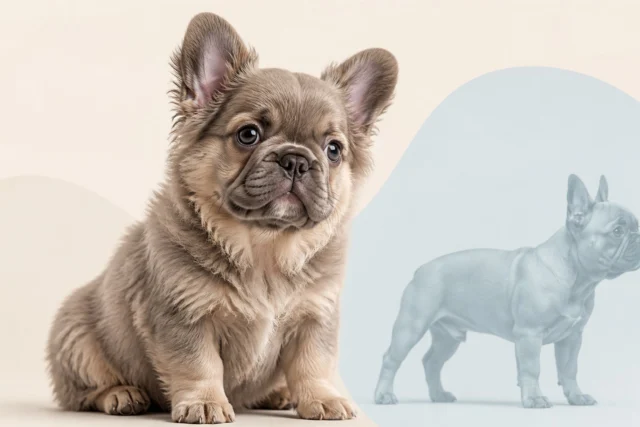
Yep, it’s possible. Two smooth-coated Frenchies can have a fluffy puppy—but only if both parents carry a hidden copy of the recessive long-hair FGF5 gene variant.
Each parent looks like a typical short-coated Frenchie, but each passes that hidden gene about half the time. If a puppy gets both copies, the coat comes in long.
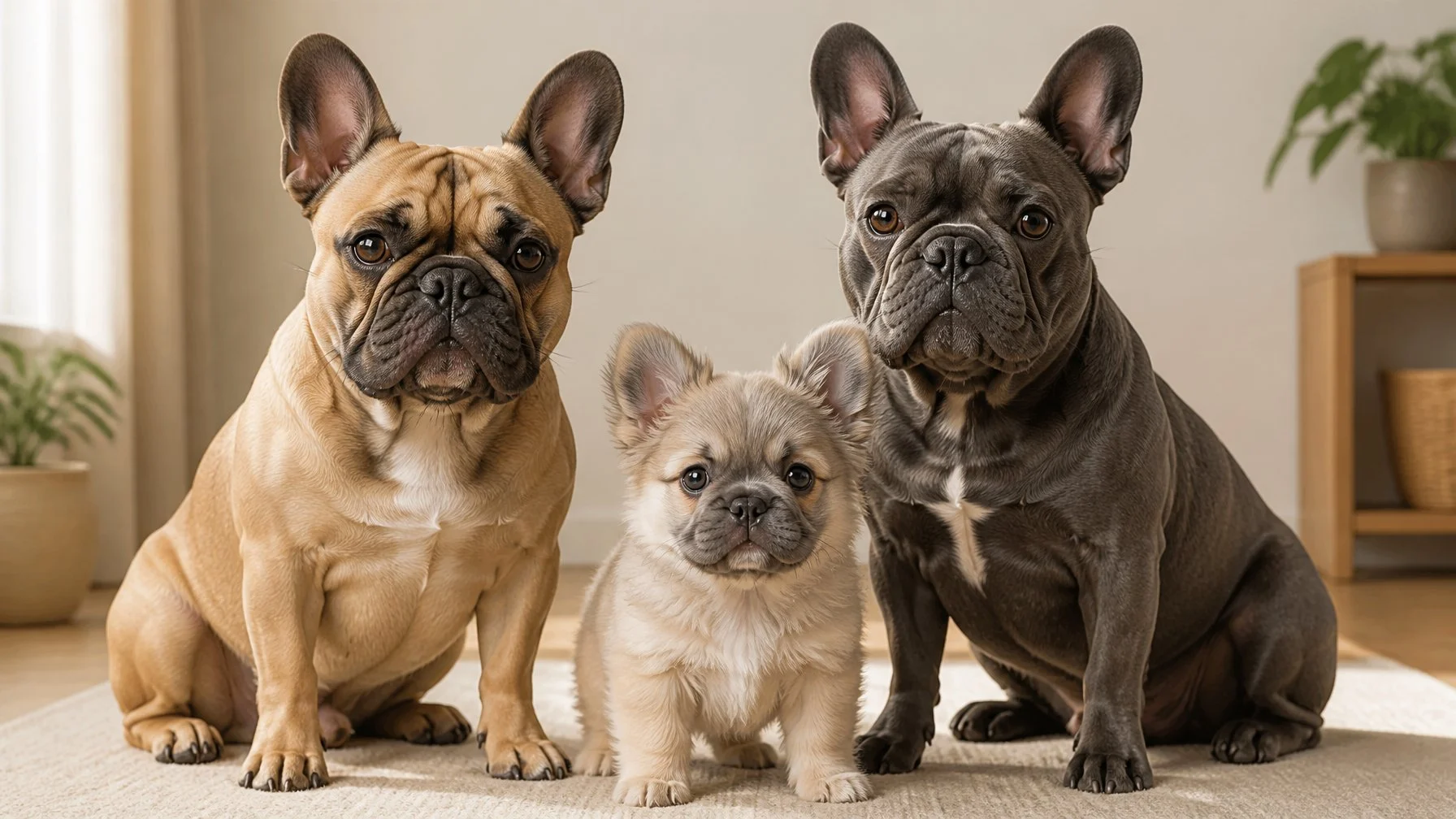
A fluffy Frenchie isn’t some weird mix or a designer cross. It’s just classic recessive genetics at work.
But knowing the science is only half the story. A fluffy coat changes grooming routines, heat management, and how carefully you need to read a breeder’s paperwork.
Dog Fluffy digs into the genotype-versus-coat confusion, the DNA tests that settle it, and the health questions that honestly matter way more than the fluff.
Why Two Smooth-Coated Parents Can Produce Fluffies
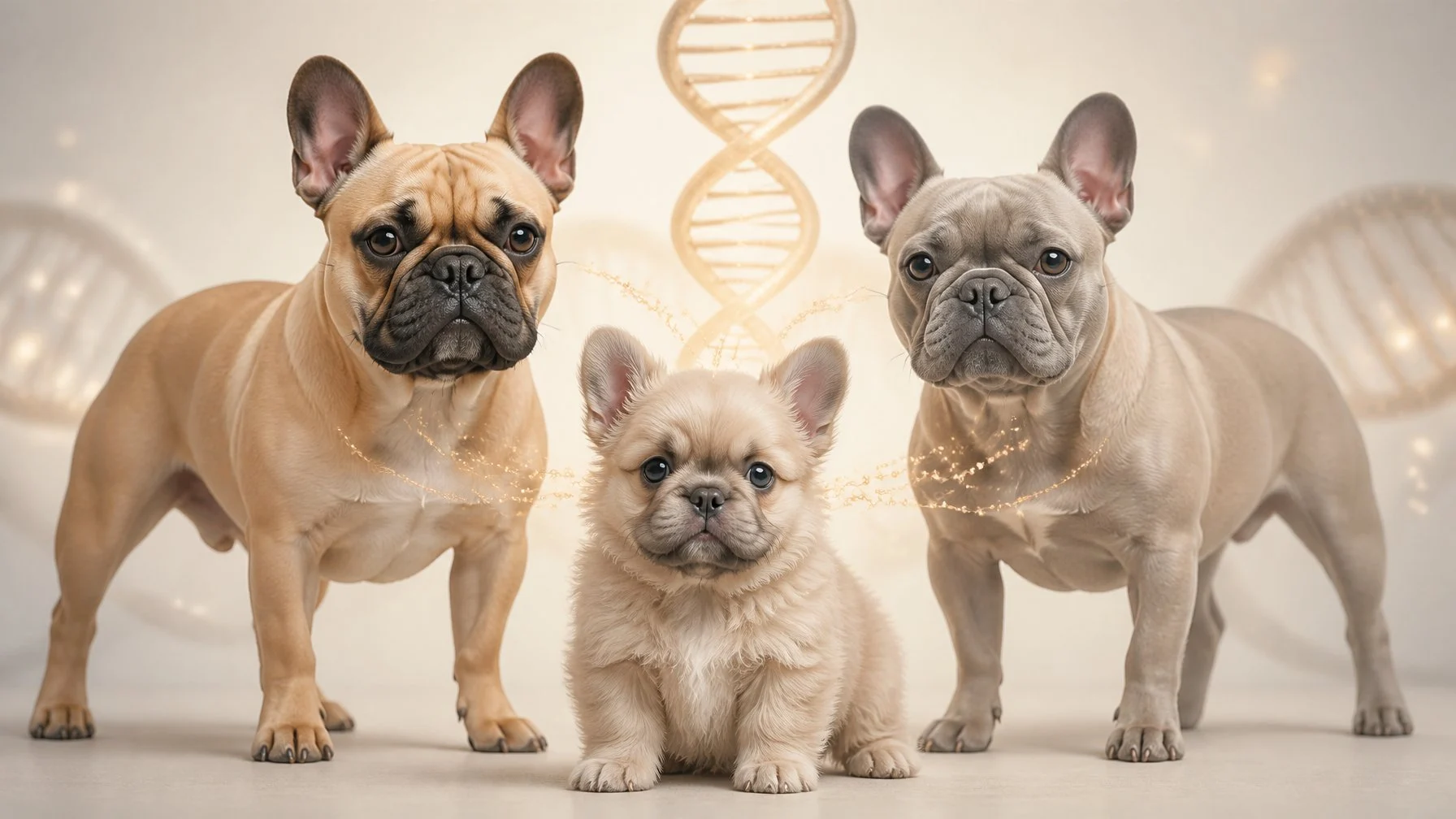
Coat length in French Bulldogs comes down to two copies of a single gene. The long-hair version only shows up when a puppy inherits it from both parents.
That simple rule explains why some smooth parents can surprise you with a fluffy pup, while others never will, no matter how many litters they have.
The Recessive FGF5 Long-Hair Variant
A fluffy French Bulldog is a purebred Frenchie with two copies of a recessive FGF5 gene variant. That’s what gives them a longer, softer coat.
FGF5 stands for fibroblast growth factor 5. Its job? Tell hair follicles when to stop growing.
If both copies of the gene are “broken,” that stop signal never comes, so the hair just keeps growing. You get fur that’s two to three times longer than normal—most obvious as feathering on the ears, a soft chest ruff, and a fluffy tail.
Breeders call these variants L1 and L4, both found at the L-locus in Frenchie coat genetics.
Carrier, Non-Carrier, and Visual Fluffy Coat Results
There are three genotypes, but only one is obvious on the outside:
- Non-carrier (L/L): two short-coat copies. Smooth coat. Can’t produce fluff unless paired with a fluffy dog.
- Carrier (L/l): one short, one long copy. Looks totally smooth. Passes the long-hair gene to about half their puppies.
- Visual fluffy (l/l): two long copies. Long coat. Passes the long-hair gene to every puppy.
A carrier and a visual fluffy look nothing alike, but genetically they’re just one copy apart. That’s the reason smooth parents can have fluffy puppies.
What Each Parent Pairing Can Produce
Here’s how the odds shake out for each pairing:
- Non-carrier x non-carrier: 0% fluffy. No hidden copies to pass on.
- Carrier x non-carrier: 0% fluffy, but around 50% of puppies will be carriers.
- Carrier x carrier: about 25% fluffy, 50% carriers, 25% clear. This is the classic “two smooth parents, one fluffy puppy” scenario.
- Carrier x visual fluffy: about 50% fluffy, 50% carriers.
- Visual fluffy x visual fluffy: 100% fluffy.
Those are just odds, not guarantees. Frenchie litters usually have three or four puppies, so a carrier-to-carrier pairing might give you zero fluffies—or three. Genetics doesn’t always play fair.
How To Confirm What a Frenchie Carries
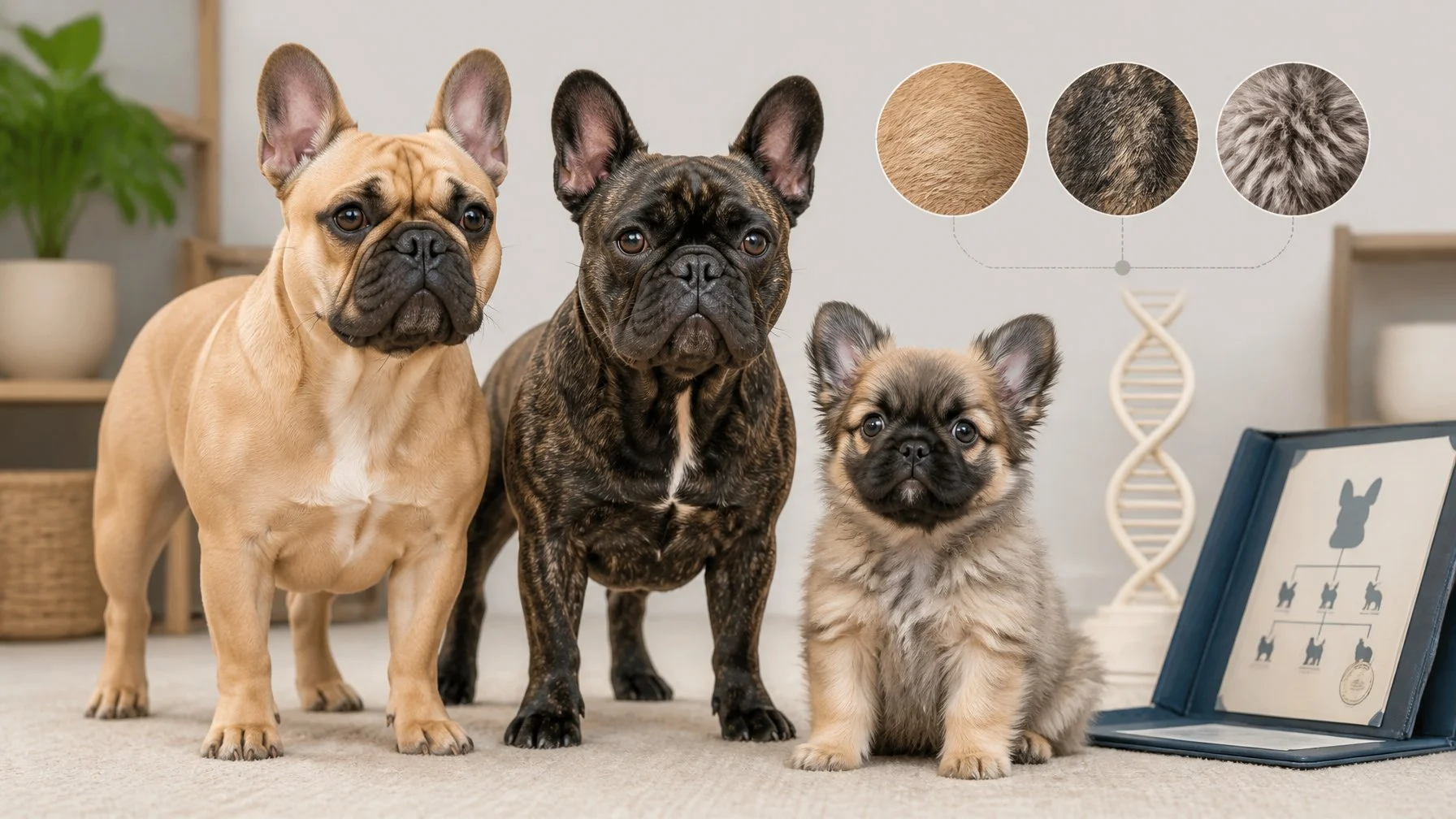
A cheek swab will tell you in two weeks what guessing never will. The paperwork should name the gene, the result, and the lab.
Coat texture, wispy ear hair, and a breeder’s word don’t count as proof.
Why Looks Alone Cannot Identify a Carrier
A fluffy carrier looks exactly like any other smooth-coated Frenchie. There’s no visual clue.
People online swear by longer ear fringe or a softer neck. That’s just normal coat variation. One working copy of FGF5 is enough to keep hair short.
If a breeder says, “she’s definitely a carrier, look at her ears,” they’re guessing. That kind of guess can cost buyers real money when a “fluffy-priced” puppy turns out smooth.
Reading a Coat-Length DNA Test
Coat-length testing is cheap and easy to get. Labs like Orivet and other canine genetics services can screen the FGF5 gene from a cheek swab.
A solid report should show:
- The dog’s registered name and microchip number
- The gene tested (FGF5 or L-locus)
- The result: clear, carrier, or affected/visual
- The lab name and processing date
Ask for the PDF directly from the lab, not just a cropped screenshot. Screenshots float around between litters more often than you’d think.
Records That Support a Purebred Claim
Fluffy Frenchies are purebred French Bulldogs. The long-hair variant has been quietly hanging around Frenchie bloodlines for generations. Breed-ancestry DNA panels confirm it; they don’t turn up Pekingese or Pomeranian.
Reasonable paperwork to ask for:
- Registration papers for both parents
- Coat-length results for both parents
- A breed-ancestry panel if the puppy is marketed as “rare purebred fluffy”
- A written pedigree going back at least three generations
A Fluffy Coat Changes Grooming, Not Frenchie Personality
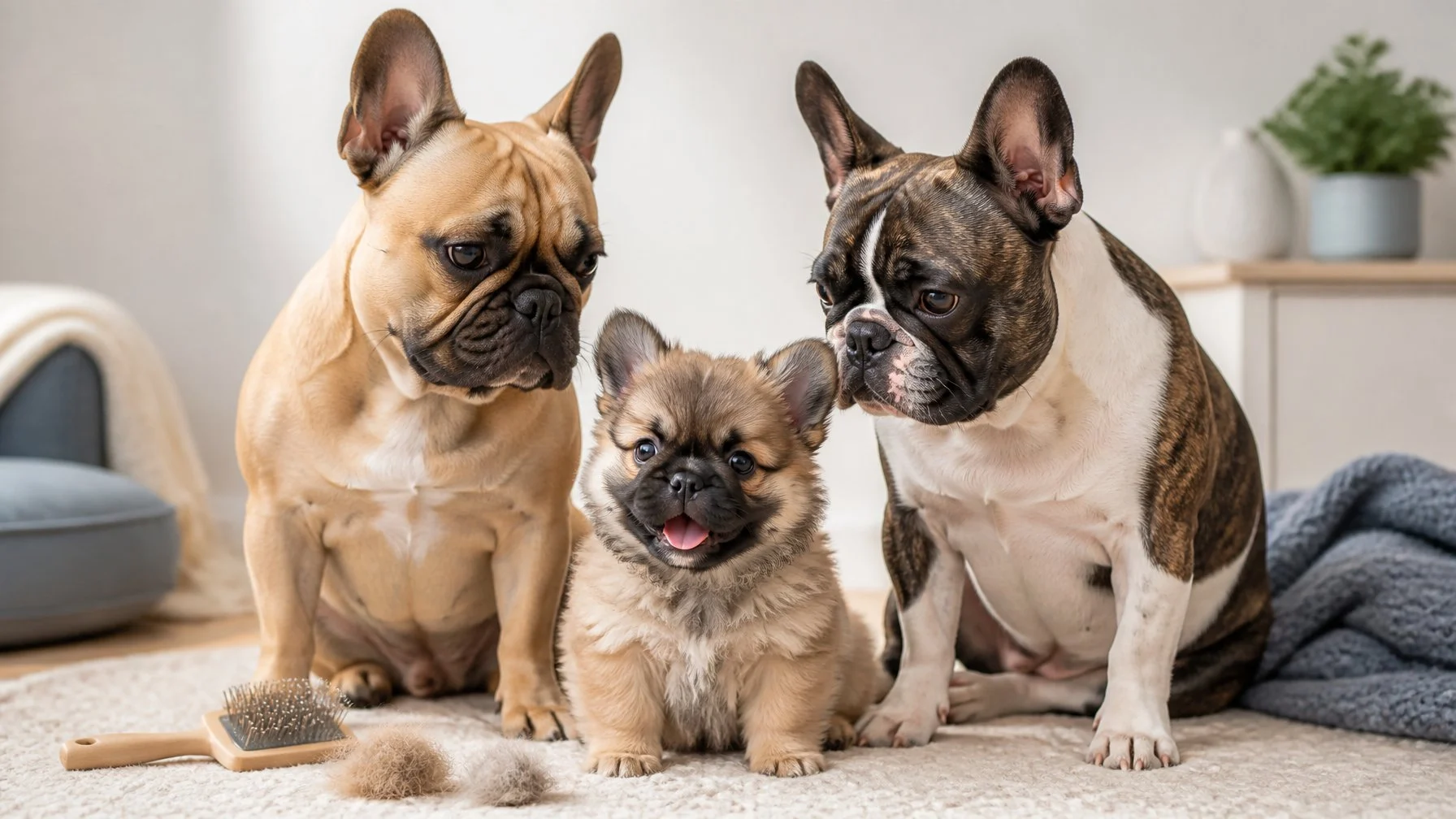
The extra hair shows up on the ears, chest, and tail. You’ll need two or three brushing sessions a week, and more loose fur gets trapped against the skin.
But underneath, it’s still the same stubborn, snoring, people-obsessed Frenchie as always.
Where the Longer, Softer Hair Shows Most
The coat isn’t evenly long. It’s patchy, but in a predictable way:
- Ears: fringe-like feathering, super obvious
- Chest and neck: a soft ruff, almost like a mini lion’s mane
- Tail: fuller and fluffier than usual
- Legs and belly: light feathering that picks up debris
Texture is silky, not coarse. Every Frenchie color shows up in fluffies, and longer hair makes cream, lilac, and blue look extra dramatic in photos—probably why the hype exists.
Brushing, Bathing, and Skin-Fold Care
Consistency beats intensity. Two or three short brushing sessions a week prevent mats better than one long weekly battle.
Here’s a routine, pulled from fluffy Frenchie grooming guides:
- Brush 2 to 3 times weekly with a soft slicker brush, focusing on ears, chest, and behind the legs.
- Bathe every 3 to 4 weeks with a mild dog shampoo. Only bathe more often if the coat gets truly dirty.
- Wipe facial folds daily with a damp cloth and dry them well. Damp folds can cause dermatitis.
- Check ears weekly for debris and odor.
- Book a professional tidy-up every 6 to 8 weeks if things get out of hand.
Dog Fluffy’s grooming guides cover slicker-brush technique for small fluffy breeds if mats keep popping up.
Shedding, Heat, and Everyday Comfort
Fluffy Frenchies shed. Usually a bit more than smooth ones, since the longer hair traps loose undercoat instead of dropping it straight onto your couch.
Heat’s the real issue, though. Flat-faced dogs already struggle to cool off by panting, and extra coat just adds more insulation. Walks should happen during the coolest part of the day, ideally under 20°C [68°F], with shade and water handy.
A fluffy coat isn’t cooling. It’s basically a duvet on a dog that overheats easily.
Skin allergies hit this breed no matter the coat. Longer hair just hides early redness for longer. Part the fur while brushing to spot problems sooner.
Health Must Matter More Than Coat Length
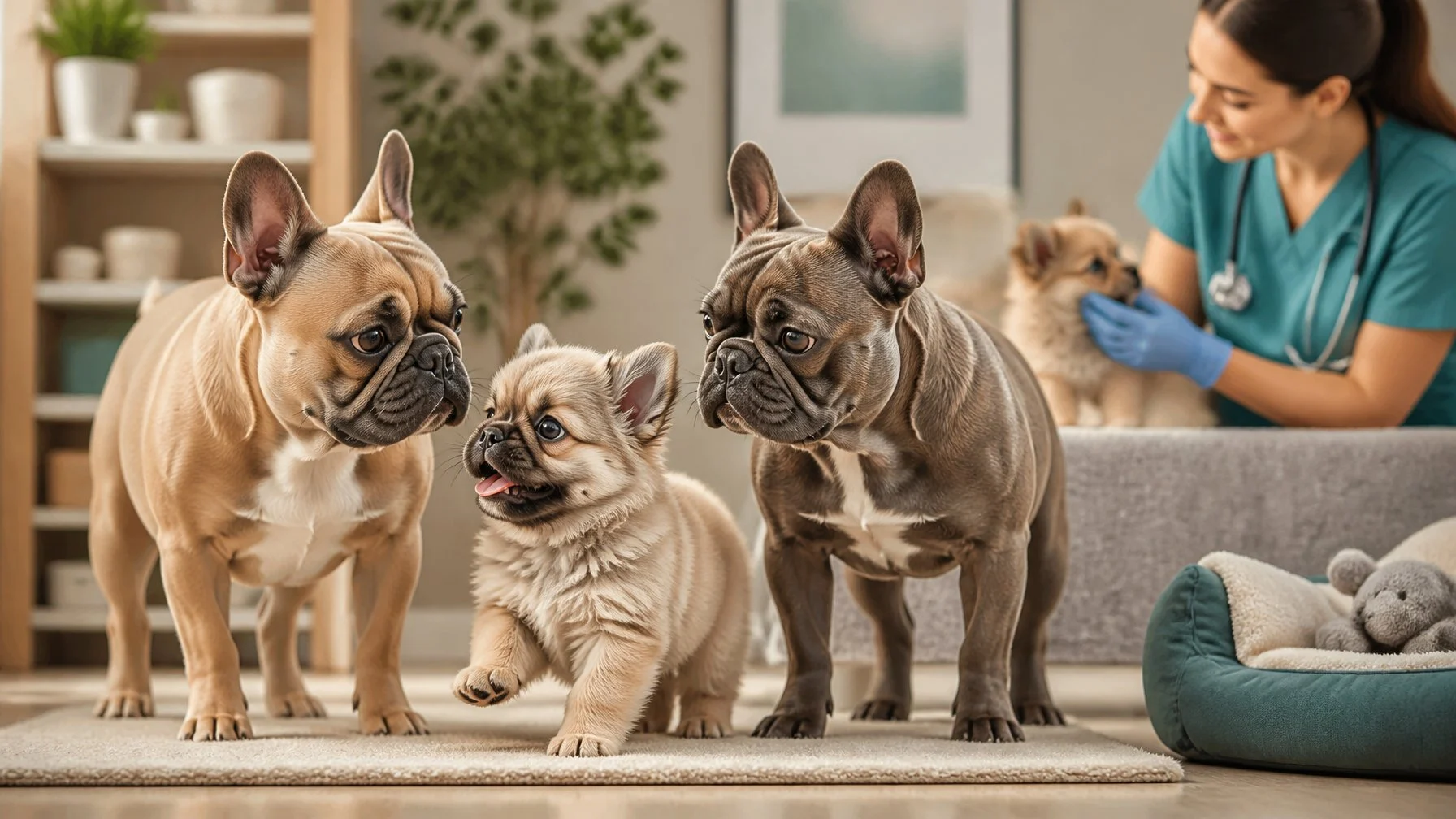
Breathing, spine, eye, and joint problems run through the French Bulldog breed, no matter what the coat looks like. A fluffy puppy faces the same risks as a smooth littermate.
The tests that matter are the ones a breeder can show you on paper. Don’t get distracted by the fluff.
The Frenchie Health Checks to Request From a Breeder
Get documentation on both parents—don’t just take someone’s word for it.
- Ask for a breathing or airway assessment, ideally a graded brachycephalic obstructive airway syndrome exam by a vet.
- Request a hip evaluation for hip dysplasia.
- Spinal screening matters, since hemivertebrae and other spinal issues show up often in screw-tailed breeds.
- Make sure there’s been an eye exam covering cherry eye, dry eye, and corneal ulcers.
- Look for a DNA panel that includes degenerative myelopathy (DM).
- Insist on a written health guarantee that spells out what it covers and for how long.
If a breeder can’t show you dated results with a real vet’s or lab’s name, just assume the claim hasn’t been verified.
Breathing, Spine, Eye, And Joint Risks
Flat faces mean narrowed airways.
Loud snoring, gagging after excitement, and struggling in mild heat aren’t quirks—they’re real problems.
Short, twisted spines can create malformed vertebrae. This can cause pain or weakness as a dog grows up.
Prominent eyes sit so exposed, scratches and ulcers happen fast.
Hips and knees take a beating from all that weight packed into a compact frame.
Why a Long Coat Does Not Cause or Cure Breed Health Problems
The FGF5 variant controls hair length. That’s it.
It doesn’t affect airway shape, spinal structure, or joints.
No credible evidence links the long-hair variant to extra disease risk. No coat type protects a Frenchie from brachycephalic problems either.
The coat just changes heat tolerance and how easily skin issues hide. Those are management headaches, not genetic ones.
How To Choose a Responsible Fluffy Frenchie Breeder
Good breeders lead with test results and welcome tough questions. The sketchy ones push rarity, color, and a deposit deadline instead.
The gap between AKC registration and AKC show eligibility is where most buyers get tripped up.
Questions to Ask Before Paying a Deposit
- Can both parents’ FGF5 results and health tests be sent as lab PDFs?
- How many litters does each dam have, and how far apart?
- Where do the puppies live before eight weeks, and who’s handling them?
- What happens if the buyer can’t keep the dog later?
- Is a video call with the litter and dam possible?
A breeder who welcomes those questions is usually worth waiting for.
Frenchie litters are small, so a waiting list is normal. Honestly, it’s usually a good sign.
Prices swing wildly by region and season. Any figure you see online should be checked against local listings before you treat it as a benchmark.
Ask sellers to back up a premium price with paperwork, not just fancy adjectives.
AKC Registration Versus the AKC Breed Standard
These are two different things, and the confusion sells a lot of puppies.
A fluffy French Bulldog can be registered with the American Kennel Club as a purebred, but the AKC breed standard calls for a short, smooth coat, so fluffies can’t compete in conformation.
They can still try obedience, agility, or rally. Registration just confirms parentage records. It doesn’t say a thing about health, temperament, or show eligibility.
If you see a listing treating “AKC registered” as proof of quality, that’s a stretch.
Red Flags Around Color, Price, And Breeding Rights
Watch for these:
- Marketing that pushes “rare exotic” colors harder than health results.
- Claims the fluffy coat came from Poodle or Pekingese crosses—breed-ancestry testing says otherwise.
- Pressure to pay a deposit within hours.
- Full breeding rights offered to first-time buyers, no questions asked.
- No contract, or a contract with no return clause.
- Puppies available before eight weeks old.
From Fluffy’s Bowl: From Fluffy’s Bowl: ask to see the parents’ paperwork, not the puppy’s. A puppy has no health history yet, so its own documents tell you almost nothing. The parents’ results are the only thing on the table that predicts anything, and a breeder who has them will produce them without being asked twice.
Frequently Asked Questions
Can two short-haired French Bulldogs have a long-haired puppy?
Yes, if both parents carry one copy of the recessive long-hair variant. Each carrier passes that copy to about half its puppies, so roughly 25% of the litter could inherit two copies and grow a fluffy coat. If only one parent’s a carrier, none of the puppies will be visually fluffy.
What gene causes a French Bulldog to have a fluffy coat?
The FGF5 gene, short for fibroblast growth factor 5, sits at the L-locus. It tells hair follicles when to stop growing. Two broken copies mean the signal’s gone, so hair keeps growing longer and softer. Breeders usually call the variants L1 and L4 on DNA reports.
Do both Frenchie parents need to carry the long-hair gene?
For a visually fluffy puppy, yes. A puppy needs two copies—one from each parent—so both parents must be either carriers or visual fluffies. A carrier bred to a non-carrier makes only smooth-coated puppies, though about half will quietly carry the gene forward.
Are fluffy French Bulldogs purebred or mixed with another breed?
They’re purebred. Breed-ancestry DNA panels on true fluffy Frenchies come back 100% French Bulldog with two long-hair copies, not Pekingese or Pomeranian. The long-hair variant’s been in French Bulldog bloodlines for generations. Breeders just bred away from it because the show standard calls for a short coat.
How can breeders tell if a smooth-coat Frenchie carries the fluffy gene?
Only through a DNA test. Cheek-swab coat-length panels from labs like Orivet will report the dog as clear, carrier, or affected. There’s no visual clue, no coat texture, and no ear fringe that reliably identifies a carrier. Buyers should ask for the lab PDF, not just a cropped screenshot.
Are fluffy Frenchies more likely to have health problems than smooth-coat Frenchies?
No one’s found evidence that the long-hair gene causes extra health problems. Fluffy Frenchies deal with the same breed issues as their smooth-coated cousins: airway trouble, spinal quirks, eye stuff, and creaky joints. Their longer fur does trap more heat and can hide early skin irritation. So, if you’ve got a fluffy, you’ll want to stay on top of heat management and get into the habit of regular brushing. Ever had a pair of smooth-coats throw a fluffy pup into the mix? If you’ve run a DNA test, drop your results in the comments—always curious to see what pops up. This is just general guidance, not veterinary advice. Definitely check with your vet about your own dog’s situation.