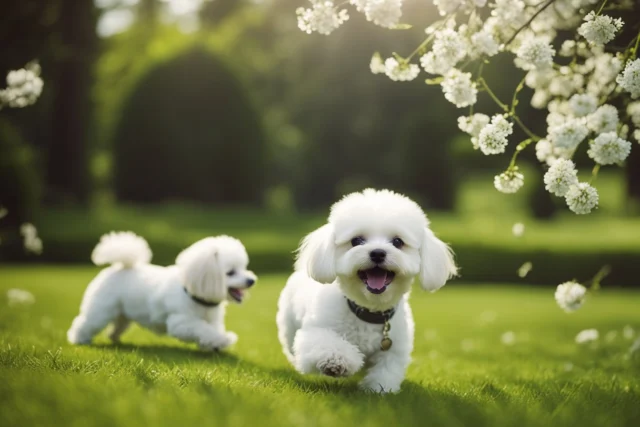
The powdered-puff appearance of the Bichon Frise is famous worldwide, but their charming cloud of white curls requires serious mechanical upkeep. Understanding why and when a Bichon needs haircuts is essential for keeping their skin healthy and free of painful mats.
Quick Answer: Yes, a Bichon Frise absolutely requires regular haircuts every 4 to 6 weeks. Unlike furred shedding breeds, Bichons possess a continuously growing, hypoallergenic double coat of hair. Without regular clipping and scissoring, trapped dead hairs quickly felt against the skin, forming severe mats that cause restricted movement and painful skin infections.
The Biology of the Bichon Coat: Continuous Growth vs. Shedding Fur
To understand why haircuts are non-negotiable for a Bichon Frise, you must look at canine follicle biology. Double-coated furred breeds (such as Huskies or Golden Retrievers) have fur that grows to a predetermined genetic length, enters a resting phase, and sheds freely onto floors. In contrast, the Bichon Frise has hair with an extraordinarily long anagen (growth) phase.
Their coat consists of two distinct components:
- A Dense Undercoat: Soft, downy hairs that provide natural insulation.
- A Coarser Outer Coat: Crisp, curly guard hairs that create a springy, resilient texture.
When dead undercoat hairs shed from the follicle, they do not fall out into the room. Instead, they become trapped inside the springy spirals of the surrounding curly outer coat. If this hair is not removed through daily combing and regularly trimmed down through professional clipping, it felts together into solid sheets of felted matting.
Popular Bichon Frise Haircut Styles
Depending on your lifestyle and the time you can dedicate to daily brushing, groomers offer several distinct trim styles:
1. The Puppy Cut (Teddy Bear Clip)
The Puppy Cut is the most popular style for pet Bichons. The coat is clipped uniformly across the body and legs to a manageable length of 0.5 to 1 inch, while the facial hair is hand-scissored into a soft, round silhouette. This cut reduces daily combing time to just five minutes while retaining the breed’s signature cuddly appearance.
2. The AKC Show Cut
The traditional show cut preserves a plush, dense coat that is hand-scissored over several hours to produce a continuous, seamless puffy outline without visible clipper lines. The head is scissored into a spherical halo with no visible ears. Maintaining this trim requires daily 30-minute line-brushing sessions and bi-weekly professional maintenance.
3. The Utility (Summer) Clip
For active dogs that hike, swim, or suffer from severe chronic skin allergies, the utility cut clips the torso down to 1/8 to 1/4 inch, leaving moderate length on the head and tail plume. This cut provides maximum ventilation and drastically simplifies post-walk cleanups.
Recommended Clipper Blade Sizes for Bichon Haircuts
Home groomers and salon professionals use specific safety blade numbers to prevent accidental clipper burn on a Bichon’s sensitive pink skin.
When selecting clippers or scheduling grooming trims, consult our hair length dog grooming blade chart to select the exact blade depths (such as a #10 blade for sensitive sanitary areas, #30 under snap-on combs, and #4F or #7F for body lengths) that ensure a smooth finish without nicking skin folds.
Consequences of Neglecting Regular Haircuts
Skipping haircuts does not merely result in an unruly appearance—it causes medical complications:
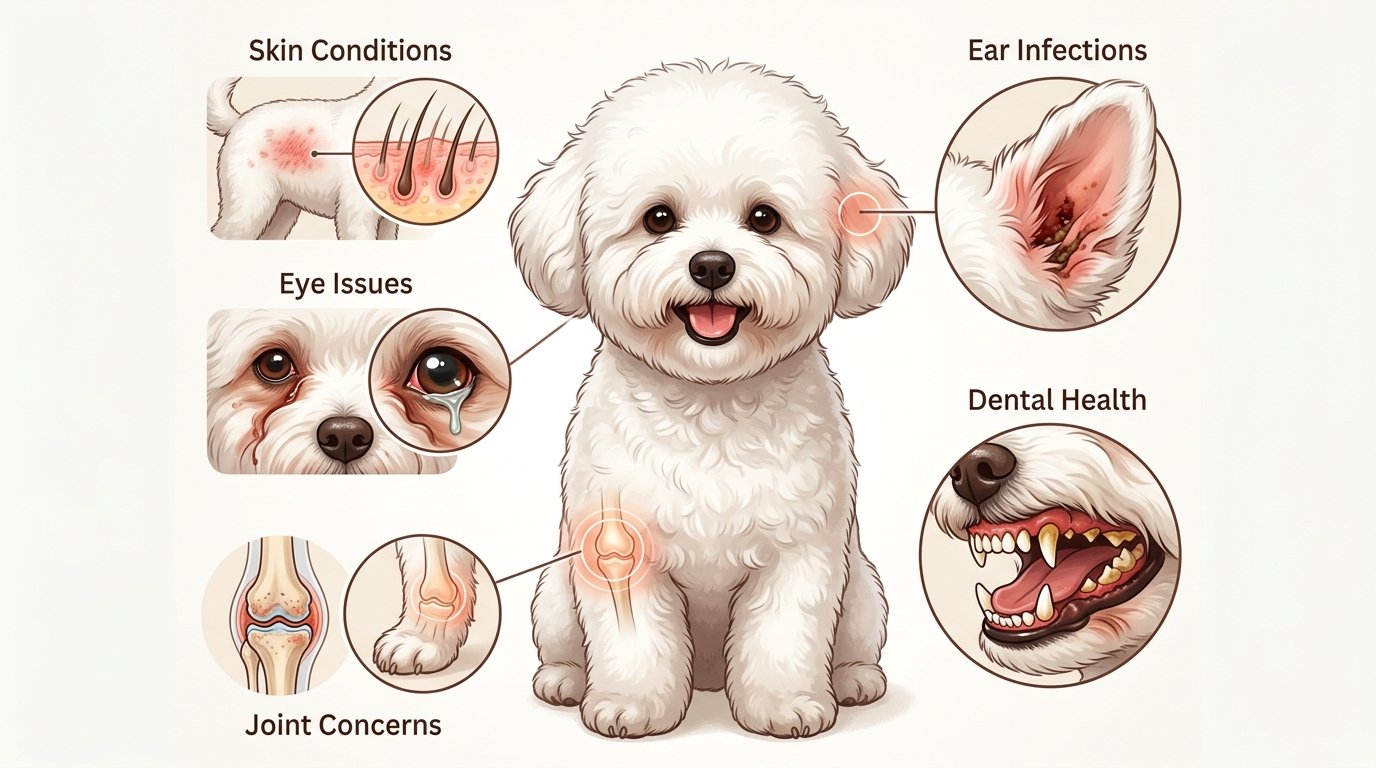
- Severe Skin Pellicle (Pelting): Trapped dead hairs tighten against the skin, forming an impenetrable barrier that cuts off air circulation and traps moisture, creating hot spots and bacterial pyoderma.
- Ear Canal Strangulation: Hair grows continuously inside the Bichon ear canal. If not clipped or plucked regularly, it traps earwax and moisture, causing chronic yeast and bacterial otitis externa.
- Restricted Limb Mobility: Dense mats under the armpits and around the hocks tighten with every stride, pinching the skin and causing open friction sores and abnormal gait changes.
- Sanitary Contamination: Overgrown hair around the anus and vulva or prepuce traps urine and feces, leading to ascending urinary tract infections and severe skin scalding.
Coat Development Across Life Stages
A Bichon Frise puppy coat is soft, silky, and relatively straight. Between 9 and 14 months of age, the dense, curly adult undercoat begins to emerge in a process known as “blowing the puppy coat.”
You can reference our Bichon Frise age in human years calculator to determine when your puppy is entering biological adolescence, signaling the crucial window when daily combing and professional clipping must increase to prevent adolescent coat compaction.
Veterinary Disclaimer: This article is for informational purposes only and adheres to American Kennel Club (AKC) breed standards. If your Bichon develops tight mats resting directly against the epidermis, never attempt to cut them out with scissors; scissors easily catch and sever thin canine skin folds. Severely pelted coats must be shaved humanely by an experienced professional groomer or veterinary technician. For persistent skin redness or itching, consult a board-certified dermatologist through the American College of Veterinary Internal Medicine (ACVIM).
Frequently Asked Questions
How often does a Bichon Frise need a haircut?
Most Bichons require a professional haircut every 4 to 6 weeks. Dogs maintained in longer show clips or plush teddy bear cuts may require trims every 3 to 4 weeks, whereas dogs in short utility clips can stretch appointments to 7 or 8 weeks with diligent home brushing.
Can I shave my Bichon Frise completely?
Yes, shaving a Bichon Frise does not cause the coat damage that occurs when shaving double-coated fur breeds (like Spitz or Nordic dogs). Because Bichons have continuously growing hair follicles, shaved coats regrow with full density and curl, provided there is no underlying endocrine disease such as hypothyroidism or Cushing’s disease.
At what age should a Bichon puppy get their first haircut?
Puppies should receive an introductory “puppy trim” (sanitary area, paw pads, and eye clearance) between 10 and 12 weeks of age, after receiving their core puppy vaccinations. Their first full body haircut typically occurs between 5 and 7 months, before the heavy adult coat emerges.