Short answer: Many Bichon Frises can learn to paddle and some enjoy it, but there is no good evidence that they are natural swimmers. The breed was developed as a small companion dog, not a water worker. Treat your Bichon as a non-swimmer until it has shown you otherwise. Introduce water slowly in the shallows, use a well-fitted dog life jacket, never leave it unattended in or near water, and rinse and dry it afterwards. Check with your vet first if your dog is older or has any joint, heart or neurological condition.

Are Bichons natural swimmers?
Not reliably, and that is true of most dogs. The American Kennel Club (AKC) says it is a myth that all dogs are natural swimmers. Breeds such as Labradors and Portuguese Water Dogs were developed to work in water and have the build for it. Many other dogs need lessons, and some dogs never enjoy it. The UK veterinary charity PDSA puts it simply: not every dog is a water baby, and some dogs that are built for swimming still don’t like going out of their depth.
Your Bichon’s attitude matters more than its breed. Some will splash happily. Others will want nothing to do with it, and that is completely fine. There are plenty of other ways to exercise and cool down a small dog.
Understanding the Bichon Frise breed

The AKC describes the Bichon as a small but sturdy dog from the Mediterranean, standing about 24–29 cm (9.5–11.5 in) and weighing about 5–8 kg (12–18 lb). Its name has a watery history. The AKC records that the Bichon descended from the Barbet, or water spaniel, which gave the name “Barbichon”, later shortened to Bichon. That ancestry is centuries old, and the breed has long been kept as a companion. It tells you where the name came from, not whether your dog will swim.
Two breed traits are relevant to water. First, the AKC calls the Bichon “somewhat active”, with long calm spells broken by bursts of activity. It also notes that Bichons respond very well to reward-based training, which is exactly how swimming should be taught. Second, the coat needs real upkeep. The AKC says Bichons should be brushed at least two or three times a week, ideally daily, because shed hair stays caught in the undercoat and forms mats if it isn’t brushed out.
How a Bichon’s size and coat affect swimming

- Small dogs tire quickly. VCA notes that swimming is hard work and that dogs need breaks so they don’t tire out mid-swim. A small dog covers little distance for a lot of effort, so keep sessions short and close to the shore.
- Cold water hits small bodies hard. VCA advises avoiding “dangerously cold water”. The AKC warns that water that is too cold can cause hypothermia and “limber tail”, and that puppies are especially sensitive. The PDSA notes that deep water such as reservoirs stays very cold even on hot days, and can shock a dog into gasping and swallowing water.
- The coat needs aftercare. A wet, curly coat left to dry on its own is an easy way to end up with tangles. Rinse, towel-dry and brush through once dry. See the aftercare section below.
Before the first swim: safety checklist
- Ask your vet first. VCA notes that conditions such as arthritis, heart disease or epilepsy can make swimming risky.
- Check vaccinations. Leptospirosis spreads through contaminated water. Ask your vet whether your dog’s protection is up to date where you live.
- Fit a dog life jacket. The AKC recommends one for every first-time swimmer and for boating. Look for a snug, adjustable fit, a handle strong enough to lift your dog out of the water, bright colours for visibility, and a D-ring if you want to attach a lead on land.
- Practise recall on land. The Kennel Club advises making sure your dog comes back when called before swimming. If you’re not confident, keep a long lead on while you’re at the water’s edge.
- Never leave your dog unattended in or near water, even a paddling pool. VCA and the PDSA both stress this.
Teaching a Bichon Frise to swim

- Start shallow. Pick calm water with a gentle slope, or a paddling pool, and let your dog get used to wet feet.
- Let your dog choose. Never throw or pull a dog in. The AKC warns that forcing a young dog into water can damage its confidence for life.
- Make it rewarding. Use treats, praise and a small floating toy in the shallows. The Kennel Club advises against throwing toys into deep water.
- Support the first paddles. Once your dog is confident, the PDSA suggests supporting it under the stomach with your arm until it kicks with all four legs. The life-jacket handle helps here too.
- Teach the way out. After a few minutes, guide your dog back to the shore, steps or ramp so it learns where the exit is. The AKC notes that dogs don’t instinctively understand pool steps or ladders, and that a dog thrashing in the water tires quickly.
- Keep it short and stop early. If your dog seems overwhelmed, go back to the shallows or dry land. End while it is still enjoying itself.
Where to swim, and where not to
The PDSA’s guidance on choosing a spot, summarised:
- Better choices: calm lakes with shallow edges, shallow slow-moving rivers, dog-friendly beaches on calm days (check flags, signs and tide times), and private or paddling pools under supervision.
- Avoid: canals and stagnant water, reservoirs (deep, cold, strong currents, hidden objects), fast-flowing or flooded rivers, and rough seas.
- At home: VCA advises fencing or covering pools so dogs can’t get in unsupervised. The AKC adds that chlorine tablets should always be stored where dogs can’t reach them.
Blue-green algae: the hazard to take most seriously
Blue-green algae (cyanobacteria) can produce toxins that can kill dogs. The Kennel Club notes it is most common in or after hot, sunny spells, especially after heatwaves. Affected water may look like pea soup, appear blue-green, red, brown or black, smell musty, or have foam at the shoreline. There is no way to tell by eye whether toxins are present. Dogs can be poisoned by swimming in it, drinking it, or licking it off their fur afterwards. Signs can start within minutes to an hour, or be delayed by days. They include drooling, tiredness, vomiting, diarrhoea, breathing problems and fits.
If you suspect water is affected, keep your dog out of it and away from drinking it. If your dog may have been exposed, stop it licking its coat and contact a vet urgently. Phone ahead if you can. Check for warnings from your local water or environment authority before you visit lakes and rivers in warm weather.
Swallowed water: pools, sea and “water intoxication”
The AKC says a few mouthfuls of properly maintained pool water usually won’t harm a dog, but drinking a lot can cause vomiting and irritation. Drinking too much sea water can lead to salt poisoning, which can be fatal. Water intoxication can also happen when a dog swallows too much water too quickly, often while repeatedly grabbing toys. Bring fresh drinking water, keep sessions short, and call your vet if your dog vomits, staggers, seems weak or behaves oddly after swimming.
If your dog gets into trouble
The PDSA’s advice is not to go into the water after your dog. Call your local emergency services instead. People die every year trying to rescue dogs, and dogs often get themselves out.
After the swim: rinse, dry the ears, brush
- Rinse with fresh water. VCA notes chlorine, sea salt and debris can irritate the skin. The PDSA suggests a good wash wherever your dog has swum.
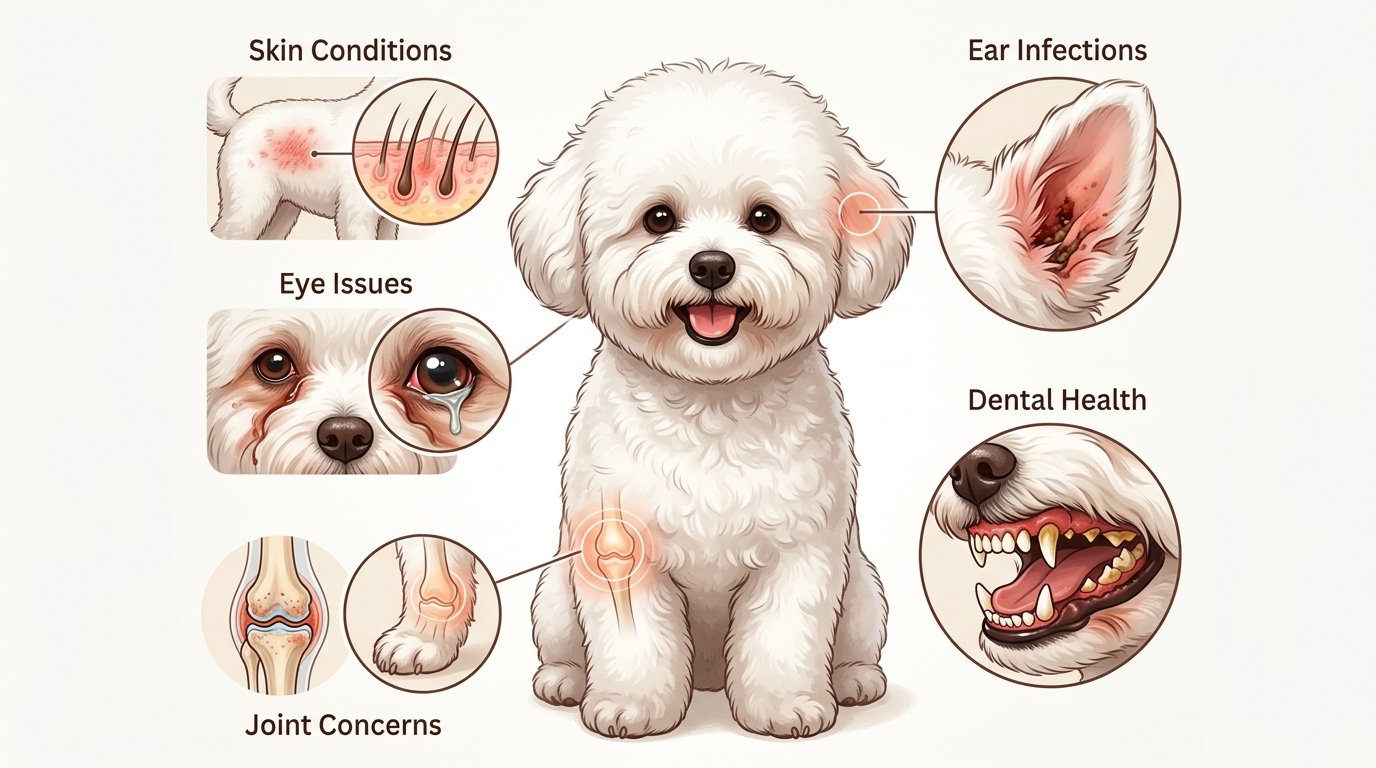
- Dry the ears. Trapped moisture can lead to ear infections. The AKC advises gently towel-drying the ears. VCA suggests an ear cleaner with a drying agent. The AKC also recommends regular ear cleaning for Bichons generally.
- Dry and brush the coat. Towel off thoroughly, then brush right through once dry to stop mats forming.
Health benefits of swimming for a Bichon Frise

For a dog that enjoys it, swimming is good exercise. The PDSA notes it can be especially good for dogs with stiff or painful joints, and it helps dogs cool down in hot weather. Because joint problems such as luxating patella are among the conditions the AKC lists for the breed, that is worth knowing. But it cuts both ways: VCA says arthritis and some other conditions can also make swimming risky. So if your Bichon has a joint problem, ask your vet whether swimming, or supervised hydrotherapy with a professional, is right for your dog.
If your Bichon doesn’t take to the water, you lose nothing. A shallow paddling pool on a warm day, daily walks and play sessions give it the exercise the AKC recommends for the breed.
This article is general information, not veterinary advice. If your dog has a health condition, or you are worried after a swim, please contact your vet.
Frequently Asked Questions
Can Bichon Frises swim naturally?
Not reliably. The AKC says it is a myth that all dogs are natural swimmers, and its Bichon breed page makes no claim that the breed is a strong swimmer. Many Bichons can learn to paddle with gradual, reward-based lessons. Some will never enjoy it, and that’s fine.
Does my Bichon need a life jacket?
It is strongly recommended. The AKC advises a fitted dog life jacket for first-time swimmers and for boating. Choose one with a sturdy handle so you can lift your dog out. VCA also recommends buying one.
How long can a Bichon swim for?
Keep sessions short. VCA notes swimming is hard work and dogs need breaks. Short sessions also lower the risk of swallowing too much water. Stop as soon as your dog seems tired or overwhelmed.
Is pool water safe for my Bichon?
A properly maintained chlorinated pool is generally fine to swim in. Discourage drinking from it, rinse your dog afterwards, and store chlorine tablets well out of reach. Always supervise your dog, fence or cover the pool, and teach it where the steps are.
What should I do after my Bichon swims?
Rinse off chlorine, salt or debris with fresh water. Dry the ears to help prevent infections, and towel-dry and brush the coat to prevent mats. If it swam in a lake or river and you suspect blue-green algae, stop it licking its fur and call a vet urgently.
Is swimming good for a Bichon with joint problems?
It can be. The PDSA notes swimming can be especially good for stiff or painful joints. VCA warns that arthritis and some other conditions can make it risky. Ask your vet before starting.