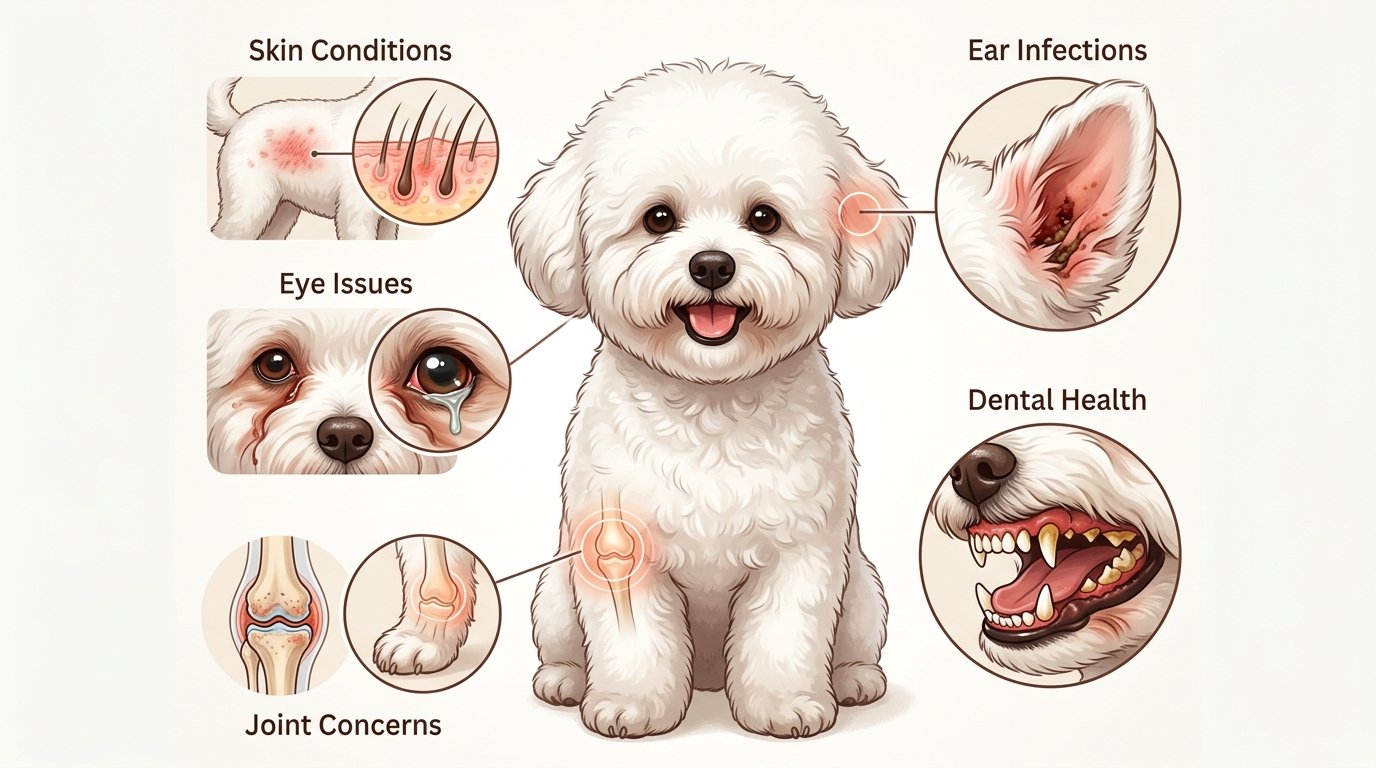
The Bichon Frise is widely celebrated as a non-shedding, hypoallergenic breed. If you suddenly notice tufts of white hair on your clothes or furniture, it is understandable to feel alarmed. Understanding the difference between normal hair turnover and clinical alopecia is essential.
Quick Answer: A healthy adult Bichon Frise does not shed noticeable hair onto furniture; loose hairs naturally remain trapped inside their curly coat until brushed out. If your Bichon is shedding visibly, the primary causes are the 9-to-14 month puppy coat transition, nutritional deficiencies, flea allergy dermatitis, atopic allergies, or endocrine disorders like hypothyroidism.
Normal Hair Turnover vs. Abnormal Shedding (Alopecia)
No mammal with hair is 100% shed-free. Every hair follicle on your Bichon passes through three biological phases:
- Anagen Phase (Active Growth): The hair grows continuously for months or years.
- Catagen Phase (Transition): The follicle shrinks and growth ceases.
- Telogen Phase (Rest and Release): The old hair detaches from the dermal papilla.
In a healthy Bichon, telogen hairs detach inside the curly outer guard hairs. When you brush your dog, seeing a small ball of white hair in the slicker pins is normal. However, if hair is falling freely onto furniture, leaving bald patches, or coming out in clumps, it indicates an underlying medical issue.
The 5 Primary Causes of Abnormal Shedding in Bichons
1. The Adolescent Puppy Coat Blow (9 to 14 Months)
The most common non-pathological cause of heavy shedding is the transition from puppy fuzz to adult curls. As the dense, curly adult undercoat pushes in, the soft puppy hair drops out rapidly. Without daily line combing, this shedding creates dense mats overnight.
2. Atopic Dermatitis and Flea Allergy Dermatitis
Bichons are genetically prone to hypersensitivity disorders. A single flea bite can trigger intense itching, causing your dog to bite, lick, and chew their coat, snapping hair shafts and causing secondary bacterial or yeast skin infections.
3. Food Sensitivities and Nutritional Deficiencies
Diets lacking adequate omega-3 fatty acids, zinc, or high-quality animal protein weaken hair follicles. Food allergies (often to common proteins like beef or chicken) cause chronic inflammation and generalized coat thinning.
4. Endocrine Disorders (Hypothyroidism and Cushing’s)
In middle-aged to senior Bichons, endocrine disorders disrupt the hair cycle:
- Hypothyroidism: Slows cellular metabolism, leading to dry, brittle hair that sheds easily and fails to regrow, often in a symmetrical pattern along the flanks.
- Hyperadrenocorticism (Cushing’s Disease): Overproduction of cortisol causes thin, parchment-like skin, hair loss along the trunk, and a pot-bellied appearance.
5. Stress-Induced Telogen Effluvium
Major physiological or emotional stress (such as surgery, high fever, or boarding) can shock a large percentage of hair follicles into entering the resting phase simultaneously, causing a massive shed 30 to 60 days later.
Hygiene Trimming During Coat Recovery
When treating dermatological shedding, keeping sanitary areas clean allows topical treatments and medicated shampoos to contact the skin directly. Reference our hair length dog grooming blade chart for safe clipper blade depths around sensitive skin folds.
Tracking Age Milestones
Because adolescent coat blowing and senior endocrine issues occur at predictable life stages, consult our Bichon Frise age in human years calculator to determine when your dog enters adolescence or geriatric stages requiring metabolic blood panels.
Veterinary Disclaimer: This article is for informational purposes only. Coat and skin conditions should always be evaluated by a licensed veterinarian. If your Bichon exhibits circular bald spots, severe flaking, open sores, or dark hyperpigmented skin, schedule a comprehensive diagnostic workup (skin scrapings, fungal cultures, and thyroid panels) through a specialist certified by the American College of Veterinary Internal Medicine (ACVIM).
Frequently Asked Questions
Do Bichon Frises shed more in the summer?
No. Bichon Frises do not have a photoperiod-driven seasonal shedding cycle like double-coated Nordic breeds. While slight changes in ambient temperature can mildly affect hair turnover, sudden heavy summer shedding is typically linked to seasonal allergies or swimming in chlorinated water.
Will cutting my Bichon’s hair short stop shedding?
Cutting hair does not stop shedding at the follicle level. A short trim simply makes loose hairs shorter and easier to brush out, reducing the likelihood of severe mats while you address the root cause.
Can supplements stop my Bichon from shedding?
If shedding is caused by poor fatty acid nutrition, supplementing with high-purity EPA and DHA fish oil can strengthen hair follicles within 4 to 6 weeks. However, supplements will not resolve shedding caused by fleas, thyroid disease, or allergies.