Under normal conditions, a healthy Bichon Frise has virtually no doggy odor, making them ideal indoor companions. If your Bichon develops an unpleasant, sour, or fishy smell, it is not normal breed scent—it is a clinical sign of an underlying hygiene or medical issue.
Quick Answer: A clean Bichon Frise is virtually odorless. If your Bichon smells, the primary culprits are yeast or bacterial skin infections (especially under mats), chronic ear infections, impacted anal glands (producing a metallic fishy smell), severe dental disease, or porphyrin-rich facial tear staining.
5 Common Sources of Odor in a Bichon Frise
1. Malassezia Yeast and Bacterial Skin Dermatitis
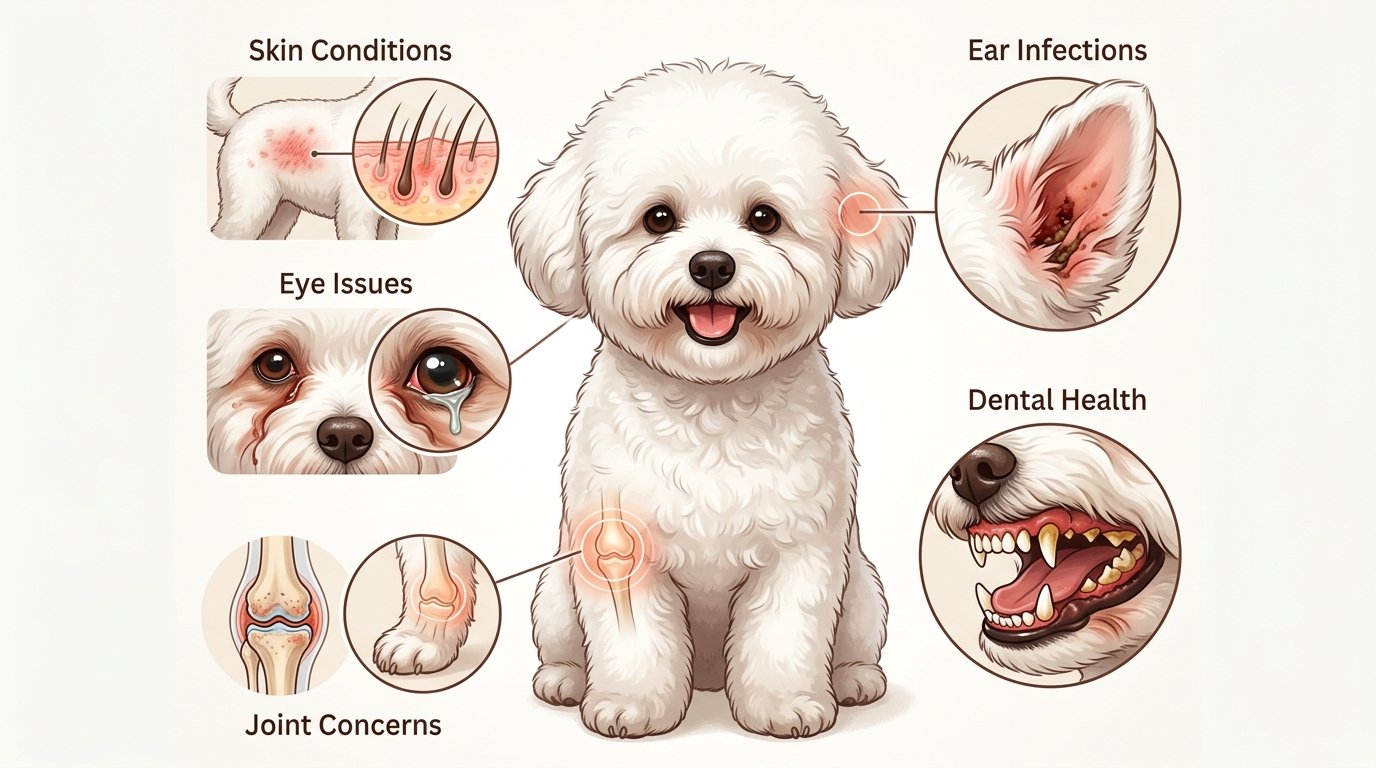
Because Bichons have dense double coats that trap moisture, damp skin creates a breeding ground for Malassezia yeast. Yeast emits a distinctive “corn chip” or sour bread odor. This commonly develops after bathing if the coat is not blown 100% dry, or inside wet mats behind the ears, in the armpits, and around the groin.
2. Chronic Ear Infections (Otitis Externa)
The Bichon’s drop ears feature heavy internal canal hair growth that blocks air circulation. Moisture and wax buildup harbor bacteria and yeast, producing a pungent, sweet-sour stench. Symptoms include head shaking, ear scratching, and dark brown or yellowish discharge.
3. Impacted or Infected Anal Glands
Two small scent glands sit inside the rectum. If they fail to express naturally during defecation, they become impacted and emit a sharp, foul, fishy-metallic stench. Dogs will often scoot their hindquarters across carpets or lick their rears frantically.
4. Periodontal Disease and Halitosis
Toy breeds with crowded teeth accumulate calculus quickly. Anaerobic bacteria beneath the gumline cause tissue necrosis and foul breath. Periodontal bacteria can also spread to vital organs through the bloodstream.
5. Tear Staining and Facial Fold Pyoderma
Porphyrins in tears and saliva oxidize on white facial hair. When facial hair stays damp, red yeast (Pityrosporum) proliferates around the eyes and muzzle, creating a sour, musty odor.
Sanitary Maintenance and Blade Safety
Keeping the anal and sanitary regions clipped short is essential for odor control. Check our hair length dog grooming blade chart to verify that a safe #10 blade is used around delicate perianal tissues to prevent feces accumulation and clipper rash.
Age-Related Health Tracking
Older dogs are significantly more prone to periodontal disease, kidney decline, and metabolic changes that cause systemic breath and body odors. Use our Bichon Frise age in human years calculator to determine when your senior dog should begin bi-annual veterinary wellness panels and dental scalings.
Veterinary Disclaimer: This guide aligns with health standards from the American Kennel Club (AKC). If your Bichon produces an offensive odor accompanied by inflamed skin, head tilt, painful anal swelling, or foul mouth breath, seek medical evaluation from a veterinarian or an internal medicine specialist accredited by the American College of Veterinary Internal Medicine (ACVIM).
Frequently Asked Questions
Why does my Bichon smell like fish?
A fishy odor is almost universally caused by the anal glands. The glands may be full, impacted, or expressing involuntarily due to fear or excitement. If the smell persists, have your veterinarian check the glands for impaction or abscessation.
How often should I bathe a smelly Bichon?
Bathe your Bichon every 2 to 3 weeks with a mild, soap-free canine shampoo. If the odor stems from a yeast or bacterial skin infection, your veterinarian may prescribe a chlorhexidine or ketoconazole medicated bath twice weekly until resolved.
Why do my Bichon’s paws smell like corn chips?
The “Fritos” or corn chip smell on dog paws is caused by normal populations of Pseudomonas and Proteus bacteria or mild yeast living between the paw pads. Regular washing, thorough drying, and keeping hair clipped short between the pads resolves the scent.