
As an Amazon Associate I earn from qualifying purchases.
| Factor | Detail |
|---|---|
| Short answer | Puppy biting is normal, and it can be trained. |
| What works | Stop the game, redirect to a chew toy, reward calm behaviour. |
| What does not | Yelling, hitting or rough play. |
| Get help if | Biting or growling has not eased by about 6 months, or it worries you. |
Every English Bulldog puppy goes through a biting stage. It can hurt, and the growling can be frightening, but it is usually part of how puppies play and explore.
The American Kennel Club says play biting is completely normal for puppy teething and necessary for development, and something you can train away with a few simple steps. It also says it does not mean your puppy is vicious.
The AKC adds that if you have not been able to moderate the behaviour by the time your puppy is 6 months old, it is a good idea to consult an experienced dog trainer or animal behaviour specialist.
This page covers why puppies bite, what to do in the moment, and when to get help. For more, see how to stop puppy biting fast and training English Bulldogs.
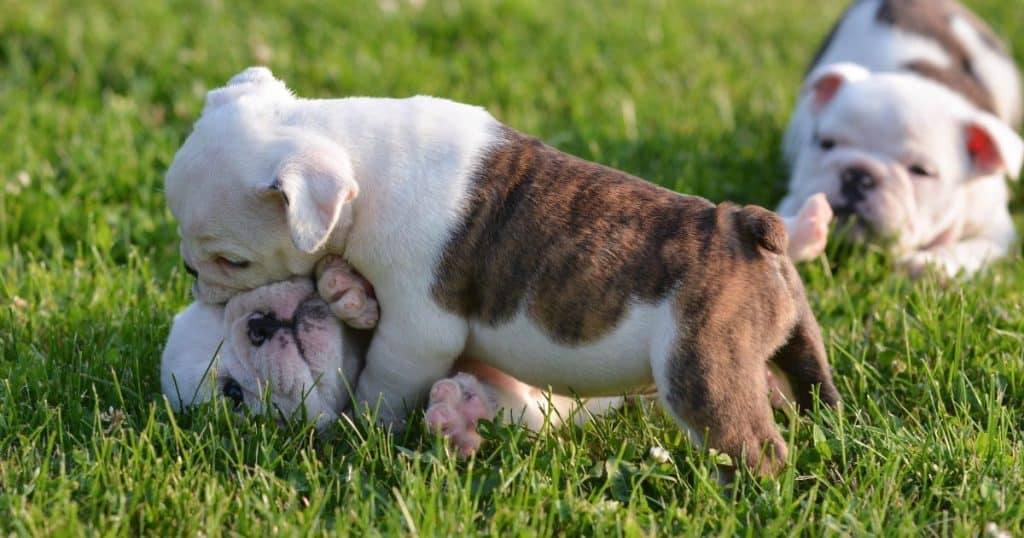
Teething and play
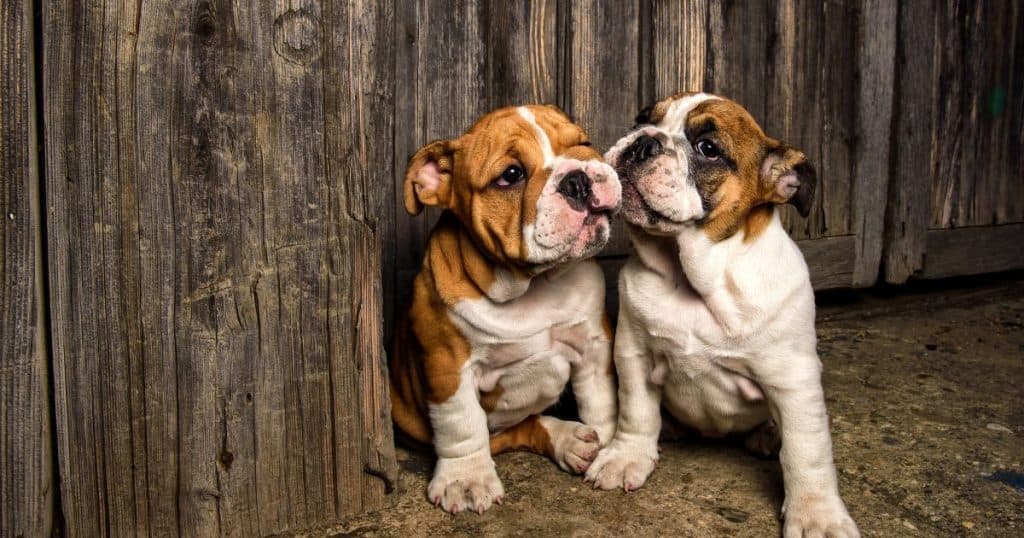
Puppies explore with their mouths, and they chew more while they are teething. Keep a chew toy within reach, so you can swap it for your hand, your clothes or the furniture. The AKC says this lets puppies know what is OK to bite or chew.
Chew toys we like: a nylon chew bone and a chew rope. Any products named here are suggested from published specifications and owner reviews, not from hands-on testing.
Check price on AmazonAffiliate link — Dog Fluffy may earn a commission, at no extra cost to you.Check price on AmazonAffiliate link — Dog Fluffy may earn a commission, at no extra cost to you.When your puppy bites, the game is over
If your puppy bites you while playing, stop the game. The AKC says playtime is over with no exceptions. Turn away calmly, and tuck your hands under your arms. Trainer Kathy Santo, quoted by the AKC, calls this a calming signal and a minor form of attention withdrawal.
The AKC also says that yelling can work as a reward, because it teaches your puppy that biting gets a response, and that a high-pitched “ow” gets some puppies even more worked up. If your puppy gets more excited, turn quietly around, walk away, or gently put the puppy in the crate for a few minutes.
When your puppy backs off, reward calm behaviour with a treat and a “good dog”. Small, soft training treats work well, because they can be eaten quickly. Our pick: soft puppy treats.
Do not shout, hit or roughhouse
The AKC warns against roughhousing in ways that encourage a young puppy to lose control and bite. Shouting can also make a puppy fearful of being handled. Physical punishment is not a good idea, and we found no primary source recommending it.

More ways to cut down on biting
- Stop pouncing on legs: the AKC suggests holding a high-value treat by your leg as you walk, so the puppy learns to walk nicely alongside you.
- Check for tiredness, hunger or a toilet break: the AKC says a biting puppy is sometimes simply overtired, or needs the toilet.
- Use up energy: if your puppy keeps biting after you swap in a toy several times, a walk or a play in the garden may help.
- Time-out: put your puppy in the crate to calm down, calmly. The crate should never feel like a punishment.
- Everyone uses the same rules: the whole family should respond to biting the same way.
- Puppy classes: the AKC recommends a well-run puppy class for safe socialisation with other dogs.
Growling and adult dogs
Growling is how a dog says it is uncomfortable. Do not punish a growl. Stay calm, stop what you were doing and give your dog space. If your puppy or adult dog bites hard, growls often, or you feel unsafe, talk to your vet and ask for a qualified trainer or behaviour specialist. Biting behaviour can sometimes have a medical cause such as pain.
Before you go
Biting is a stage. With patience and the same response every time, most puppies grow out of it. If it is not getting better, ask your vet for help.


