As an Amazon Associate I earn from qualifying purchases.
A FURminator isn’t always bad for a double coat, but it can be in some cases.
If you use it gently, once a week, on a clean, dry coat, it just pulls loose undercoat. But if you go hard or too often, the fine blade edge can shave guard hairs, thin the topcoat, and irritate skin.
Short double coats like a French Bulldog‘s don’t need much of it at all.
That gap between “helpful” and “harmful” really comes down to technique and picking the right tool. A rake, a stripping-style deshedder, a dual bristle brush, and a dematting comb all do different things.
Choosing the wrong one for a short, dense coat is where skin trouble usually starts.
Here’s a quick look at five common tools and where each fits best.
Best for dense undercoat without blade contact: FURminator Grooming Rake
Best for big long-coated shedders: FURminator Undercoat deShedding Tool, Large/Long Hair
Best two-in-one rake and dematter: MalsiPree 2-in-1 Undercoat & Dematting Rake
Best for short, sensitive coats like a Frenchie’s: Burt’s Bees Double Sided Pin and Hemp Bristle Brush
Best for stubborn mats and tangles: GoPets 2-in-1 Deshedding & Dematting Comb
FURminator Grooming Rake
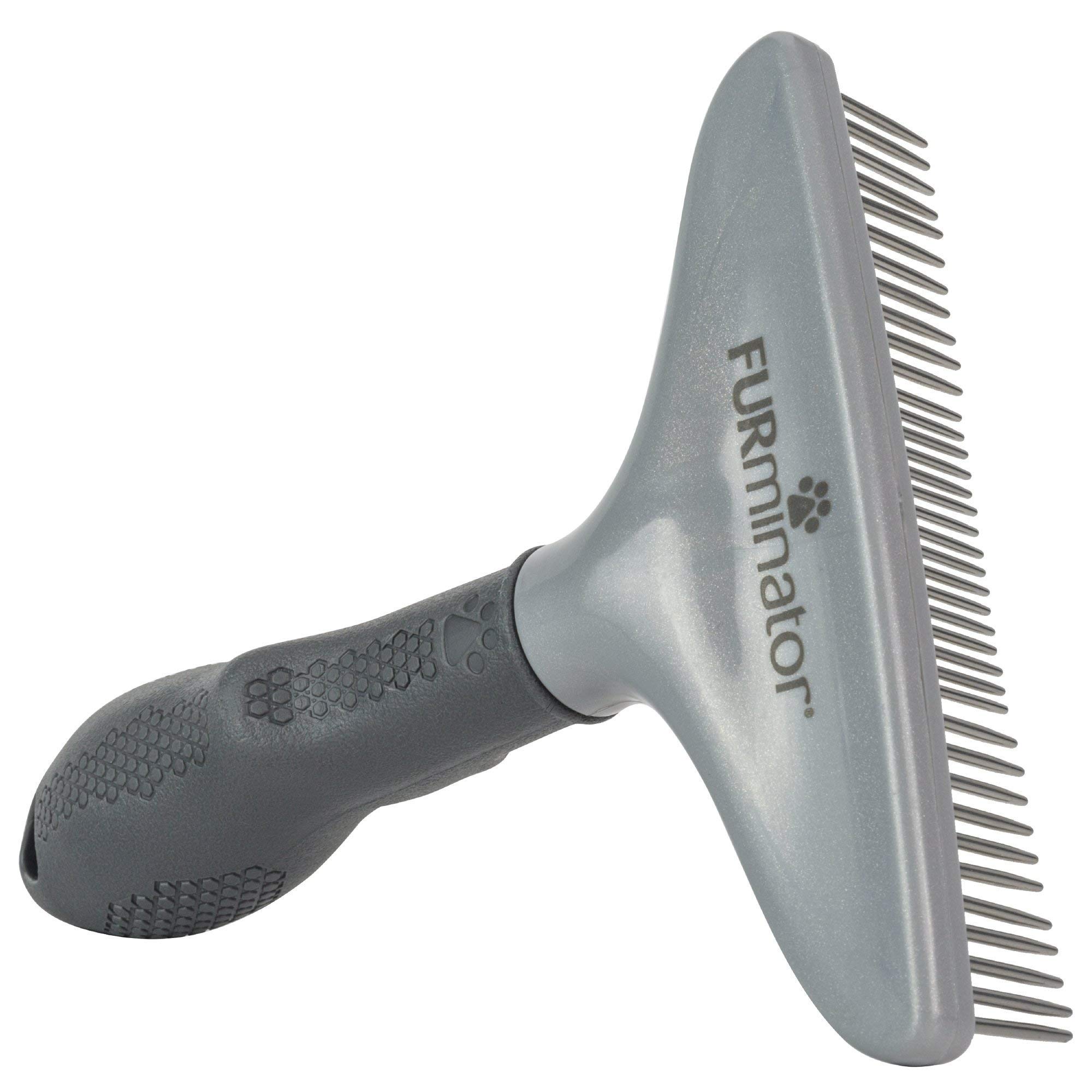
Worth buying if your dog has a thick, plush undercoat and you just want to loosen dead fluff, not cut anything near the skin.
| Things We Like | Things We Don’t Like |
|---|---|
| Rotating teeth roll instead of drag, so there’s less pulling | Doesn’t do much on very short coats, teeth sit above the skin |
| No cutting edge, so guard hairs stay safe | Can’t break apart tight mats alone |
| Non-slip handle doesn’t slide around when hands get furry | Plastic body feels a bit cheap for the price |
The rotating-tooth design is the key. Each metal tooth spins as you pull it through, so dead undercoat lifts out instead of getting yanked. That really makes a difference for dogs who hate slicker brushes.
For a long-coated Golden Retriever or a doodle, this tool earns its place. But for a short double coat, the teeth mostly just skim the top.
Owners of French Bulldogs and other short-coated breeds will probably get more use from a bristle or rubber brush.
Reviewers with Australian Shepherds and Bernese Mountain Dogs say they pull out a ton of hair per session, which makes sense with the tooth length.
A rake and a slicker are not interchangeable on a nervous dog, and the back legs are where you find that out. A slicker has to be dragged, and a dog that is already unsure reads the pull as something being done to them. A rake with rolling teeth moves through the same coat without that tug, so the dog stops bracing. If yours goes stiff when you reach for the hind end, the tool is doing more of the arguing than you are.
FURminator Undercoat deShedding Tool, Large Long Hair
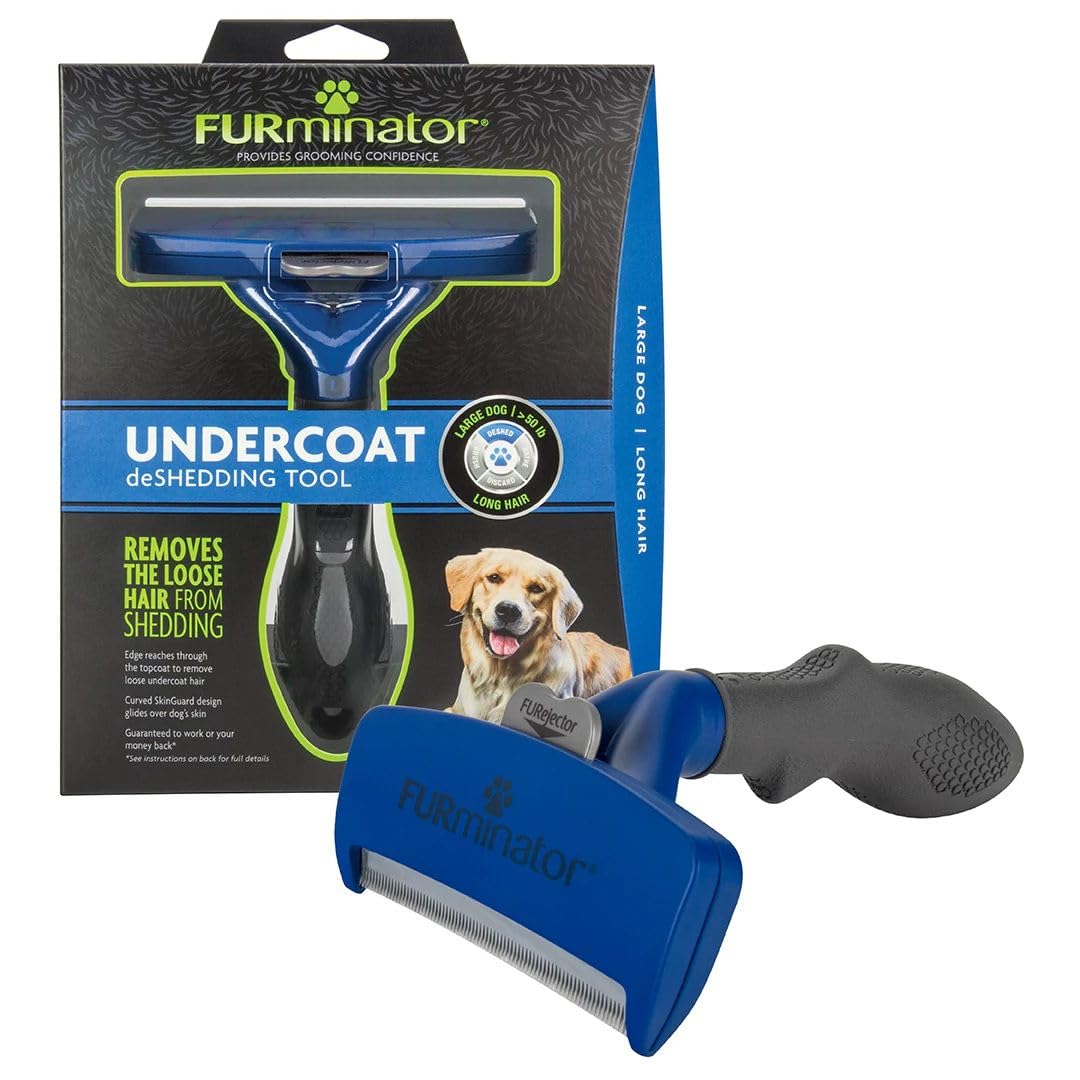
This is the classic FURminator, built for dogs over 23 kg (50 lb) with long double coats. It’s not for short-coated or small breeds.
| Things We Like | Things We Don’t Like |
|---|---|
| Curved stainless edge follows the body | The edge can cut guard hairs if you press or overuse it |
| FURejector button clears packed hair with one press | Wrong size for smaller or short-coated dogs |
| Weekly use really cuts down on household hair | Easy to overdo the same patch of skin |
The blade works by catching loose undercoat between fine teeth as you go. But that same edge will trim topcoat if you use too much pressure or keep working the same spot. Go light. Keep moving.
Owners of Border Collies, Akitas, and Labradors talk about piles of hair coming off in one session. That’s the tool doing its job—no need to keep going after that.
Rules to keep it safe:
- Use only on a fully dry, brushed-out coat.
- Stick to one pass per area, three max.
- Hold the tool flat, never tilt it onto the edge.
- Stop at 10 minutes, or sooner if skin looks pink.
- Space sessions a week apart during heavy shedding, longer otherwise.
MalsiPree 2-in-1 Undercoat & Dematting Rake
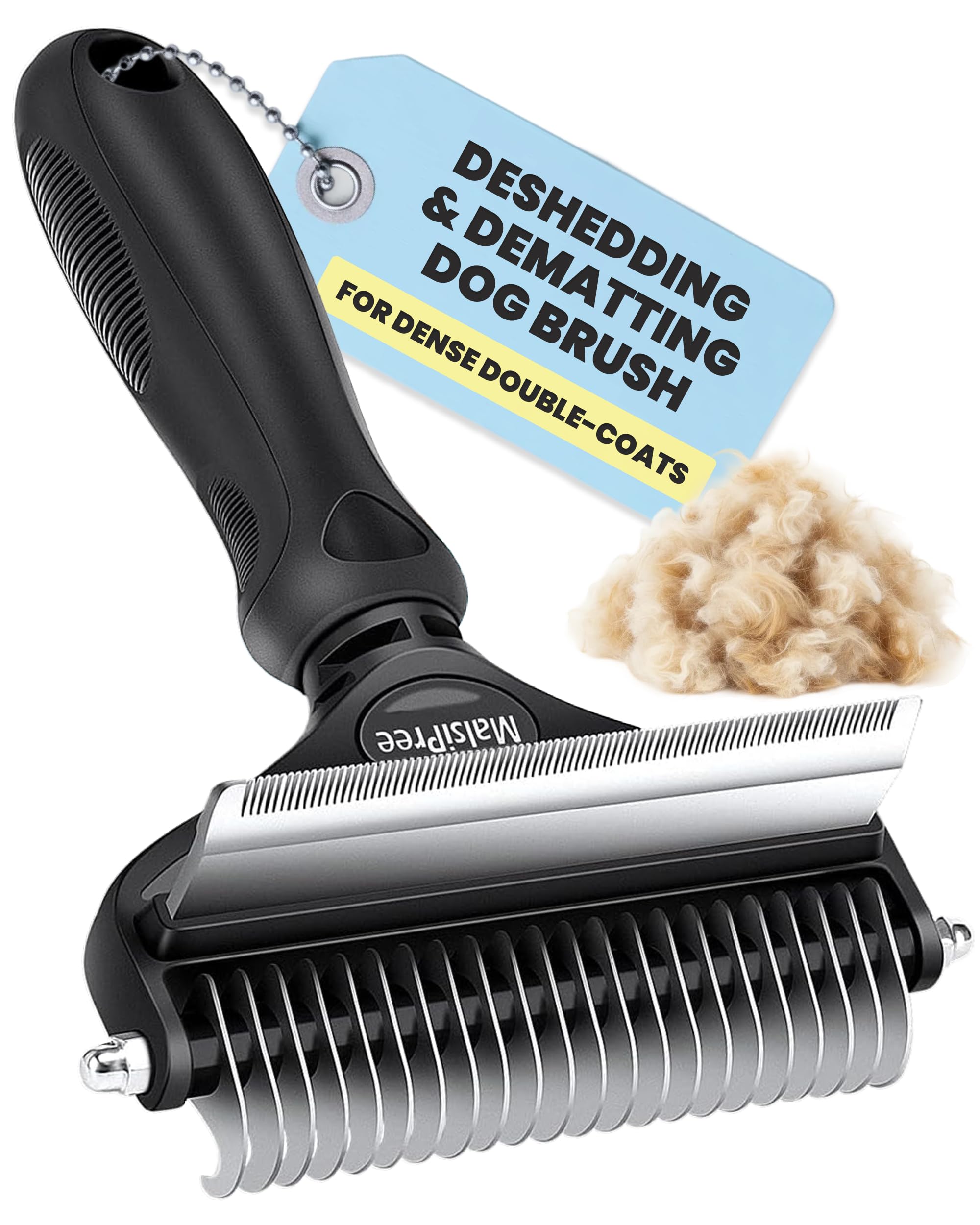
This is a smart single purchase for medium to large double-coated dogs. One side breaks mats and the other thins undercoat.
| Things We Like | Things We Don’t Like |
|---|---|
| Two blade densities in one head | Head size is too big for small breeds |
| Rounded tooth tips help avoid scratching skin | Nine-tooth side can pull if a mat is tight |
| Rubbery grip stays put during long sessions | No hair-release button, so you have to clean it by hand |
The split design actually matters more than the marketing. The wide side works through knots without ripping them; the tighter side handles undercoat after tangles are gone. Using them in that order is the trick.
Reviewers with German Shepherds and Westies say their dogs actually relax with this tool, which probably means those blunt tooth tips are doing their job.
For a short double coat, this one’s still oversized. Tooth length is the best clue for whether a rake fits a coat—short coats need short teeth.
A coat blow is not gradual. One week the hair is normal, the next there is a second dog’s worth of undercoat on the floor and it is back an hour after you sweep. Working it out with a rake, on a schedule, moves that hair into a bin instead of onto the carpet. It does not reduce what the dog sheds — it decides where it lands.
Burt’s Bees Double Sided Pin and Hemp Bristle Brush
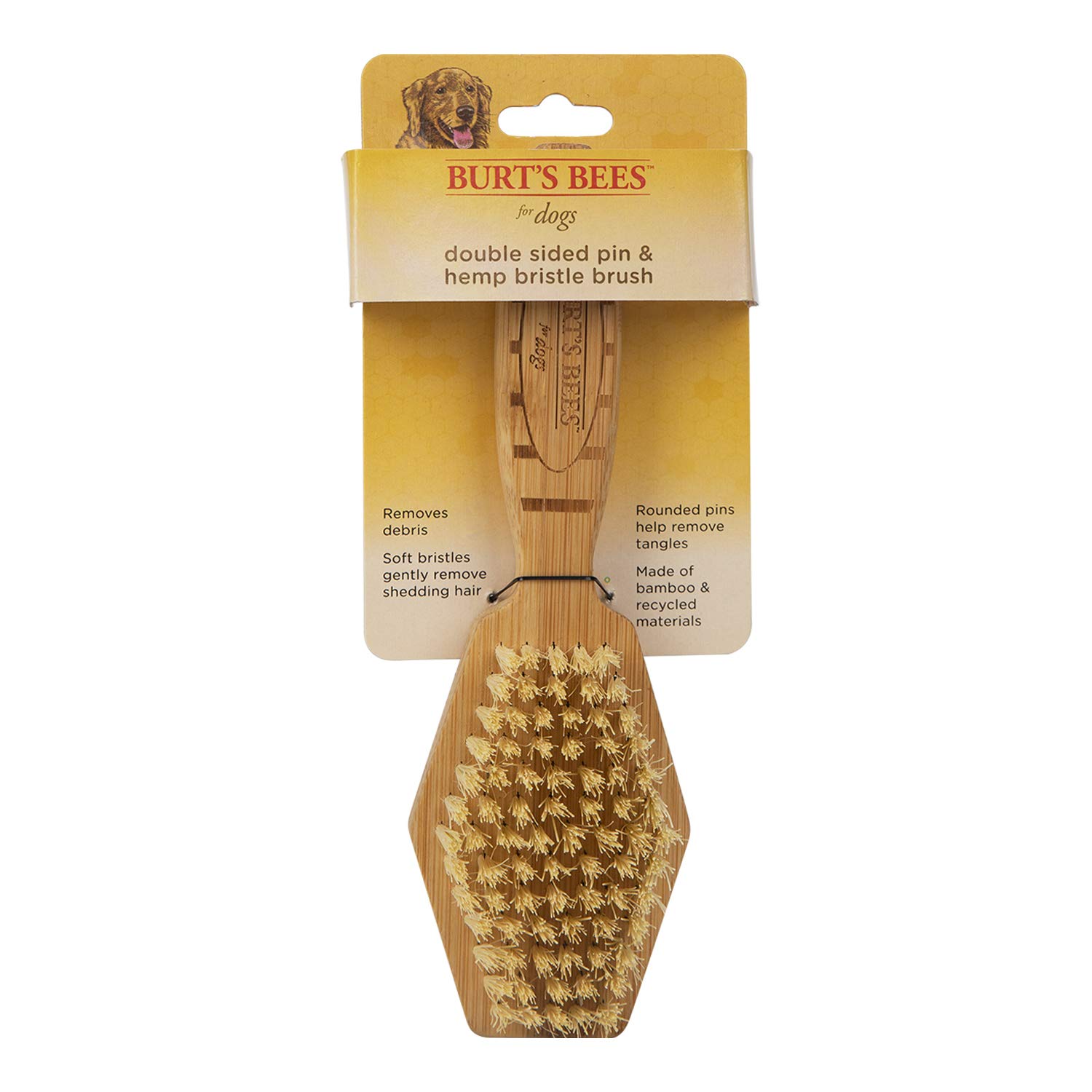
Not a deshedding tool at all, which is the point — this is what you use once the rake has done its job.
| Things We Like | Things We Don’t Like |
|---|---|
| Rounded pin tips, so it does not scrape skin on a finishing pass | Will not pull undercoat — it is not a substitute for a rake |
| Hemp bristle side redistributes the coat’s own oils | Pins are too short for a deep or matted coat |
| Works on single and double coats alike | Bristle side does little on a very dense double coat |
| Bamboo handle and recycled body |
GoPets 2-in-1 Deshedding & Dematting Comb
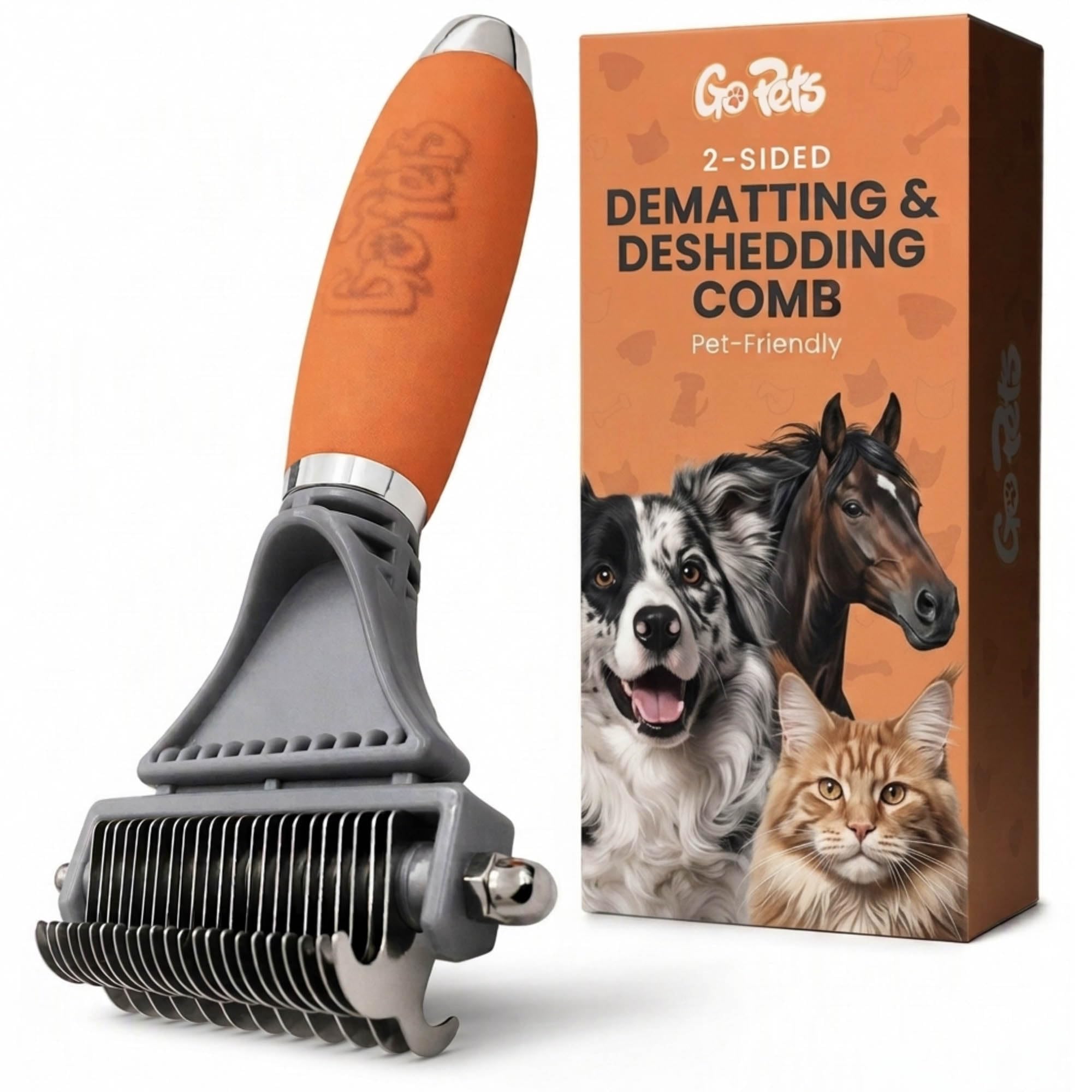
This is the best pick when mats are the real problem, not just shedding.
| Things We Like | Things We Don’t Like |
|---|---|
| 12-blade side cuts through knots, 23-blade side thins undercoat | Blades are sharp enough to nick skin if you angle it wrong |
| Curved blades are only sharpened on the inside edge | Some dogs just hate the feel of it |
| Feels light in the hand—about 100 g (3.5 oz) | Not a finishing or smoothing tool |
Curved blades slice through a mat from the outside in, which is way gentler than trying to comb out a solid knot. Work the edge of the mat, not the middle, and try to lift the mat away from skin with your free hand.
Reviews are pretty split. Owners of Goldens, Huskies, and Aussies say it clears packed coats fast. But some report their dog objects right away, and at least one says it seemed uncomfortable. That’s a sign to slow down, not push harder.
Sharp tools reward patience. On sensitive or older dogs, shorter sessions are usually best.
Buying Guide
Picking a deshedding tool really comes down to three things: how long the coat actually is, whether the tool cuts hair or just combs, and how often your dog’s skin can handle contact. Get those right and you pretty much avoid trouble.
Match Tooth Length to Coat Length
An undercoat rake is a wide-toothed grooming tool that slips under the topcoat to pull out dead undercoat. It leaves the outer guard hairs untouched.
The teeth have to reach the undercoat and stop there. Go any deeper, and you risk damaging the topcoat.
| Coat type | Tool that fits | Tool to skip |
|---|---|---|
| Short double coat (under 2.5 cm / 1 in) | Bristle or pin brush, rubber curry | Long-toothed rake, stripping blade |
| Medium double coat | Short rake, fine comb | Aggressive dematter |
| Long, dense double coat | Long rake, deshedding blade | Nothing much |
| Matted anywhere | Dematting comb first | Blade deshedder on the mat |
Cutting Edge vs Combing Teeth
Blade-style deshedders have a fine sharpened edge. Rakes and combs don’t, and that’s a pretty big deal.
That single difference causes most issues with thinned coats or bald spots. If a tool can cut, pressure and repetition make it risky.
Frequency and Stop Signs
Blade tools? Once a week is plenty. Brushes can go daily, if you want.
Stop right away if the skin turns pink, the dog pulls away, flakes show up, or you start seeing topcoat instead of soft undercoat in the tool.
From Fluffy’s Bowl: brush before the bath, never after it alone. Water tightens a mat like a knot, so anything you missed becomes far harder to shift once it is wet, and a mat that has been through a bath is usually the one that ends up being cut out.
Frequently Asked Questions
Can a FURminator damage a double-coated dog’s coat?
Yep, it can—especially with pressure, on damp fur, or if you keep hitting the same spot. That fine edge on blade-style models can shear guard hairs, leaving the topcoat thin and patchy. Light strokes on a dry, pre-brushed coat, once a week at most, keeps the tool doing what it’s meant to do.
Which double-coated breeds shouldn’t use a FURminator?
Short double coats? They get little benefit and more risk. French Bulldogs, Pugs, and other short-coated breeds do better with a bristle brush or rubber curry. Wire-coated and single-coated breeds should skip blade deshedders too. If a dog has skin irritation, hot spots, or bald patches, don’t use a blade tool.
How often can a FURminator be used on a double-coated dog?
Once a week during a coat blow is enough. Every two to four weeks is fine the rest of the time. Sessions shouldn’t go over 10 minutes. Using it more often doesn’t help—it just pulls out hair that’s not ready, which thins the coat and stresses the skin.
Does a FURminator cut or pull out healthy guard hairs?
It can, honestly. The blade edge cuts guard hairs if you tilt or press, and the fine teeth can snap them in a tangle. Flat, light passes on a detangled coat don’t do much harm. Mats should always get cleared with a dematting comb before you even think of using a blade tool.
Is a FURminator safe for German Shepherds, Golden Retrievers, and Labradors?
Generally, yes. These breeds have the long or dense double coats the tool was made for. Weekly use during shedding season works well. Just size the tool to your dog, keep strokes light, and stop when you stop seeing soft undercoat and start seeing coarser topcoat on the blade.
What’s a safer way to deshed a double-coated dog?
Layer your tools. Start by combing out any mats. Next, grab a rake and work through the undercoat. Finish up with a bristle brush for that final polish. A warm bath helps loosen tons of dead fur before you even pick up a brush. Make sure you dry your pup thoroughly—. short, frequent sessions work better than one long, intense grooming marathon. Your dog will thank you for it (well, maybe not out loud). What’s worked for your dog’s coat? Drop your thoughts in the comments—I’m always curious! This is general guidance, not official veterinary advice. Definitely check with your vet for your dog’s specific needs.