The best wet food topper for a fussy small dog is a soft, strong-smelling pâté or gravy served in tiny amounts, roughly 1 to 2 teaspoons (5 to 10 ml) mixed lightly into the top layer of kibble. Wet toppers work because they carry 70 to 80% moisture, which lifts aroma and softens texture without replacing a complete diet.
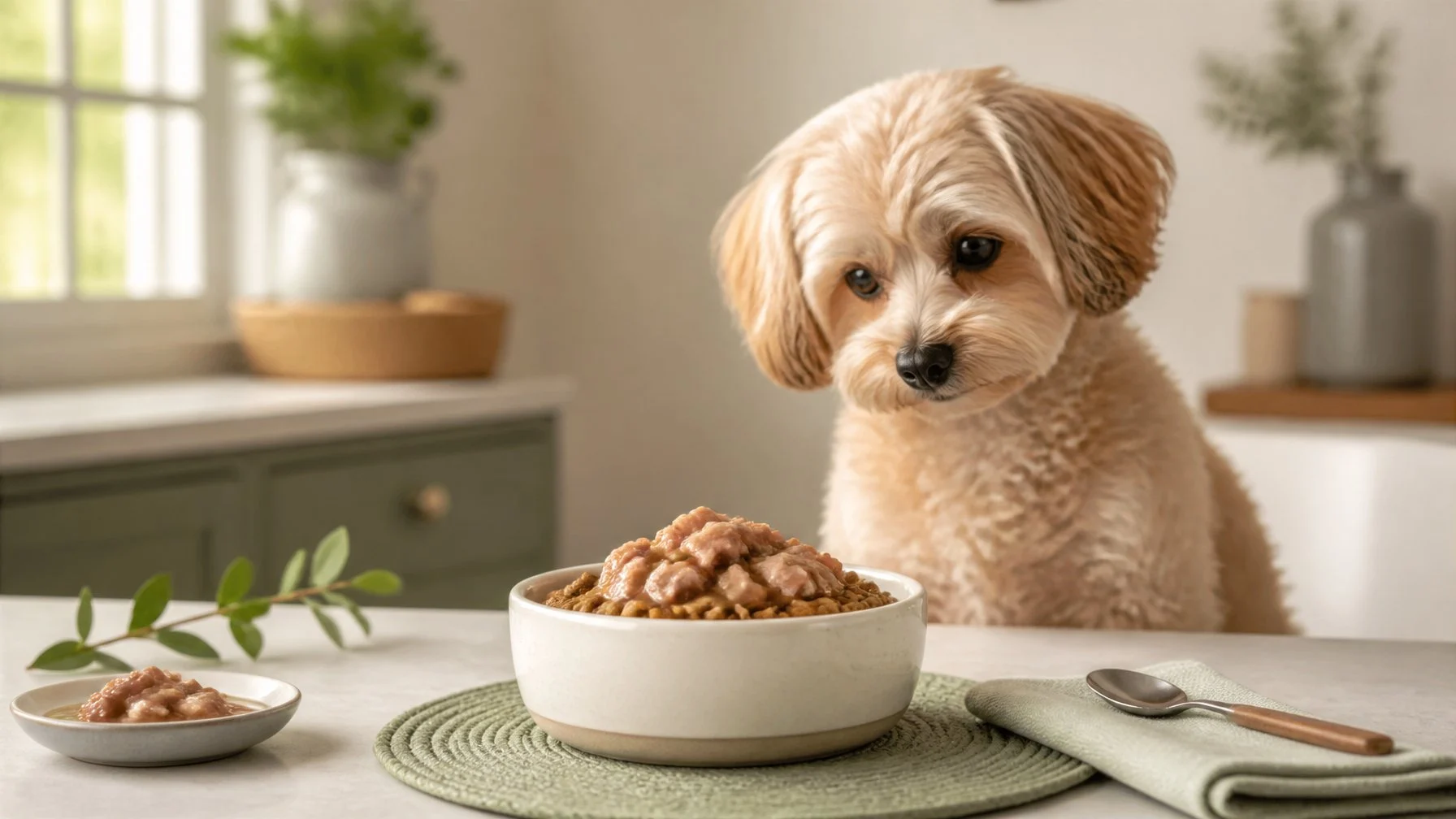
Small dogs are tricky here. A 4 kg (9 lb) Pomeranian eats so little that a “small spoonful” sized for a Labrador can hijack a third of the day’s calories. Dog Fluffy sees this a lot with fluffy toy breeds, where dense coats hide weight gain until the vet says something. What follows helps a reader pick a topper format, size the portion for a tiny bowl, and avoid teaching a dog to hold out for something better.
What Makes a Wet Topper Work for a Small, Selective Dog?
Three things decide whether a topper wins over a selective eater: smell, moisture, and mouthfeel. Portion size decides whether it stays safe, and the timing of the fussiness decides whether a topper is even the right tool.
Why Aroma, Moisture, and Texture Can Improve Palatability
Dogs eat with their noses first. A wet food topper is a small serving of moist food added over dry kibble to boost aroma, moisture, and flavor without replacing the main meal.
Kibble sits at roughly 8 to 12% moisture. Wet food sits at 70 to 80%, and that water carries volatile smell compounds into the air where a dog can find them. Warming the topper slightly to body temperature, around 37°C (98°F), pushes that aroma further.
Texture matters for tiny mouths too. Toy breeds with crowded teeth and small jaws chew hard, dry pieces less happily than a Golden Retriever does. A pâté or shredded topper softens the top layer and makes the first mouthful easy.
How Much Extra Food Can a Small Dog Safely Have?
Keep all extras, including toppers, treats, and chews, to no more than 10% of daily calories. That’s the widely used ceiling for keeping an AAFCO-complete base diet balanced.
For a small dog, the math gets tight fast:
- 2 kg (4.4 lb) dog: roughly 150 kcal a day, so extras cap around 15 kcal. That’s about 1 teaspoon (5 ml) of most pâtés.
- 4 kg (9 lb) dog: roughly 270 kcal a day, extras cap around 27 kcal. About 2 teaspoons (10 ml).
- 7 kg (15 lb) dog: roughly 400 kcal a day, extras cap around 40 kcal. About 1 tablespoon (15 ml).
Those are starting points, not prescriptions. Check the calories per can or pouch on the label, since a rich fresh recipe can pack twice the energy of a broth-based one.
When Refusing Food May Be More Than Pickiness
A dog who has always been choosy is different from a dog who stopped eating this week. The second one needs a vet, not a nicer bowl.
Watch for these alongside the food refusal:
- Weight loss, or ribs and spine becoming easy to feel
- Vomiting, loose stools, or straining
- Pawing at the mouth, dropping food, or bad breath
- Low energy, hiding, or trembling
- Drinking noticeably more or less than usual
Dental pain is a big one in small fluffy breeds. Shih Tzus, Pomeranians, and other toy breeds crowd a full set of teeth into a short jaw, which speeds up plaque and gum disease. A dog who suddenly prefers soft food might be telling you a tooth hurts.
Our Picks by Mealtime Need
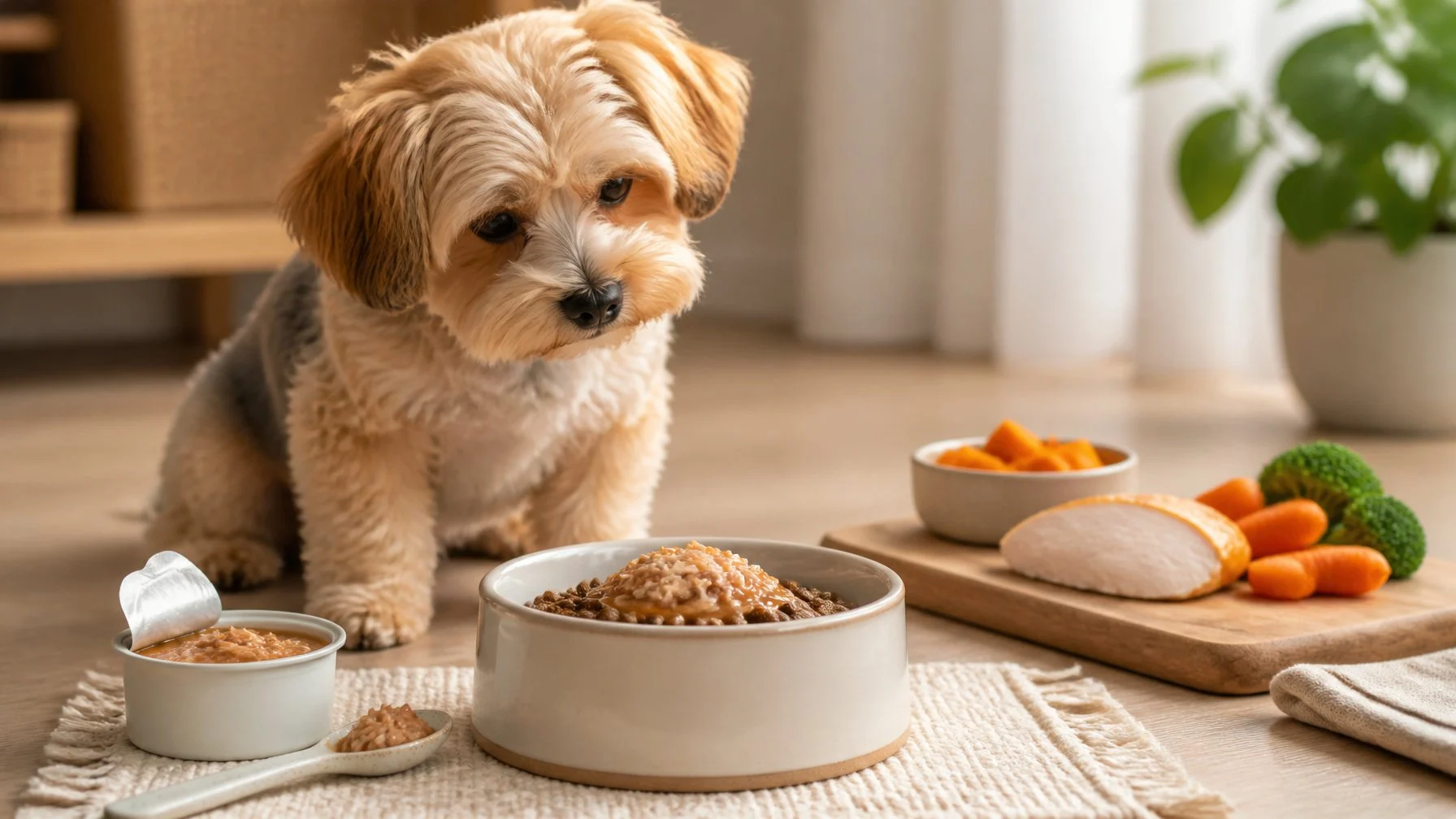
These five cover the formats that suit small bowls: a fresh gently cooked pantry option, a pourable human-grade gravy, a high-protein pouch, a wide flavor range for dogs who bore quickly, and a short-ingredient recipe for touchy stomachs. Pick by what your dog rejects, not by the prettiest label.
Best Fresh, Soft Option: JustFoodForDogs Pantry Fresh
Soft, gently cooked, and shelf-stable until opened. JustFoodForDogs Pantry Fresh comes in 12.5 oz (354 g) tubs of whole-food recipes like chicken and white rice, which suits owners who want fresh-style food without freezer space.
The texture is loose and stirs through kibble easily, which helps with dogs who eat the topper and abandon the rest. For a 4 kg (9 lb) dog, a single tub stretches across many meals when portioned to a couple of teaspoons.
Store the opened tub in the fridge and use within a few days. Worth noting for small-dog owners: these recipes are calorie-dense, so measure rather than eyeball.
Best Human-Grade Gravy: The Honest Kitchen Superfood Pour Overs
Pourable, light, and easy to portion for a tiny bowl. The Honest Kitchen Superfood Pour Overs use human-grade ingredients in a broth-style base with add-ins like pumpkin or spinach.
Because it’s a gravy, the calorie load per teaspoon runs lower than a pâté, so a dog gets a strong smell hit without eating much. That’s a real advantage for a dog on a weight plan.
The cartons reseal and keep in the fridge once opened. Dogs who dislike chunks often accept a gravy, since it coats kibble instead of sitting on it as a separate food.
Best High-Protein Pouch: Nulo Freestyle
Single-serve pouches, high in animal protein, no artificial preservatives. Nulo Freestyle toppers deliver real chicken or real beef in a shredded or minced texture that mixes without turning to paste.
Pouches solve the small-dog storage problem. A 2 kg (4.4 lb) dog can’t get through an open can before it goes off, and a pouch means no half-used tins fermenting in the fridge.
High protein suits active toy breeds and dogs recovering from illness. For a dog with kidney or liver issues, ask the vet first, since protein levels need managing.
Best Variety for Fussy Appetites: Blue Buffalo Delectables and Wilderness Trail Toppers
Some dogs get bored, plain and simple. Blue Buffalo covers that with two lines: Delectables, a soft topper range in stew and pâté textures, and Wilderness Trail Toppers, grain-free recipes with real meat in gravy.
Rotating between two or three flavors within one brand keeps novelty going without swapping the protein source every week, which is gentler on digestion.
Both lines are widely stocked in the US and available through international retailers, though availability outside North America varies by country. Check the pack size, since standard cans and tubs can be too large for one small dog.
Best Simple Recipe for Sensitive Dogs: Portland Pet Food Company
Short ingredient lists, human-grade, and made in small batches. Portland Pet Food Company makes pouch meals and toppers built on a single main protein with a handful of whole-food extras.
Fewer ingredients make troubleshooting easier. When a dog reacts, a five-ingredient recipe tells you far more than a twenty-ingredient one.
The pouches suit owners who want to know exactly what went in the bowl. A comparable homemade route works too, using plain cooked meat and a vet-approved homemade dog food recipe as the base.
Choose the Right Recipe for Your Dog’s Health Needs

The right topper for a gassy Frenchie isn’t the right topper for an itchy Pomeranian or a stiff 12-year-old Shih Tzu. Ingredient choice does the sorting: fiber and probiotics for digestion, omega-3s for coat, moisture and joint support for age, and short ingredient lists when food sensitivities are in play.
For Sensitive Stomachs: Fiber, Pumpkin, and Probiotics
Look for pumpkin and added probiotics, and skip anything rich in fat. Pumpkin brings soluble fiber that firms loose stools and adds bulk without many calories, which is why it turns up in so many topper recipes.
Introduce slowly. Even a good topper can cause a day or two of soft stool if it lands in the bowl all at once.
For dogs with ongoing digestive trouble, keep the protein the same as the base food at first. Changing flavor and protein together makes it impossible to tell what caused a reaction.
For Itchy Skin and a Fluffy Coat: Omega-3 Fatty Acids and Protein Choices
Omega-3 fatty acids from fish are the ingredient worth hunting for. They support skin barrier function and coat condition, which matters for double-coated breeds like Samoyeds and Pomeranians that shed heavily and can flake.
Sardine, salmon, and whitefish toppers deliver this without a separate oil bottle in the fridge. The smell also happens to be a strong draw for choosy dogs.
If itching is the main problem, protein choice comes before oils. Chicken and beef are the most common triggers, so a fish or novel-protein topper doubles up nicely. Dog Fluffy’s guide to picking dog food for sensitive skin covers how to run a proper elimination trial.
For Older Small Dogs: Hydration and Joint Support
Water is the quiet win here. Senior small dogs drink less than they should, and a wet topper adds real fluid to the day, which supports kidney function and keeps stools moving.
Look for glucosamine and chondroitin on the label if joints are stiffening. Small breeds get patella and hip trouble too, and toy breeds live long enough for arthritis to show up.
Softer texture helps a dog with worn or missing teeth. Warming the topper to around 37°C (98°F) lifts smell for a senior nose that’s lost some sharpness.
For Food Sensitivities: Limited Ingredients and Novel Proteins
A single animal protein and a short list beats a long “premium” ingredient panel every time when a dog reacts to food. Novel proteins like duck, rabbit, venison, or kangaroo have never crossed most dogs’ paths, so the immune system hasn’t learned to react.
Read the whole label, not the front. A “lamb” topper containing chicken broth defeats the purpose.
Keep a simple diary for two weeks: what went in the bowl, stool quality, and scratching. That record is what a vet needs to make sense of a suspected sensitivity.
How to Serve a Topper Without Unbalancing Dinner
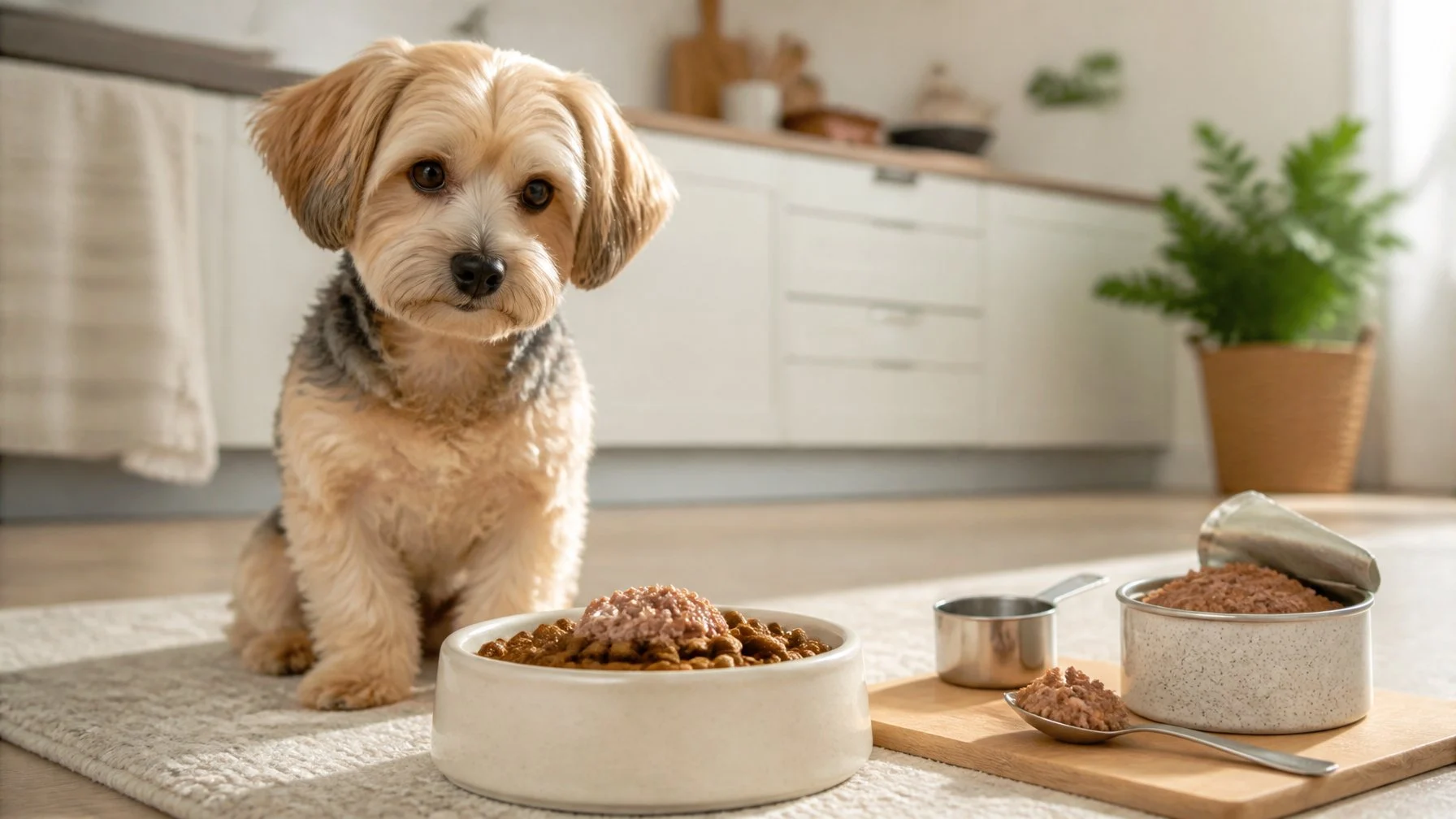
Serving a topper well comes down to three habits: a measured portion introduced across a week, a routine that stops the dog holding out for something tastier, and clean storage once moisture enters the bowl.
A Simple Portioning and Transition Plan
Reduce the kibble slightly, then add the topper. Otherwise you’re stacking calories on a dog that needed 270 of them.
A five-step routine keeps it repeatable, and a practical feeding guide for toppers lays out the same order:
- Day 1 to 2: Serve the normal meal with a quarter of the target topper amount, stirred into the top layer.
- Day 3 to 4: Move to half the target amount. Trim the kibble by a spoonful to keep calories level.
- Day 5 to 6: Go to three-quarters. Check stool quality before going further.
- Day 7: Serve the full portion, capped at 10% of daily calories.
- Week 2 onward: Weigh the dog fortnightly. If weight climbs, cut the kibble again, not the topper.
Kitchen scales beat spoons for accuracy with a dog this size. A digital scale that reads to 1 g costs little and removes the guesswork.
How to Keep Kibble Appealing Without Creating a Holdout
Mix, don’t layer. A dog who can eat the wet part separately will do exactly that, then sit and wait for round two.
Four habits that stop the negotiation:
- Put the bowl down, allow 15 to 20 minutes, then lift it whether it’s finished or not
- Keep the same topper for at least two weeks before rotating
- Skip the “he didn’t like it, let’s try something else” spiral in a single meal
- Count training treats against the same 10% extras budget
Choosing a base food the dog already tolerates makes all of this easier. Dog Fluffy’s picks for dry food for small breeds cover kibble sizes that suit tiny jaws, which removes one reason for the refusal in the first place.
Storage, Hygiene, and Safe Homemade Add-Ons
Once water hits the bowl, treat it like fresh food. Lift leftovers after the meal and wash the bowl daily, since moist residue grows bacteria fast in a warm kitchen.
Refrigerate opened cans and tubs in a sealed container and use within three days. Freezing single portions in an ice cube tray works well for small dogs, giving roughly 15 ml (1 tablespoon) cubes that thaw in minutes.
For homemade add-ons, plain works best:
- Plain cooked chicken or white fish, no skin, no seasoning
- Plain canned pumpkin, not pie filling
- A splash of unsalted bone broth, such as Brutus Bone Broth or Native Pet’s powdered version
- Plain cooked sweet potato, mashed
Skip onion, garlic, salty gravies, cooked bones, and anything from the seasoned end of the kitchen. A shallow, stable bulldog food bowl or similar wide-rimmed dish also helps flat-faced small dogs reach a mixed meal without pushing it across the floor.
A Smaller Bowl Needs a Thoughtful Topping
Picking the best wet food topper for a fussy small dog comes down to matching format to problem: a gravy for aroma with few calories, a pâté for texture, a pouch for portion control, a short-ingredient recipe for a touchy gut. Then measuring it, because 2 teaspoons is a meaningful chunk of a 3 kg (6.6 lb) dog’s day.
Introduce it over a week, keep the base food constant, and weigh the dog every couple of weeks. A dog who suddenly stops eating needs a vet appointment, not a fancier bowl.
What’s worked for your fussy little one? Drop the brand and the portion size in the comments, and share this with someone whose dog is currently staging a hunger strike.
Frequently Asked Questions
Portion size, sensitive stomachs, and whether a topper can stand in for a real meal come up most often from owners of small selective eaters.
What is the best wet food topper for a picky small dog?
A soft pâté or pourable gravy with real meat as the first ingredient works best for small picky dogs. Human-grade gravies like Honest Kitchen Superfood Pour Overs add strong aroma with fewer calories, while pouches such as Nulo Freestyle avoid half-used cans. Match the protein to the base kibble at first so any reaction is easy to trace.
How much wet topper should I add to my small dog’s kibble?
Keep the topper at or below 10% of daily calories. For a 2 kg (4.4 lb) dog that’s roughly 1 teaspoon (5 ml); for a 4 kg (9 lb) dog, about 2 teaspoons (10 ml). Check calories per serving on the label, since fresh recipes can hold double the energy of broth-based ones. Trim the kibble to compensate.
Can wet dog food toppers help a dog with a sensitive stomach?
Yes, when the recipe is simple and introduced slowly over about seven days. Pumpkin adds soluble fiber that firms loose stools, and added probiotics support gut bacteria. Keep the topper’s protein the same as the base food initially, and avoid high-fat recipes. Stop and call a vet if diarrhea or vomiting lasts more than 24 to 48 hours.
What can I put on dry food for a very picky small dog?
Plain cooked chicken or white fish, plain canned pumpkin, unsalted bone broth, or mashed sweet potato all work as safe home add-ons. Warm water alone lifts kibble aroma and costs nothing. Avoid onion, garlic, salted gravies, seasoned leftovers, and cooked bones. Mix the addition into the top layer so the dog can’t eat around the kibble.
Can a wet topper replace my dog’s regular food?
No, unless the label states the product is complete and balanced. Most toppers are labeled supplemental, meaning they lack the full vitamin and mineral profile a dog needs daily. Feeding a supplemental topper as a whole diet risks nutrient gaps, which hits growing puppies and small dogs hardest. Keep the complete food as the base.
This is general guidance, not veterinary advice – always check with your vet for your own dog’s situation.