As an Amazon Associate I earn from qualifying purchases.
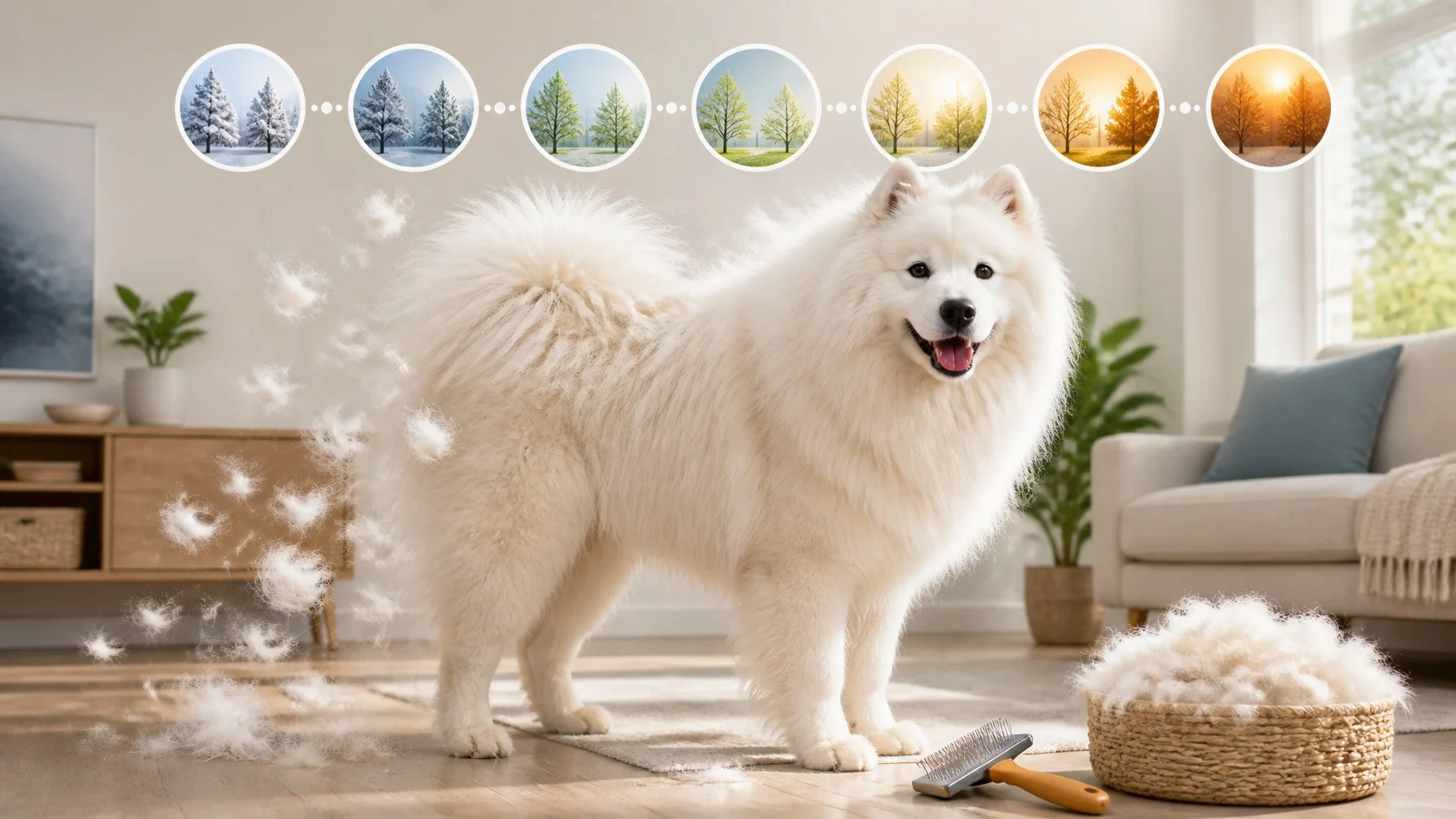
Most Samoyed coat blows last about 3 to 6 weeks, with the heaviest fur loss packed into a 10 to 14 day stretch in the middle. Spring is usually the big one. Autumn often brings a lighter repeat. Daylight, indoor heating, age, sex, and coat condition can all stretch or shorten that window.
There’s a real difference between everyday shedding, a seasonal undercoat release, and hair loss that needs a vet. One fills a bin bag and stops. One never really stops. And one comes with bald patches, redness, or a dog that seems off. Dog Fluffy digs into fluffy-dog grooming the same way it covers nutrition and wellness: research-informed, honest, and welfare-first. Here’s the timeline, the brushing method, and the line where “normal mess” becomes “call the vet.”
What a Normal Coat-Blow Timeline Looks Like
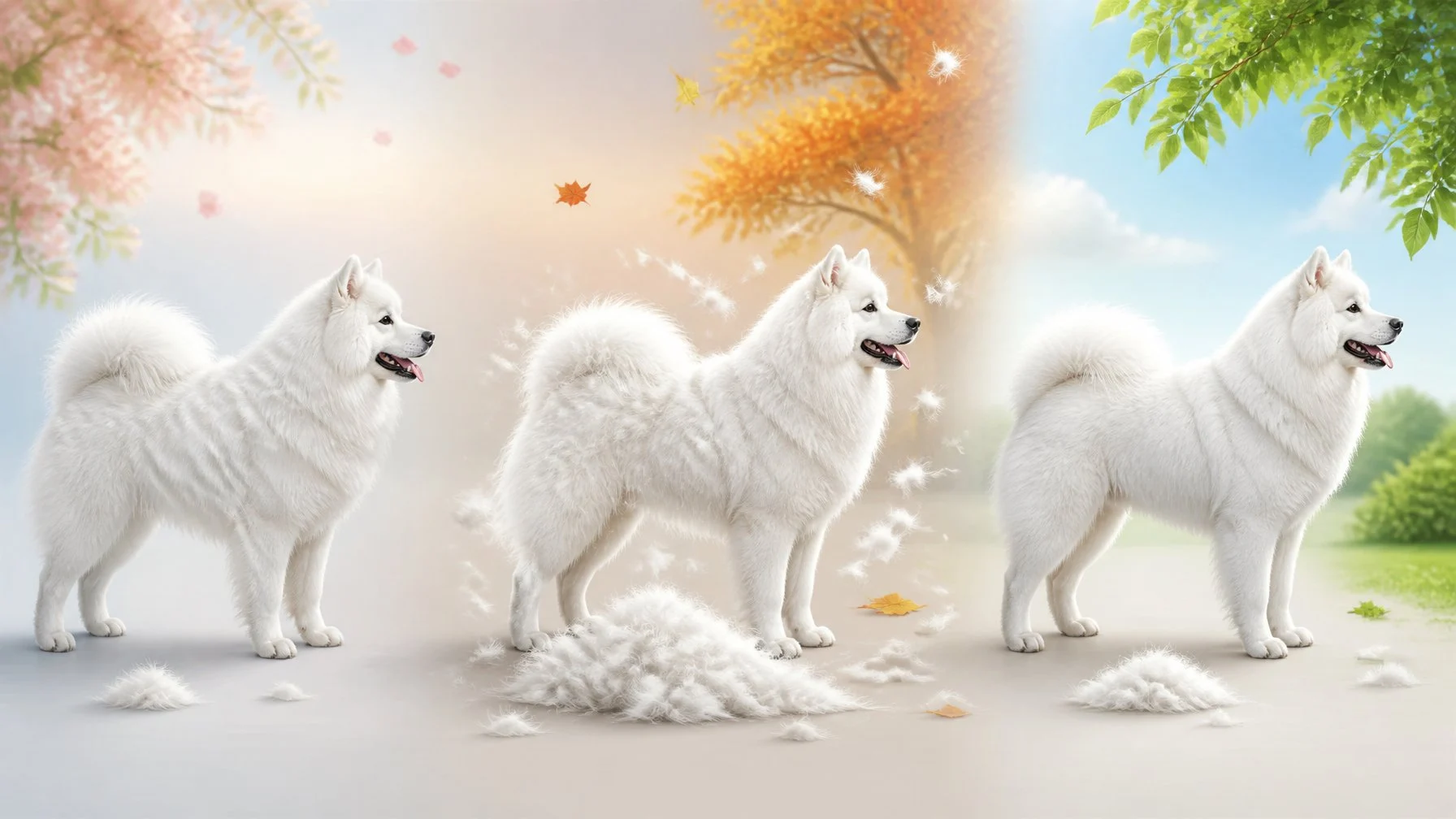
A full Samoyed coat blow runs roughly three to six weeks, ramps up hard in weeks two and three, and hits differently in spring than in autumn. Puppies follow their own schedule, and dogs living under artificial light and central heating often seem to shed forever.
The Typical Three-to-Six-Week Window
A coat blow is the seasonal release of a dog’s entire soft undercoat, pushed out through the guard hairs over several weeks. That’s the short version.
Most owners see something close to this pattern:
- Week 1: Small cottony tufts appear along the spine and rump. Brushing yields more fur than usual, but nothing alarming.
- Week 2: Volume jumps. The coat starts looking patchy and uneven as different areas release at different speeds.
- Week 3: Peak. Expect handfuls per session. Some owners fill several bags a week, and daily fur removal during these 4 to 6 week periods is normal.
- Week 4: Still heavy, but the rake starts hitting resistance instead of endless fluff.
- Weeks 5 to 6: Tapering. The new undercoat feels tighter and springier against the skin.
Skip brushing for a week during peak and the timeline stretches. Loose fur that stays trapped doesn’t shed, it felts.
Spring and Autumn Peaks
Spring is the heavy one. The dense winter undercoat comes out in favour of a lighter summer layer, and it usually kicks off somewhere between March and May in the Northern Hemisphere.
Autumn is the quieter cousin. Since the summer coat is thinner to begin with, the autumn blow tends to be more manageable than the spring one.
Females sometimes blow a third time in a year, tied to hormonal cycling rather than daylight. That’s not a problem, just a different rhythm.
Puppy Coat Changes and Adult Coat Development
Samoyed puppies wear a soft, fluffy coat with almost no proper guard hairs. Somewhere between 6 and 12 months, that puppy fluff gives way to the adult double coat.
The first adult coat blow often catches owners off guard because puppy shedding was nothing like it. Texture changes too. The adult coat feels coarser on top and denser underneath.
Full adult coat quality usually isn’t settled until around 2 to 3 years old. Samoyed mixes vary wildly here. A Samoyed crossed with a single-coated breed may never blow coat in the classic way at all.
Why Indoor Dogs Can Seem to Shed All Year
Coat blow is triggered by changing daylight, not temperature alone. Dogs living indoors under lamps and central heating get muddled signals.
The result: a lower-grade shed that never fully stops, plus softer seasonal peaks. Some things that blur the pattern:
- Artificial lighting into the evening
- Heated homes in winter, air conditioning in summer
- Living closer to the equator, where day length barely shifts
- Frequent bathing, which can loosen undercoat out of season
None of that harms the dog. It just means the calendar matters less than the coat itself.
Why So Much White Fur Comes Out at Once
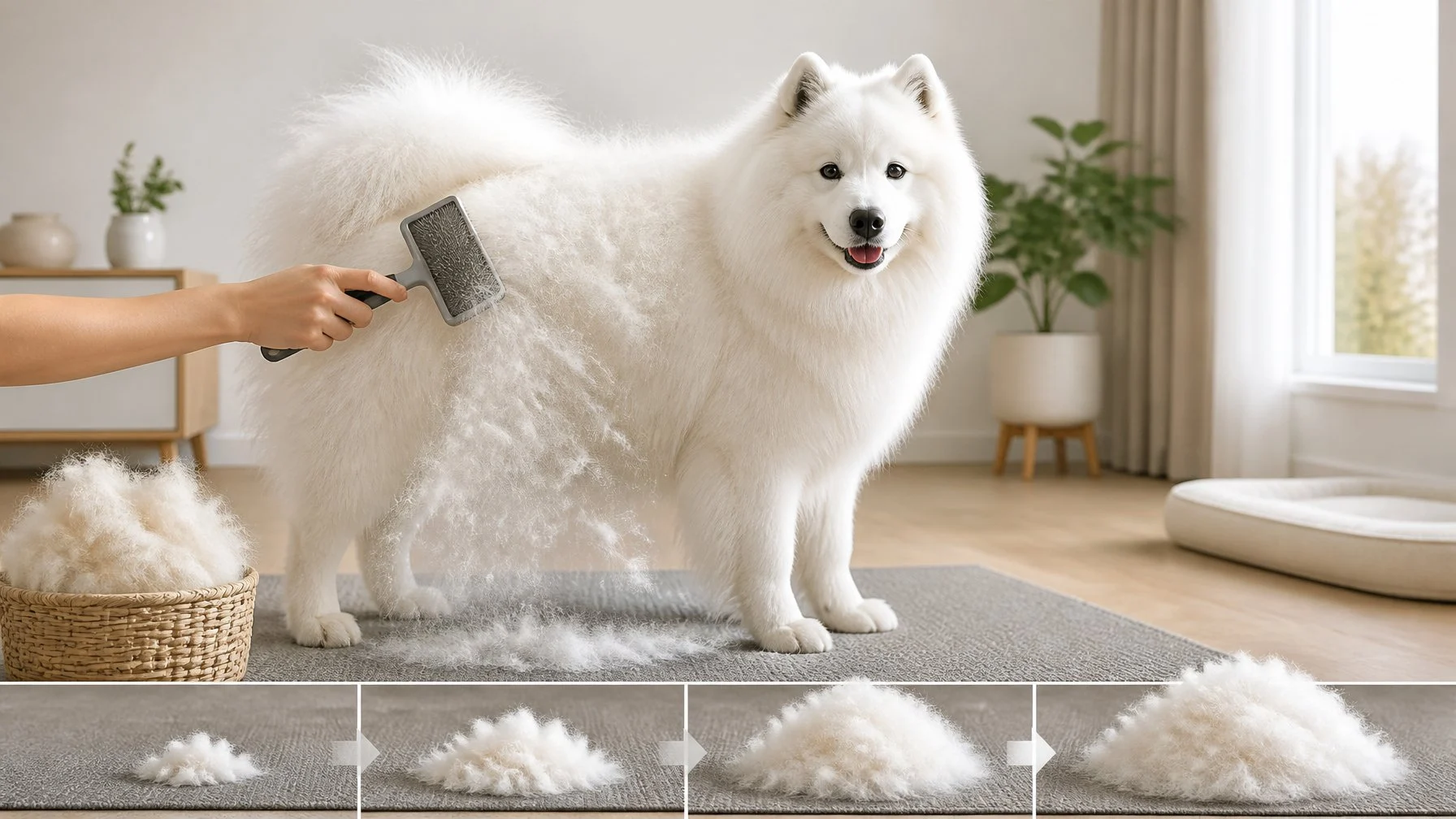
The volume comes down to how a double coat is built, what daylight does to the hair cycle, and the fact that a Samoyed’s undercoat detaches almost all at once rather than trickling out. Knowing what loose undercoat feels like under the fingers is what lets an owner start early.
The Jobs of the Undercoat and Guard Hairs
Double-coated dogs carry two very different layers, and each one does a separate job.
Layer | What it looks like | What it does |
|---|---|---|
Undercoat | Soft, woolly, cotton-like, packed at the skin | Traps air for insulation, keeps warmth in and heat out |
Guard hairs | Long, straight, coarse, stand off the body | Repel water and dirt, block UV, protect skin |
Together they handle temperature regulation in both directions, which is why the coat matters just as much in a heatwave as in snow.
The Samoyed coat was built for Arctic work. That density is exactly why the shed feels extreme compared to other breeds.
How Daylight and Seasonal Weather Trigger Shedding
Changing day length is the main switch. As daylight hours shift in spring and autumn, hormonal signals tell the hair follicles to release the old undercoat and grow a replacement.
Temperature plays a supporting role, not the lead. That’s why a warm spell in February doesn’t usually start a blow, but lengthening evenings in April does.
Weather can still nudge timing. A late cold snap sometimes delays things by a week or two.
What Loose Undercoat Feels Like Before It Releases
This is the skill worth learning. Catching a blow in the first day or two beats catching it in week two.
Signs to check for with the hands, not the eyes:
- The coat feels airy or spongy when fingers push through to the skin, instead of tightly packed
- Cottony white tufts start poking up through the guard hairs, especially along the back and rump
- A gentle tug on a small section of undercoat lifts fluff away with almost no resistance
- More fur floats off during normal petting
- The dog rolls, rubs on furniture, or licks more, because loose undercoat gets itchy
A Brushing Routine That Keeps the Coat From Felting
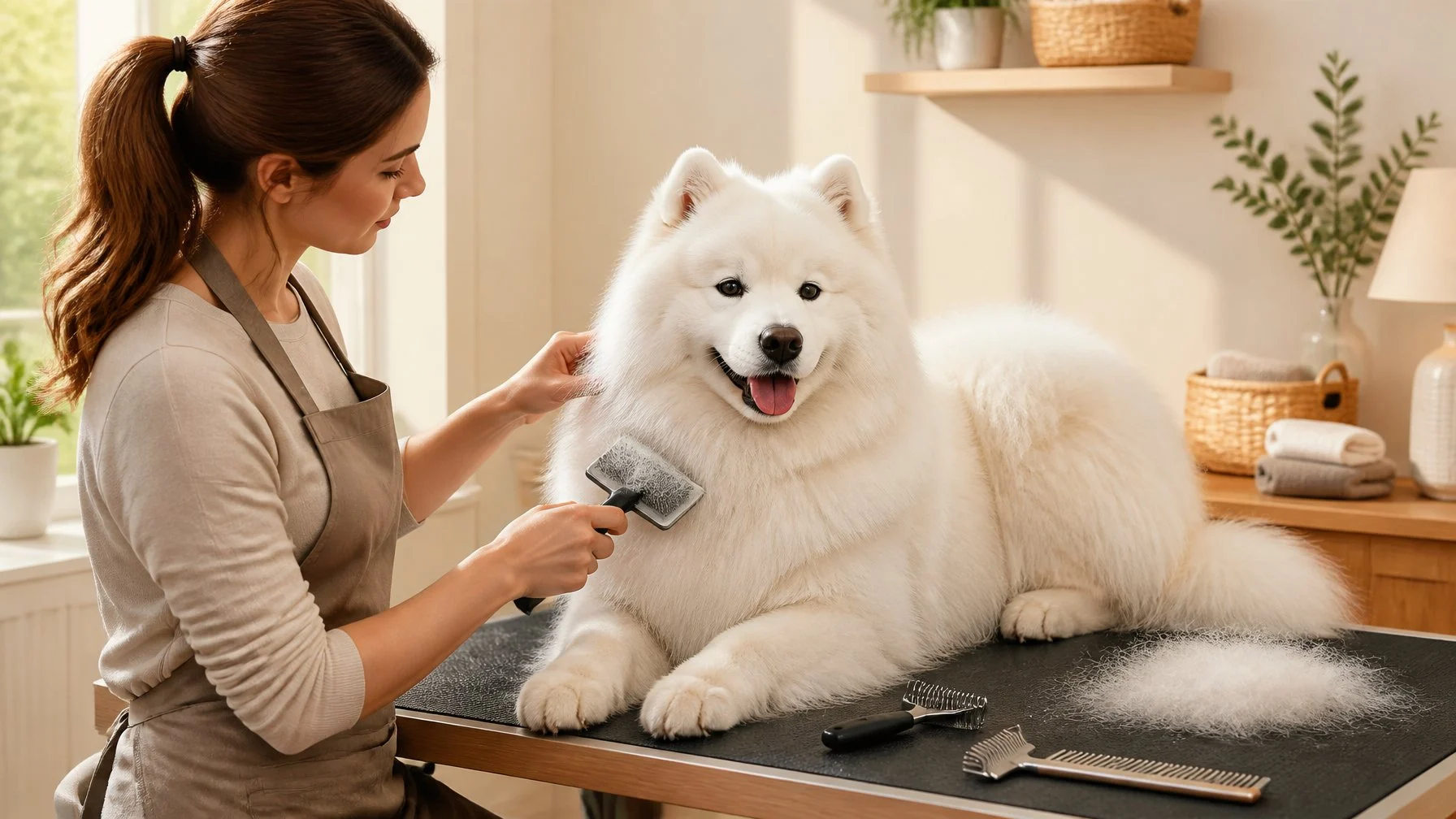
Line brushing down to the skin is the one technique that separates a manageable blow from a matted mess, and how often it’s needed changes completely between shedding season and the rest of the year. Each tool has a specific job, and mats always show up in the same five places first.
How to Line Brush Down to the Skin
Surface brushing looks productive and does almost nothing. The undercoat sits underneath, and a brush that only skims the guard hairs leaves it exactly where it is.
Line brushing works like this:
- Lay the dog on their side or work from the bottom of a leg upward.
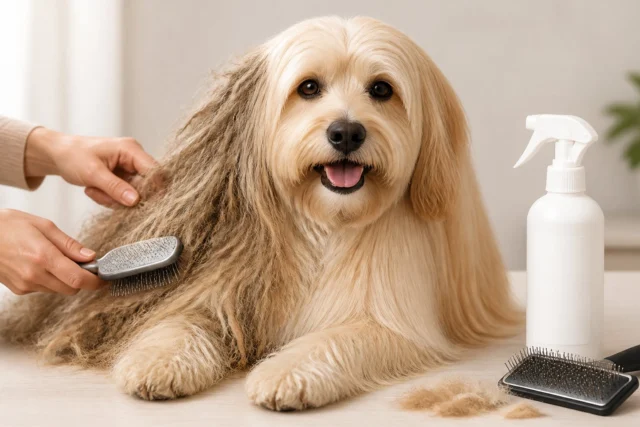
- Mist the area lightly with a conditioning detangling spray. Dry brushing snaps hair and builds static.
- Push the coat up with one hand so a horizontal “line” of skin shows.
- Brush a thin section downward, from the skin outward, until the tool passes through cleanly.
- Drop the next thin layer of coat down and repeat, working up the body in lines.
- Finish each section with a metal comb. If the comb glides skin to tip, that section is done.
The comb is the test, not the brush. A brush can slide over a mat. A comb can’t.
How Often to Brush During and Between Coat Blows
The gap between “normal weeks” and “blow weeks” is bigger than most new owners expect.
- Between blows: every 2 to 3 days, roughly 20 minutes
- During a blow: daily, 30 to 60 minutes, split into two shorter sessions if the dog gets restless
- Puppies: short daily sessions from day one, even when there’s little to remove, so handling feels normal later
Missing three or four days at peak is where felting starts. Twenty minutes today beats a two-hour rescue mission on Saturday.
The Tools That Each Have a Job to Do
Dog Fluffy recommends tools by what they actually do, not by brand hype. Note that Dog Fluffy participates in the Amazon Associates program and may earn a commission on qualifying purchases, which never changes what gets recommended.
Tool | Job |
|---|---|
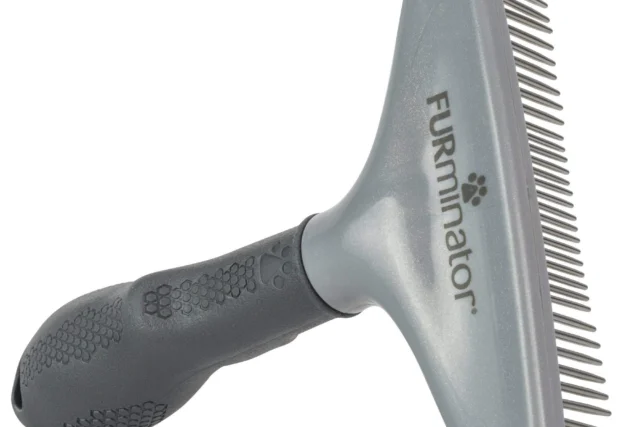
Main workhorse during a blow. Long tines reach past guard hairs to pull loose undercoat | |
Daily care of the long guard hairs and the tail plume | |
Prep and finishing, plus working small tangles loose | |
The checker. Wide-tooth for bulk, fine-tooth for spotting early mats | |
Cuts static and friction so hair slides instead of snapping | |
Furminator-style deshedding blade | Occasional targeted use only. Overuse thins guard hairs, so once or twice a week at most |
Skip anything that cuts. Deshedding blades trim what they can’t pull, and a Samoyed coat doesn’t need trimming.
Where Mats Hide First
Friction and moisture make mats. Same five spots, nearly every time:
- Behind and under the ears
- The chest ruff and under the collar
- Armpits, where the front legs meet the body
- Pantaloons, the fluffy trousers on the back legs
- Around the base of the tail and the sanitary area
Check these with a fine-tooth comb every session during a blow. Mats in these zones can form within a day or two once loose undercoat starts packing in.
Small mat? Work it apart with fingers and a comb, holding the hair at the base so tugging doesn’t hurt. Tight mat sitting flat against the skin? That’s a groomer job.
Bathing, Drying, and Household Fur Control
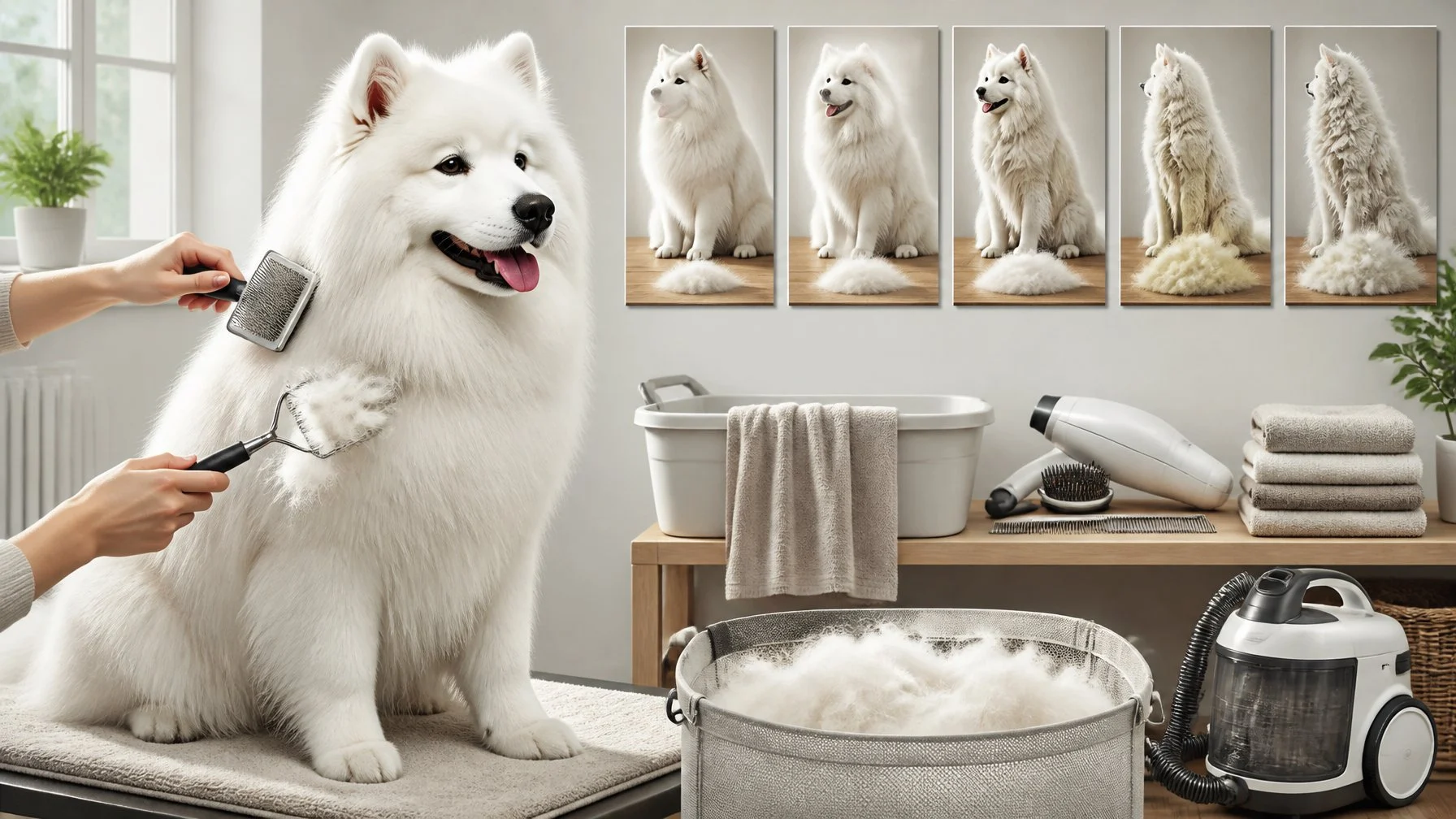
Water turns a small tangle into a solid mat, so brushing comes first, always. The right dog shampoo protects skin oils, a high-velocity dryer physically blasts loose undercoat out, and a few household habits stop white fluff from taking over the sofa.
Brush Out Tangles Before Water Makes Them Worse
Wet hair shrinks and tightens. Any tangle that goes into the bath comes out as a proper mat, felted right down to the skin.
Comb the whole dog skin to tip before the water runs. No exceptions during a coat blow.
If a mat is too tight to work through dry, deal with it first or book a groomer. Bathing over it makes removal painful and sometimes impossible without clipping.
Using Dog Shampoo Without Drying the Skin
Human shampoo has the wrong pH for dog skin. A gentle dog shampoo, diluted in water before it goes on, spreads better through a dense coat and rinses out faster.
Bathing every 4 to 6 weeks suits most Samoyeds. During a blow, one bath can genuinely speed things along by loosening undercoat.
Two things that cause trouble:
- Under-rinsing. Shampoo left in a thick coat causes itching and flaking. Rinse until the water runs completely clear, then rinse again.
- Over-bathing. Weekly baths strip the oils that keep guard hairs water-repellent.
A dull, dry-looking coat can point to leftover product, incomplete drying, or a diet short on omega fatty acids, as noted in a Samoyed grooming breakdown.
How a High-Velocity Dryer Helps Release Undercoat
A high-velocity dryer isn’t a hairdryer with a bigger motor. It uses air pressure, not heat, to push water and loose fur straight out of the coat.
During a blow, the effect is dramatic. Undercoat that a rake would take an hour to remove comes out in minutes, in visible clouds.
A few rules:
- Use cool or low heat only. Hot air can burn skin under all that insulation
- Dry fully to the skin. A damp undercoat can go musty or trigger hot spots
- Expect 45 to 90 minutes for a full adult
- Start the introduction at a distance with the dryer on low, and pair it with treats
Do it outside or in a bathroom with the door shut. Seriously.
Simple Ways to Keep Fur Off Floors and Furniture
Fur management is a routine, not a single purchase.
- Brush outdoors or on a mat that can be shaken out
- Run a rubber pet hair remover or damp rubber glove over sofas and car seats
- Washable throws on the furniture, swapped out weekly
- A vacuum with a decent filter, emptied more often than feels reasonable
- Lint roller by the front door, another in the car
Static makes white undercoat cling to walls and float into odd places. A humidifier in dry months genuinely helps.
What Not To Do and When To Get Help
Shaving a Samoyed damages temperature regulation and can permanently wreck coat texture, while a few small hygiene trims are perfectly fine. Some shedding patterns aren’t seasonal at all, and diet supports skin health without doing anything miraculous.
Why You Should Never Shave a Samoyed
A shaved double coat doesn’t cool the dog. It does the opposite.
Guard hairs block sun and hold a layer of insulating air against the body. Take them away and the skin is exposed to UV, heat, and biting insects, with no buffer left.
Clipping also destroys the balance between the two coat layers. Undercoat grows back faster than guard hairs, so the coat often returns patchy, woolly, and prone to matting. Sometimes it never grows back properly. Groomers and breed guides are consistent that the double coat should never be shaved or clipped short.
Hot climate? Brush out the undercoat properly, provide shade and water, walk in the cool hours. That works. Clippers don’t.
Safe Trims That Support Hygiene Rather Than Change the Coat
Not all trimming is off-limits. These are all fine:
- Sanitary trim: a tidy-up around the rear so waste doesn’t cling
- Paw pad trim: removing fur between the pads for grip and to stop ice or grass seeds gathering
- Feet tidy: a light shape around the outline of the foot
Nails matter too. A nail grinder gives more control than clippers on dark nails and is worth doing every 2 to 3 weeks.
None of these touch the body coat. That’s the line.
Signs Shedding May Be More Than a Seasonal Coat Blow
A normal blow means lots of hair everywhere, but a dog who feels fine, with no bald skin showing through.
Worth a vet appointment:
- Bald patches or thinning where the skin is visible
- Redness, scabs, spots, or a strong smell
- Constant scratching, chewing, or licking one area
- Flaky, greasy, or thickened skin
- Hair loss on both sides of the body in a matching pattern
- Heavy shedding alongside weight change, low energy, or drinking more
- A coat that stays thin and doesn’t grow back after a blow
Symmetrical hair loss plus tiredness can point to hormonal issues like hypothyroidism. Itchy, angry skin points more toward allergies, fleas, or infection. Either way, that’s a diagnosis, not a grooming fix.
Nutrition and Skin Support Without Miracle Claims
No supplement stops a coat blow. Anything promising that is selling something.
What diet does do is support the quality of the coat that grows back. A complete food with enough protein and fat is the base. Fish oil, which supplies omega-3 fatty acids, is commonly used to support skin and coat condition, though dosing should be checked with a vet since too much can cause loose stools or interact with other conditions.
Practical points:
- Sudden coat or skin changes after a food switch are worth mentioning to a vet
- Fresh water always available, since dehydration shows up in skin first
- Regular flea and parasite prevention, because a single flea can drive heavy scratching
- Skip anything marketed as a “shedding cure”
Dog Fluffy covers dog nutrition and wellness in more depth for owners wanting to dig further into feeding choices.
Frequently Asked Questions
Coat-blow questions cluster around timing, warning signs, frequency, age, and cleanup, so here are the direct answers to each.
How long does a Samoyed’s seasonal shed usually last?
Most seasonal coat blows run 3 to 6 weeks from first tufts to a settled new coat. The heaviest stretch is usually 10 to 14 days in the middle. Daily brushing shortens the whole process, since removing loose undercoat by hand beats waiting for it to fall out on its own.
When do Samoyeds usually shed their undercoat?
Spring is the main event, typically March through May in the Northern Hemisphere, driven by lengthening daylight. A lighter autumn shed often follows around September to November. Females sometimes blow a third time in a year, linked to hormonal cycling. Dogs living indoors under artificial light may shed on a fuzzier schedule.
How can someone tell if a Samoyed is blowing its coat?
The undercoat feels loose and airy instead of tightly packed when fingers push to the skin. Cottony white tufts poke through the guard hairs along the spine and rump. Brushing produces far more fur than usual, the coat looks patchy, and the dog may roll or rub on furniture more than normal.
How often do Samoyeds have a heavy shedding season?
Twice a year for most Samoyeds, once in spring and once in autumn. Spring is heavier because the dense winter undercoat comes out. Some unspayed females experience a third, hormone-driven blow. Light shedding continues year-round between these periods, so the brush never really gets put away.
Does a Samoyed’s age affect how long the big shed lasts?
Yes. Puppies shed their soft puppy coat between roughly 6 and 12 months, and that first adult blow can feel unusually long and messy. Adult dogs settle into a more predictable 3 to 6 week pattern. Senior dogs sometimes shed less dramatically but more constantly, since the coat cycle slows with age.
What helps manage all the loose fur during a Samoyed’s heavy shed?
Daily line brushing with an undercoat rake, followed by a metal comb check, removes the most fur. A bath with thorough high-velocity drying releases huge amounts at once. Washable throws on furniture, a rubber pet hair remover for fabric, and frequent vacuuming handle whatever escapes.
What’s worked during coat-blow season at your house? Drop the tip in the comments, other Samoyed parents will thank you for it.
This is general guidance, not veterinary advice – always check with your vet for your own dog’s situation.