Bichon Frises are small dogs that have become increasingly popular as companion pets. They are known for their curly, hypoallergenic coats and playful personalities. But what are Bichons good for beyond being a lovable companion?
First and foremost, Bichon Frises are excellent family pets. They are known to be affectionate and gentle with children, making them a great addition to any household. Additionally, Bichons are good with other pets, including cats and other dogs.
Bichon Frises also make great watchdogs. They may be small, but they are alert and will bark to alert their owners of any potential danger. Despite their watchdog abilities, Bichons are not aggressive and are known for their friendly demeanor.
Bichon Frise: A Brief History
https://www.youtube.com/watch?v=3e8jl88j-pY&embed=true
The Bichon Frise is a small dog breed with a curly white coat that doesn’t shed. While the definitive history of Bichon Frise is a composite of fact and fiction, legend and conjecture, it is believed that the breed originated around the Mediterranean in the 13th century.
Sailors from Italy, Spain, and France brought the breed to Europe, where it became a favorite of the French nobility during the Renaissance. The Bichon Frise’s popularity continued to grow during the French Revolution, as it was favored by commoners and royalty alike.
During World War I, the Bichon Frise fell out of favor and faced hard times because of the shortages and austerities brought on by the war. However, it survived and made a comeback in the 1930s when breeders in France and Belgium worked to restore the breed.
The Bichon Frise’s ancestors are believed to include the Barbet, a water dog, which was then crossbred with smaller lap dogs. The breed’s name is derived from the term “Barbichon,” which over time was shortened to “Bichon.”
In the 16th century, Bichon Frise dogs were brought to the Canary Islands and Tenerife, where they were further developed into four distinct breeds: Bichon Tenerife, Bichon Maltese, Bichon Bolognese, and Bichon Havanese.
Today, the Bichon Frise is a popular companion dog known for its playful and affectionate nature. It is good with other pets, makes an alert watchdog, and is a great choice for allergy sufferers because of its non-shedding coat.
Overall, the Bichon Frise has a rich and fascinating history that has helped shape the breed into the lovable and sociable dog it is today.
Characteristics of a Bichon Frise
https://www.youtube.com/watch?v=jbLKglE130E&embed=true
Bichon Frise is a small but sturdy dog breed that is known for its playful and affectionate personality. They have a white, curly coat that does not shed, making them one of the best breeds for allergy sufferers. Their coat can also come in buff, cream, and apricot colors.
These dogs are alert watchdogs but are not aggressive. They are good with other pets and have a good temperament for kids and other household pets. Bichon Frises tend to have moderate energy levels and require 20-40 minutes of exercise per day. They have a low tendency to drool, snore, and dig, but a moderate tendency to bark.
Bichon Frises have a life expectancy of 12-15 years and can weigh between 7-12 pounds. The breed’s glory is their white hypoallergenic coat, which is plush and velvety to the touch, featuring rounded head hair that sets off the large, dark eyes and black leathers of the nose and lips.
Overall, Bichon Frises make great companions for those who want a small, affectionate, and playful dog that does not require much outdoor exercise. They are also a good choice for those with allergies due to their hypoallergenic coat.
Bichon Frise Temperament and Behavior
https://www.youtube.com/watch?v=iyljFQOK0A8&embed=true
Bichon Frises are known for their cheerful, friendly, and gentle personalities. They have a playful and curious nature that makes them a great companion for families with children, seniors, and apartment dwellers. Properly cared for, the little Bichon will bring joy and happiness to any home, with its pleasant personality and happy outlook.
However, it’s important to note that Bichons can be difficult to housebreak, and they may develop separation anxiety if left alone for long periods of time. This is due to their sociable and dependent nature, which means they thrive on human companionship. Owners should be prepared to provide plenty of attention and socialization to their Bichon Frise, or risk behavioral issues such as excessive barking or destructiveness.
Despite their small size, Bichon Frises are not typically considered good guard dogs in the traditional sense due to their lack of natural protective instincts. They are more likely to greet strangers with enthusiasm than to deter them. However, their friendly nature makes them a great choice for therapy work, as they excel at providing comfort and companionship to those in need.
Overall, the Bichon Frise temperament is one of the most pleasing dog temperaments. They are intelligent and eager to please, which makes them relatively easy to train. They respond well to positive reinforcement techniques and can learn various tricks and commands. With proper training and socialization, a Bichon Frise can make a wonderful addition to any family.
Training a Bichon Frise
https://www.youtube.com/watch?v=AgjJ58UcbC4&embed=true
Training a Bichon Frise can be a rewarding experience, but it requires patience, consistency, and a good understanding of their unique needs. Bichons are alert and trainable dogs, but they can be difficult to potty train. Therefore, it is essential to start housebreaking immediately by putting the dog on their toilet spot and praising them when they go. Crate training can also be helpful, as Bichons are quick learners in most aspects.
Early socialization is crucial for Bichons. They become very attached to their primary caregivers, and anxiety can be a prominent training challenge. Therefore, it is essential to expose them to different people, animals, and environments from a young age. This will help them become well-adjusted and confident dogs.
Bichons respond well to positive reinforcement training, and they prefer learning tricks to formal obedience. Food treats can be an excellent reward for them, but harshness only makes them spiteful. Consistency is key when training a Bichon Frise, and it is essential to establish a routine and stick to it.
In summary, training a Bichon Frise requires patience, consistency, and a good understanding of their unique needs. They are alert and trainable dogs that respond well to positive reinforcement training and prefer learning tricks to formal obedience. Early socialization is crucial for them to become well-adjusted and confident dogs.
Bichon Frise and Children
https://www.youtube.com/watch?v=ZKEnzGSODE0&embed=true
Bichon Frise is a small breed of dog that is known for its friendly and loving nature. Many people wonder if Bichons are good with children. The answer is yes! Bichon Frises are great family pets and are known to be very gentle with children.
One of the reasons why Bichon Frises are good with children is their playful nature. They love to play and interact with people, especially children. They are small but sturdy dogs, which makes them perfect for children to play with. Additionally, Bichon Frises do not require much outdoor exercise, which means they can play indoors with children without getting too tired.
Another reason why Bichon Frises are good with children is their gentle temperament. They are not aggressive dogs and are known to be very patient with children. They are also not very loud barkers, which means they are unlikely to startle or scare children.
However, it is important to note that children should always be supervised when playing with Bichon Frises. While they are gentle dogs, they may still be easily injured during playtime if not handled with care. It is also important to teach children how to properly interact with dogs to prevent any accidents or injuries.
Overall, Bichon Frises make great family pets and are excellent with children. They are playful, gentle, and patient dogs that can provide hours of fun and entertainment for children.
Bichon Frise and Other Pets
Bichon Frises are known to be friendly and sociable dogs, making them an excellent choice for families with other pets. They are generally good with other dogs and cats, as well as other small animals like rabbits and guinea pigs.
When introducing a Bichon Frise to other pets, it is important to supervise their interactions and introduce them gradually. This will help to prevent any potential conflicts and ensure that all pets feel comfortable and safe.
Bichons are also known for their playful and energetic nature, which can make them great companions for other active pets. They enjoy playing and running around, which can be a great way to keep other pets entertained and active.
However, it is important to note that Bichons can sometimes be a bit too playful for some pets, particularly those that are older or more timid. In these cases, it may be necessary to supervise their interactions more closely or to provide separate areas for each pet.
Overall, Bichon Frises are generally good with other pets and can make great companions for families with multiple animals. With proper supervision and introductions, they can form strong bonds with other pets and provide endless hours of entertainment and companionship.
Exercise Needs of a Bichon Frise
https://www.youtube.com/watch?v=FpfEYCOqB_Q&embed=true
Bichon Frises are energetic and active dogs that require daily exercise to maintain their health and happiness. They are small dogs, which means they do not need as much exercise as larger breeds, but they still need a daily walk or playtime to keep them physically and mentally stimulated.
A general rule of thumb is that an adult Bichon Frise needs at least 30 minutes of exercise per day. This can be broken up into two or three smaller play sessions or one walk around the block. For puppies, most exercise should be unstructured playtime, and structured exercise like walks on a leash or a sport like agility should be incorporated as they become adults.
It is important to note that Bichon Frises are not outdoor dogs and should not be left outside for extended periods of time. They are indoor dogs that thrive on human interaction and attention. Therefore, indoor games of fetch or running off-leash in a safely fenced area are good options for exercising your Bichon Frise.
Because Bichon Frises are intelligent dogs, they need daily mental stimulation in addition to physical exercise. Training them to perform tricks or tasks is an excellent way to fulfill both of these needs. It is also important to note that Bichon Frises are peaceful with everyone, including other pets, so they can enjoy playtime with other dogs as well.
In summary, Bichon Frises have moderate exercise needs and require daily physical and mental stimulation to maintain their health and happiness. A daily walk or playtime, along with training and indoor games, is sufficient to meet their exercise needs.
Grooming a Bichon Frise
https://www.youtube.com/watch?v=ouK9tIF9gwI&embed=true
Bichon Frises are adorable dogs that require consistent grooming to maintain their fluffy and curly coats. Proper grooming is essential to keep their coat healthy, prevent matting, and maintain their overall hygiene. Here are some tips for grooming a Bichon Frise:
Brushing
Bichon Frises have a double coat that requires daily brushing to prevent matting. Use a slicker brush or a pin brush to remove tangles and mats. Brushing will also help to distribute the natural oils in their coat and keep it shiny. Brush their hair up from the base towards the face rather than down against the skin to prevent pulling and discomfort.
Coat Care
Bichon Frises have a curly and fluffy coat that requires regular trimming to keep it neat and tidy. The most popular haircut for Bichon Frises is the Teddy Bear cut, which is relatively easy to maintain and works best for pet parents with busy lifestyles. Bichon Frises also require regular bathing to keep their coat clean and healthy.
Combing
Combing is essential to remove tangles and mats that brushing might miss. Use a metal comb to go through the coat and remove any remaining tangles. Combing should be done after brushing to ensure that the coat is free of any tangles or mats.
Matting
Matting is a common problem with Bichon Frises, especially if their coat is not brushed regularly. Matting can cause discomfort and even skin irritation. To prevent matting, brush your Bichon Frise daily and make sure to comb through their coat regularly. If you notice any matting, use a detangler spray to loosen the mats before brushing them out.
In summary, grooming a Bichon Frise requires daily brushing, regular trimming, and bathing. Combing and preventing matting are also essential to maintain their fluffy and curly coat. With proper grooming, your Bichon Frise will look and feel their best.
Bichon Frise Health Concerns
https://www.youtube.com/watch?v=z9QOLYSdkrk&embed=true
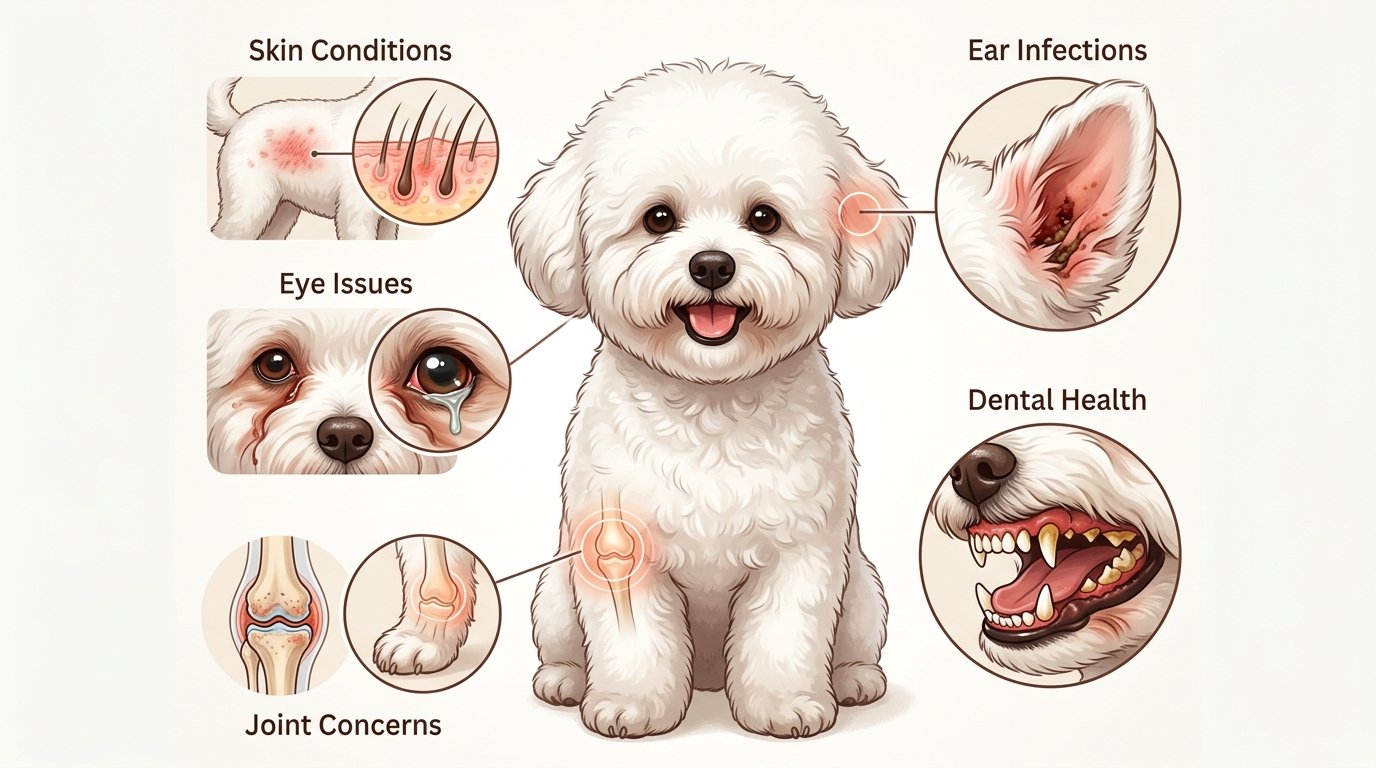
Bichon Frises are generally healthy dogs with a lifespan of 14-plus years. However, like any other breed, they are prone to certain health issues that owners should be aware of. Here are some common health concerns that Bichon Frise owners should keep an eye on:
Allergies: Bichon Frises may develop allergies to environmental factors such as pollen, dust mites, mold, or dietary allergens. Symptoms of allergies may include itching, sneezing, and skin irritation. It is recommended to consult a veterinarian if you suspect your Bichon Frise has allergies.
Cataracts: Bichon Frises are prone to developing cataracts, a clouding of the eye lens that can lead to vision loss. Cataracts can be caused by genetics, old age, or injury. Regular eye check-ups with a veterinary professional can help catch cataracts early on.
Dental Disease: Bichon Frises are also prone to dental disease, including gum disease and tooth decay. Poor dental health can lead to more serious health issues such as heart disease and kidney failure. Owners should brush their Bichon Frise’s teeth regularly and schedule yearly dental check-ups with a veterinarian.
Ear Infections: Bichon Frises have floppy ears that can trap moisture and debris, making them prone to ear infections. Signs of an ear infection include redness, swelling, and a foul odor. Regular ear cleaning and check-ups with a veterinarian can help prevent ear infections.
Bladder Stones: Bichon Frises are prone to developing bladder stones, which are hard mineral deposits that form in the bladder. Symptoms of bladder stones may include frequent urination, difficulty urinating, and blood in the urine. A veterinarian can diagnose and treat bladder stones.
Diabetes: Bichon Frises are at risk of developing diabetes, a condition where the body is unable to regulate blood sugar levels. Symptoms of diabetes may include increased thirst, frequent urination, and weight loss. A veterinarian can diagnose and treat diabetes.
Separation Anxiety: Bichon Frises are known for their affectionate and social nature, which can lead to separation anxiety when left alone for long periods. Signs of separation anxiety may include destructive behavior, excessive barking, and house soiling. Training and gradual acclimation to being alone can help prevent separation anxiety.
Overall, Bichon Frises are generally healthy dogs, but owners should be aware of the potential health concerns that come with the breed. Regular check-ups with a veterinarian and preventative measures such as proper dental care and ear cleaning can help keep Bichon Frises healthy and happy.
Feeding a Bichon Frise
https://www.youtube.com/watch?v=zSMJzvBuRC8&embed=true
Feeding a Bichon Frise is an essential aspect of their overall health and well-being. Bichons have a small stature, so it’s important to ensure that they receive the right amount of nutrition in their diet. Here are some tips on feeding your furry friend:
Food
When it comes to choosing food for your Bichon Frise, it’s important to choose a high-quality dog food that is formulated for small breeds. Look for dog food that contains real meat as the first ingredient, and avoid dog food that contains fillers such as corn and soy.
Nutrition
Bichons require a balanced diet that contains all the necessary nutrients, including protein, carbohydrates, and fats. Additionally, they require vitamins and minerals to maintain their overall health. Consider adding supplements to their diet to ensure that they are receiving all the necessary nutrients.
Feeding
The amount of food your Bichon Frise requires will depend on their age, weight, and activity level. As a general rule, puppies should be fed three to four times a day, while adult Bichons should be fed twice a day. Senior Bichons may require more frequent feeding.
Treats
Treats are an excellent way to reward your Bichon Frise for good behavior, but it’s important to choose treats that are healthy and nutritious. Avoid treats that are high in calories or contain artificial ingredients. Instead, opt for treats that are made with real meat or vegetables.
In conclusion, feeding your Bichon Frise a healthy and balanced diet is essential for their overall health and well-being. By choosing high-quality dog food, providing the right amount of nutrition, and offering healthy treats, you can ensure that your furry friend remains healthy and happy for years to come.
Bichon Frise as a Companion
https://www.youtube.com/watch?v=IU59JrdpUjw&embed=true
Bichon Frise is a breed of small dogs that are known for their affectionate and friendly nature. They make excellent companion dogs and are perfect for those looking for a lap dog that loves to snuggle.
As companion dogs, Bichon Frises are incredibly loyal and will always be by their owner’s side. They are also great with children and make wonderful family pets. Their loving nature makes them ideal for those who want a dog that will always be there for them.
Bichon Frises are also great for those who live in apartments or small homes, as they do not require a lot of space. They are content to curl up on their owner’s lap and spend the day snuggling.
One of the best things about Bichon Frises is their playful nature. They love to play and will always be up for a game of fetch or tug-of-war. This makes them a great choice for those who want a dog that is both affectionate and fun-loving.
Overall, Bichon Frises are excellent companion dogs that are perfect for those who want a loyal and loving pet that will always be by their side. With their friendly nature and playful personality, they are sure to bring joy and happiness to any household.
Choosing a Bichon Frise
https://www.youtube.com/watch?v=KW7bIR7Up9Q&embed=true
If you are considering adopting a Bichon Frise, there are a few things to keep in mind. Bichons are a popular pet breed, known for their friendly and playful nature. Here are some factors to consider when choosing a Bichon Frise:
Pet suitability
Bichon Frises are great pets for families with children or for those who are looking for a companion animal. They are known for their friendly and affectionate nature, and they love to play and cuddle. However, they may not be the best choice for those who are looking for a guard dog or a dog for outdoor activities.
Breed Overview
Bichon Frises are a small breed of dog that originated in France. They are known for their curly, hypoallergenic coat and their friendly and playful nature. They are a popular breed for families and are often used as therapy dogs due to their gentle and affectionate demeanor.
American Kennel Club
The American Kennel Club recognizes the Bichon Frise as a breed in the Non-Sporting group. They are known for their cheerful disposition and their hypoallergenic coat. The AKC recommends that potential owners research the breed thoroughly before adopting to ensure that they are a good fit for their lifestyle.
Lifespan
Bichon Frises have a lifespan of around 12-15 years. However, like all breeds, they may be prone to certain health issues such as hip dysplasia, allergies, and dental problems. It is important to keep up with regular vet visits and to provide your Bichon with a healthy diet and exercise to ensure a long and happy life.
In summary, a Bichon Frise can make a great pet for those who are looking for a friendly and affectionate companion. However, it is important to consider your lifestyle and the needs of the breed before adopting. With proper care and attention, a Bichon Frise can provide years of love and companionship.
Living with a Bichon Frise
https://www.youtube.com/watch?v=TQLLwz4HJZQ&embed=true
Bichon Frises are known for their affectionate and playful personalities, making them great pets for families and individuals alike. They are small but sturdy dogs that don’t require much outdoor exercise, making them suitable for apartment living.
However, it’s important to note that Bichons can be barky, and some have a high-pitched bark that can be irritating to some people. If you live in an apartment or have close neighbors, it’s important to train your Bichon to control their barking.
Housebreaking a Bichon Frise can be a challenge, but with patience and consistency, it can be done. It’s important to establish a routine and take your Bichon out frequently, especially after meals and naps.
Bichon Frises are hypoallergenic and don’t shed much, making them an excellent choice for allergy sufferers. However, they still require regular grooming to maintain their curly coat and prevent matting.
Fleas can be a problem for Bichon Frises, so it’s important to keep them on a regular flea prevention regimen. They also enjoy playing in grass, so it’s important to keep them protected from ticks and other parasites.
In terms of weight, Bichon Frises typically weigh between 10-18 pounds and require a balanced diet and regular exercise to maintain a healthy weight.
Overall, living with a Bichon Frise can be a rewarding experience for those who are willing to put in the time and effort to train and care for them properly. They are affectionate, playful, and adaptable dogs that make great companions for families and individuals alike.
Pros and Cons of a Bichon Frise
https://www.youtube.com/watch?v=JWv37xEe_C4&embed=true
Bichon Frises are a popular breed of dog that are known for their fluffy, white coats and friendly personalities. However, like any breed, they have their pros and cons that potential owners should be aware of before bringing one into their home.
Pros
- Affectionate: Bichon Frises are known for being very affectionate and loving towards their owners. They thrive on attention and will often follow their owners around the house.
- Good with children: Bichon Frises are great family pets and are known for being good with children. They are gentle and playful, and enjoy spending time with their human family members.
- Adaptable: Bichon Frises can adapt to different living environments, including apartments and rural settings. They are also good travel companions and enjoy going on trips with their owners.
- Long lifespan: Bichon Frises have a relatively long lifespan compared to other breeds, with an average lifespan of 12-15 years.
- Hypoallergenic: Bichon Frises are often recommended for people with allergies, as they have hair instead of fur and don’t shed as much as other breeds.
Cons
- Picky eaters: Bichon Frises can be picky eaters, which can make feeding them a bit of a challenge. They may require a special diet or expensive food to keep them healthy.
- Health issues: Bichon Frises are prone to certain health issues, including allergies and skin problems. They may also be prone to bladder stones, lung disorders, and dental problems.
- High maintenance: Bichon Frises require regular grooming to keep their coats looking fluffy and white. They also need regular exercise and playtime to keep them healthy and happy.
- Separation anxiety: Bichon Frises can become anxious and destructive when left alone for long periods of time. They require a lot of attention and may not be the best choice for someone who works long hours.
Overall, Bichon Frises make great family pets for those who are willing to put in the time and effort to care for them. They are affectionate, adaptable, and have a long lifespan. However, potential owners should be aware of their picky eating habits, health issues, high maintenance, and separation anxiety.
Bichon Frise: A Summary
https://www.youtube.com/watch?v=pcK5x7NGOsk&embed=true
Bichon Frises are small, friendly, and affectionate dogs that make great pets for families with kids. They are known for their intelligence, which makes them easy to train and teach new tricks. Bichons are also very active and require regular exercise to keep them healthy and happy.
One of the best things about Bichons is that they don’t shed much, which makes them a great choice for people with allergies. They have a hypoallergenic coat that is plush and velvety to the touch, featuring rounded head hair that sets off the large, dark eyes and black leathers of the nose and lips.
Bichons are also known for being good with kids and other pets. They are friendly and outgoing, which makes them great companions for people of all ages. However, it’s important to note that Bichons can be picky eaters, which can make the cost of feeding them a bit high.
In summary, Bichon Frises are great pets for families with kids who are looking for a small, friendly, and affectionate dog that requires regular exercise. They are intelligent, easy to train, and don’t shed much, which makes them a great choice for people with allergies. Bichons are also good with kids and other pets, but can be picky eaters.
Frequently Asked Questions

What are some activities that Bichons enjoy?
Bichons are playful and active dogs that enjoy a variety of activities. They love to play fetch, go on walks, and run around in open spaces. They also enjoy participating in dog sports such as agility and obedience training. Bichons are social dogs and enjoy spending time with their owners, so activities that involve interaction with humans are also great for them.
What are the pros of having a Bichon?
Bichons are affectionate, friendly, and loyal dogs that make great companions. They are also hypoallergenic, which means they are a good choice for people who suffer from allergies. Bichons are easy to train and adapt well to different living environments, making them a good choice for apartment dwellers.
How do Bichons behave around children?
Bichons are generally good with children and make great family pets. They are gentle and playful, and enjoy spending time with kids. However, like all dogs, Bichons should be supervised when around children to ensure that they are safe and not accidentally hurt.
What are some common health issues for Bichons?
Bichons are generally healthy dogs, but like all breeds, they are prone to certain health issues. Some common health issues for Bichons include allergies, skin problems, dental issues, and eye problems. It is important to take your Bichon to regular check-ups with a veterinarian to ensure that they stay healthy.
What is the average lifespan of a Bichon?
The average lifespan of a Bichon is between 12 and 15 years. With proper care, Bichons can live longer than this. It is important to provide your Bichon with a healthy diet, regular exercise, and regular check-ups with a veterinarian to ensure that they live a long and healthy life.
What are some grooming requirements for Bichons?
Bichons have a thick, curly coat that requires regular grooming. They should be brushed at least once a week to prevent matting and tangling. Bichons also require regular trimming and grooming of their hair and nails. It is important to keep their ears clean and dry to prevent infections. Regular grooming not only keeps your Bichon looking great, but also helps to keep them healthy and comfortable.