As an Amazon Associate I earn from qualifying purchases.
A #10 blade leaves about 1.5 to 1.6 mm (around 1/16 in) of coat. A #7 leaves roughly 3.2 mm (1/8 in).
So, the #10 cuts closer. It’s really a detail blade for sanitary spots and paw pads, not for a full body clip on a French Bulldog.
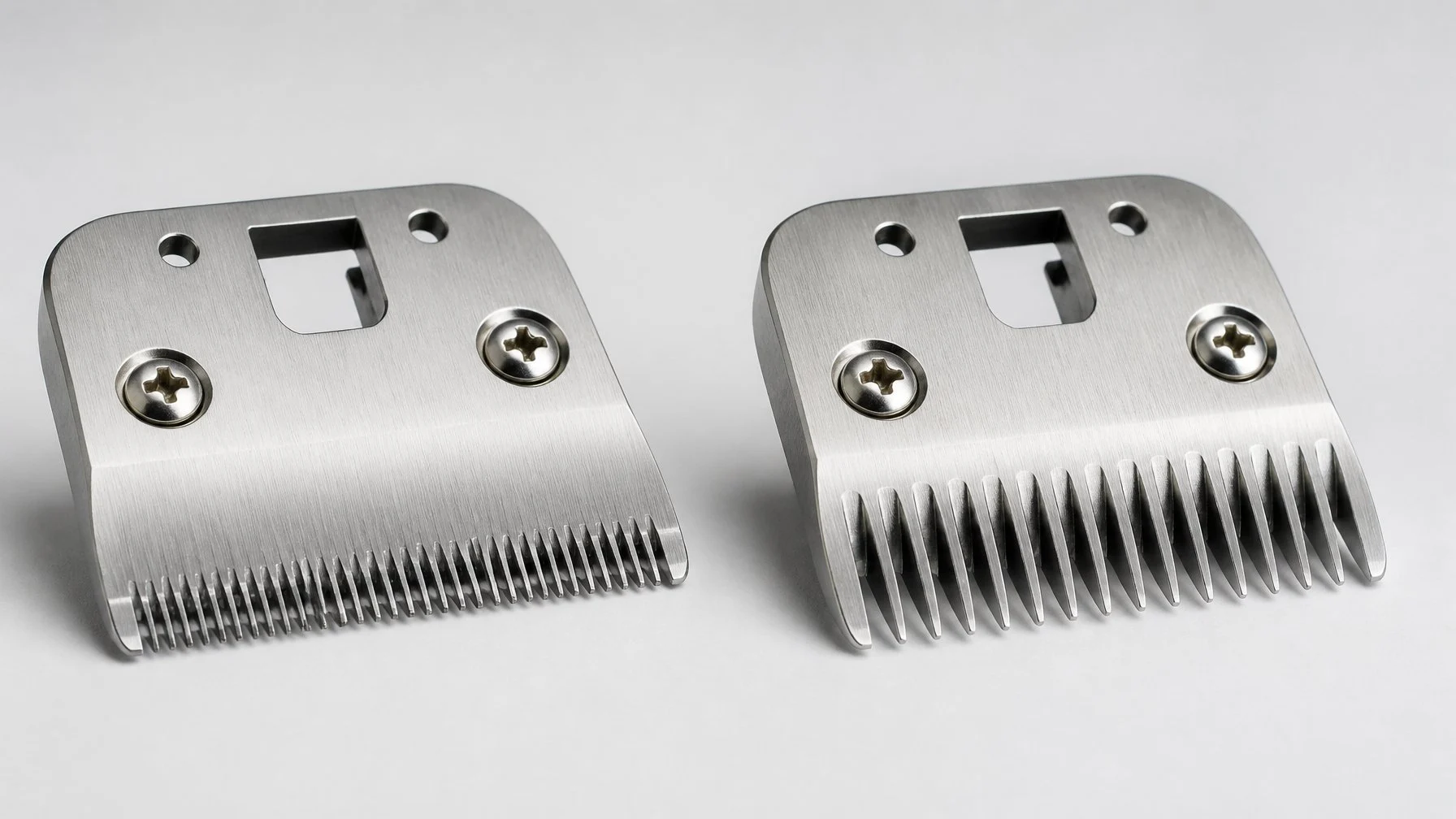
The number stamped on the blade only tells part of the story. Coat type, tooth style, clipping direction, skin folds, and blade heat all play a role in the final result.
Dog Fluffy has spent years digging into these small grooming details, and blade choice is a big one. Here’s how these two blades compare in real life.
What The Numbers Mean In A Real Groom
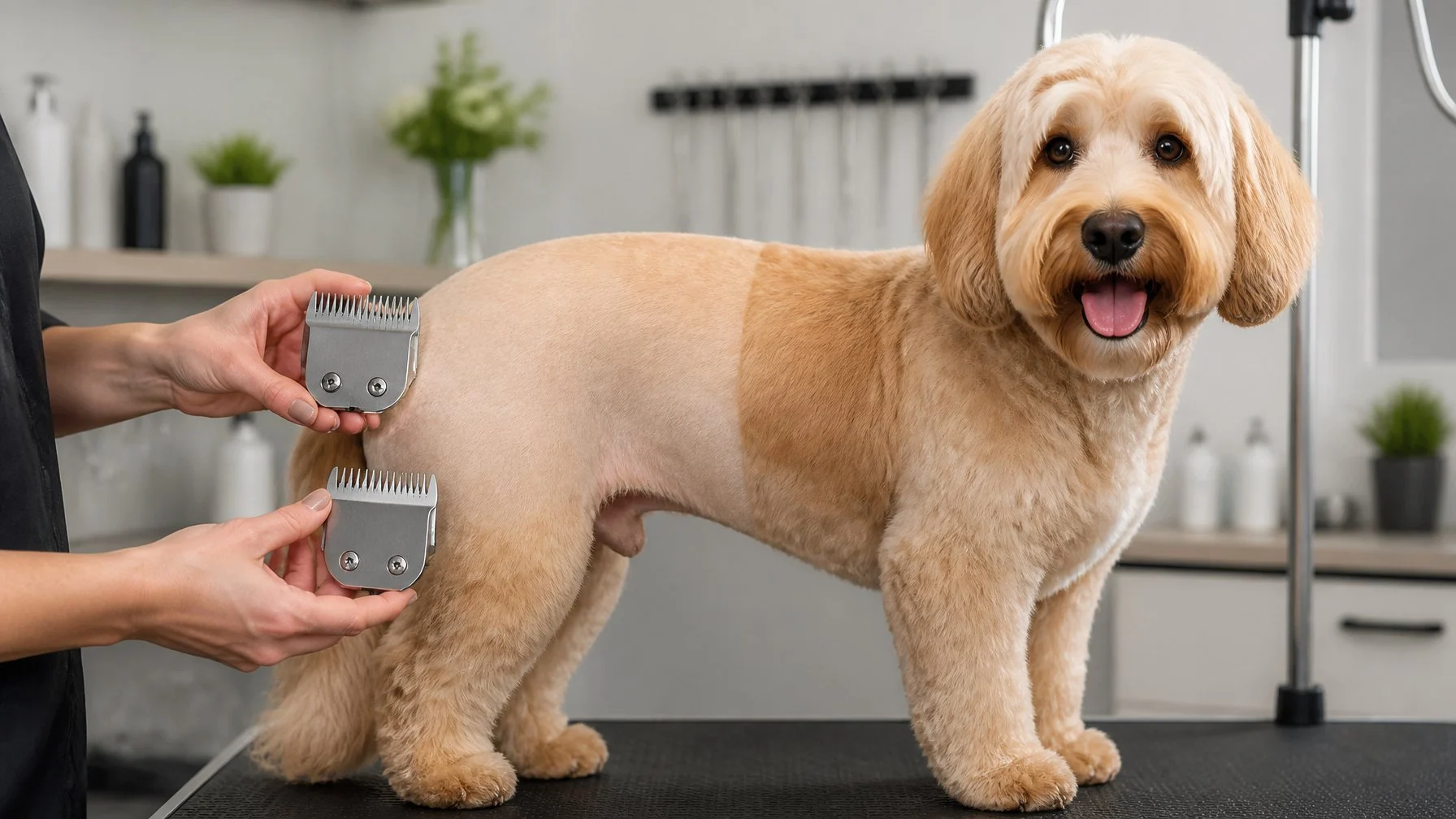
Blade numbers run backwards. The bigger the number, the less coat you leave behind.
That explains the #10 versus #7 gap, but tooth type and clipping direction can change the result by a millimetre or more.
Why A #10 Leaves Less Coat Than A #7
On dog clipper blades, a higher number means a shorter cut. So, a #10 leaves less coat than a #7.
A #10 leaves about 1.5 to 1.6 mm (1/16 in). A #7 leaves about 3.2 mm (1/8 in).
That’s almost double the length, which might not sound like much until you see pink skin showing through on a short-haired dog.
The reversed numbering confuses almost everyone at first. As this grooming blade guide points out, a #30 is much shorter than a #3.
Side-By-Side Blade Length Chart
| Blade | Approx. length left | Typical job |
|---|---|---|
| #10 | 1.5–1.6 mm (1/16 in) | Sanitary trims, paw pads, belly |
| #7 | 3.2 mm (1/8 in) | Short body clip on longer coats |
| #5F | 6 mm (1/4 in) | Curly and double coats |
| #4 | 9 mm (3/8 in) | Medium body clip |
| #3 | 9–13 mm (3/8–1/2 in) | Longer, softer finish |
Numbers are pretty standard across A5-style blades. Still, this technical breakdown says it’s smart to double-check the mm figure stamped on your blade.
Skip-Tooth And Finish-Cut Blades Aren’t The Same
A #7 usually comes in two types. The regular #7 is skip-tooth, with alternating long and short teeth.
The #7F is finish-cut, with even, close-set teeth. Skip-tooth blades chew through mats and bulk faster, but they can grab skin more easily.
Most home groomers should probably avoid skip-tooth blades. Finish blades leave a smoother, more predictable surface, especially on silky or fine coats.
A #10 is a finish-style blade by default.
How Clipping With Or Against The Grain Changes The Result
Blade charts assume you’re clipping against the grain. If you go with the grain, the same blade leaves more coat behind.
That can be handy. A #7 used against the grain might cut shorter than you expect, while with the grain, you get a softer finish.
Coarse, dense coats show this difference most. The hair stands up differently in the blade teeth.
Stick to one direction per pass. Changing direction mid-groom is how you end up with tram lines.
Which Blade Makes Sense For A French Bulldog
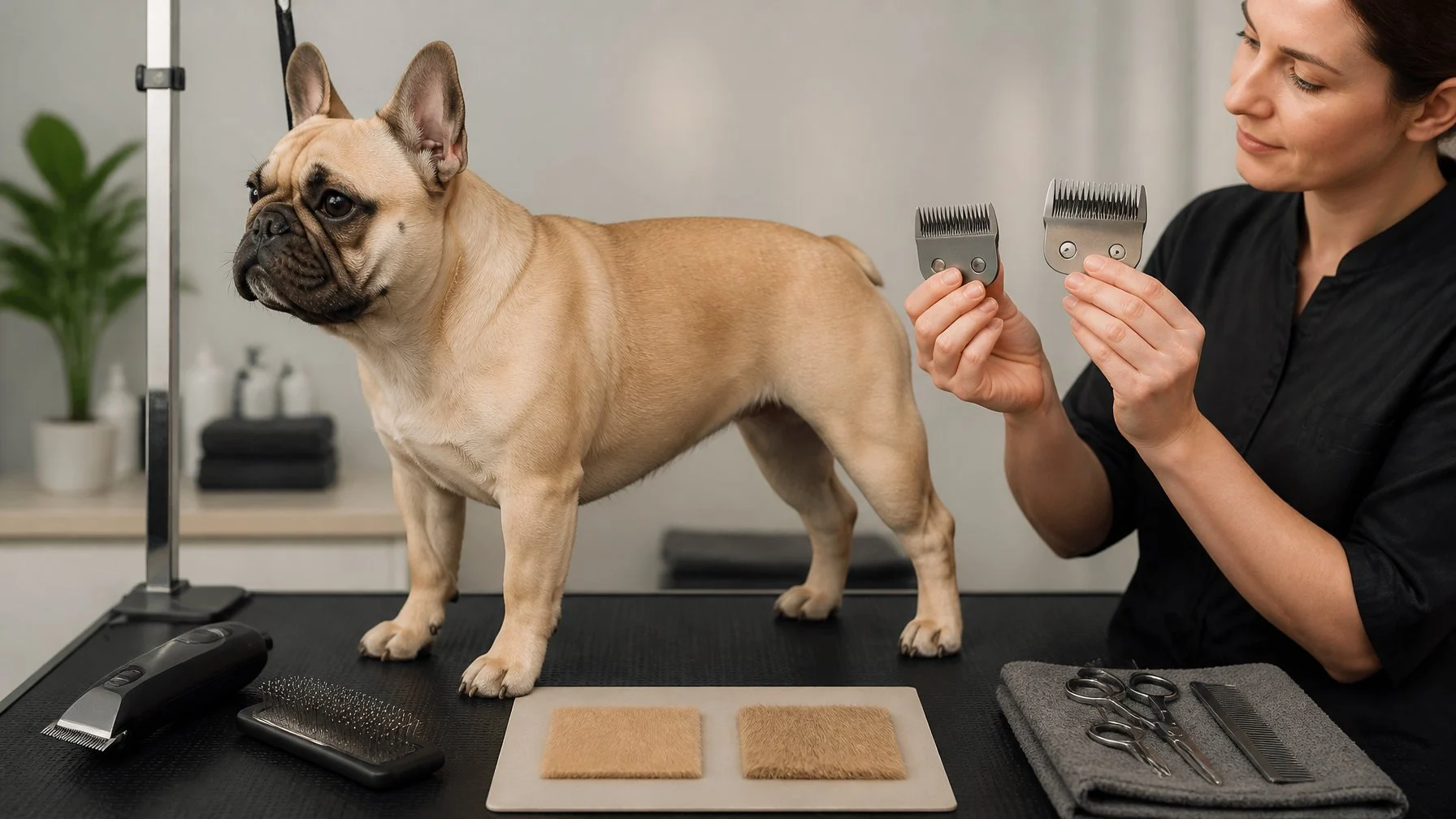
Most Frenchies don’t need a body clip at all. Honestly, for this breed, the answer is usually “neither blade, on the body.”
A #10 is handy for sanitary and paw work. A #7 on a short, skin-close coat? That’s mostly risk, not reward.
Why Most French Bulldogs Don’t Need A Summer Body Clip
A French Bulldog’s coat is short, single-layered, and already about as easy as it gets. Clipping won’t cool your dog down.
What actually helps in the heat? Shade, water, and less exercise. Frenchies overheat because of their airway, not their coat. Shaving a short coat just removes the layer that protects the skin from the sun.
Regular brushing and bathing do more for a Frenchie than any blade ever will.
Where A #10 Is Useful For Sanitary Trims And Paw Pads
A #10 is the go-to for tidying the sanitary area and clearing fur between paw pads. It’s quick and controlled.
Good spots for a #10 on a Frenchie:
- Sanitary area around the genitals and under the tail
- Hair between and around the paw pads
- Any small patch a vet wants cleared
Skip armpits, groin creases, and skin folds. Those are risky, and clipping without a guard in those areas is best left to scissors or a pro.
Why A #7 Can Be Too Much For Short Coats And Sensitive Skin
A #7 is meant for dogs with more coat to remove. On a Frenchie, there’s barely 10 to 15 mm of coat anyway.
Run a #7 over that and you’ll probably see patchy spots and skin showing through. Skip-tooth #7s make it worse—those teeth can catch loose skin around the shoulders and rear.
Frenchies often have allergies, hot spots, and irritated patches. Clipping close over inflamed skin can turn a small problem into a raw mess.
When To Choose Guard Combs Instead Of A Bare Blade
Guard combs, also called attachment or guide combs, snap over a #10 or #30 blade. They set the length for you and are way more forgiving.
A comb leaving 6 mm (1/4 in) or 9 mm (3/8 in) gives you a #5 or #4 style finish, with less chance of scalping your dog. For a nervous owner with a wiggly dog, that buffer helps.
The catch: combs need a clean, brushed, dry coat or they’ll snag. They sit a bit above the skin, which is the point.
How To Clip Safely Without A Too-Short Surprise
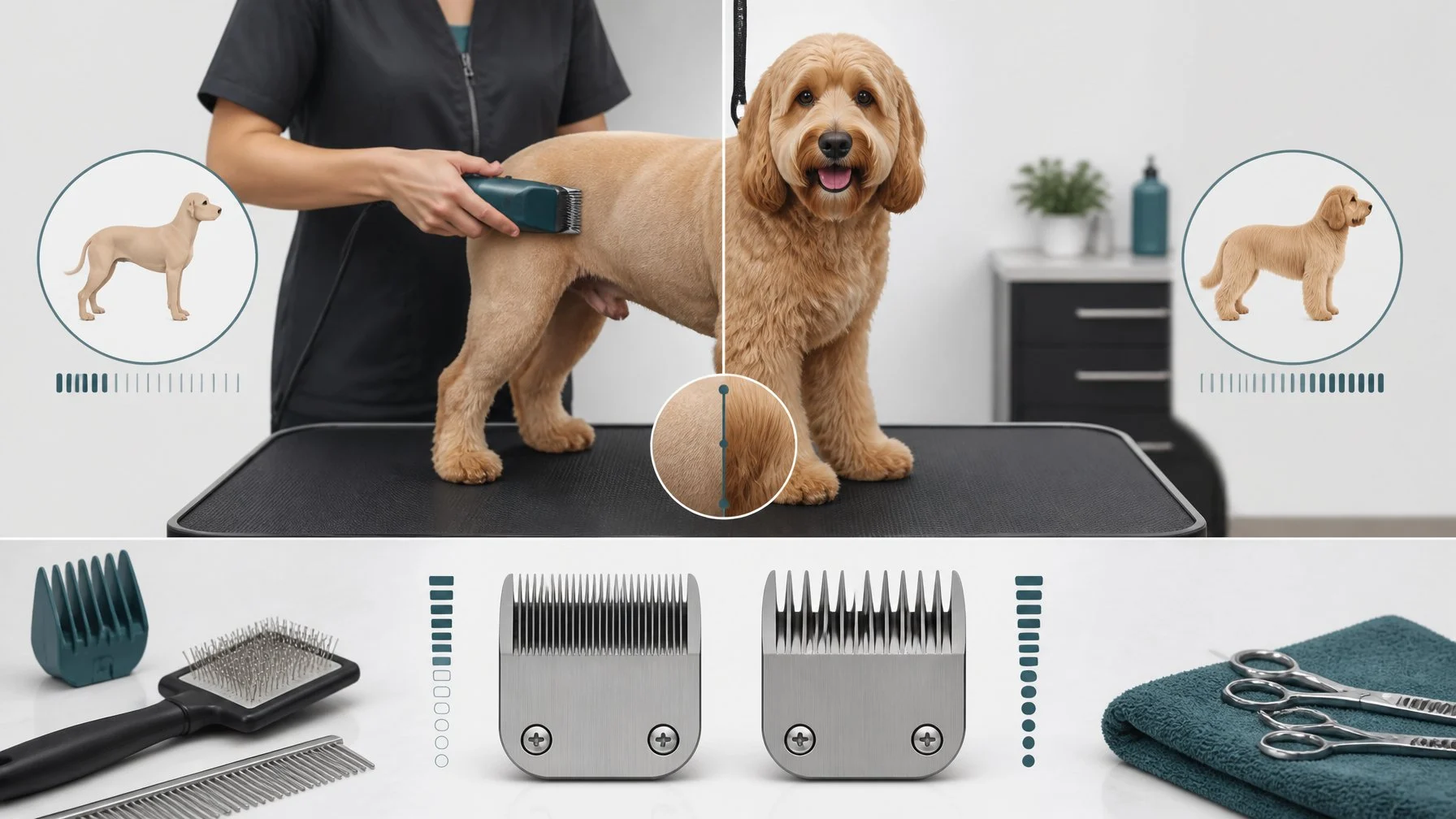
Most bad home clips happen for a few reasons: skipping the pre-groom skin check, letting the blade get hot, using a dull blade that tugs, and pushing through matting that should be left to a pro.
Prepare The Coat And Check For Irritated Skin Or Mats
Clippers only work well on a clean, dry, brushed coat. Dirt dulls blades fast, and damp hair drags.
Run a slicker brush over your dog’s whole body, then use your hands to check the skin. Look for red spots, scabs, lumps, hot spots, or anything that makes your dog flinch.
If the skin is already sore, just put the clippers down. Clipping over irritation only makes things worse.
A Simple Order Of Steps For A Low-Stress Detail Trim
- Brush the coat out fully and check for redness, scabs, or lumps.
- Bathe and dry your dog completely, then brush again.
- Fit the blade, switch the clipper on, and let your dog get used to the sound and vibration.
- Oil the blade and wipe off the extra before starting.
- Begin on a low-stress area like a paw, not the sanitary region.
- Hold the blade flat and take short passes in one direction.
- Pause every 30 to 60 seconds to check blade temperature with your hand.
- Stretch skin flat with your free hand near any fold or crease.
- Stop while your dog is still calm, even if you haven’t finished.
- Clean, oil, and store the blade, then check your dog’s skin again the next day.
Prevent Clipper Burn By Managing Blade Heat
Clipper burn isn’t a cut—it’s a heat burn from a blade left on the skin too long. A #10 sits closest to the skin, so it gets hot faster and transfers heat right through.
Touch the blade to the inside of your wrist every minute or so. If it feels too hot for you, it’s too hot for your dog.
Swap to a cool blade, use a cooling spray, or just take a break. Ceramic-topped blades run cooler than all-steel ones, which helps if you’re grooming for longer stretches.
Clean, Oil, And Replace Blades Before They Tug
A dull blade doesn’t cut—it pulls. No wonder dogs start hating grooming when that happens.
Here’s a quick routine:
- Brush hair out of the teeth after every session.
- Add a few drops of clipper oil along the teeth before and after use.
- Wipe off any extra oil so grime doesn’t collect.
- Send blades for sharpening or swap them out if they start snagging or leaving tracks.
Sharp blades generate less friction and heat. It’s just easier on everyone.
When Matted Coats Or Skin Problems Need A Professional Groomer
Some grooming jobs just aren’t for home. Handing things over isn’t giving up—sometimes it’s the best move.
Call a groomer or vet if you notice any of these:
- The coat is matted tight to the skin.
- You see open sores, scabs, hot spots, or think there’s an infection.
- The dog panics, snaps, or freezes when clippers come out.
- Skin folds need cleaning around the face or tail pocket.
- You feel anything odd or unfamiliar under the coat.
Mats can hide sore skin, and clipping blindly over them is a recipe for nicks.
From Fluffy’s Bowl: comb the section before you clip it, every time, without exception. A blade cannot tell a mat from skin and neither can you at speed. If the comb catches, that section is not ready for clippers, and clipping it anyway is how a tidy-up turns into a vet visit.
The Two Blades This Comparison Is About
Both of these fit any Andis detachable-blade clipper, and between them they are the whole of this article. The lengths below are the manufacturer’s own figures, not our estimates.
Andis UltraEdge #10 Blade (64071)
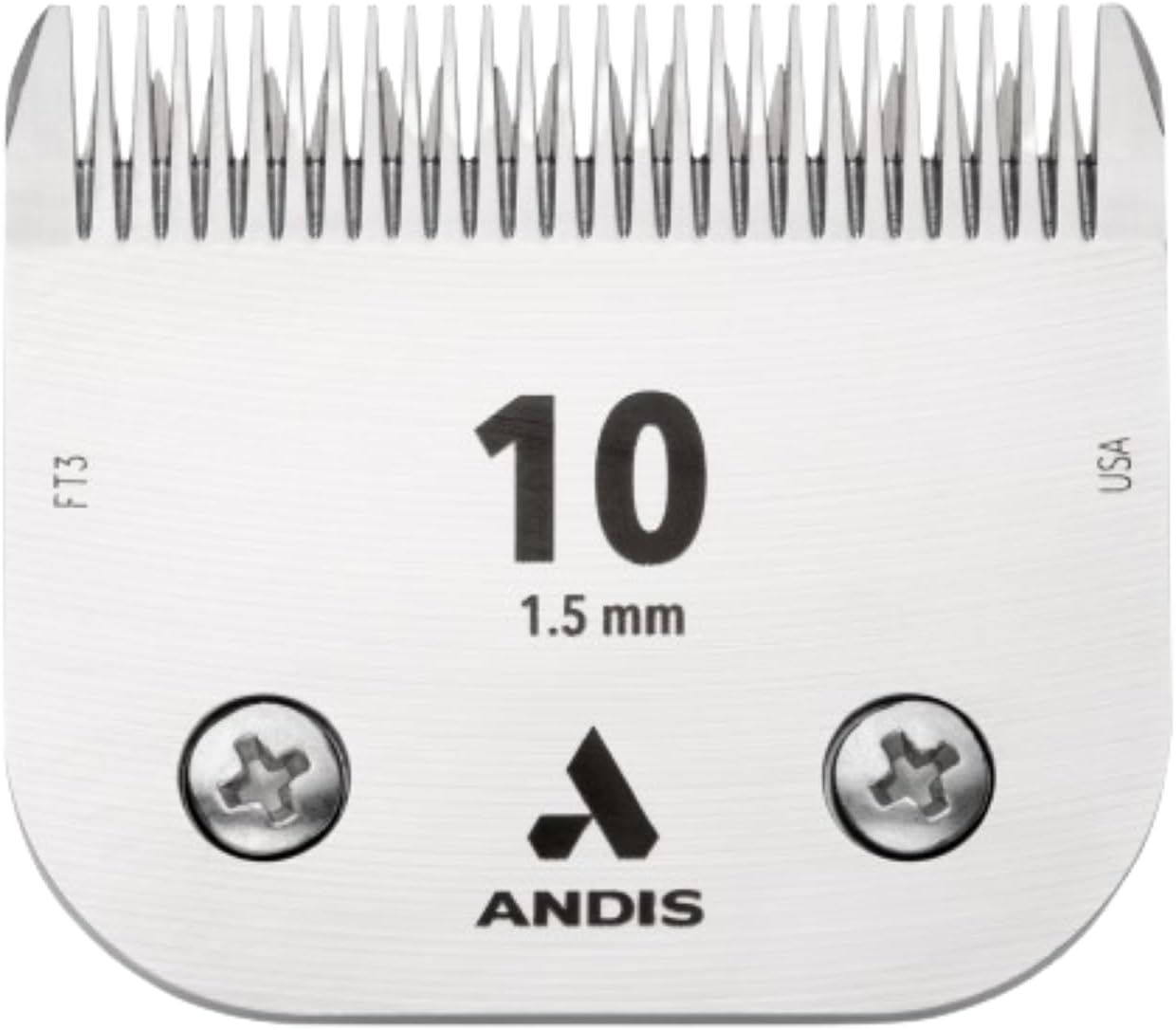
The short one. Andis lists its cut at 1/16 of an inch — about 1.5 mm — which is the figure this article uses throughout. Check price on Amazon
| Things We Like | Things We Don’t Like |
|---|---|
| Cuts at about 1.5 mm, so it matches the length described above | 1.5 mm is short enough to leave pale skin exposed to sun |
| The usual choice for sanitary trims and between paw pads | Too close for a routine body clip on most short-coated dogs |
| Carbon steel holds an edge well and is easy to re-oil | Carbon steel will rust if it is put away damp |
| One of the most widely used blades in this category |
Andis UltraEdge 7FC Finish-Cut Blade (64121)
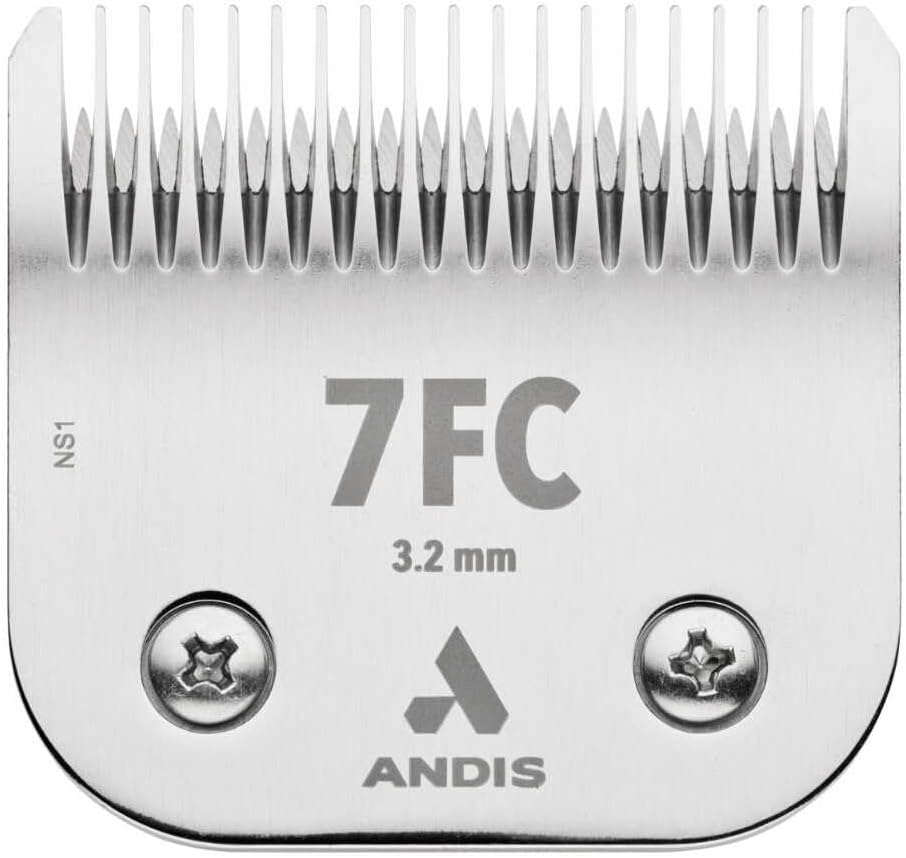
Roughly double the length, at 1/8 of an inch — about 3.2 mm — with finish-cut teeth. Check price on Amazon
| Things We Like | Things We Don’t Like |
|---|---|
| Leaves about 3.2 mm, near twice what a #10 leaves | 3.2 mm is still a real reduction, not a tidy-up |
| Finish-cut teeth give an even result rather than a streaky one | Removes more coat than most owners expect on a short-coated dog |
| Same detachable fitting, so no second clipper is needed | As this article says, most French Bulldogs do not need it at all |
Frequently Asked Questions
What coat length does a number 10 blade leave on a dog?
A #10 blade leaves about 1.5 to 1.6 mm (around 1/16 in) of coat. That’s pretty short—skin color usually shows through. It’s the standard for sanitary trims, paw pads, and pre-surgical clipping. On short-coated breeds, it’s best as a detail blade, not for the whole body.
How short does a number 7 blade cut compared with a number 10?
A #7 leaves around 3.2 mm (1/8 in), which is roughly double what a #10 leaves. In real life, that’s the difference between visible skin and a short but solid layer of coat. The #7 works as a body-clip blade for dogs with a lot of hair to remove. It’s not for fine detail.
When should a groomer use a number 10 blade instead of a number 7?
Use a #10 for precision work—sanitary areas, between paw pads, and any spot that needs a clean, close finish. A #7 is for bigger body areas on dogs with longer coats. It really depends on whether you’re tidying up a small spot or taking off bulk from the body.
Is a number 10 blade safe for trimming sensitive areas like paws and sanitary spots?
Yes, if you’re careful. A #10 is the pro pick for those areas because it’s a fine-tooth finish blade. Just pull the skin flat, keep your passes short, and check for blade heat often. For skin folds, armpits, and groin creases, blunt-nosed scissors or a groomer are usually safer.
Can a number 7 blade be used on a matted or thick coat?
A skip-tooth #7 can get through heavy coats, but it catches loose skin easily. It’s really not great for home use. Tight mats sit right against the skin and can hide irritation. Honestly, a matted coat is a job for a pro groomer—they can shave safely from underneath the mat.
What are the clipper blade lengths in millimetres and inches for numbers 7 and 10?
A #7 blade leaves about 3.2 mm (1/8 in). A #10 blade trims down to roughly 1.5 to 1.6 mm (1/16 in). These numbers assume you’re clipping against the grain on a clean, brushed coat. If you clip with the grain, you’ll end up with a bit more length left on your dog. Most blades have the millimetre measurement stamped right on the side. It’s honestly easier to check than to guess. Which blade do you usually keep in your grooming drawer? Ever tried a home trim and ended up with a look you didn’t expect? Drop a comment—someone else is probably wondering the same thing. This is just general guidance, not veterinary advice. If you’re unsure, ask your vet about your dog’s specific needs.