As an Amazon Associate I earn from qualifying purchases.
What is the best dog brush for shedding? The best dog brush for shedding is a self-cleaning slicker brush, like the Aumuca Slicker Brush, which uses angled stainless steel pins to reach through the topcoat and safely remove loose undercoat fur. For heavy-shedding double-coated breeds, a slicker brush should be paired with an undercoat rake, while short-haired breeds benefit most from a rubber curry brush.
If you’ve ever looked at your couch and wondered whether you adopted a dog or a fur factory, you already know the struggle. Finding the right dog brush for shedding can feel like a guessing game.
Half the brushes out there either scratch your pet’s skin or fall apart after a month. The best shedding brush removes loose fur efficiently, feels gentle enough for daily use, and doesn’t make cleanup a nightmare.
That’s where the Aumuca Self-Cleaning Slicker Brush steps in. It’s one of the top-ranked cat shedding tools on Amazon, and dog owners have been grabbing it just as fast.
Tens of thousands of pet parents have weighed in with reviews. The consensus? It gets the job done without drama.
How these picks were chosen: by comparing published specifications, materials and design against what the breed actually needs. We have not physically tested these products on a dog, and nothing below is a report of hands-on use. Check current listings and sizing before buying, and ask your vet about anything health-related.
Bottom Line
If you need a gentle, easy-to-clean slicker brush that handles shedding on both dogs and cats, the Aumuca brush is a solid pick at a competitive price. It’s not perfect for every coat type, but for most households dealing with loose fur, it pulls its weight.
Click here to check out the Aumuca Slicker Brush on Amazon and see if it’s right for your pet!
Overview of the Aumuca Skin Friendly Self-Cleaning Slicker Brush

At just over five ounces, this brush feels light in the hand. It won’t tire you out during a 15-minute grooming session, which matters more than people think.
The body is made from ABS plastic, so it’s sturdy without being bulky. The bristles are stainless steel with rounded plastic tips at the end of each pin.
| Feature | Detail |
|---|---|
| Dimensions | 8.3 x 4 x 1.9 inches |
| Weight | About 5.3 ounces |
| Materials | Stainless steel pins, ABS body, silicone rubber grip |
| Self-Cleaning | One-click retractable button |
| Color | Green |
Keeps things tidy and within reach.
Why Pet Owners Like It
Gentle on Sensitive Skin
You know that flinch your dog gives when a brush catches? That’s the thing this brush tries to prevent.
It’s not a miracle worker on extremely matted fur. For routine brushing, though, the comfort level is noticeable.
Handles Shedding Fast
Let’s be real. Nobody wants to spend 45 minutes pulling fur out strand by strand.
The amount of fur this brush collects in a single session is honestly a little alarming, in the best way.
Works for Long and Short Coats
The pin length hits a sweet spot. Long enough to reach through thicker coats, short enough not to jab short-haired breeds.
That versatility is a big plus if you have multiple pets in the house.
Standout Features
Skin-Friendly Massage Needles
Each metal pin has a small rounded plastic cap. This turns brushing into more of a massage experience.
Thicker Stainless Steel Bristles
Less bending. Less warping over time.
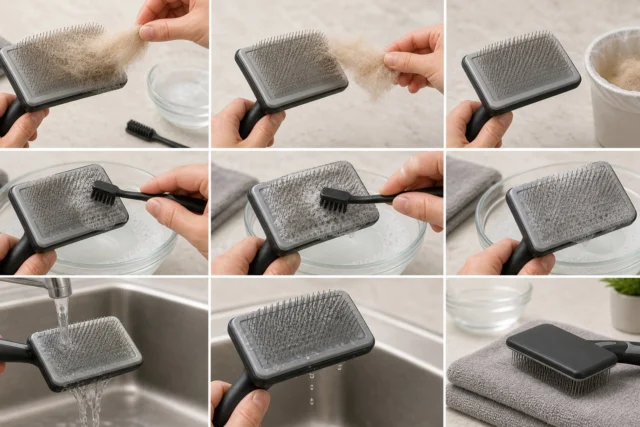
One-Click Cleaning Button
Done. No picking individual hairs out of the bristles with your fingernails.
Seriously, if you’ve ever spent five minutes cleaning a brush after grooming, this alone might sell you.
ABS Body With Hanging Loop
The body feels solid, not cheap or hollow. A small silicone loop at the base lets you hang it on a hook, doorknob, or wall mount.
Simple feature, but it keeps the brush from ending up lost under a couch cushion.
Best Fit for Fluffy Dogs and Cats
Not every brush works for every pet. Here’s where the Aumuca slicker brush shines brightest:
- Double-coated breeds like Golden Retrievers, Huskies, and Samoyeds
- Long-haired cats like Persians and Maine Coons
- Medium-coat dogs such as Aussies, Collies, and Spaniels
- Sensitive pets who dislike stiff brushes
If your dog has a very tight, wiry coat (think Wirehaired Pointing Griffon), this probably won’t be your primary tool. A stripping knife or firm bristle brush would be more effective there.
For households with both dogs and cats, this is a convenient single-tool solution. One brush, two (or more) pets. That’s practical.
Pros and Cons
Pros
- Rounded pin tips feel gentle even on sensitive skin
- Self-cleaning button saves real time after each session
- Works on both long and short coats
- Lightweight and easy to grip
- Sturdy ABS construction holds up well
- Hanging loop keeps things organized
- Backed by a 90-day money-back guarantee
Cons
- Not ideal for very thick mats or tangles; you’ll need a dematting comb for that
- The green color is the standard option, which may not suit everyone’s preference
- A smaller brush head may take extra passes on large breed dogs
- Pins can still pull if you brush too aggressively on fine hair
Customer Reviews
With tens of thousands of ratings and a well-above-average score, the Aumuca brush has clearly hit a nerve with pet owners. Most buyers highlight how easy the self-cleaning button makes post-grooming cleanup.
Several mention being surprised by the volume of fur collected in a single session. A common theme? Pet owners with nervous or skin-sensitive animals say their pets tolerate this brush better than others they’ve tried.
Others point out that heavy matting requires a different tool entirely. Those are fair critiques and worth knowing before you buy.
The general vibe from real buyers: it does exactly what it promises, without any surprises.
What Actually Reduces Dog Hair in the House
Ranked by how much difference each thing makes, which is not the order most people try them in.
- Brushing frequency beats brush quality. Ten minutes daily with a mediocre tool removes far more coat than an excellent tool used on Sundays
- A high-velocity dryer after a bath is the single biggest one-off reduction on a double coat. It blows out loose undercoat that brushing leaves behind
- Brush outside during a seasonal blowout. Hair you never bring indoors does not need removing from anything
- Wash the bedding weekly. Dog beds are the reservoir that reloads the room
- A rubber squeegee or a damp rubber glove on upholstery lifts embedded hair that a vacuum rolls over
- Air filtration helps with dander, not hair. Worth it for allergies, close to useless for the tumbleweeds
Two things that do not work as advertised. Supplements marketed to stop shedding do not stop a healthy dog shedding — a genuinely dull, brittle coat can improve with better nutrition, but a normal coat sheds on schedule regardless. And shaving a double coat increases what you clean up, because the short bristly hairs weave into fabric instead of sitting on top of it.
If shedding changes suddenly, or comes with bald patches, scabs or itching, that is a vet question rather than a brush question.
Frequently Asked Questions
What kind of brush actually works best for a short-haired dog that sheds like crazy?
For short-haired heavy shedders like Beagles or Labs, a rubber curry brush or a slicker brush with fine, short pins works well. The Aumuca brush handles short coats fine because the pin length doesn’t dig too deep.
Pair it with a grooming glove for best results on smooth coats.
Got a long-haired pup? What brush helps pull out loose undercoat without turning grooming into a tug-of-war?
A slicker brush with angled pins, like the Aumuca, is great for reaching through the topcoat to grab loose undercoat. The trick is brushing in small sections and always going with the direction of hair growth.
For heavy tangles, use a wide-tooth comb first, then follow up with the slicker.
If you’ve ever wondered… do deshedding tools genuinely reduce hair around the house, or is that just marketing?
They really do make a difference when used consistently.
How often should you brush to keep shedding under control without irritating your dog’s skin?
Two to three times per week is the sweet spot for most breeds. During heavy shedding seasons (spring and fall), daily brushing helps a lot.
Just keep sessions short, around five to ten minutes, and watch for any redness or discomfort.
Grab the Aumuca Slicker Brush on Amazon here.
What’s the best way to use a deshedding brush so you don’t scratch, snag, or cause brush burn?
Always brush gently, following the direction the hair grows. Use light, short strokes—not those long, heavy-handed sweeps that can catch or pull.
Try not to go over the same spot again and again. And whatever you do, don’t press the pins flat against your pet’s skin. Let the brush handle the hard part.
Which dog breeds are the toughest to groom at home, and what tools make it less of a headache?
Double-coated breeds like Huskies, Malamutes, and Great Pyrenees? They’re a real challenge, honestly. Then, an undercoat rake digs into that dense, fluffy bottom coat.
If there are stubborn knots (and there always are), a dematting comb comes in handy. Juggling all three tools definitely makes the whole ordeal less frustrating—well, at least a little bit.