Small fluffy dogs are compact, affectionate breeds with plush, cloud-like coats and big personalities. Think Pomeranians, Bichon Frises, Shih Tzus, Maltese, and Havanese.
These little fluff balls usually weigh under 20 pounds. But don’t let their size fool you—they bring plenty of charm (and grooming needs) to fill a house.

Owning a small fluffy dog means you need a real grooming routine, not just admiration for their Instagram cuteness. But once you get the hang of it? Honestly, it’s totally worth every minute.
If you’re thinking about bringing a small fluffy breed into your life, or you already have one and want to level up your care game, you’ll find plenty of helpful resources at dogfluffy.com.
Small Dogs That Are Fluffy
- Pomeranian
- Bichon Frise
- Shih Tzu
- Havanese
- Coton De Tulear
- Toy Poodle
- Papillon
- Pekingese
- Maltese
- Japanese Spitz
1) Pomeranian
Pomeranians are basically tiny lions with the confidence to match. They weigh between 3 and 7 pounds, but that massive double coat makes them look twice their actual size.
Temperament-wise, Pomeranians are bold, curious, and love being the center of attention. They’re also barky, so if you live in an apartment with thin walls, that’s something to think about.
Professional grooming every 4 to 6 weeks keeps their coat manageable.
Keeping their coat healthy with good nutrition matters just as much as brushing.
Quality dog food and regular vet check-ups make a big difference.
2) Bichon Frise
If a cloud became a dog, it’d be a Bichon Frise. These little guys stand about 9.5 to 11.5 inches tall, weigh 12 to 18 pounds, and have a curly white coat that barely sheds.
Sounds perfect, right? Here’s the kicker: that low-shedding coat tangles like crazy.
A Bichon’s curly fur traps loose hair instead of dropping it, so if you skip brushing for even a few days, you’ll be fighting stubborn mats.
What makes all the effort worth it is their personality. Bichons are playful, curious, and naturally peppy, and they make fantastic family dogs.
They get along beautifully with kids, other pets, and even strangers. It’s honestly pretty charming.
Wet mats tighten and become nearly impossible to untangle.
Tear staining around the eyes is another Bichon thing.
3) Shih Tzu
The Shih Tzu looks regal but acts like a total goofball.
Their long, flowing coat demands a lot of attention. The Shih Tzu temperament is affectionate, outgoing, and surprisingly playful.
They’re not the most energetic breed, but they’re deeply loyal and love being around their people. Shih Tzus bond hard with their owners and can get a little jealous if you look away too long.
Now, grooming. Let’s be real: a Shih Tzu in full coat is a commitment. That double-layered, silky fur grows continuously and can reach the floor if you let it.
Most pet owners (myself included) prefer a shorter “puppy cut” to keep things manageable.
Their flat faces mean moisture and food can collect around the mouth and eyes.
Ear infections are another thing to watch for. Those floppy, fur-covered ears trap moisture.
4) Havanese
The Havanese is Cuba’s national dog, and once you meet one, it’s easy to see why. They weigh 7 to 13 pounds and have a soft, silky coat that can be wavy or straight.
They’re social butterflies, extremely trainable, and genuinely happy dogs. Grooming a Havanese sits somewhere in the middle of the difficulty scale.
Their coat doesn’t shed much, which is great for allergy sufferers. But that long, silky hair does mat, especially behind the ears, under the legs, and around the collar.
Related reading: Best Dog Brush for Shedding.
A corded Havanese coat is something some owners try. Think dreadlocks for dogs. It looks amazing but needs a very specific maintenance routine that’s not for beginners.
For most people, a regular brushed-out coat or a shorter trim works best. Bathing a Havanese every two to three weeks keeps their coat clean without stripping natural oils.
One standout trait: Havanese are sometimes called “Velcro dogs” because they follow you everywhere.
If you work from home, expect a fluffy shadow at your feet all day.
5) Coton De Tulear
The Coton De Tulear might be the most underrated small fluffy breed out there. Named after the city of Tulear in Madagascar and their cotton-like coat, these dogs weigh 8 to 15 pounds and have a personality that’s pure sunshine.
Their coat texture really does feel like cotton. It’s soft, slightly dry, and surprisingly easy to maintain compared to breeds like the Bichon or Shih Tzu.
“Easier” doesn’t mean “no effort,” though.
Cotons are known for being remarkably adaptable. They do well in apartments, houses with yards, with singles, or in bustling families.
They’re calm without being lazy and playful without being hyperactive.
It’s endearing and usually gets a laugh from anyone watching. Shedding is minimal, and the breed is often recommended for people with mild dog allergies.
Their coat does pick up debris easily, so expect to pull the occasional leaf or twig out after a walk. Professional grooming every 6 to 8 weeks works well for most Coton owners.
Between visits, focus on keeping the belly and leg areas tangle-free since those spots mat first.
6) Toy Poodle
Don’t let the “fancy” reputation fool you. Toy Poodles are athletic, wicked smart, and probably one of the most versatile small fluffy dog breeds out there.
They stand under 10 inches and weigh just 4 to 6 pounds. All that intelligence, packed into a tiny, curly package.
They’re among the most intelligent dog breeds, which makes training shockingly easy.
The flip side? A bored Poodle will invent its own fun, and you probably won’t love the results.
The Toy Poodle’s curly, dense coat barely sheds — low-shedding rather than hypoallergenic — but it grows non-stop. Regular haircuts are just part of life with this breed.
Most owners schedule professional grooming every 4 to 6 weeks.
Clip styles range from the classic “Continental” to the simple lamb cut. For most pet owners, a short, even trim is the easiest to handle at home.
If you let it air-dry, you’ll get tight, kinked curls that are nearly impossible to brush out.
A low-heat blow dryer while you brush works best. It takes a little extra time, but the results are worth it.
Their size makes them great apartment dogs. Still, they need daily walks and mental challenges to stay happy.
Puzzle toys and short training sessions keep them sharp. If you skip that, they’ll find their own entertainment—sometimes at your expense.
7) Papillon
Named after the French word for “butterfly” because of their ear fringe, Papillons are small fluffy dogs that surprise people with their athleticism. These 5- to 10-pound dogs are agility champs in a dainty, elegant body.
That means way less shedding and fewer mats compared to double-coated breeds like the Pomeranian.
A weekly brushing keeps them looking sharp. No need to go overboard.
The main grooming focus areas are the ear fringes, chest plume, and the feathering on the legs. These longer sections can tangle if you ignore them, but it’s nothing like the daily brushing some breeds need.
Papillons are quick learners and crave interaction. They absolutely shine in obedience and agility competitions, which might sound odd for such a delicate-looking dog.
They go and go.
Papillons can be sensitive to rough handling. They’re a better fit for families with older kids or adults.
Their fine-boned build means a toddler’s hug could actually hurt them. Just something to keep in mind.
Bathing every 3 to 4 weeks is usually enough.
Nail trims every couple of weeks round out their routine. Simple stuff, really.
8) Pekingese
The Pekingese is basically the definition of a lap dog with an attitude.
They weigh up to 14 pounds and have a long, thick double coat that flows like a little lion’s mane. It’s a look, for sure.
That glorious coat mats fast, especially on the belly, behind the ears, and in the feathering on the legs.
A full grooming session with a pro every 4 to 6 weeks keeps the coat healthy.
The flat face (brachycephalic structure) adds extra grooming steps. The skin folds around the nose and eyes need daily cleaning to avoid infections.
Pekingese are loyal and affectionate with their chosen person but can be aloof with strangers. They’re also stubborn, so training takes patience and plenty of positive reinforcement.
Heat is a real problem for this breed. That heavy coat and flat face mean Pekingese overheat easily.
If you’re considering this breed, know that the grooming commitment is real. But the companionship? Absolutely worth it if you want a calm, dignified dog with a loyal streak a mile wide.
9) Maltese
The Maltese is one of the oldest toy breeds, with roots stretching back thousands of years across the Mediterranean. They weigh under 7 pounds and have a straight, silky white coat that just screams elegance.
What’s unique about the Maltese coat is that it’s hair, not fur. It grows continuously like human hair, so there’s barely any shedding, but a constant need for trimming and brushing.
It’s a lot, but worth it for that gorgeous look.
Maltese are gentle, sweet-natured, and stick to their people like glue. They can be timid around loud noises or new situations, so socialization early on matters a lot.
That made a huge difference in her confidence.
Tear staining is the number-one cosmetic issue with white-coated Maltese. Those reddish-brown streaks under the eyes are from excess tearing, and you can manage them with daily wiping and special cleansers.
Some owners tweak their Maltese’s diet, since certain foods can make staining worse. It’s a bit of trial and error.
Bathing every 1 to 2 weeks keeps the coat bright.
Maltese are prone to dental issues because of their tiny mouths. Brush their teeth several times a week and make sure to get regular vet dental checkups.
10) Japanese Spitz
They weigh 10 to 25 pounds, have a brilliant white double coat, and a fox-like face you can’t help but smile at.
Their outer coat naturally repels dirt and debris—mud dries and falls right off.
Brushing two to three times a week is enough for most of the year. During shedding season (usually twice a year), daily sessions with a slicker brush and undercoat rake are a must.
The undercoat comes out in clumps, and mats form fast if you ignore it. Stay on top of it and you’ll be fine.
Japanese Spitz dogs are loyal, playful, and pretty smart. They bond closely with families and are great with kids.
They’re also a little vocal, letting you know about visitors or anything weird. Makes them decent watchdogs, honestly.
Bathing is needed less often than you’d expect for a white dog. Once a month works unless they’ve rolled in something gross.
Over-bathing strips out the natural oils that keep their coat self-cleaning, so don’t overdo it. Less is more.
This breed does well with moderate exercise, about 30 to 45 minutes a day. They’re fine in apartments as long as they get their walks and playtime.
How To Choose The Right Small Fluffy Dog
Picking a fluffy breed isn’t just about which one looks the cutest in photos.
Match Energy Level To Your Home
A Papillon or Toy Poodle needs daily mental and physical activity. A Pekingese or Maltese is happy with short walks and lots of couch time.
Be honest about your lifestyle. If you work long hours and want a laid-back companion, a high-energy breed will frustrate both of you.
Think about your living space too. Most small fluffy breeds do fine in apartments, but the barky ones (looking at you, Pomeranians) can annoy neighbors in tight quarters.
Think About Grooming Time Honestly
Some of these breeds need daily brushing. Others are fine with a few sessions a week.
Factor in professional grooming costs too. Breeds like Bichon Frises and Toy Poodles need salon visits every 3 to 6 weeks, which adds up to $500 to $1,200+ per year depending on your area.
Consider Kids, Other Pets, And Noise Sensitivity
Havanese and Bichon Frises are great with children and other pets. Pekingese and Papillons tend to do better in calmer households.
If you have toddlers, fragile toy breeds like the Maltese might not be the safest match. Noise sensitivity matters too—some breeds bark at everything, others are quieter.
Ask breeders and rescue groups about typical temperament traits before you decide. It saves a lot of headaches later.
Watch For Breed-Specific Health Needs
Every breed comes with its own health quirks. Brachycephalic breeds like the Shih Tzu and Pekingese can have breathing issues and struggle with heat.
Toy Poodles sometimes develop patellar luxation (slipping kneecaps). Pomeranians can face tracheal collapse.
Do your research so you’re ready. Regular vet visits, good nutrition, and knowing the warning signs early can save you money and a lot of heartache down the line.
Essential Grooming Tools
You honestly don’t need a drawer full of fancy grooming gadgets.
Slicker Brush
If you only buy one grooming tool for a small fluffy dog, make it a slicker brush. The fine, angled wire bristles dig through tangles and loose undercoat without yanking or hurting sensitive skin.
It handles loose fur, dirt, and even those sneaky little knots.
Pick one that has a flexible pad and rounded bristle tips. Rigid brushes can scratch, and these little dogs have surprisingly thin skin.
Deshedding Shampoo
Deshedding shampoo made bath time so much easier for us. It loosens up the undercoat, so brushing after the bath turns into a breeze.
Look for formulas with omega fatty acids and natural moisturizers.
Skip anything with sulfates or fake fragrances—those dry out fluffy coats and can make your dog itchy.
Cordless Nail Grinder
One slip and suddenly you have a bleeding paw and a dog who dreads nail trims.
A cordless nail grinder lets you file nails down gradually and safely.
The low vibration and quiet motor help keep her relaxed.
How Often To Brush And Bathe
Every breed’s a little different, so there’s no single right answer.
| Breed | Brushing Frequency | Bathing Frequency |
|---|---|---|
| Pomeranian | 3-4x per week | Every 3-4 weeks |
| Bichon Frise | Daily | Every 2-3 weeks |
| Shih Tzu | Every other day | Every 2-3 weeks |
| Havanese | Every other day | Every 2-3 weeks |
| Coton De Tulear | 3-4x per week | Every 3-4 weeks |
| Toy Poodle | Daily | Every 3-4 weeks |
| Papillon | Weekly | Every 3-4 weeks |
| Pekingese | Every other day | Every 3-4 weeks |
| Maltese | Daily (long coat) | Every 1-2 weeks |
| Japanese Spitz | 2-3x per week | Monthly |
Always brush before you bathe. Water tightens up tangles into rock-solid mats, so get the coat smooth first.
FAQ
What Is The Best Small Fluffy Dog For First-Time Owners?
They’re friendly, easygoing, and pretty forgiving if you’re still figuring things out.
Once you get into a grooming routine, they’re not too high-maintenance. Plus, their cheerful personalities make learning the ropes a lot more fun.
Which Small Fluffy Dogs Shed The Least?
Maltese, Bichon Frise, Toy Poodle, and Havanese barely shed at all. Their coats grow like human hair instead of falling out in big clumps.
But low-shedding doesn’t mean zero grooming—you still need to brush regularly to keep mats away.
Are Small Fluffy Dogs Good For Apartments?
Most small fluffy breeds fit apartment life just fine thanks to their size and moderate exercise needs. Maltese, Shih Tzu, and Coton De Tulear are especially chill indoors.
Watch out for breeds like Pomeranians if you have thin walls—they can be a bit barky and that’s not always neighbor-friendly.
How Much Grooming Do Small Fluffy Dogs Need?
It depends on the breed. For some, 15 minutes a few times a week is enough (think Papillon or Japanese Spitz).
Others, like Bichon Frise, Toy Poodle, or long-coated Maltese, need daily brushing—sometimes up to half an hour. Most breeds need a pro groomer every 3 to 8 weeks, so plan for both time and cost.
Frequently Asked Questions
What are the best tiny, cuddle-sized breeds that stay soft and teddy-bear fluffy as adults?
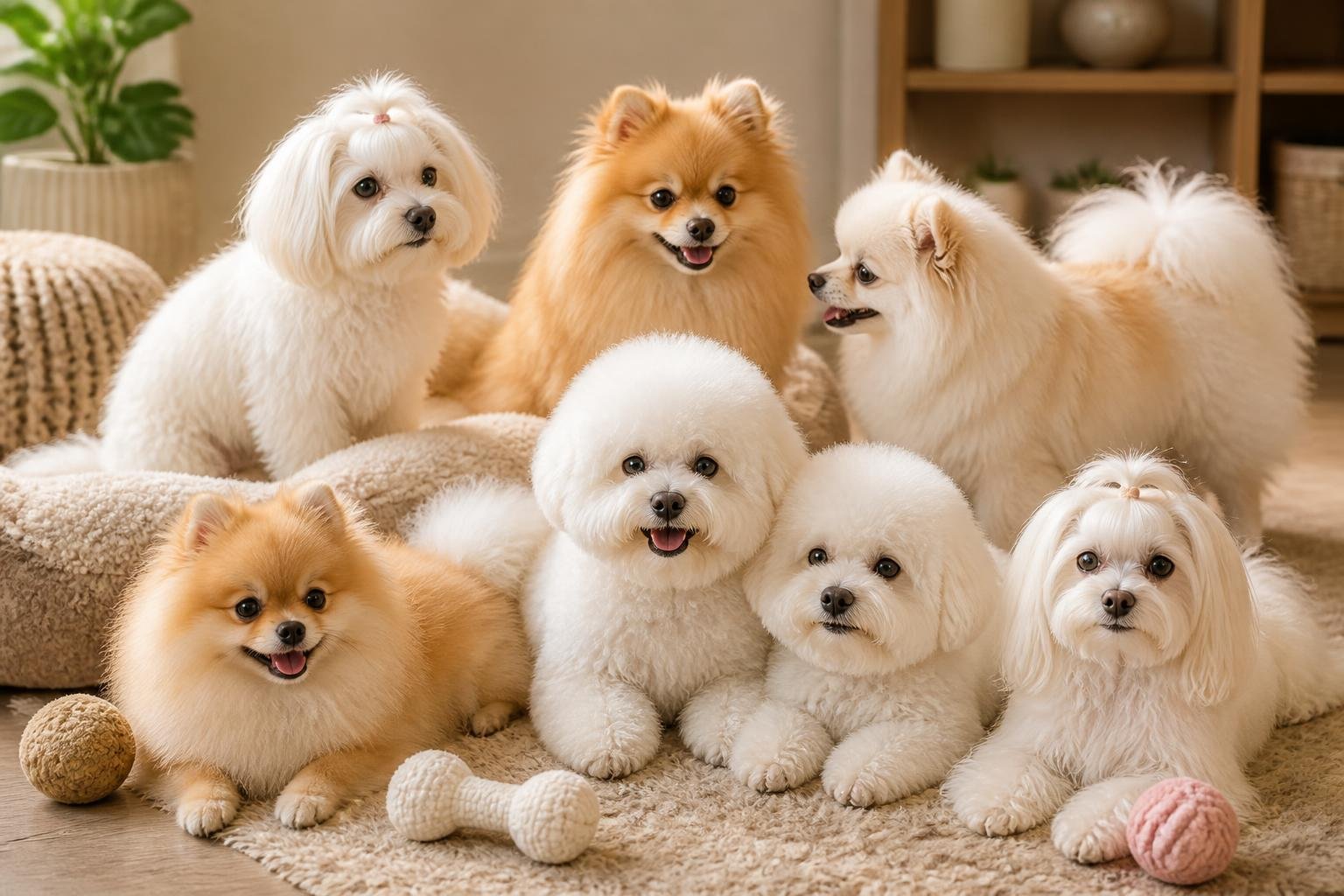
Bichon Frise, Maltese, and Coton De Tulear usually keep that soft, plush, teddy-bear look even when they’re grown up. Toy Poodles can too, as long as you keep their curls brushed out and neat.
Puppy coats do change, so if super-soft fur matters to you, pick a breed known for it. Otherwise, you might be surprised by a wiry adult coat down the line.
If you’ve ever pulled a brush through a cotton-ball coat… how often do these little floofs actually need grooming?
Most small fluffy breeds need brushing every other day at minimum. Some, like Bichons and Toy Poodles, really do best with daily brushing.
Professional grooming every 3 to 6 weeks is about right.
Which small fluffy breeds are the chill, apartment-friendly type—and which ones are secretly high-energy chaos gremlins?
Maltese, Shih Tzu, and Pekingese are the classic couch potatoes. Papillons, Toy Poodles, and Pomeranians? They’re little whirlwinds and need way more play and mental challenges than you’d expect.
Matching a breed’s energy to your lifestyle is huge. If you’re not sure, there are plenty of fluffy small dog breed guides out there to help you decide.
What should you look for to spot matting, itchy skin, or coat problems early (before it turns into a whole thing)?
Run your fingers through the coat every day, not just a brush. You’ll feel mats starting as little clumps—usually behind the ears, under the legs, or by the collar.
If your dog’s scratching a lot, has red or flaky skin, or starts scooting, those are early warning signs. Catching this stuff early means a quick fix; waiting just makes things harder (and more expensive).
How much do small fluffy dogs usually shed, and what’s the best way to keep fur from taking over your couch and black clothes?
Maltese, Bichon Frise, and Toy Poodle barely shed because their hair just keeps growing. Double-coated breeds like Pomeranians and Japanese Spitz shed a lot more, especially when the seasons change.
If you want to keep fur off your furniture and clothes, regular brushing, a deshedding shampoo, and a good lint roller are your best friends.
Puppy cut, teddy cut, lion cut… what’s the difference, and which styles are safest and easiest to maintain?
A puppy cut trims the whole body to a short, even length—usually about 1 to 2 inches. It’s honestly the easiest style to keep up with at home.
The teddy bear cut keeps the face looking rounder and a bit fluffier, kind of like a plush toy. It’s cute, but you’ll notice the face stands out with that extra fullness.
With a lion cut, you shave the body close but leave a dramatic mane around the head and chest. There are also little tufts left at the paws and the tip of the tail, which sounds fun but can be a bit much for some folks.
If you just want something simple and practical, the puppy cut usually wins. Shorter hair mats way less, so it’s honestly the safest bet for most pet owners.