As an Amazon Associate I earn from qualifying purchases.
The best lead for training is a plain, lightweight one that you can hold comfortably and that stays loose when your dog walks with you. Battersea Dogs & Cats Home suggests “a standard lead around 1.2-2 metres long”, and the AKC says to “opt for lightweight 6-foot-leashes” (about 1.8 m) and to avoid retractable leads.
This page covers how to teach loose-lead walking, which equipment helps a dog that pulls, and which leads to avoid. We describe the products from their Amazon listings and have not tested them. We earn a commission if you buy through our Amazon links, at no extra cost to you.
The right choice depends on your dog’s size and strength. If your dog pulls hard or you struggle to hold on, talk to a qualified trainer or your vet.
How To Teach Loose-Lead Walking
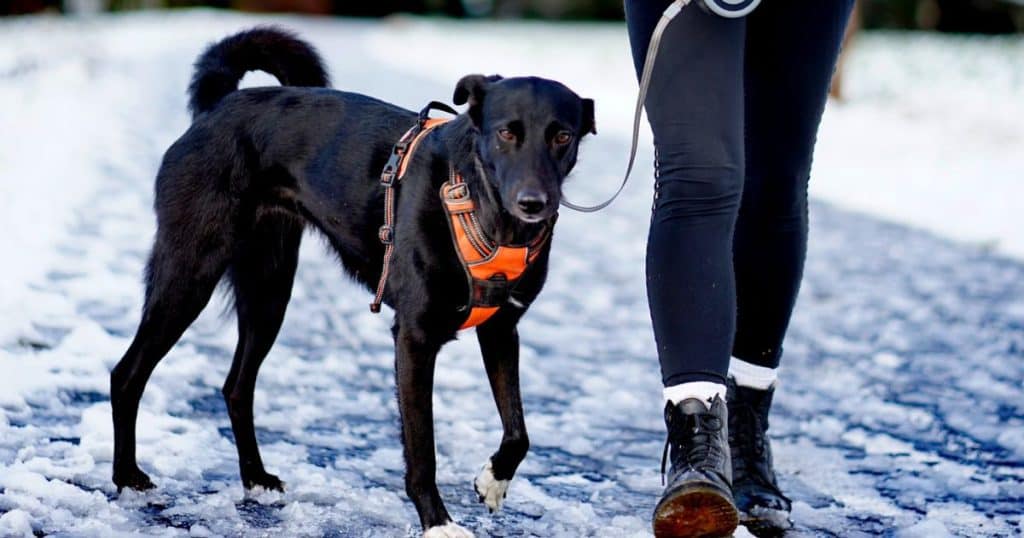
The AKC says to begin as soon as you bring a puppy home: “We start leash training before we even take a walk”. Equipment helps, but the training does the work.
The PDSA method is simple: “As soon as your dog starts pulling, stop walking. Never pull their lead back, just wait for them to stop pulling.” Once the lead goes slack, reward your dog and carry on. It takes many repetitions, and the PDSA tells owners to be “consistent and patient”.
- Start in a quiet, low-distraction place, and choose one side for your dog to walk on, as Battersea Dogs & Cats Home advises.
- Take one or two steps at a time and reward every moment the lead stays loose.
- Use a release cue such as “off you go” when your dog may sniff and explore.
- Phase out treats slowly and replace them with praise, as the PDSA suggests.
- Never punish or yank your dog for pulling.
Lead Types For Training
Standard Flat Lead
A plain nylon or leather lead is the usual choice. Battersea Dogs & Cats Home lists “a standard lead around 1.2-2 metres long” with a collar and identification tag. The PetSafe nylon lead below comes in several lengths and widths, so check the listing for the size that suits your dog.
Check price on AmazonAffiliate link — Dog Fluffy may earn a commission, at no extra cost to you.See the PetSafe nylon lead on Amazon
Long Training Line
A long line gives a dog room to sniff and is useful for recall practice in a safe, open space. Battersea Dogs & Cats Home says long leads “can be used if you fix them at a set length rather than letting them extend”. Check the lengths on the listing, and do not use a long line near roads.
Check price on AmazonAffiliate link — Dog Fluffy may earn a commission, at no extra cost to you.See the Hi Kiss training lead on Amazon
Hands-Free Lead
A hands-free lead goes around your waist and suits jogging or hiking. It does not by itself teach a dog not to pull. Check the weight range on the listing, and see our dog walking gear page for more.
Check price on AmazonAffiliate link — Dog Fluffy may earn a commission, at no extra cost to you.See the hands-free lead on Amazon
Bungee Lead
The listing describes an elastic bungee section that absorbs sudden pulls. It does not teach a dog to walk on a loose lead by itself, so use it alongside training.
Check price on AmazonAffiliate link — Dog Fluffy may earn a commission, at no extra cost to you.Harness Or Head Collar For A Dog That Pulls
The PDSA says “We recommend walking your dog on a harness if they pull – this will help prevent them from hurting their neck”, and the AKC notes that for large puppies a front-clip harness “will make it easier to direct the puppy if they do start pulling”. Make sure the harness fits so the dog cannot slip out of it and can move freely.
No-Pull Harness
Measure your dog’s chest in centimetres and compare it with the maker’s size chart. The listings below are one size each, so choose your own size on the listing.
Check price on AmazonAffiliate link — Dog Fluffy may earn a commission, at no extra cost to you.See the 2 Hounds Design Freedom harness on Amazon
Check price on AmazonAffiliate link — Dog Fluffy may earn a commission, at no extra cost to you.See the Kurgo Tru-Fit harness on Amazon
Head Collar
A head collar steers the dog by the muzzle. Battersea Dogs & Cats Home says a well-fitted head collar can help with a large or strong dog “as long as it’s introduced slowly and positively”. Ask a trainer to show you the fit. The Gentle Leader is listed here in medium and large; choose by the maker’s size chart.
Check price on AmazonAffiliate link — Dog Fluffy may earn a commission, at no extra cost to you.See the Gentle Leader (medium) on Amazon
Check price on AmazonAffiliate link — Dog Fluffy may earn a commission, at no extra cost to you.See the Gentle Leader (large) on Amazon
Leads To Avoid Or Use With Care
- Retractable leads. The AKC says “Avoid using retractable leashes”. Battersea Dogs & Cats Home says they can be used only if fixed at a set length.
- Slip leads. Battersea Dogs & Cats Home: “Avoid slip leads as they can tighten around the neck and cause discomfort.”
- Choke collars. The PDSA says not to use “anything that is painful for your dog or restricts their movement (such as a choke collar)”.
Common Questions
How long should a training lead be?
About 1.2-2 metres (4-6 ft) for everyday training, according to Battersea and the AKC.
When should I start lead training a puppy?
As soon as the puppy comes home, even before the first walk outside, says the AKC. For more, see our puppy lead training tips.
Which harness suits a bulldog?
See our American Bulldog pulling harness guide.
The Bottom Line
Choose a lightweight lead of about 1.2-2 m, use a well-fitted harness for a dog that pulls, avoid retractable and slip leads, and put your effort into reward-based training. If your dog is difficult to manage, ask a qualified trainer.