As an Amazon Associate I earn from qualifying purchases.
Introduce a puppy to a bath by letting them explore the dry tub with treats first, then adding a few centimetres of lukewarm water on a non-slip mat. Keep the first bath under five minutes, wash the body only, skip the face, and reward calm behaviour throughout. Most puppies are ready from about 8 weeks old.
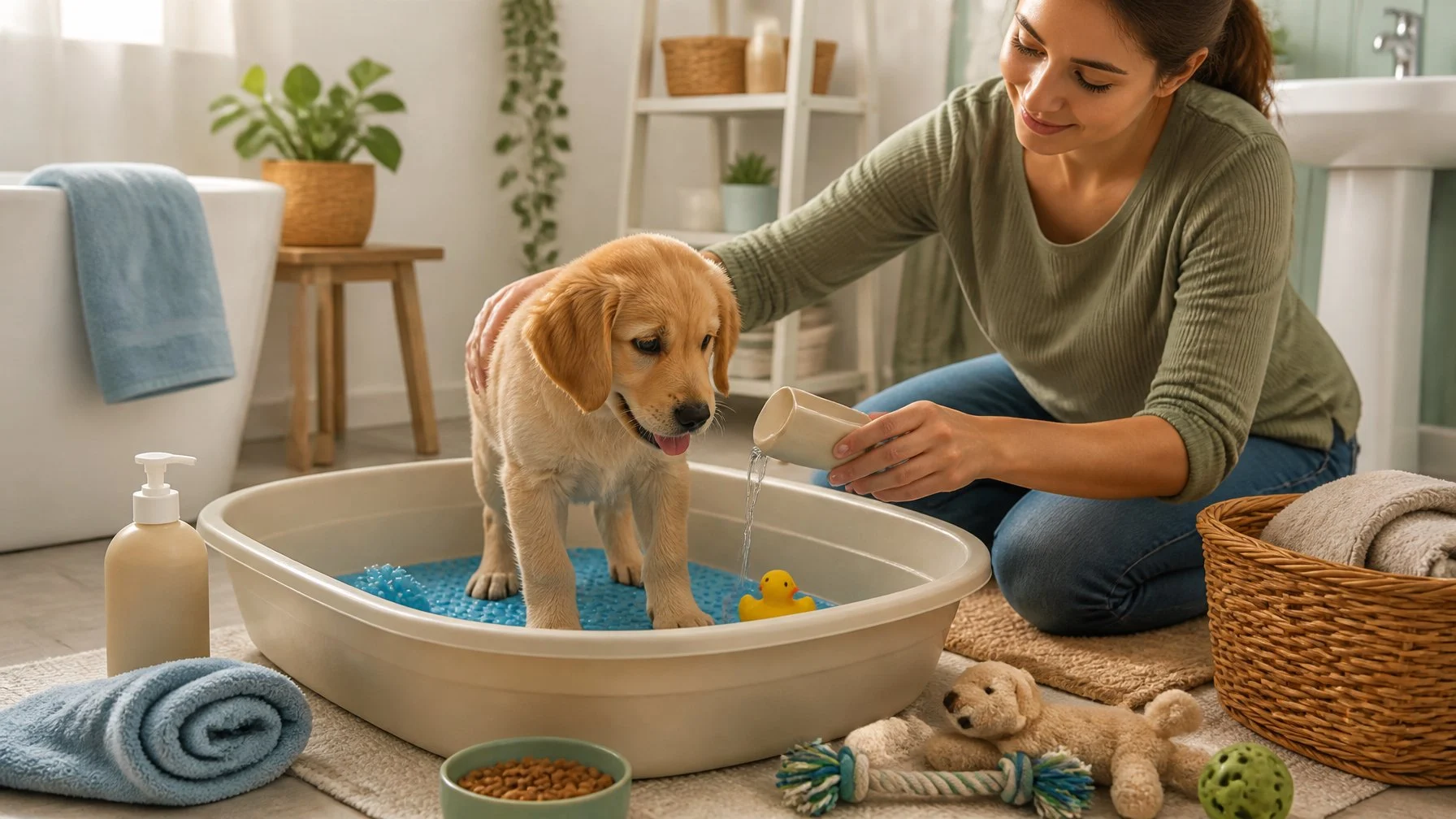
That first bath sets the tone for every grooming session that follows, and fluffy breeds get a lot of them. Pomeranians, Samoyeds, Goldendoodles and Shih Tzus all carry coats that mat fast when they’re damp and neglected. Dog Fluffy has spent years helping owners of these breeds turn bath time from a wrestling match into a routine the dog tolerates, and sometimes even enjoys. Get the setup and the pace right, and a puppy learns that water means treats, not panic.
Start With a Calm, Safe Setup
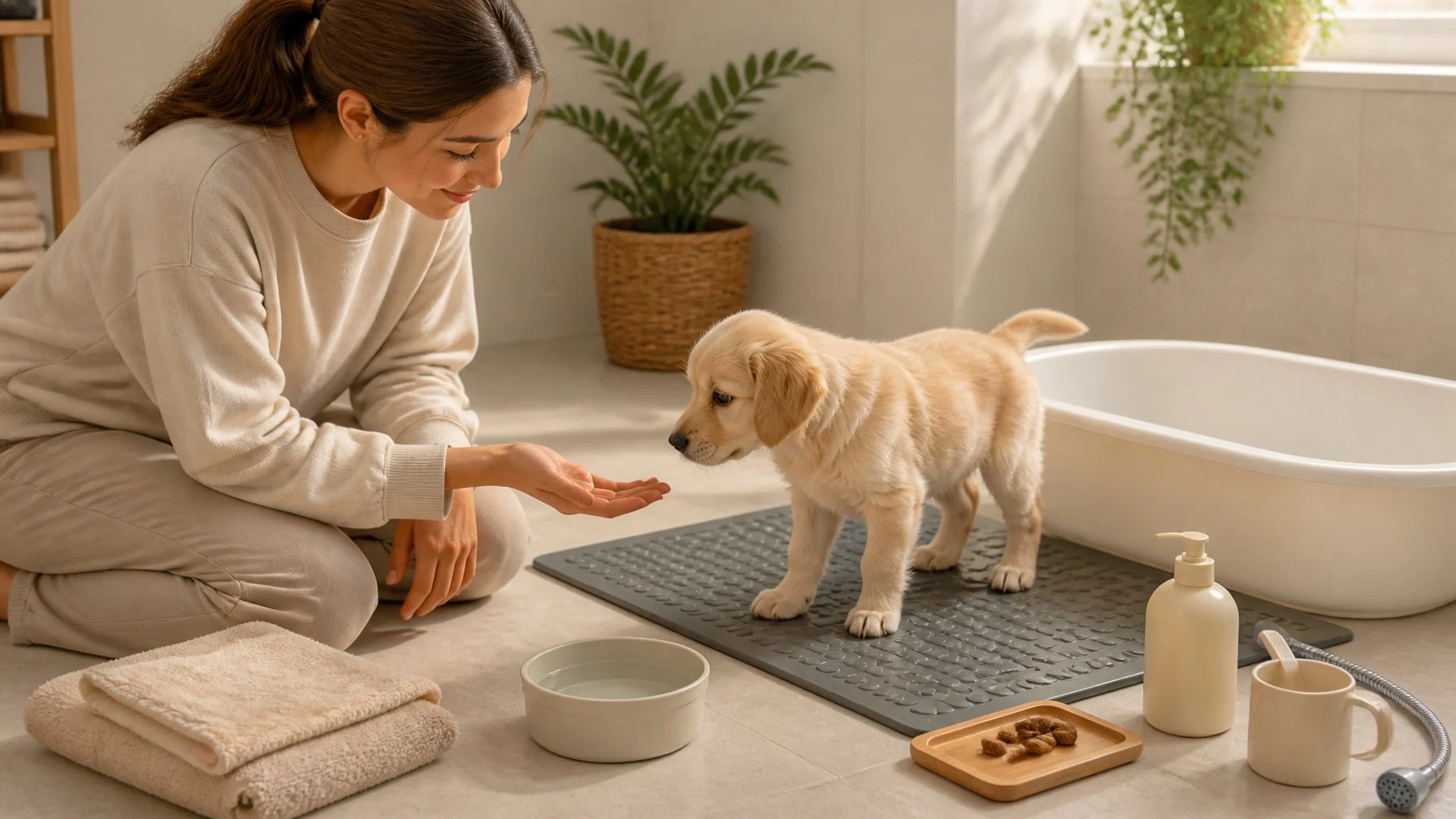
Age, location, supplies and footing decide how the first bath goes before a single drop of water lands. A puppy who’s slipping around a slick tub while someone runs back for a towel learns that bathrooms are stressful places.
When Is a Puppy Ready for a Full Bath?
Most puppies can have a proper bath from around 8 weeks old, once they can hold their own body temperature reliably. Younger than that, a damp cloth wipe-down handles the mess.
Newborn and very young pups chill fast. If a puppy is under 8 weeks and covered in something, spot-clean with a warm damp flannel and dry them immediately.
A quick word on health: puppies recovering from illness, or ones with skin conditions, should be cleared by a veterinarian before a full bath. Vaccination status doesn’t stop a bath at home, since the risk sits with public spaces, not the bathroom.
Choose a Sink, Bathtub, or Other Safe Spot
For a puppy under about 5 kg (11 lb), a kitchen or utility sink beats a bathtub every time. The handler stands upright, the puppy sits at chest height, and nobody’s spine complains afterwards.
Bigger puppies or fast-growing breeds like Samoyeds and Golden Retrievers do better in a bathtub with a handheld shower attachment. A shallow plastic tub on the bathroom floor works too, and gives a nervous puppy a low edge to see over.
Whatever the spot, close the door. A wet puppy who bolts mid-rinse is a soapy problem chasing itself round the house.
Gather Supplies Before Bringing the Puppy In
Everything within arm’s reach, before the puppy arrives. Turning away for thirty seconds is how puppies end up jumping out of tubs.
- Non-slip mat or folded towel for the tub floor
- Puppy-safe shampoo, pre-diluted in a cup of warm water
- Jug or handheld shower head for rinsing
- Two absorbent towels, one to blot, one to wrap
- A slicker brush and a metal comb for the coat
- Small soft treats, or a lick mat with something spreadable on it
- Cotton wool for gently drying ear flaps afterwards
A dog bath towel wrap speeds up the drying stage considerably on double coats, which hold water far longer than people expect.
Why a Non-Slip Surface Matters
A slipping puppy panics, and that panic sticks. Traction is the single cheapest fix for bath-time fear. Line the tub with a non-skid mat before the puppy ever steps in.
Rubber bath mats with suction cups work well. So does a folded bath towel laid flat, which fluffy paws grip easily and which doubles as insulation against cold enamel.
Test it with a hand press. If it slides, it’ll slide under a wriggling puppy too.
Help Your Puppy Feel Safe Before Water Is Involved
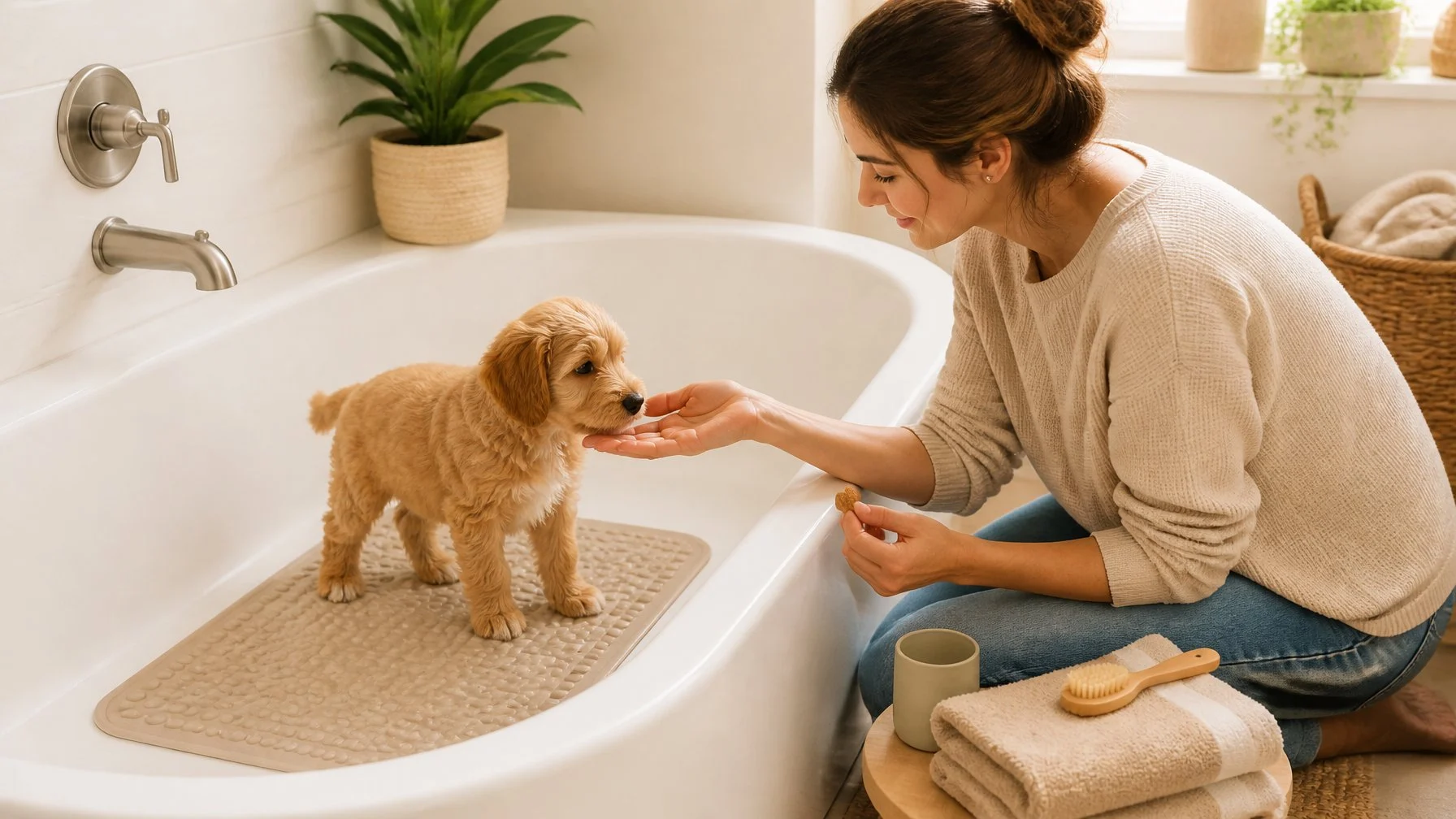
The work that makes bath time easy happens on dry ground: exploring an empty tub, tolerating paw handling and brush strokes, and hearing running water without anything happening. Rushing this stage is the most common reason puppies develop a lasting fear of water.
Let the Puppy Explore the Dry Bathing Area
Put the puppy in the empty tub or sink, scatter a few treats, and let them sniff around. No water, no shampoo, no agenda.
Two or three of these sessions across a week is plenty. The dry run is the point: the puppy gets in with no water, eats a treat, and gets out again, so the space is familiar long before anything happens in it.
Keep each visit under two minutes. End before the puppy gets bored, and they’ll be keener next time.
Get Them Used to Handling, Brushes, and Bath Sounds
Gentle handling practice pays off more than anything else on this list. Touch paws, lift ears, run a hand under the belly, stroke the tail base, each for a second or two, each followed by a treat.
Add sounds separately. Run the tap for five seconds while the puppy eats, then stop. Repeat with the shower head, then the hairdryer on its lowest setting from across the room.
Regular brushing should already be part of the routine by now. A puppy who accepts a slicker brush dry will accept it wet. Dog Fluffy’s guide to a puppy’s first groom covers how to build that tolerance session by session.
Use Treats, Praise, and a Lick Mat Without Forcing Progress
Positive associations form when good things happen near the scary thing, not when the puppy is made to endure it. Gradual desensitisation means pairing each new step with food, then stopping while the puppy is still relaxed.
A lick mat stuck to the tub wall is the workhorse here. Spread on a thin layer of plain unsweetened yoghurt or wet puppy food, and the puppy stays busy while hands do the washing.
Praise in a low, even voice. High-pitched excited chatter tends to wind puppies up rather than settle them.
What to Do If Your Puppy Seems Scared
Stop and back up a step. Fear signs include tucked tail, flattened ears, whale eye (whites showing), lip licking, freezing, or trying to climb out.
Never scruff, hold down, or shout at a frightened puppy in water. That single event can create a fear that takes months to undo.
Instead:
- Drain the water and let the puppy stand in the empty tub with treats
- Go back to dry sessions for three or four days
- Reintroduce water at half the previous depth
- For very anxious puppies, try calming a dog for grooming techniques before the bath begins
Follow These Steps for the First Short Bath
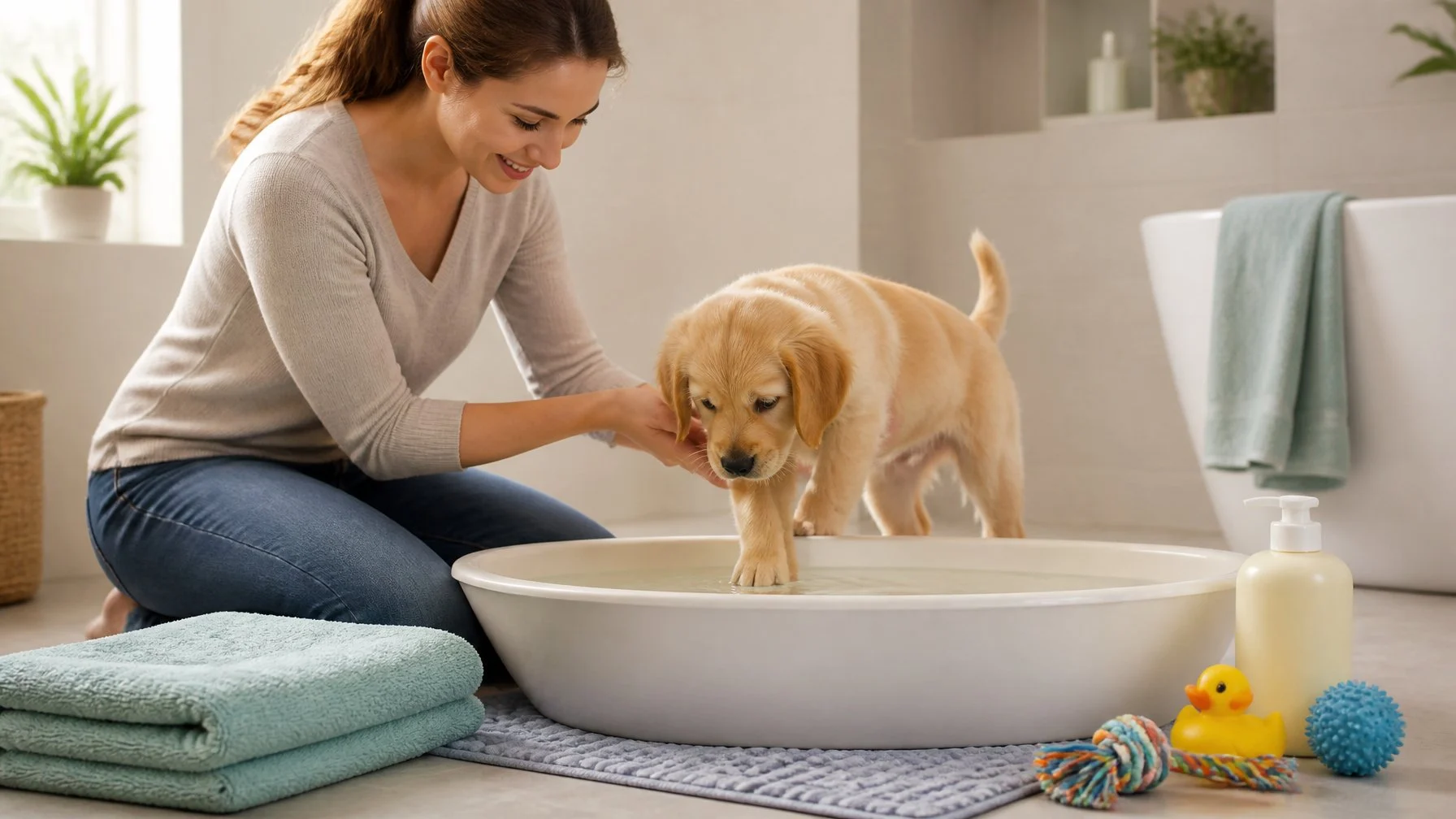
The first real bath runs brush, wet, wash, rinse, dry, and it should take under ten minutes start to finish. Skipping the pre-brush on a fluffy coat is how small tangles turn into felted mats that need scissors.
Brush Out Tangles Before the Coat Gets Wet
Water tightens knots. A loose tangle in a Goldendoodle’s coat becomes a solid mat the moment it’s soaked, and no amount of shampoo will free it.
Work through the whole coat with a slicker brush, then check with a metal comb. The comb should glide from skin to tip without catching, especially behind the ears, under the front legs and around the collar line.
Found a mat that won’t budge? Leave the bath for another day and deal with the mat first. Dog Fluffy’s advice on grooming a fluffy dog covers mat removal on long fur without hurting the skin.
Introduce Lukewarm Water Slowly
Lukewarm water means roughly 37 to 38°C (98 to 100°F), close to a puppy’s own body temperature. Test it on the inside of a wrist, the way you’d test a baby’s bottle.
Fill the tub to about 5 cm (2 in), or roughly halfway up the puppy’s legs. Wet the back paws first, then the legs, then work up the body. Head last, and only lightly.
Pour with a jug rather than blasting a shower head at close range. The noise and pressure startle puppies more than the water itself.
Wash the Body Gently and Keep the Face Dry
Dilute the puppy shampoo in a cup of warm water before it touches the coat. Neat dog shampoo on a dense double coat sits in one spot and takes ages to rinse out.
Massage it in with fingertips, moving with the direction of the coat. Neck, back, sides, chest, legs, tail, then the belly.
The face never goes under water. Wipe it with a damp cloth instead, avoiding eyes and the inside of the ears. Flat-faced puppies like French Bulldogs need extra care in the skin folds, which should be dried thoroughly afterwards to avoid irritation.
Rinse Until No Shampoo Remains
Leftover shampoo is the leading cause of itchy, flaky skin after a bath. Fluffy coats hide residue deep at the root, where it dries into a film.
Rinse in sections, squeezing the coat gently as water runs through. When the water runs clear and the fur squeaks slightly between fingers, it’s clean.
Then rinse once more. Owners almost always under-rinse a double coat on the first attempt.
Dry and Reward the Puppy Right Away
Wrap the puppy in a towel before lifting them out. Blot and squeeze rather than rubbing, since rubbing creates tangles in long fur.
- Squeeze water out of the coat with the first towel while the puppy is still in the tub
- Lift the puppy onto a dry towel on the floor or a table
- Blot the legs, belly, tail and ears with the second towel
- Dry the ear flaps with cotton wool and check inside the folds
- Use a dryer on cool or low heat, held 20 cm (8 in) away and kept moving
- Brush the coat out as it dries to prevent mats forming
- Finish with a treat, praise, and a short play session
A damp double coat can stay wet for hours and hold cold against the skin. Keep the puppy indoors and warm until the undercoat is dry to the touch.
Choose Products and a Routine That Protect the Coat
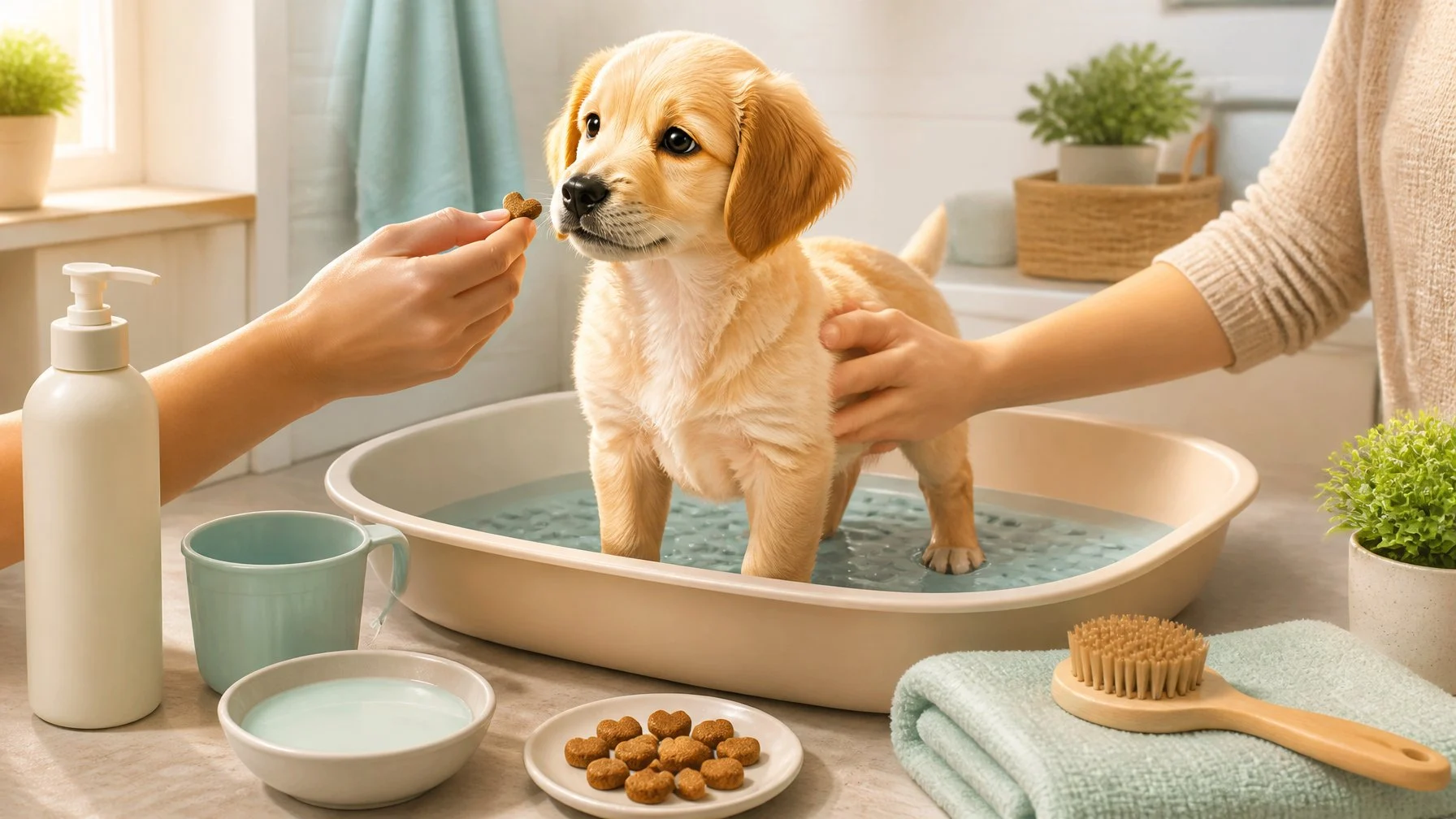
Puppy skin sits at a different pH from human skin, so household products strip it. Getting shampoo choice and bath frequency right protects the coat far more than any single perfect bath does.
Why Human Shampoo Is Not a Good Substitute
Human shampoo, baby shampoo and washing-up liquid all disrupt the protective barrier on a puppy’s skin. The result shows up days later as flaking, scratching and a dull coat.
Dog skin has a more neutral pH than human skin, so shampoos formulated for people strip its natural oils and leave it dry and itchy.
Baby shampoo gets recommended a lot online. It’s milder than adult shampoo, sure, but still built for human pH. Use it only as a one-off emergency, then rinse extra thoroughly.
What to Look for in Puppy Shampoo for Sensitive Skin
Read the back of the bottle, not the front. A good puppy-safe shampoo for sensitive skin keeps the ingredient list short.
Look for:
- Labelled specifically for puppies, with an age range on the pack
- Soap-free and sulphate-free
- No added fragrance or artificial colour
- Tearless formulation, useful for around the head
- Simple moisturisers such as aloe or glycerin
Skip anything with tea tree oil, which is toxic to dogs at higher concentrations. White and cream coats have their own considerations, and Dog Fluffy’s rundown of the best shampoo for a white coat goes into brightening formulas that don’t irritate.
When Oatmeal, Hypoallergenic, or Medicated Shampoo May Fit
Three situations call for something beyond a basic puppy wash:
Shampoo type | Best for | Notes |
|---|---|---|
Dry, flaky, mildly itchy skin | Soothing, safe for regular use | |
Puppies reacting to fragrances or dyes | Fewest ingredients, no scent | |
Medicated shampoo | Yeast, bacterial infection, hot spots | Vet prescription only, with a contact time |
Medicated shampoo works differently from the others. It needs to sit on the skin for a set number of minutes before rinsing, and using it without a diagnosis can make skin problems worse. French Bulldogs and Bulldogs prone to hot spots often end up on one of these, but that call belongs to a veterinarian.
How Often Should a Fluffy Puppy Be Bathed?
Once every four to six weeks suits most fluffy puppies. That spacing keeps the coat clean without stripping the oils that keep a double coat weatherproof.
Rough guide by coat type:
- Double coats (Samoyed, Husky, Pomeranian, Golden Retriever): every 6 to 8 weeks
- Curly and wavy coats (Goldendoodle, Bichon Frise): every 3 to 4 weeks, paired with frequent brushing
- Long silky coats (Shih Tzu): every 3 to 4 weeks
- Short coats with folds (French Bulldog, Bulldog): every 4 to 6 weeks, with folds cleaned weekly
Muddy walk in between? Rinse the dirty bits with plain water rather than running a full shampoo bath.
Keep Long Fur Clean Between Baths
Brushing does most of the cleaning work on a fluffy coat. Loose dirt, dead undercoat and debris all come out on the brush, and a well-brushed dog stays cleaner for longer.
Between-bath maintenance that works:
- Brush three to four times a week, more during a coat blow
- Wipe paws and belly with a damp cloth after wet walks
- Clean skin folds and tear stains with a soft damp cloth
- Use a dry shampoo foam on small dirty patches
- Trim the fur between paw pads so it stops trapping mud
Dog Fluffy’s guidance on cleaning a long coated dog after a muddy walk covers the spot-clean routine in more detail, and the wider coat care collection has breed-specific brushing schedules.
Make Each Bath Easier Than the Last
Every bath is a training session, whether anyone plans it that way or not. The goal is a puppy who walks into the bathroom on their own, because the last five baths all ended with something good.
Keep the sessions short and predictable. Same room, same order of steps, same treat at the end. Predictability is what lowers a puppy’s stress, and gradual desensitisation only sticks when the pattern repeats.
Track how the puppy behaves rather than how clean they got. A puppy who stood still for thirty seconds longer than last time made progress, even if the rinse was rushed.
A few habits that compound:
- End on a win, even if that means stopping early
- Keep the lick mat loaded so hands stay free
- Use praise during the bath, treats after
- Never bathe a puppy who’s already wound up; try a walk or a calming routine first
- Let the puppy leave the bathroom on their own four feet when possible
Puppies who learn bath handling early also handle vet exams, nail trims and professional groomers better. The tolerance transfers.
Bath time works when the setup is safe, the water is warm, the shampoo is mild, and nobody is in a hurry. Build it slowly and a fluffy puppy grows into a dog who shrugs at the tub.
Frequently Asked Questions
Owners ask the same five things about a puppy’s first bath: the right age, the 8-week question, how to avoid scaring them, what to do without dog shampoo, and how often a three-month-old needs washing.
At what age should you start bathing a puppy?
Around 8 weeks old is standard for a first full bath, once a puppy can regulate their own body temperature. Before that, spot-clean with a warm damp cloth and dry them straight away. Some breeders introduce shallow water earlier under close supervision. Check with a veterinarian first if the puppy is unwell or has any skin condition.
Can an 8-week-old puppy have a bath?
Yes. An 8-week-old puppy can have a short bath in lukewarm water at roughly 37 to 38°C (98 to 100°F), using a puppy-safe shampoo. Keep it under five minutes, use a non-slip mat, and dry the coat completely before the puppy goes anywhere cool. Vaccination status doesn’t prevent a bath at home.
How do you introduce a puppy to a bath without scaring them?
Start with the tub empty. Let the puppy explore it with treats over several short sessions, then add a few centimetres of warm water. Wet the back paws first and work upwards. Use a lick mat to keep them busy, praise calm behaviour, and stop the moment they show fear signals like a tucked tail or freezing.
What can you wash a puppy with if you do not have dog shampoo?
Plain lukewarm water and a soft cloth handle most puppy messes without any product at all. If something greasy needs shifting, a tiny amount of tearless baby shampoo, heavily diluted and rinsed thoroughly, works as a one-off. Skip washing-up liquid, adult human shampoo and any soap with fragrance, since these strip the skin barrier.
How often should a 3-month-old puppy take a bath?
Every four to six weeks suits most three-month-old fluffy puppies. Curly and long silky coats such as Goldendoodles and Shih Tzus benefit from every three to four weeks alongside frequent brushing. Double-coated breeds like Samoyeds and Pomeranians can stretch to six to eight weeks. Rinse muddy patches with plain water in between rather than running a full bath.
What’s the one thing that finally got your puppy to relax in the tub? Drop it in the comments, other new dog parents will thank you for it.
This is general guidance, not veterinary advice – always check with your vet for your own dog’s situation.