As an Amazon Associate I earn from qualifying purchases.
Curly coats shed less but mat faster. They need brushing almost daily and a professional groom every 5 to 8 weeks.
Wavy coats sit in the middle. Plan on brushing three to four times a week, with trims roughly every 8 weeks.
Both coats trap loose hair instead of dropping it, which is exactly why matting, not shedding, is the real workload.
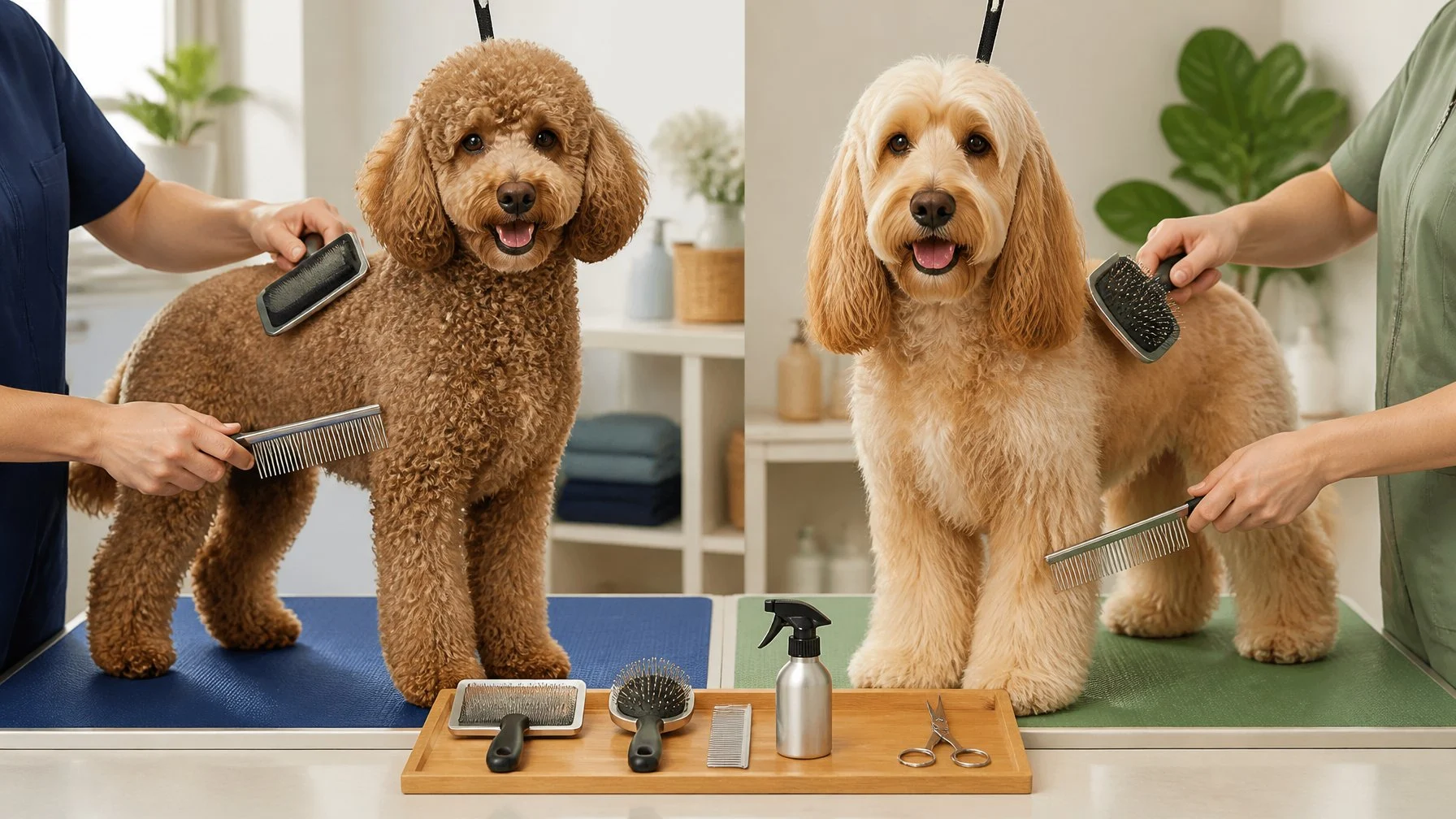
So what actually changes between a tight ringlet and a soft S-wave? Quite a lot, once you look at where mats form and how deep a comb has to reach.
Puppy coats can flip texture around eight months. Dog Fluffy pulls together research-informed grooming guidance for fluffy breeds.
This comparison covers identification, tools, timing, and the genetics that make coat predictions messy.
How To Tell Curly Hair From Loose Waves
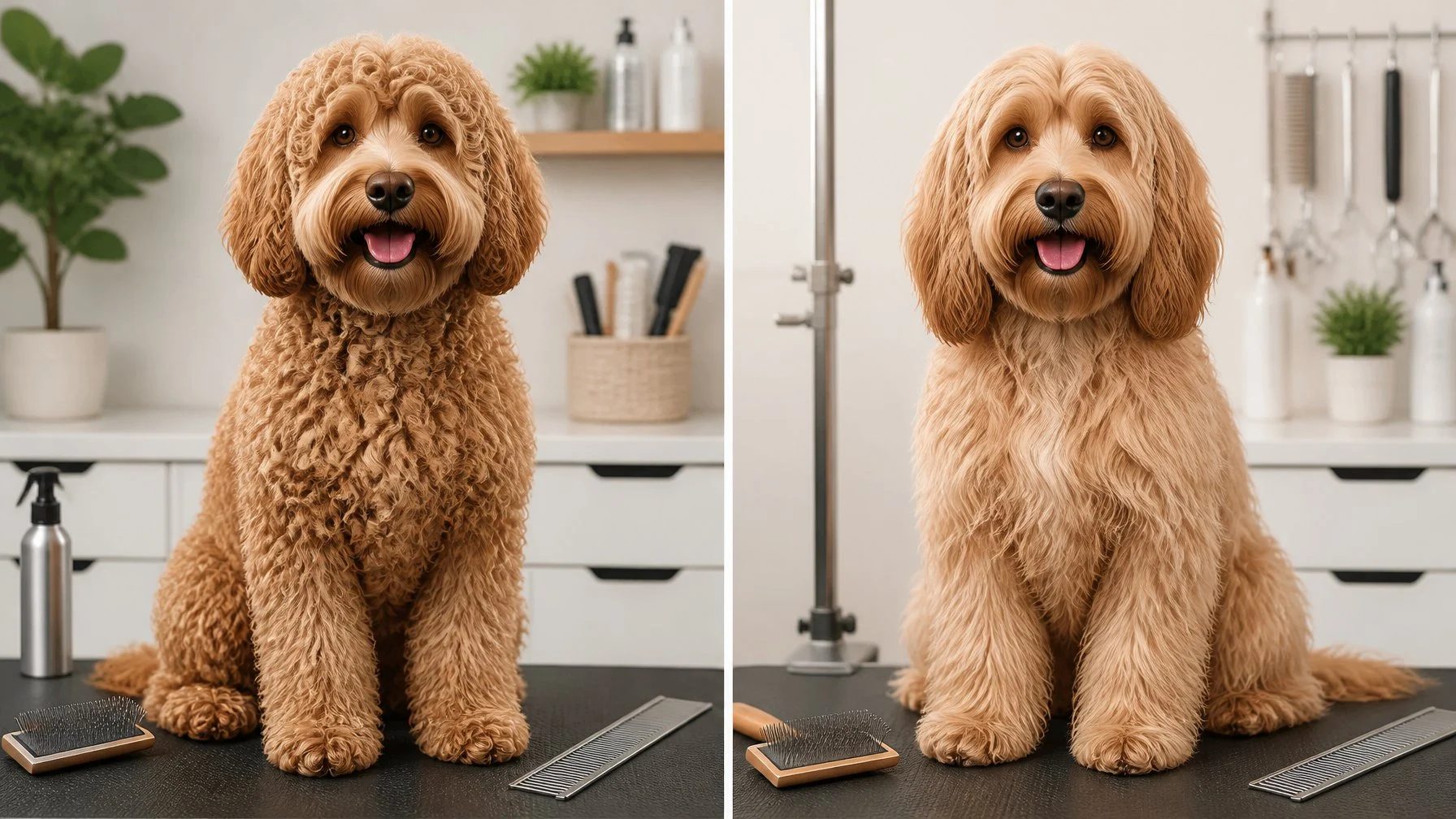
Curl pattern, comb resistance, and coat age tell you almost everything. A tight ringlet that springs back after stretching is a woolly curly coat.
A soft S-bend that flattens under a damp hand is a fleece wavy coat. Puppy coats lie about both until roughly 8 to 12 months.
Texture, Curl Pattern, and the Comb-Through Test
A curly coat forms full spirals close to the skin, while a wavy coat forms open S-shapes that loosen when brushed or wet.
That’s the whole visual difference in one line. The comb tells the truth better than your eyes.
Run a metal comb from the skin outward on the shoulder:
- Part the hair down to the skin with your fingers.
- Slide a [steel comb](https://www.dogfluffy.com/dog-brush-for-shedding) in at the base and pull straight out.
- If it glides in one pass, that section is wavy or straight.
- If it stalls 1 to 2 cm (about half an inch) from the skin, that’s curly density or an early mat.
- Repeat behind the ears and under the front legs, where texture is often curliest.
Curly coats feel dry and springy. Wavy coats feel silky and drape.
Why Puppy Coats Can Change Before Adulthood
Most doodle puppies arrive with a soft, easy puppy coat that hides their real texture. The adult coat usually pushes through between 8 and 12 months, and that’s when owners suddenly find mats where the brush used to sail.
Early clues help. Muzzle furnishings at eight weeks are often the strongest predictor of adult coat type, as Goldendoodle coat guides note.
Heavy beard and eyebrow hair usually points toward a curlier, lower-shedding adult coat.
Where Flat and Straight Coats Fit In
Flat and straight coats, sometimes called hair coats or improper coats, are the third group. They shed the most and mat the least, so brushing two to three times a week usually keeps them tidy.
A French Bulldog belongs in a different category entirely. Short, single, smooth coat.
No line brushing, no clipper work, just a rubber curry brush and skin-fold checks. The doodle-style routine here doesn’t apply to them.
The Real Trade-Off: Shedding, Allergies, and Mats
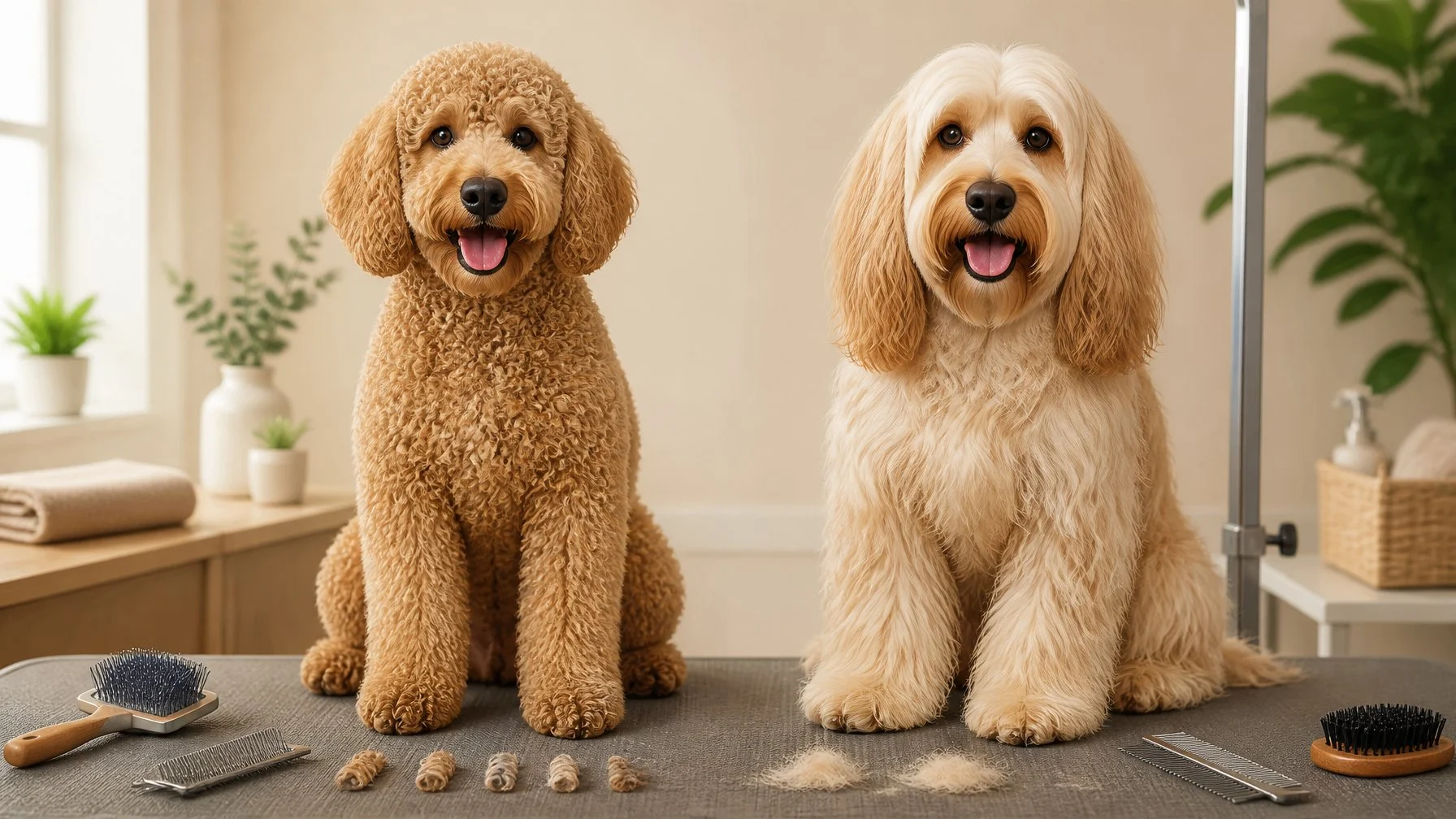
Low shedding sounds like less work, but the hair still dies on schedule. It just stays in the coat instead of landing on the sofa.
This turns shedding into matting and dander into a separate question entirely.
Why Low Shedding Does Not Mean Low Maintenance
A Golden Retriever drops loose hair onto the floor; a Poodle-type coat keeps it tangled around live hair until it felts.
Same amount of shed hair, very different destination. That trapped hair is the engine behind mats.
Curls have more surface contact per strand, so a single dead hair wraps around three or four neighbours before you notice. Wavy coats do the same thing, just slower.
Seasonal shedding still happens in both. It’s simply invisible until the comb finds it.
What Dander Means for Pet Allergies
No dog is truly hypoallergenic. Pet allergies are usually triggered by proteins in dander and saliva, not by hair length or curl pattern.
Curly and wavy coats can help by holding dander in the coat instead of scattering it around the house. That only works if the coat is brushed and bathed on schedule.
A neglected curly coat becomes a dander storage unit. Anyone with a diagnosed allergy should spend real time with the specific dog before committing.
The Friction Spots That Mat First
Mats form where hair rubs hair. Every time.
- Behind and inside the ears
- The armpits, under the front legs
- The collar line and harness contact points
- The britches and the base of the tail
- Between the toes and the pads
Checking these six zones daily catches 90% of matting before it needs scissors.
Damp weather and swimming speed the whole process up.
Set a Routine That Matches Your Dog’s Coat
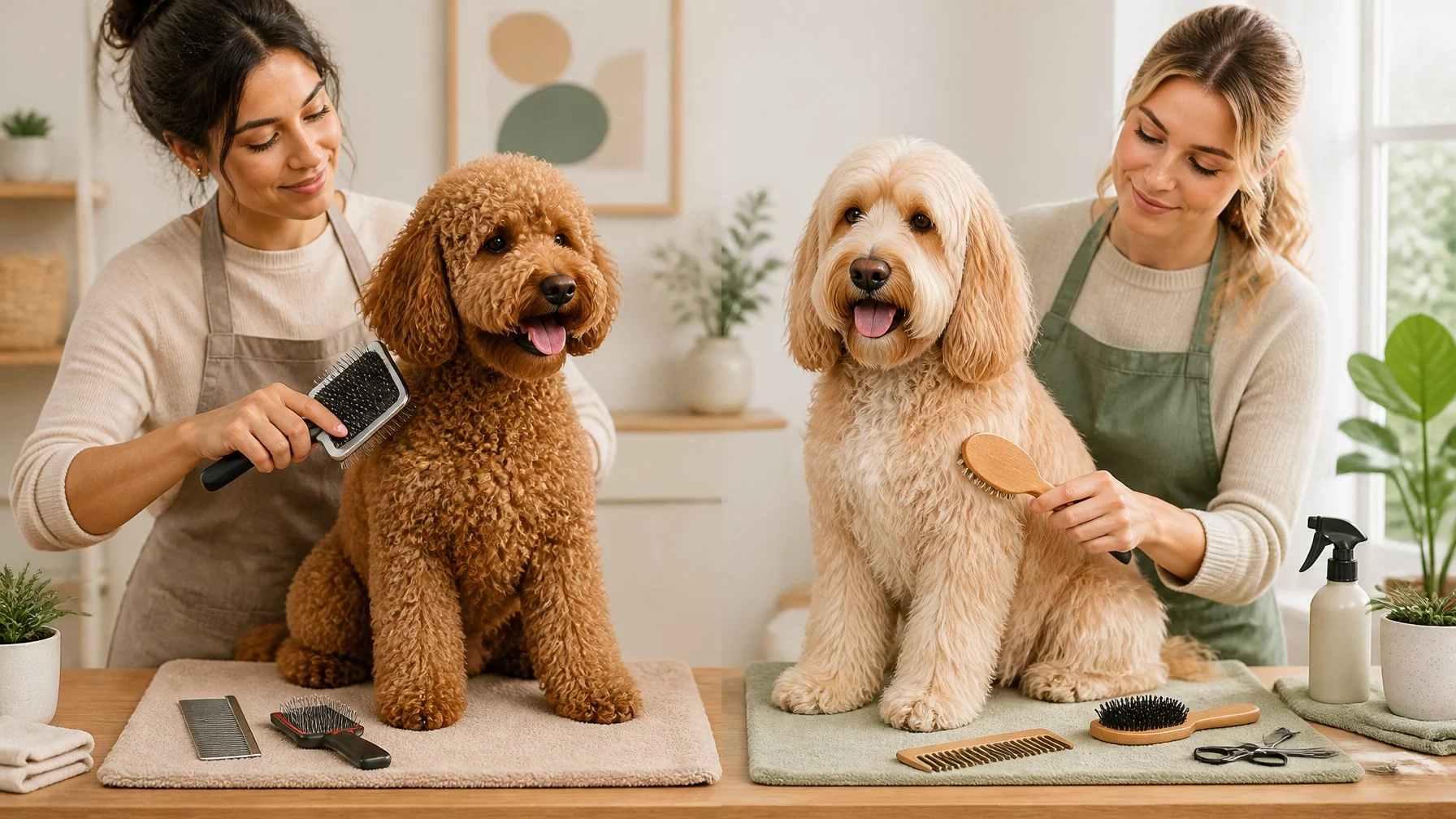
Curly coats need daily contact. Wavy coats need three to four sessions a week.
Both need a professional groom before the coat gets tight, not after. Booking on a calendar beats booking on panic.
A Daily Plan for Dense Curly Coats
Daily brushing on a curly coat is prevention, not vanity.
Doodle coat guidance from The Doodle Brush recommends brushing woolly coats daily and following with a steel comb.
Ten minutes is plenty on most days. Focus on the friction zones, then spot-check the back and chest.
A light mist of detangling spray reduces friction and hair breakage. Skip three days in a row and you’ll usually feel it in the comb.
A Weekly Plan for Soft Wavy Coats
Wavy coats forgive more, but not forever. Three to four brush sessions a week keeps a fleece coat smooth; drop to once a week and mats show up behind the ears within a fortnight.
A workable rhythm:
- Monday, Wednesday, Friday: full line-brush plus comb check
- Weekend: quick comb over the ears, legs, and tail
- After every swim or muddy walk: dry fully, then comb
Damp curls and damp waves both felt as they dry. Drying properly matters as much as brushing.
When Professional Grooming Should Happen
Curly coats generally need a professional groom every 5 to 8 weeks. Wavy coats stretch to around every 8 weeks, sometimes 10 with strong home brushing.
Book the next appointment while you’re still at the salon.
Waiting until the coat looks rough usually means a shorter clip than anyone wanted. Tell the groomer the honest brushing frequency.
They’ll set clipper length to match real life, not the ideal version.
Brush to the Skin Without Pulling or Breaking Hair
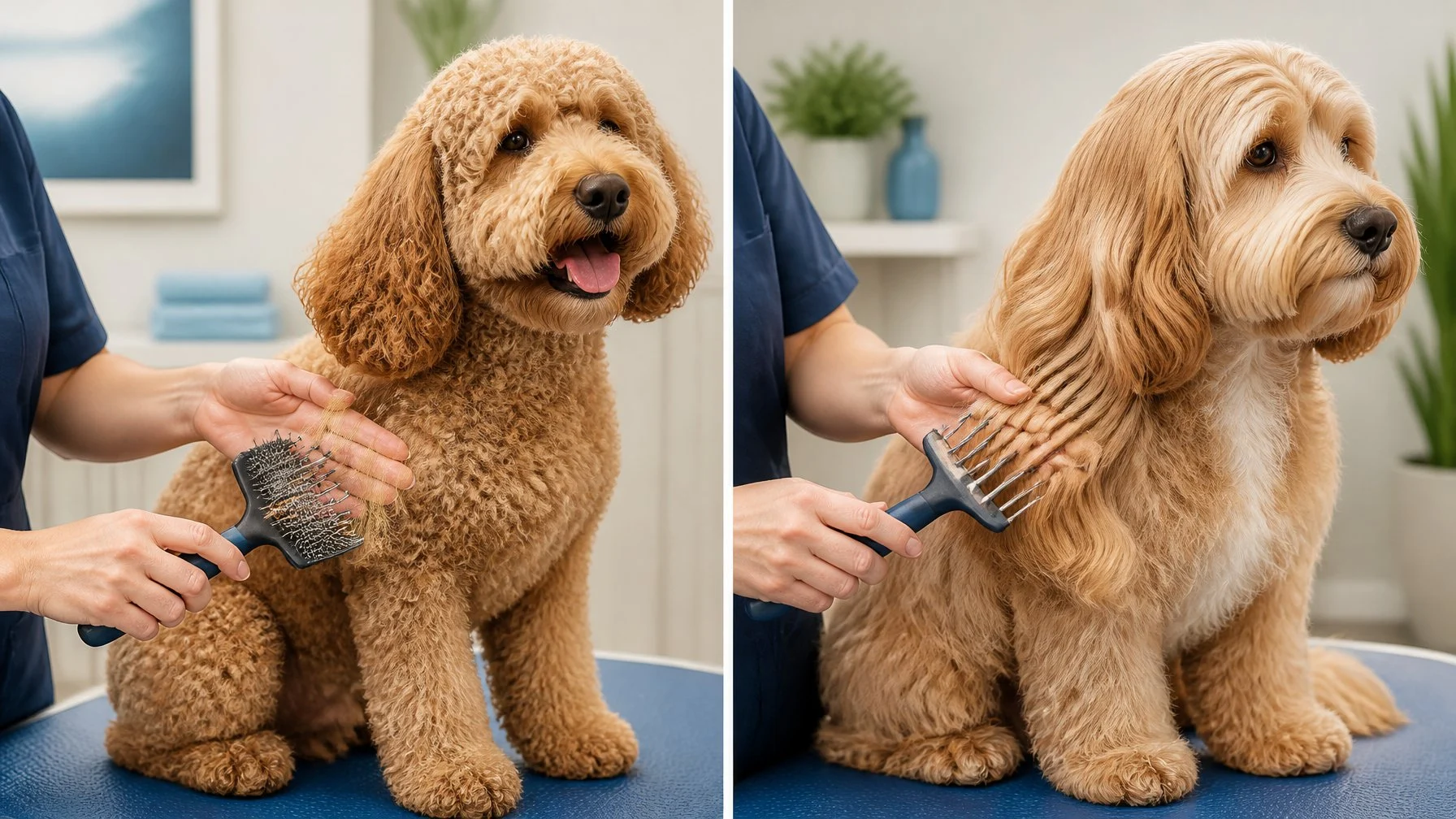
Surface brushing is the single most common mistake in curly coat grooming and wavy coat grooming. Line brushing fixes it, the right two tools make it faster, and small tangles come out with fingers long before they need blades.
The Line-Brushing Method Step by Step
Line brushing means parting the coat in horizontal sections and brushing only the hair below the part, so the brush reaches skin every pass.
- Sit the dog comfortably and start at the lowest point, usually a back leg.
- Push the coat upward with one hand to create a clean horizontal part.
- Mist that strip lightly with detangling spray. Never brush a bone-dry curly coat.
- Brush the exposed hair downward with a slicker, using short, light strokes.
- Follow immediately with a metal comb through the same strip. If it snags, the slicker missed it.
- Release the next 2 to 3 cm (about 1 inch) of coat and repeat upward.
- Finish with a full-body comb pass from skin to tip.
Light pressure. The slicker should skim the skin, not scrape it.
Tools That Earn a Place in a Doodle Grooming Kit
| Tool | What it does | Best for |
|---|---|---|
| Slicker brush | Opens the coat, lifts loose hair | Curly and wavy, main tool |
| Steel or metal comb | Confirms you reached the skin | Both, non-negotiable |
| Pin brush | Gentle smoothing on clean coats | Wavy and fleece |
| Wide-tooth comb | First pass on thick, long coat | Curly |
| Detangling spray | Cuts friction, reduces breakage | Both |
| Thinning scissors | Tidies around eyes and paws | Wavy, light use |
The comb is the tool that tells the truth. A slicker can glide over a mat and leave it sitting against the skin.
How to Handle Small Tangles Before They Become Mats
Start at the outside of the tangle and work your way in. Hold the hair at the base with your fingers so the pull hits your hand, not your dog’s skin.
Tease apart the tangle with your fingers or use the end tooth of a comb, working a few hairs at a time. If a mat sits tight against the skin or is bigger than a coin, stop and let a groomer clip it out.
Cutting blind with scissors? That’s how skin gets nicked.
Dog Fluffy’s grooming and wellness resources also cover skin checks you can do at the same time.
What Breed Mix and Genetics Can, and Can’t, Predict
Two puppies from the same litter can end up with totally different coats. Generation labels like F1 or F1B only shift the odds a bit.
Genes for curl and furnishings do most of the work, and DNA testing can help narrow things down before the adult coat arrives.
Why Goldendoodle Generations Can Produce Different Textures
An F1 Goldendoodle is a 50/50 first cross, so coat type is a real coin toss between wavy, curly, or flat. F1B crosses have more Poodle in the mix, so curly coats show up more often and shedding usually drops.
But honestly, “usually” is doing a lot of heavy lifting there. Labradoodles, Cockapoos, Bernedoodles, and Mini Goldendoodles all follow the same pattern—more Poodle DNA leans curlier, but there’s never a guarantee.
Buy the coat in front of you, not just the label on the paperwork. It’s just more honest that way.
Furnishings, Curl Genes, and the Role of DNA Testing
Two gene groups do most of the heavy lifting. The KRT71 gene influences curl, and the RSPO2 gene controls furnishings—the beard-and-eyebrow look.
Canine coat genetics research explains how RSPO2, FGF5, and KRT71 interact to create the main coat types.
A dog can carry one curl copy and end up somewhere in the middle, which is where most wavy doodle coats come from. Animal Genetics testing mentions a second curl variant that makes a slightly different wave pattern.
DNA panels can flag furnishings and curl status early. That’s useful, but it’s not a grooming plan.
Which Parts of This Advice Apply Beyond Doodles
Coat texture matters way more than breed name. Any single-coated, low-shedding dog with curl or wave—Poodles, Bichons, Portuguese Water Dogs, lots of rescue mixes—needs the same line brushing and comb checks.
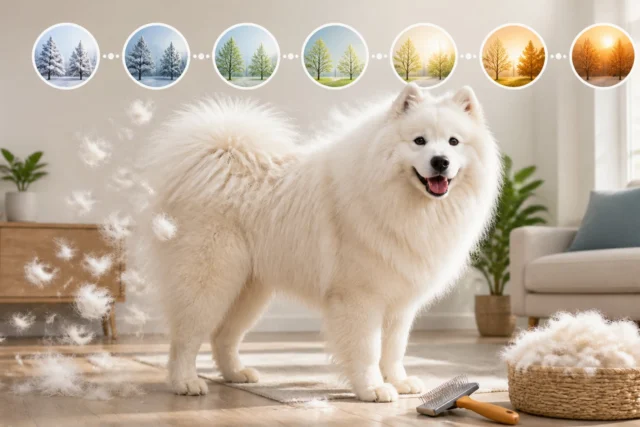
Double-coated breeds like Huskies and Samoyeds need de-shedding work instead, and short-coated dogs like French Bulldogs really don’t need either. Match the routine to what’s actually growing out of your dog’s skin.
From Fluffy’s Bowl
From Fluffy’s Bowl: buy the routine for the coat you can feel, not for the breed on the paperwork. Two dogs of the same breed, from the same litter, can need different tools by their first birthday. Put your fingers in at the skin and let that decide.
This is general guidance, not veterinary advice—always check with your vet for your own dog’s situation.
What We Would Actually Buy For These Two Coats
The kit for a curly coat and a wavy coat is the same kit — the difference is how often you reach for it, which is the point this article keeps making.
Large Slicker Brush for Doodle and Poodle Coats
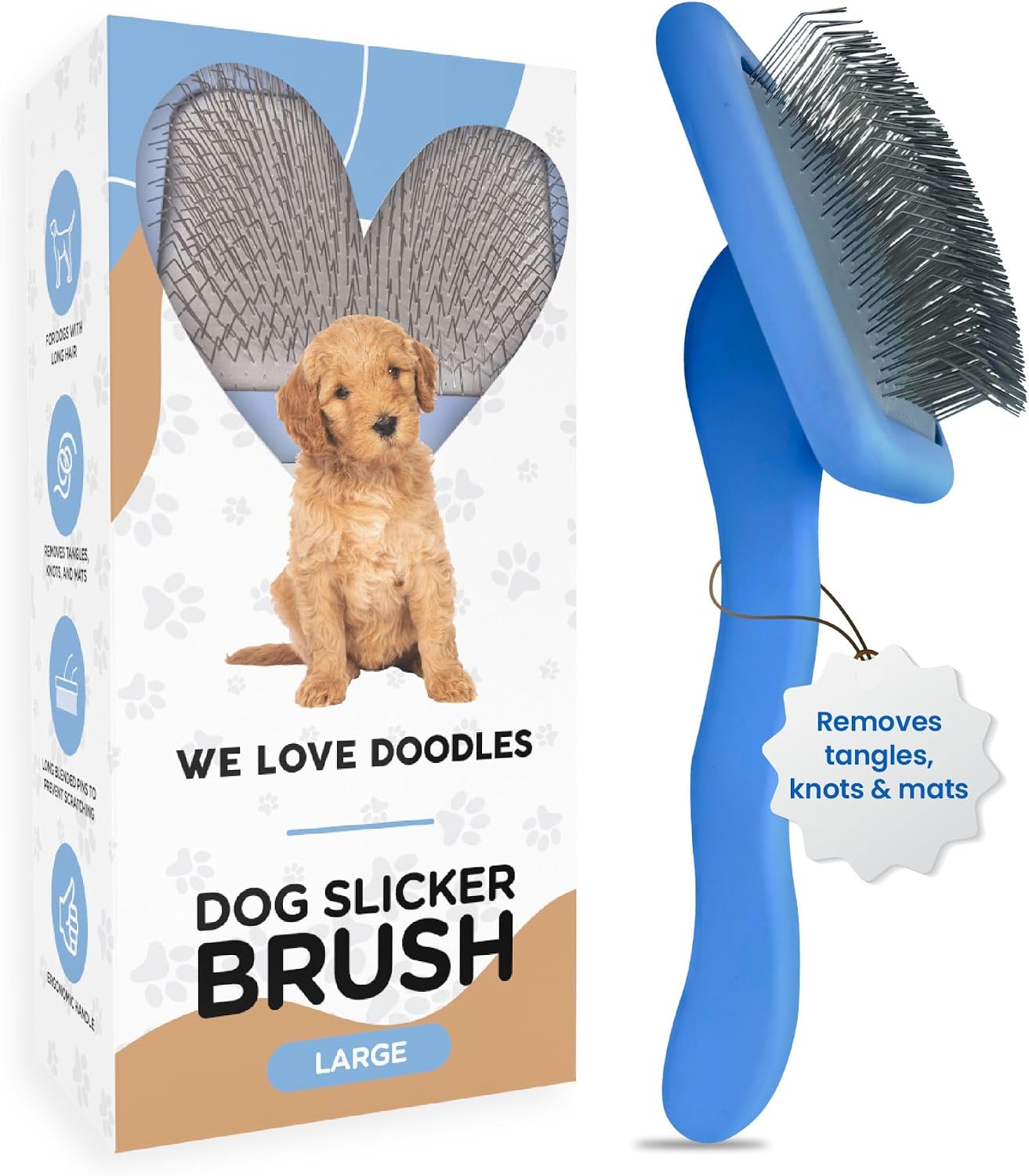
The daily tool for a dense curly coat, and the weekly one for waves. Check price on Amazon
| Things We Like | Things We Don’t Like |
|---|---|
| Reaches the skin, which is where curly coats mat first | Overkill on a flat or smooth coat |
| Large head suits the friction zones listed above | Heavy pressure causes brush burn |
| Works for line brushing as described earlier | Curly coats clog it quickly |
Master Grooming Tools Fine/Coarse Steel Greyhound Comb
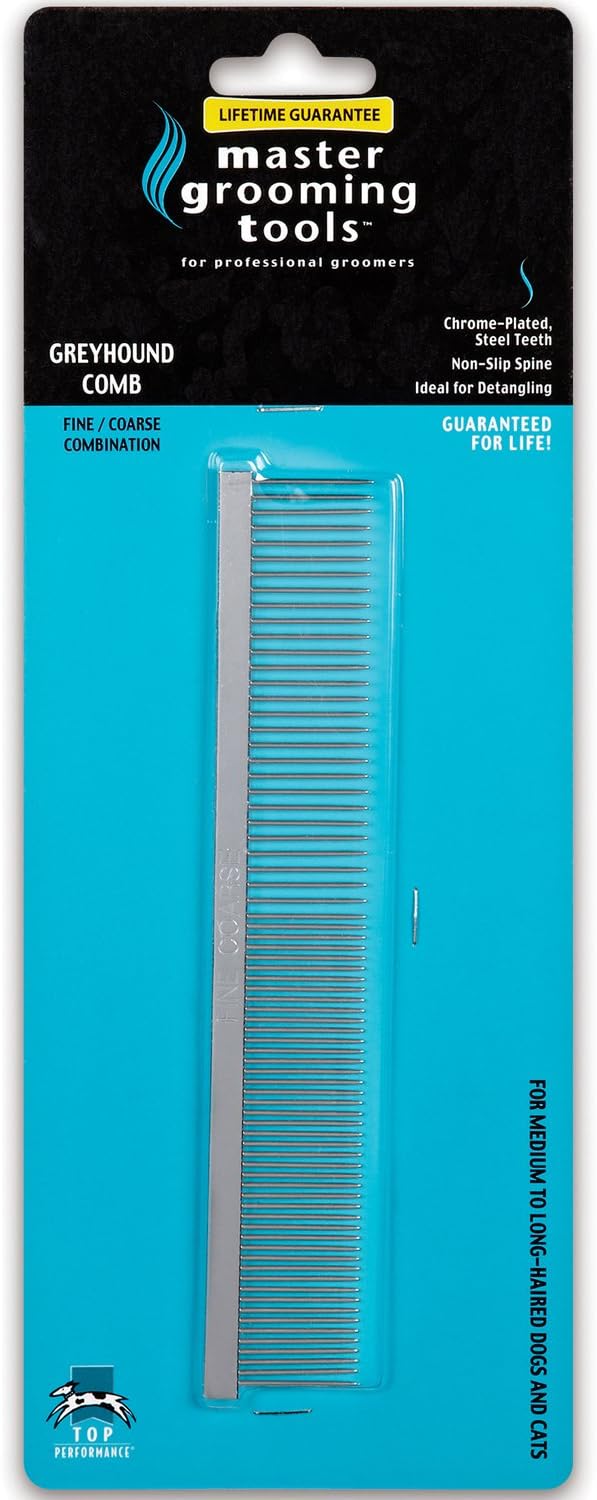
The comb-through test from the opening section, in one tool. Check price on Amazon
| Things We Like | Things We Don’t Like |
|---|---|
| Fine and coarse ends for the texture test described above | Not a substitute for brushing first |
| Confirms whether a brushed area is genuinely clear | Will tug if forced |
| Steel, so it does not flex past a mat | Easy to mislay |
TropiClean Dematting and Detangling Leave-In Spray, 16oz
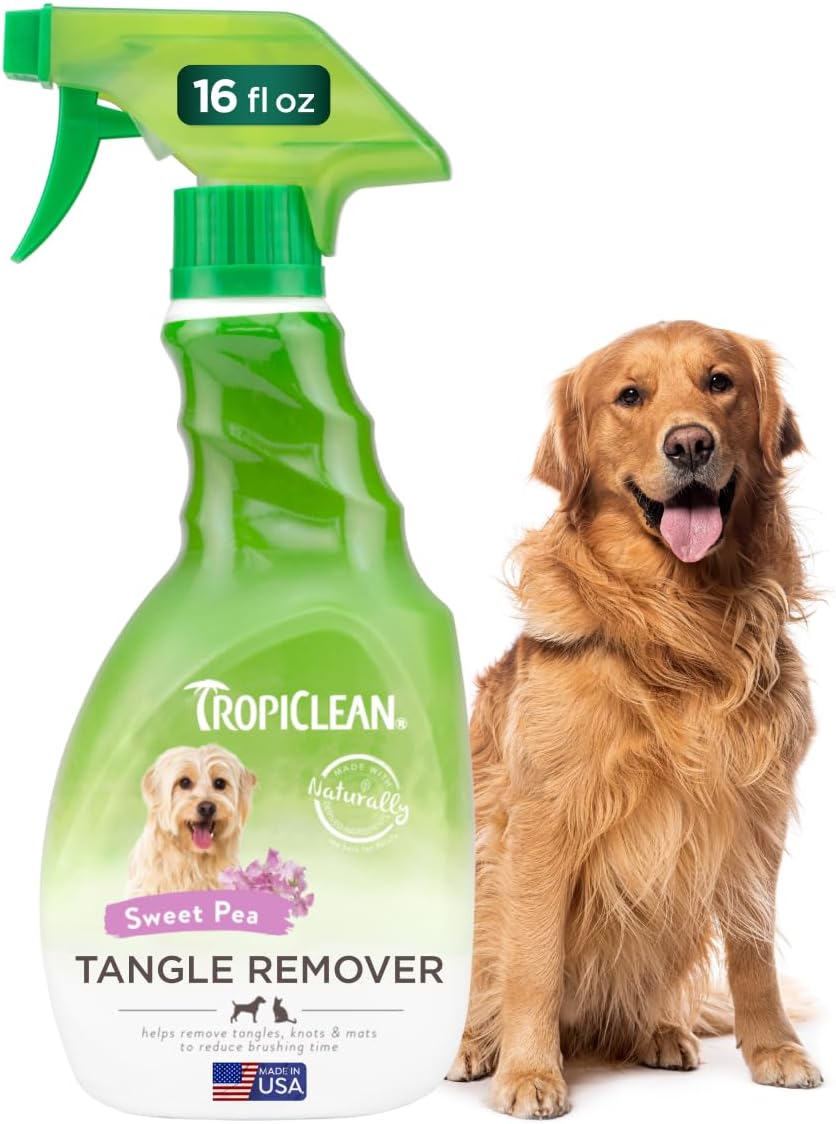
For the small tangles this article says to catch before they become mats. Check price on Amazon
| Things We Like | Things We Don’t Like |
|---|---|
| Adds slip so a comb passes without snapping hair | Will not rescue a tight, skin-level mat |
| Useful on the friction spots named above | Overuse leaves a coat feeling heavy |
| A little goes a long way in a 16oz bottle | Scented, which not every dog tolerates |
Frequently Asked Questions
How does grooming a curly-coated dog differ from grooming a wavy-coated dog?
Curly coats need line brushing pretty much daily, since dead hair locks into the spirals and felts fast. Wavy coats need three to four sessions a week and can tolerate a missed day better. Curly coats also need shorter salon intervals—usually 5 to 8 weeks—while wavy coats can often stretch closer to 8 weeks. Both types need a comb check to the skin.
Do curly coats need brushing more often than wavy coats to prevent mats?
Yes. Curly coats have more hair-to-hair contact, so tangles tighten up within a day or two, especially behind the ears and under the legs. Daily or every-other-day brushing is the usual advice. Wavy coats mat more slowly but still need three to four brush sessions weekly, plus a comb pass to keep them clear.
Can a curly-coated dog be clipped, or will it damage the coat?
Clipping a single-coated curly dog is normal and safe, which is why Poodle-type coats get trimmed every few weeks. The curl almost always grows back with the same texture. Clipping is different for double-coated breeds, where shaving can affect regrowth. For a matted curly coat, a short clip is often the kindest option.
What brushes and combs work well for curly and wavy dog coats?
A slicker brush opens the coat and lifts loose hair. A steel comb checks if the brush actually reached the skin. Those two tools do most of the work. A wide-tooth comb helps with thick curly coats, a pin brush suits clean wavy coats, and detangling spray cuts down on breakage. Thinning scissors tidy up the face on wavy coats.
How often should a wavy-coated or curly-coated dog be professionally groomed?
Curly coats usually need a professional groom every 5 to 8 weeks. Wavy coats can do well with grooming every 8 weeks, sometimes stretching to 10 with steady home brushing. Puppies benefit from early, short visits to help them get used to it. If the comb stops reaching the skin, book sooner—no matter what the calendar says.
Is a curly or wavy coat easier to maintain between grooming appointments?
Wavy coats are generally easier to handle between grooming sessions. They tangle more slowly and usually comb out faster. If you skip a day, a wavy coat tends to forgive you. Curly coats, though, need attention almost every day, and brushing takes longer. Curly coats do shed less, so you might spend less time vacuuming. Still, you’re trading floor cleaning for extra brushing. What does your dog’s coat routine look like these days? Where do things start to get tricky? Drop your thoughts in the comments.