As an Amazon Associate I earn from qualifying purchases.
After a muddy walk, here’s the best order for cleaning a long coated dog: contain them at the door, clean paws and legs first, let caked mud dry, brush it out from the ends, and spot-clean whatever’s left. You only need a full bath if mud’s ground in or there’s still a smell.
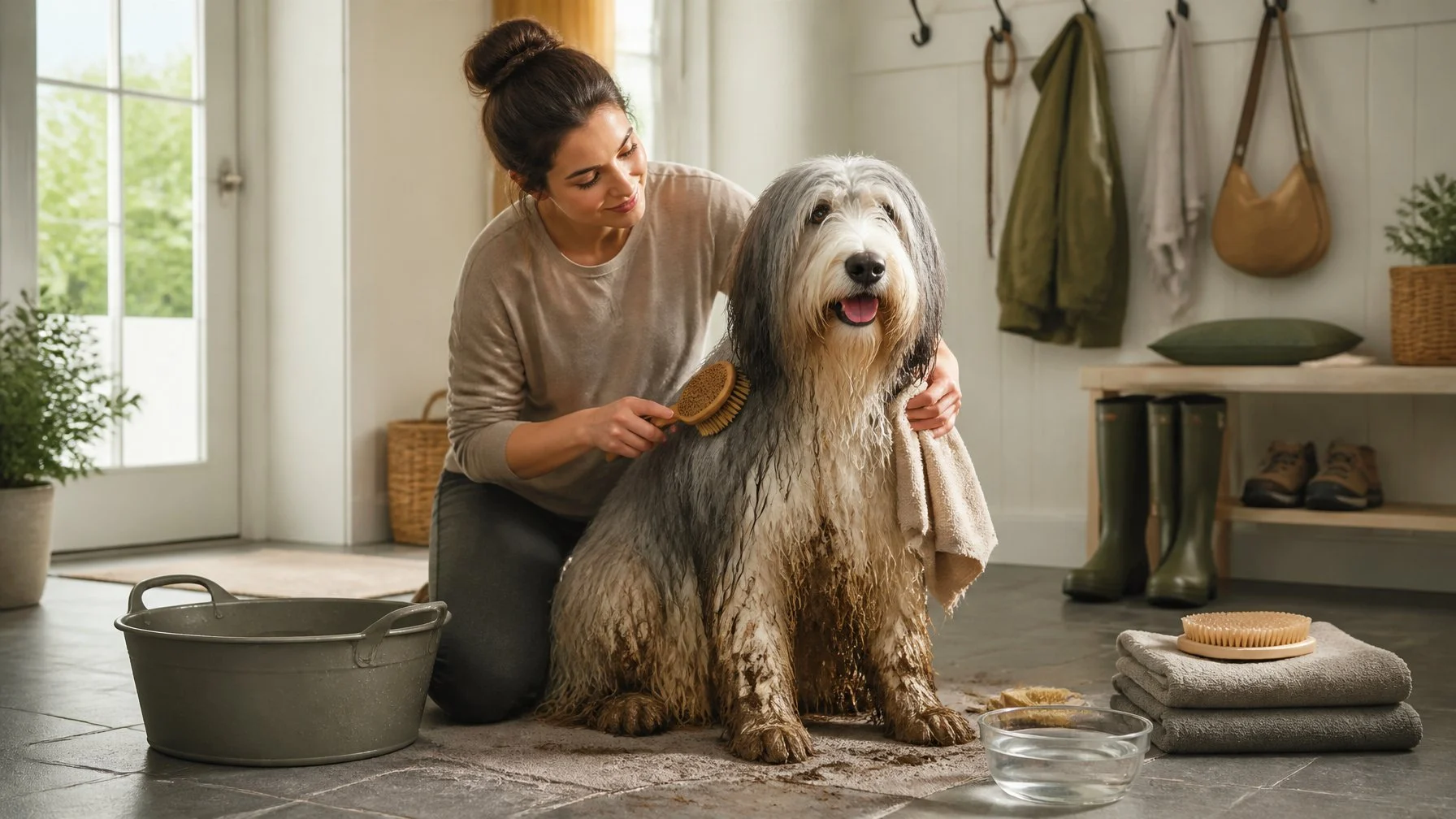
Long coats act totally differently from short ones. Wet mud in a Samoyed’s undercoat or a Goldendoodle’s curls can turn into a mat in just a few hours.
Surprisingly, the usual “hose it off” advice sometimes makes things worse. Dog Fluffy’s routines focus on grooming fluffy breeds, and this one covers the door setup, paw-first order, dry-brush method, and why a French Bulldog’s routine is a whole different story.
Set Up a Calm Post-Walk Cleaning Station
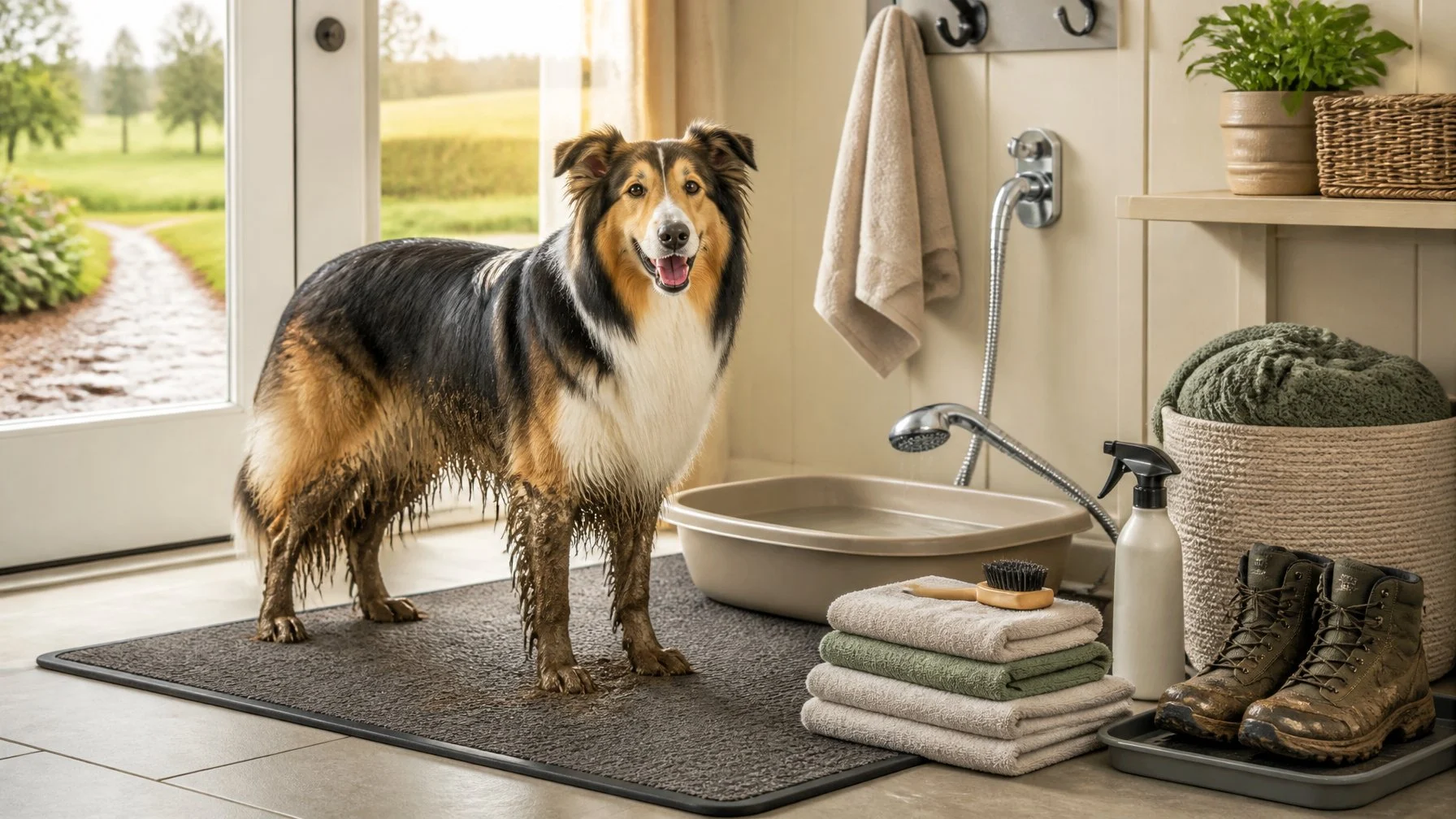
Half the mess happens in the first ten seconds after you open the door. A washable mat inside, a kit of towels and wipes within reach, and a dog who stands still for paw cleaning will save more of your floor than any deep clean later.
Choose a Mud-Containment Spot Before the Door Opens
Pick one spot and stick with it every time. Hard floors, laundry rooms, a corner of the garage, or even a big rubber boot tray work, as long as you can get them wet and wipe them down.
Keep the leash on until the paws are done. If you let go, a wet dog will head straight for the sofa and drag mud onto your fabric in seconds.
If your entryway has carpet, throw down a washable mat at least 90 cm (about 3 ft) long so all four paws land on it. Mudroom setups work best when they’re close to running water, as this guide points out.
Keep the Small Kit Within Arm’s Reach
Scrambling for supplies makes cleanup so much harder. Stock a basket and just refill it weekly.
- Two microfiber towels—one for paws, one for the body
- A paw wash cup or shallow basin of lukewarm water
- Dog-friendly wipes or paw wipes for light dirt
- A slicker brush and a metal comb for long coats
- A spray bottle of plain water for spot cleaning
Microfiber towels pull water out of a long coat way faster than a bath towel. That matters for double coats, since trapped damp is what causes that doggy smell later.
Teach a Short Wait and Paw-Handling Routine
If your dog offers a paw on cue, a five-minute wrestle turns into a 30-second job. Practice on dry days, not muddy ones.
Start simple: ask for a sit, touch a paw, mark it, treat. Work up to holding each paw for five seconds. Then add the towel, then water.
Puppies usually get this fast. Older dogs who guard their feet need more patience and shorter sessions.
Start With Paws, Legs, and the Belly
Mud loves to collect between the toes, pack around the paw pads, and splash up the belly where you might not even look. Check the toes first, use a paw cleaner for packed grit, and rinse only the dirty areas to keep the rest of the coat dry and mat-free.
Check Between Toes and Around the Paw Pads
Spread the toes and look before you wipe. Grit, tiny stones, and seed heads hide in there and can cause limping hours later.
Long-coated breeds like Shih Tzus and Goldendoodles grow hair between the pads, and that acts like a mop. The hair traps mud and holds moisture against the skin.
Run a finger around each pad’s edge. If you spot redness, a tiny cut, or a stone wedged in the webbing, it’s easier to fix now than after your dog licks at it all night.
Paw checks after every walk help you catch pebbles, burrs, and early irritation before they become a problem.
Use a Paw Cleaner for Packed-In Mud
A paw cleaner is basically a tall cup with soft silicone bristles inside. Fill it with lukewarm water, dip the paw, and twist gently.
It gets between the toes better than any towel. Do one paw at a time, about twenty seconds each, then dry.
If your dog hates the cup, try a shallow basin with 5 cm (about 2 in) of lukewarm water and a soft cloth. Skip harsh soaps—they dry out the pads and cause cracking.
Rinse Only the Dirty Areas With Lukewarm Water
Only rinse what actually needs it. Soaking a long coat just because the legs are muddy creates more work than it’s worth.
Use a handheld sprayer or a jug and aim low: paws, lower legs, belly, and the feathering behind the front legs. Keep the water lukewarm—cold makes dogs tense, hot can irritate the skin.
After rinsing, press with a towel instead of rubbing. Rubbing a wet long coat is a shortcut to tangles.
Use the Dry-First Method for a Muddy Long Coat
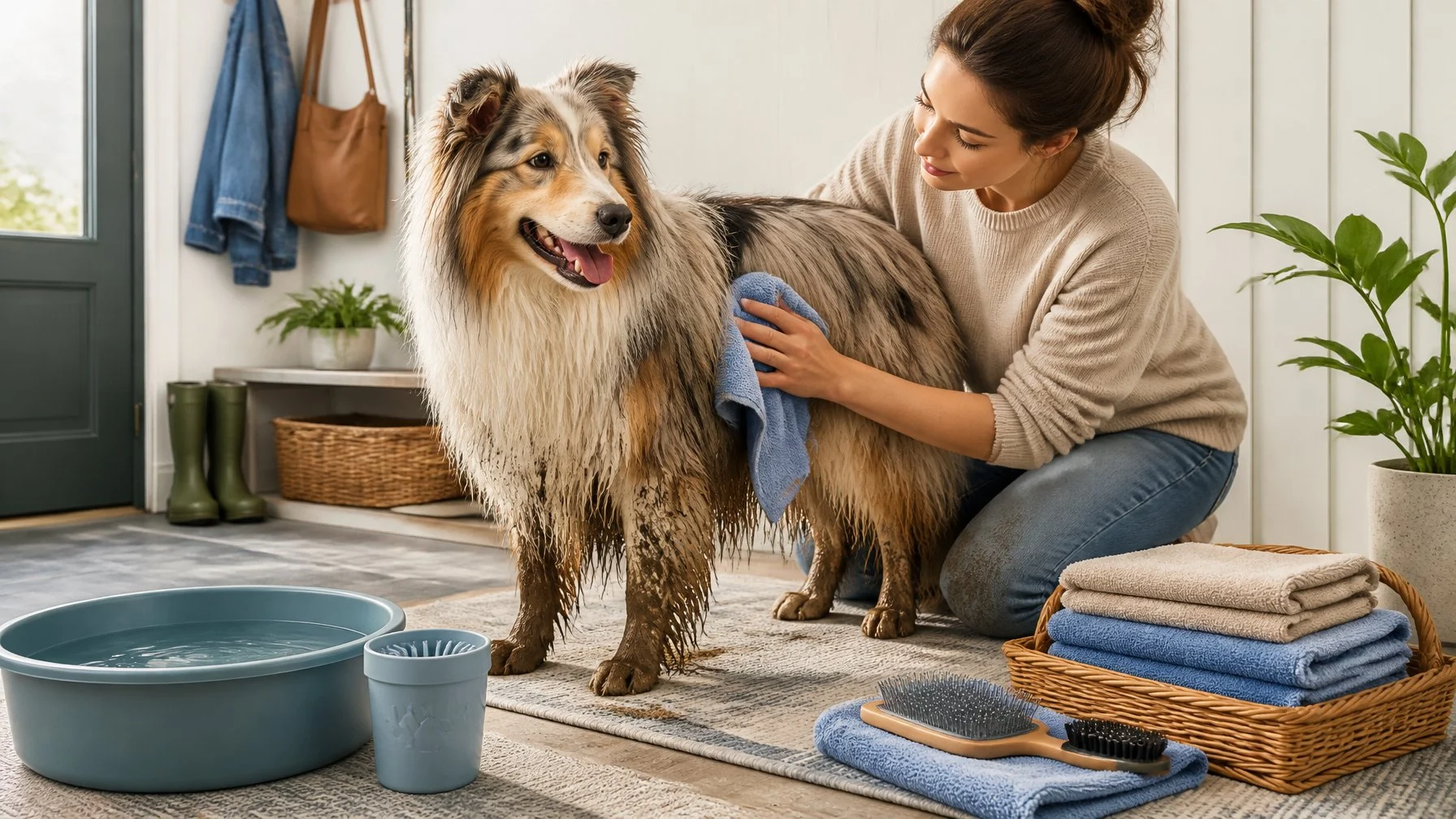
Wet mud just smears through a long coat and glues hair together. Letting it dry, brushing from the ends upward, and spot-cleaning the last marks usually gets rid of most of the mess—no shampoo needed.
Let Caked Mud Dry Before Brushing It Out
This feels backwards, but it works. Dry mud flakes off; wet mud just spreads.
Put the dog somewhere warm and easy to sweep, like a crate with a washable blanket or a tiled kitchen. Give it 30 to 60 minutes depending on how thick the mud is.
Vet advice agrees: letting mud dry makes brushing much easier since dried mud falls away and takes loose dirt with it.
Don’t leave a soaked dog to air-dry in a cold room, though. Towel off surface water first, then let the mud itself dry.
Brush From the Ends to Protect Tangles and Mats
Start at the tips and work toward the skin in small sections. If you brush straight down from the roots, you’ll just drag mud deeper and tighten knots.
Hold the hair above the tangle with one hand so you don’t pull the skin. Use a slicker brush for the outer coat, then a metal comb to check you got all the way to the base.
Focus on the friction spots—behind the ears, armpits and chest, back of the hind legs, tail base, and between the toes.
- Behind the ears
- The armpits and chest
- The back of the hind legs
- The tail base and feathering
- Between the toes
If the comb won’t go through, that’s a mat. Work it with your fingers or leave it for a groomer—don’t yank.
Spot-Clean Leftover Marks Without Soaking the Coat
Light stains usually come out with a damp cloth and patience, not a bath. Dampen a microfiber cloth with lukewarm water, press it onto the spot, hold for a few seconds, then wipe in the direction the hair grows.
Grooming wipes work for the same job if you’re out and about. They’re fine for legs, belly, and around the face, but honestly, nothing beats plain water for sensitive skin.
Dry the spot after. Damp patches in a thick coat are exactly where that musty smell starts.
Know When a Quick Rinse Needs to Become a Bath
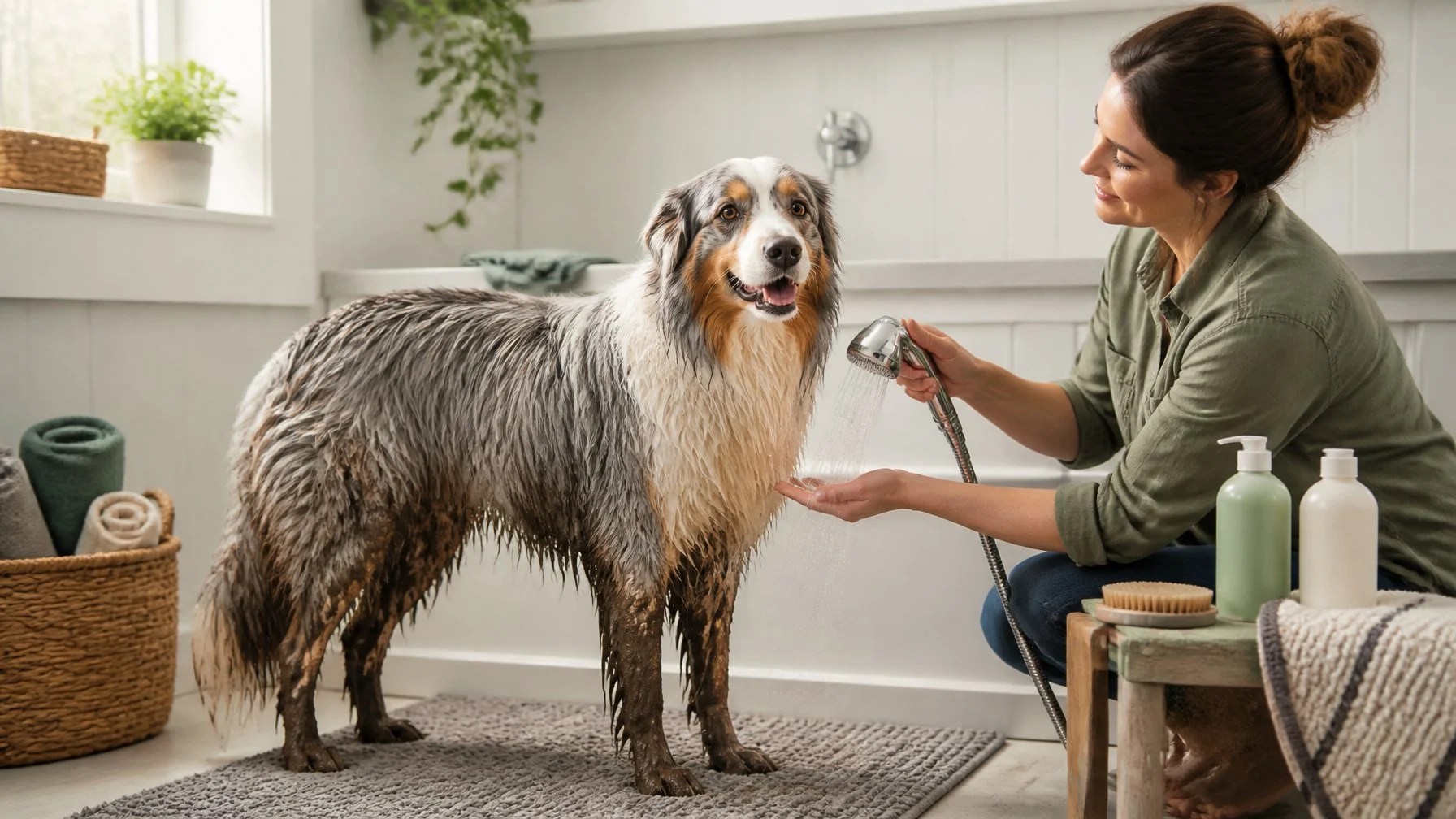
Sometimes mud just won’t brush out. If dirt’s ground in at the skin, there’s still a smell, or your dog rolled in something really gross, it’s time for a real wash.
The drying step matters even more than the shampoo step.
Signs That a Full Dog Wash Is Actually Needed
Give a bath when mud’s reached the skin, not just the outer coat. Here’s what tips the balance:
- The coat still looks dull and gritty after a full brush-out
- The smell lingers even after the mud’s gone
- The dog rolled in mud mixed with manure, algae, or standing water
- The skin looks flaky or the dog keeps scratching one area
- The mud is oily or clay-based, not just loose soil
Bathing too often strips natural oils and leaves skin dry. A quick rinse beats a full wash for most everyday muddy walks.
Use Mild Dog Shampoo and Rinse Until the Water Runs Clear
Don’t use human shampoo or dish soap. Dog skin has a different pH, and those detergents just dry it out.
Always dilute the shampoo in a jug of lukewarm water before putting it on the coat. Thick coats trap undiluted shampoo at the top and it never reaches the skin—plus, it takes forever to rinse out.
- Wet the coat fully with lukewarm water, working from the neck back.
- Apply diluted mild dog shampoo and massage down to the skin.
- Leave it for a minute or two if the label says so.
- Rinse until the water runs totally clear, then rinse once more for good measure.
- Squeeze water out of the legs, tail, and ear feathering by hand.
Leftover shampoo causes itching. On a double coat, that final rinse is the one people skip and later regret.
Dry the Undercoat Completely to Avoid That Wet Dog Smell
That wet dog smell? It’s bacteria and yeast thriving on damp skin, not just water. Even if the coat feels dry outside, the roots can stay soaked.
Start by pressing with a microfiber towel. Then, grab a dryer on cool or low-warm and lift the coat in sections with a comb.
Get it fully dry at the skin—especially under the chest, armpits, and behind those ears. Never crate a damp long-coated dog to “finish drying.” That’s a recipe for hot spots and mats by morning.
Adjust the Routine for French Bulldogs and Other Coat Types
French Bulldogs shed mud from their short coats pretty easily, but those skin folds hold onto moisture. The flat face? That makes bath time stressful, too.
Double coats and curly coats each need their own brush and drying method. Sometimes, you just have to accept it’s time to call the vet.
Why French Bulldogs Need Extra Attention to Skin Folds and Feet
The coat’s the easy part; the folds are where trouble hides. Mud splashes into the nose rope, tail pocket, and neck folds.
Damp skin in a closed fold gets itchy fast. After a muddy walk, wipe each fold with a soft dog-friendly wipe, then dry with a clean cloth or cotton pad.
Drying is what matters most. Fold care guides often flag odor, discharge, or a persistent itch as signs you shouldn’t ignore.
Frenchie feet need a proper look, too. Their toes are close together and the webbing traps grit.
Since flat-faced dogs overheat and get stressed easily, keep baths short, water lukewarm, and never spray toward the face. It’s just not worth the risk.
What Changes for Double-Coated and Curly-Coated Dogs
Samoyeds, Huskies, and Goldens have double coats with a dense woolly underlayer. Water beads up on the top, but soaks right into the undercoat and lingers.
Use an undercoat rake or slicker after the mud dries. Work in sections and expect drying to take a while.
Don’t shave a double coat to make life easier—it messes with how the coat insulates and grows back. Curly coats like Goldendoodles are a different story. The curls grab mud and hang onto it, and mats happen fast when wet.
| Coat type | Mud behavior | Best first step |
|---|---|---|
| Long silky (Shih Tzu) | Clings to feathering | Dry, then brush ends-up |
| Double (Samoyed, Husky) | Sinks into undercoat | Dry, rake, dry again |
| Curly (Goldendoodle) | Knots into curls | Line-brush before it dries hard |
| Short smooth (French Bulldog) | Wipes off easily | Wipe coat, then dry folds |
When Redness, Limping, Odor, or Itching Needs Professional Advice
Cleaning fixes dirt, not damage. Book a vet check if you see any of these after a muddy walk:
- Limping or not putting weight on a paw
- Red, swollen, or bleeding skin between the toes
- A sour or yeasty smell that sticks around after washing
- Constant licking or chewing at one spot
- A hot, wet, angry patch of skin that pops up overnight
Hot spots move fast in thick coats. Infection in a Frenchie fold does too. Honestly, catching it early is always cheaper and way kinder.
Make Muddy-Walk Cleanup Easier Next Time
Shorter foot hair, clean brushes, and a towel kit in the car cut cleanup time in half. And you don’t end up bathing the dog every week.
Trim Foot Furnishings and Keep Brushes Clean
Hair past the paw pads? Total mud magnet. Trim it level with the pads, or have a groomer do it every six to eight weeks.
Less mud comes home that way. Same goes for the trousers on the back legs and the belly fringe on small breeds.
A slightly shorter belly line on a Shih Tzu makes a big difference on wet days. And don’t forget the brushes—a slicker packed with old hair and dried mud just puts grime right back in.
Pull the hair out after each session and wash the brush weekly. It’s a tiny thing, but it helps.
Use Towels and Wipes in the Car Without Over-Bathing
Keep a cleanup kit in the boot and most of the mess never even gets inside.
- Two microfiber towels in a sealed bag
- A tub of paw wipes or grooming wipes
- A waterproof seat cover or old blanket
- A collapsible bowl of water for rinsing paws
Wipes are good for light dust and damp legs; water handles the real grit. Wipe down at the car and you’ll bring home a slightly dusty dog instead of a muddy one.
From Fluffy’s Bowl Callout
From Fluffy’s Bowl
From Fluffy’s Bowl: keep the kit in the car, not by the front door. Everything above works twice as well before the mud has had a twenty-minute drive to dry into the coat, and a towel that lives in the boot gets used — one that lives in a cupboard gets remembered afterwards.
Can You Use Baby Wipes on a Dog’s Paws?
Baby wipes aren’t great for dogs. Most have fragrance, alcohol, or preservatives for humans, and dogs lick their paws right after.
Dog-friendly wipes or paw wipes are made for a dog’s pH. They’re just safer for regular use.
Should Mud Be Washed Off Right Away or Left to Dry?
For a long coat, let thick mud dry and then brush it out. For paws, clean them right away—grit between the toes gets irritating fast.
How Often Can a Long-Haired Dog Have a Bath?
Most long-coated dogs do fine with a bath every four to six weeks, plus spot-cleaning in between. If your dog’s super active or swims a lot, you might need more, but weekly baths usually dry out the skin.
What Removes Mud From Between a Dog’s Toes?
A paw cleaner cup with lukewarm water and soft bristles works wonders. Follow up by pressing a microfiber towel between each toe until the skin actually feels dry, not just less wet.
Why Does a Dog Still Smell After a Muddy Walk?
It’s almost always leftover moisture deep in the coat. Damp undercoat plus warmth? Bacteria and yeast love that, and that’s what stinks.
Dry to the roots, not just the surface.
The Small Kit That Keeps This Quick
Two things do most of the work in the routine above, and both live by the door rather than in a cupboard.
No-Rinse Foaming Paw Cleaner with Brush
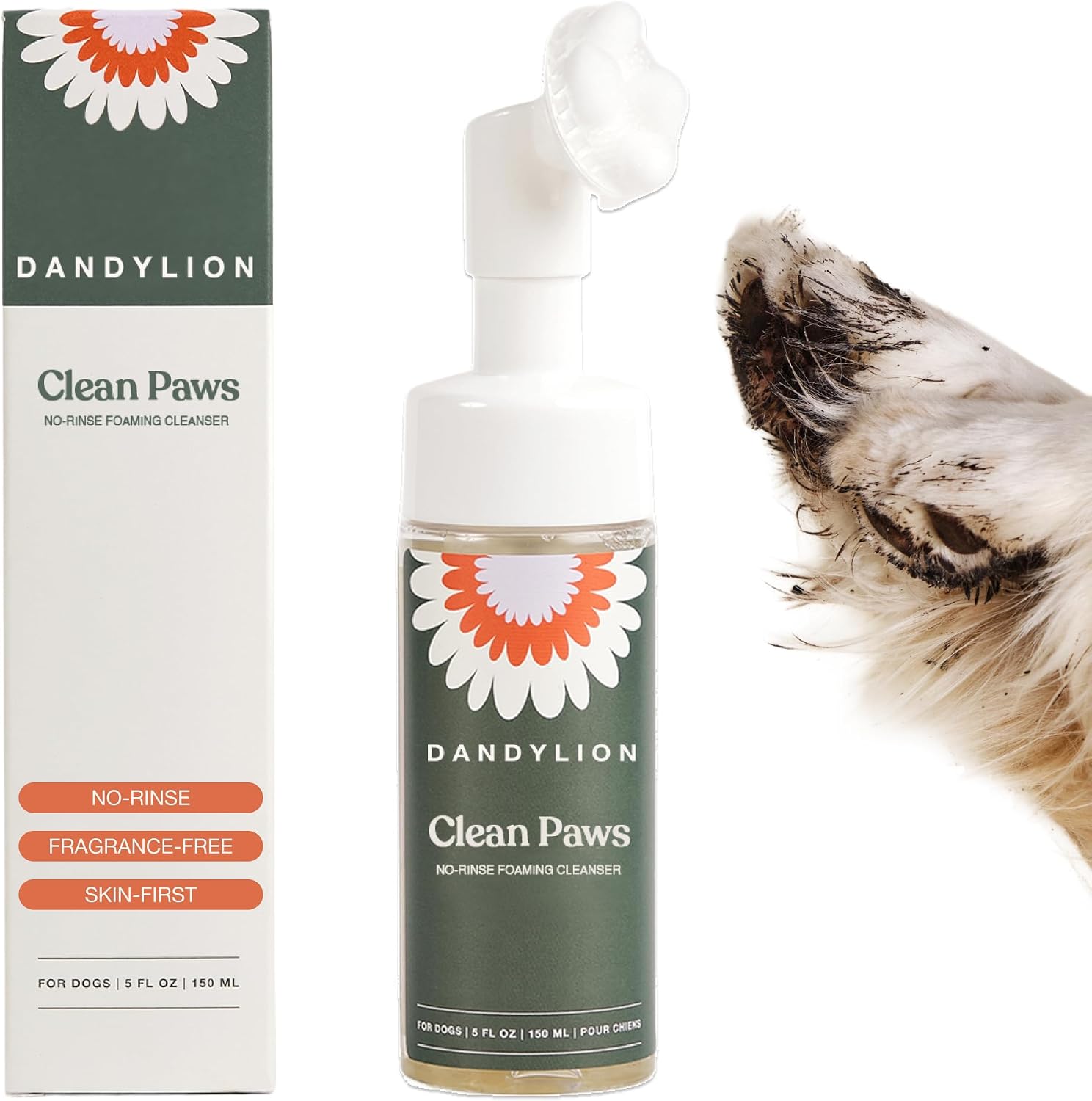
For the packed-in mud described in the paws section. Check price on Amazon
| Things We Like | Things We Don’t Like |
|---|---|
| No rinsing, so it works by the door in winter | Not enough on its own for heavily caked legs |
| The brush head reaches between the toes | A bottle does not last long with a big dog |
| Small enough to keep in a coat pocket or the car | Some dogs dislike the foam texture at first |
Soggy Doggy Super Shammy Absorbent Towel
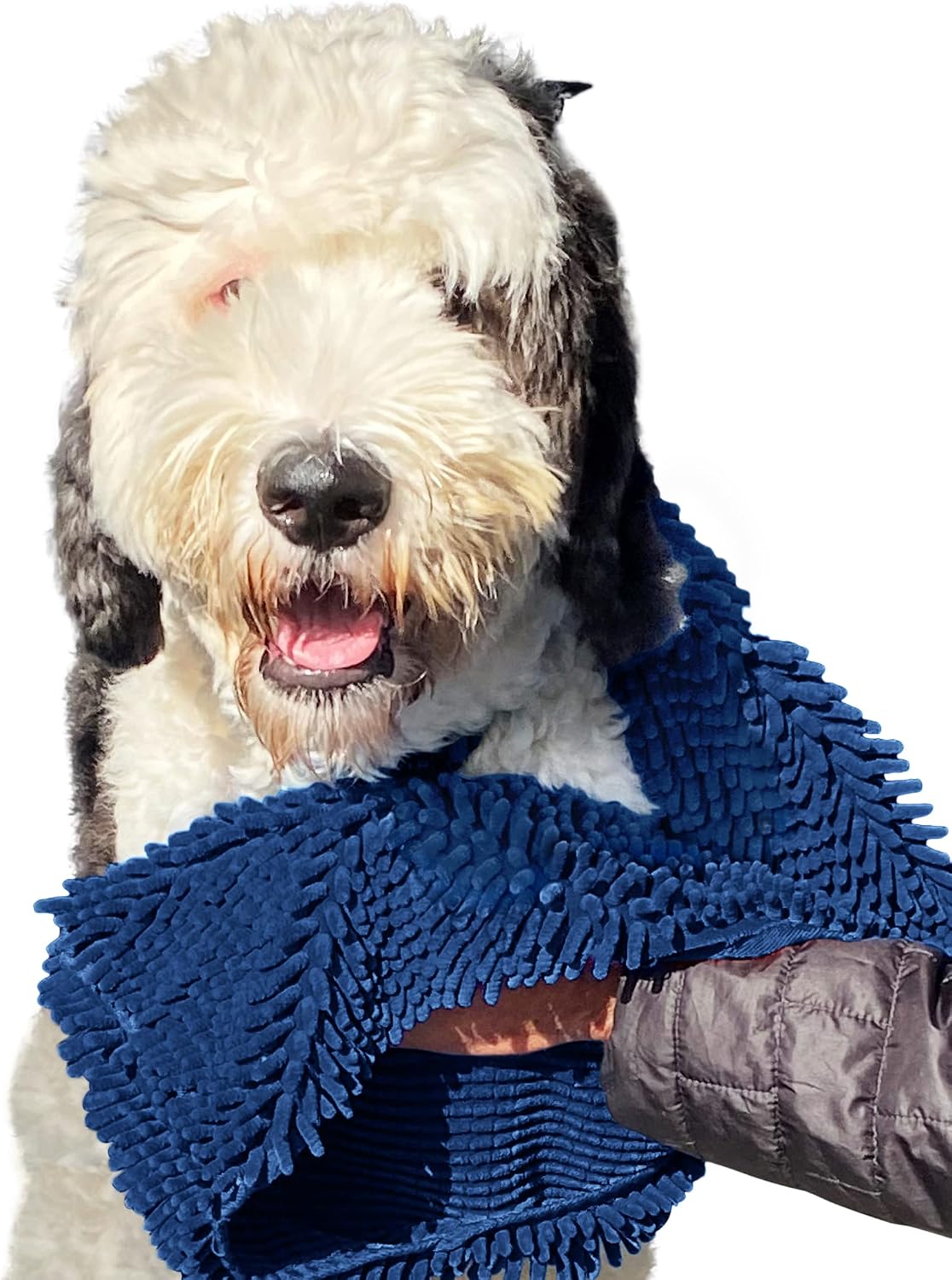
The towel for the drying step, which matters most on a long coat. Check price on Amazon
| Things We Like | Things We Don’t Like |
|---|---|
| Absorbs far more than a household towel | Needs washing often or it holds odour |
| Hand pockets help with legs and paws | Slower than a dryer on a thick undercoat |
| Washes and re-dries repeatedly | One towel is rarely enough for a big, wet dog |
Frequently Asked Questions
How should a long-haired dog be cleaned after a muddy walk?
Keep the dog on a washable mat. Clean paws and lower legs with lukewarm water, towel-press the coat, then let thick mud dry before brushing it out from the ends. Spot-clean leftover marks with a damp cloth. Save the full bath for mud ground into the skin or a smell that just won’t quit.
What’s the quickest way to get mud out of a dog’s paws and leg fur?
A paw cleaner cup with lukewarm water gets the toes clean in about twenty seconds per paw. For leg feathering, squeeze the hair inside a microfiber towel—don’t rub—and then comb once the fur is damp-dry. Wipes are fine for light dust, but they can’t shift packed grit.
Should mud be allowed to dry before brushing a long-coated dog?
Yes, for thick or caked mud. Dried mud flakes off and takes loose dirt with it. Wet mud just smears deeper and mats the coat. Towel off surface water, wait 30 to 60 minutes in a warm room, then brush in sections.
Can dog wipes clean muddy fur, or does the dog need a rinse?
Wipes handle surface dust, damp legs, and light splashes. They can’t reach grit packed between paw pads or mud at the skin in thick coats. If the coat still feels gritty after wiping, or the wipe keeps coming away brown, switch to a lukewarm rinse.
How can muddy tangles and mats be prevented in a long-haired dog’s coat?
Brush before the walk, not just after. Existing tangles trap mud. Keep foot and belly hair trimmed, dry the coat fully to the skin, and comb behind the ears, armpits, and tail base. Never let a long coat air-dry from soaking wet.
Is dish soap safe to use on a dog’s muddy paws?
Nope. Dish soap is really just a degreaser meant for plates, not paws. It strips away the natural oils that keep paw pads soft. If you use it over and over, those paws can get cracked and dry—ouch. Most of the time, plain lukewarm water does the trick for mud. If you truly need soap, try a mild dog shampoo instead. What’s your go-to trick for keeping mud out after a soggy walk? Drop it in the comments—let’s help each other out, because muddy paw prints are the worst. Just a heads up, this is general advice, not a substitute for your vet. Always check with them if you’re unsure what’s best for your own dog.