As an Amazon Associate I earn from qualifying purchases.
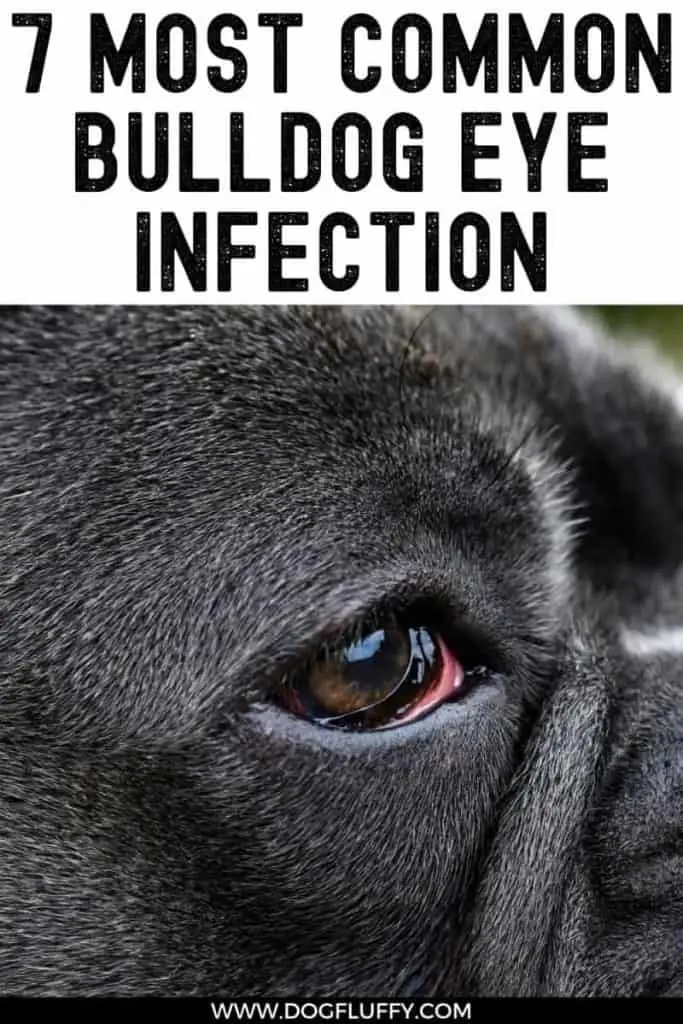
Bulldogs are prone to a number of health problems, and eye trouble is one of the most common. This page explains the seven conditions that come up most often, what each one looks like, and when it needs a vet — a guide to the common bulldog eye infection.
The seven most common bulldog eye problems are corneal ulcers, entropion, cherry eye, dry eye, ectropion, conjunctivitis (pinkeye) and tear staining.
More bulldog care guides are on the blog.
So without further preamble, here are the seven most common bulldog eye problems.
7 Most Common Bulldog Eye Infection
Corneal Ulcers
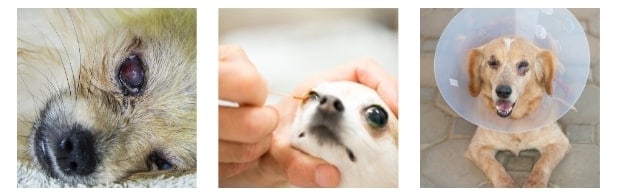
Corneal ulcers are among the most serious eye issues a dog can have, and French bulldogs are particularly at risk. Ulcerative keratitis is the clinical term.
They are extremely painful and need genuine veterinarian care promptly — delayed treatment can mean permanent damage to sight, or loss of the eye.
A bulldog with a corneal ulcer will usually try to relieve the pain by rubbing the affected eye with a paw or against the carpet. He may hold the eye tightly shut, and there is often discharge.
These are one of the most common bulldog eye problems.
A frequent cause is injury — a rub, a cat scratch, or contact with something sharp. Chemical burns are also common, and happen when a bulldog gets soap or disinfectant in the eye.
Owners should take care to protect their bulldogs’ eyes from shampoo during a bath. Other causes include untreated dry eye and infection.
Entropion
The word for this eyelid condition is uncomfortable, and so is the condition. Entropion is an inherited problem that can affect your bulldog, and bulldogs with heavy, drooping eyelids are more prone to it.
In entropion the eyelid rolls inward, so the lashes scrape the surface of the eye with every blink. Left untreated it can cause scarring, infection and loss of sight.
The signs are watering, eye rubbing, red or sore-looking eyes, and sometimes a cloudy film forming over part or all of the eye.
To treat your bulldog for entropion, your vet will perform surgery to turn the eyelid outward so the lashes no longer touch the eye.
The surgery is usually successful first time, and afterwards your bulldog can blink comfortably and without pain. Your vet may prescribe eye drops afterwards to reduce swelling.
Cherry Eye
Cherry eye is probably the most recognisable bulldog eye issue, and it usually appears
in young dogs. If you see a red, swollen mass of tissue protruding from the inner corner of either of your dog’s eyes, it is most likely cherry eye.
Cherry eye is a prolapse of the gland of your bulldog’s third eyelid. Other signs include excessive watering and discharge from the eye.
It is usually caused by weakness in the connective tissue that holds the gland in place, or by injury.
Cherry eye is generally not painful in itself and is never life-threatening. The problem is that if it is left untreated it can lead to more serious eye trouble.
Further Details
Cherry eye is not an emergency, but it should be treated promptly to reduce your dog’s danger for future issues.
Some owners try to treat cherry eye at home by massaging the gland back into place. An experienced vet is a far better option for correcting it properly. Vets have two approaches.
One is to stitch the gland back into position; the other is to remove it surgically. Repositioning is generally preferred, because removing the gland raises the risk of dry eye later.
Dry Eye
The clinical term for dry eye is keratoconjunctivitis sicca, or KCS — inflammation of the cornea and surrounding tissue caused by drying. In plain terms, your dog doesn’t make enough tears.
Dry eye is a common bulldog eye problem. When a bulldog is not producing enough tears, the eye compensates with a thick yellow or green mucus discharge.
You may also notice squinting, excessive blinking, or the eye held shut. The eye is often red and sore, and dry eye is genuinely painful.
Dry eye is most common in middle-aged and older bulldogs. It usually affects both eyes, though one is often worse than the other.
It can follow removal of a cherry eye gland, or be congenital, or be caused by illness or medication.
Further Details
There is no cure for dry eye, and left untreated it can permanently damage the eye’s normal function.
Managing dry eye is a daily, lifelong commitment, and it involves eye drops or ointment.
Some of these medications stimulate tear production, while others simply lubricate the eye. Dry eye treatment always needs veterinary supervision, and departing from the prescribed regime can lead to permanent damage.
Ectropion
Ectropion is the opposite of entropion — it is also linked to the drooping eyelids the breed is prone to, and it usually affects both eyes.
Bulldogs under one year old are the most commonly affected, and the problem develops when the lower eyelids sag or roll outward.
The difficulty with ectropion is that it leaves the delicate tissue lining the inner surface of the lower eyelid exposed.
That exposed tissue dries out, which can lead to conjunctivitis, corneal inflammation and corneal ulcers — all of them painful.
Corneal inflammation and ulcers can cause scarring, and scarring can mean permanent loss of vision.
Further Details
If your bulldog has ectropion you will see noticeable sagging of the lower eyelids, and often a thick, foul-smelling discharge along the inside of them.
The eyes may look red or swollen, and your bulldog may paw at them. You may also see tearing from the inner corners of the eyes, which leaves brown stains below them.
As with every bulldog eye condition, ectropion needs treatment from a vet. If it is not severe, it is usually managed with lubricating drops or ointment and antibiotic drops.
The most severe cases need surgery to correct the sagging eyelids. Most cases are treated successfully, though some dogs need eye drops for life.
Pinkeye
Pinkeye, or conjunctivitis as your vet will call it, is inflammation of the membrane covering the eye. It occurs in people too, and bulldogs can create it at any age. Irritation, allergies, or a more serious eye infection can all cause it.
Redness, puffy eyelids and stringy discharge are among the signs. Others include watery eyes, squinting, eyelids sticking together, and pawing at the eye.
Although pinkeye is often not serious, take your bulldog to the vet promptly if any of these signs appear, in case something more serious is behind them. Most cases of conjunctivitis clear up quickly with prescribed eye drops.
A sterile eye wash such as Vetericyn Plus All Animal Eye Wash can help keep the eye area clean, alongside whatever your vet prescribes.
Check price on AmazonTear Stains
Tear stains are most visible on light-coloured or heavily wrinkled dogs, and they are a common issue in bulldogs.
The cause is simple: tears overflowing from the eye. Usually the only problem with tear stains is that they look unsightly, but they can indicate something more.
The constant moisture can become a breeding ground for bacteria and yeast. In other cases tear staining points to a real eye problem — a blocked, inflamed or infected tear duct.
If the eyes look irritated or sore, or the stains smell unpleasant, take your dog to the vet to check whether something more than staining is going on.
In otherwise healthy bulldogs, dealing with tear stains is part of routine care, and it has two parts. The first is cleaning the stains themselves.
The second is working out what is causing them, so the source can be treated rather than just the symptom. Some owners use TropiClean SPA Tear Stain Remover for the cleaning; it lifts the staining from the coat.
Check price on Amazon🐕 Articles you may like