As an Amazon Associate I earn from qualifying purchases.
Crate training a French Bulldog puppy on the first night works best when the crate sits beside your bed, stays cool and well ventilated, and gets introduced with treats before lights out. Expect one or two potty trips, some protest crying, and short sleep stretches.
Calm, boring responses beat both scolding and cuddling.
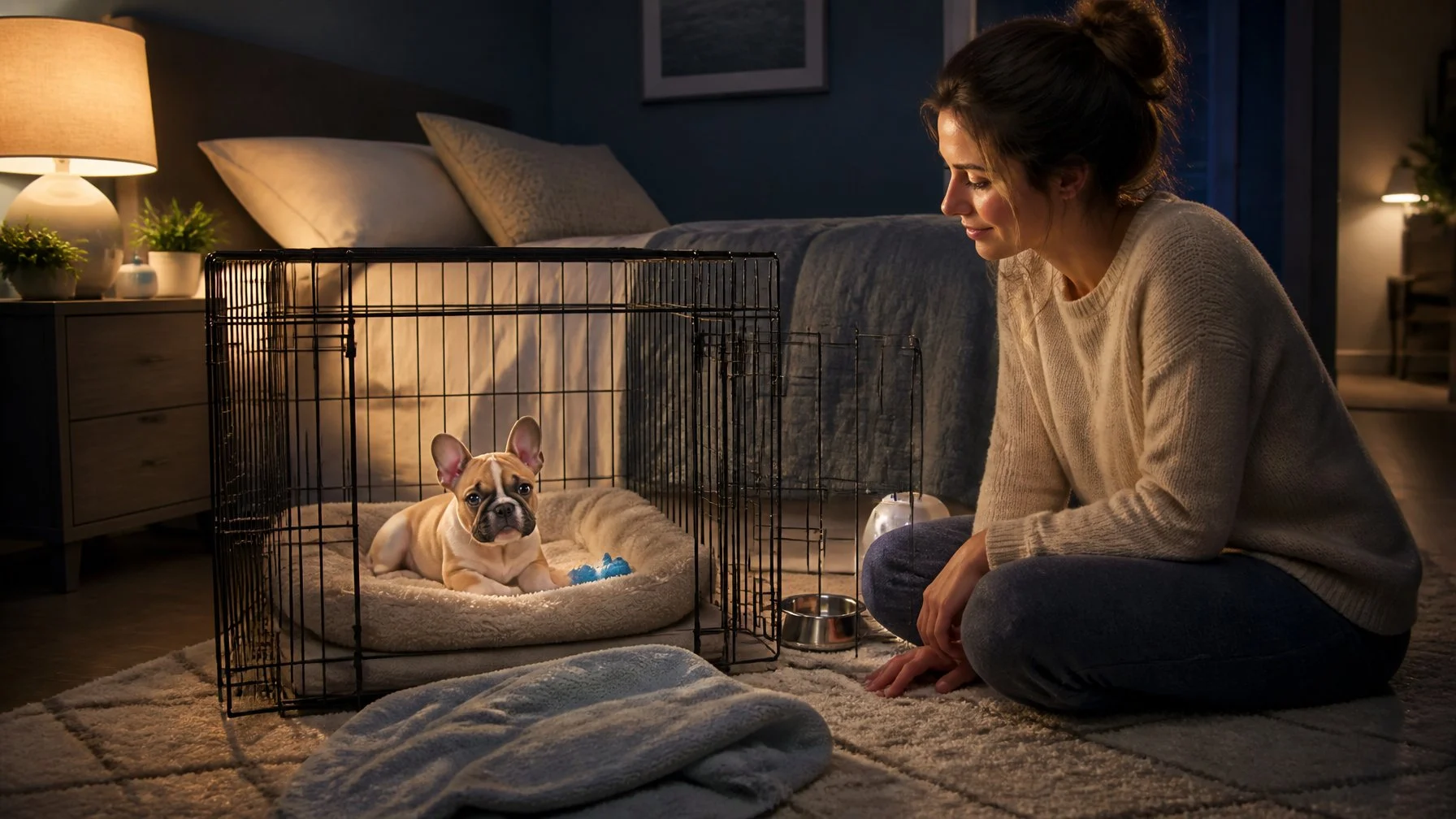
The first night really sets the tone for the next few weeks. Frenchies come with their own rulebook: flat faces, heat sensitivity, and a strong need to be near their people.
Dog Fluffy’s puppy guidance leans on calm routines and humane handling. This plan tries to connect crate setup, potty timing, and those first alone-time practices into something a tired new owner can actually follow.
Set Up a Cool, Comfortable Sleeping Space
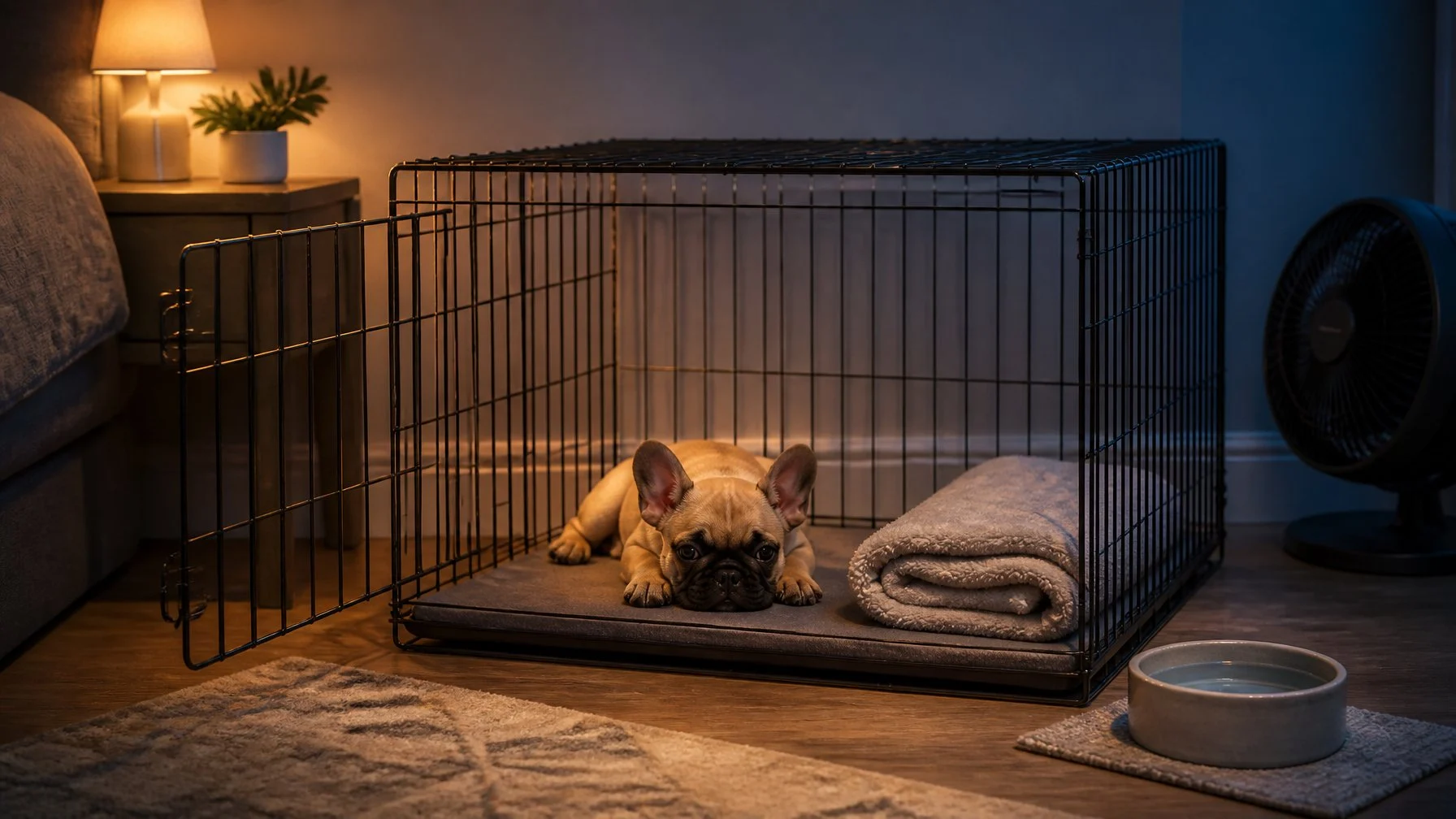
A good first night starts with a crate that’s the right size, breathes well, sits close to the family, and holds only bedding the puppy can’t shred or swallow. Four small setup choices, and each one changes how fast a Frenchie settles.
Measure for a Properly Sized Crate
A properly sized crate lets the puppy stand up, turn around, and lie down flat, with nothing left over. Extra space invites a corner toilet.
Most Frenchie puppies do well in a 61 cm (24 inch) crate with a divider, then move up to about 76 cm (30 inch) as adults, according to a French Bulldog crate sizing guide.
Longer or heavier Frenchies may need 76 to 91 cm (30 to 36 inches). Measure the puppy nose to tail base, then add roughly 5 to 10 cm (2 to 4 inches).
Choose a Wire Crate With Safe Airflow
Wire crates win for flat-faced puppies because air moves through all four sides. Plastic travel crates trap heat fast, and a warm Frenchie is a restless Frenchie.
If the room feels stuffy to you, it’s even worse inside a crate at floor level. A fan pointed near, not directly at, the crate helps a lot.
Pick a Crate Location Close to the Family
Night one, the crate belongs in the bedroom, within arm’s reach of the bed. The puppy can hear breathing and smell familiar people, which cuts the panic of sleeping alone for the first time.
Skip garages, laundry rooms, direct sun, and spots next to heaters. You can move the crate later, a metre at a time.
Add Bedding Only If It Is Safe to Leave Unsupervised
Soft bedding is lovely right up until a bored puppy eats it. Start with a flat, chew-resistant mat or a single towel and watch what happens.
Heavy blankets and fluffy beds also hold heat, which matters more for Frenchies than for most breeds.
Make the Crate Feel Safe Before Lights Out
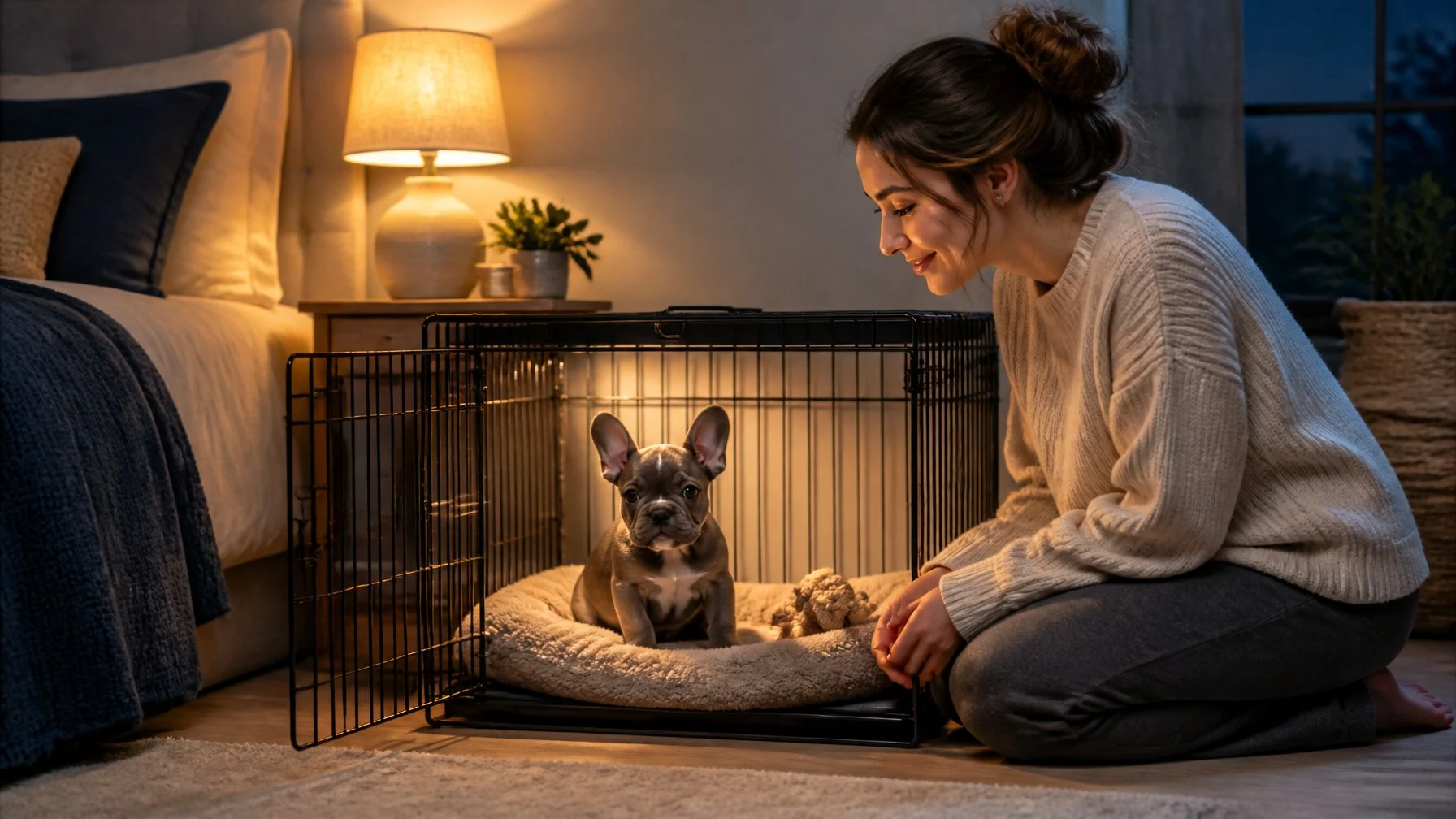
The crate should be a place the puppy has already walked into voluntarily, eaten in, and left again, all before bedtime. Open-door exploring, food-based associations, tiny closed-door reps, and carefully chosen chews all help in a single afternoon.
Let the Puppy Explore With the Door Open
Leave the door open and let the puppy decide. Toss a few high-value treats near the entrance, then a few just inside, and walk away.
No pushing, no lifting, no shutting the door behind them. Curiosity does the job faster than pressure ever will.
Build Positive Associations With Meals and Treats
Feeding meals in the crate is the single fastest way to change how a puppy feels about it. Start with the bowl at the doorway, then move it deeper over a few meals.
The rule is simple: good things happen inside the crate, and nothing scary happens there. The crate is never used as punishment—every experienced trainer repeats that point.
Practice Tiny Door-Closed Sessions Before Bed
- Lure the puppy in with a treat and close the door for 3 to 5 seconds.
- Open it before any crying starts, while the puppy is still calm.
- Repeat, stretching to 30 seconds, then 1 minute, then 3 minutes.
- Reward quiet, settled behaviour, not scratching or barking at the door.
- If crying starts straight away, drop back to the last easy step.
Ending each rep before the puppy panics is what builds trust. Six short wins beat one long fight.
Choose Chews and Comfort Items With Care
A frozen stuffed toy or a safe chew gives a puppy something to do instead of screaming at the door. It also makes the crate the place where the good stuff appears.
Watch the first few sessions. Anything that comes apart, splinters, or gets swallowed whole goes in the bin, no matter how much the puppy loved it.
Follow This First-Night Routine
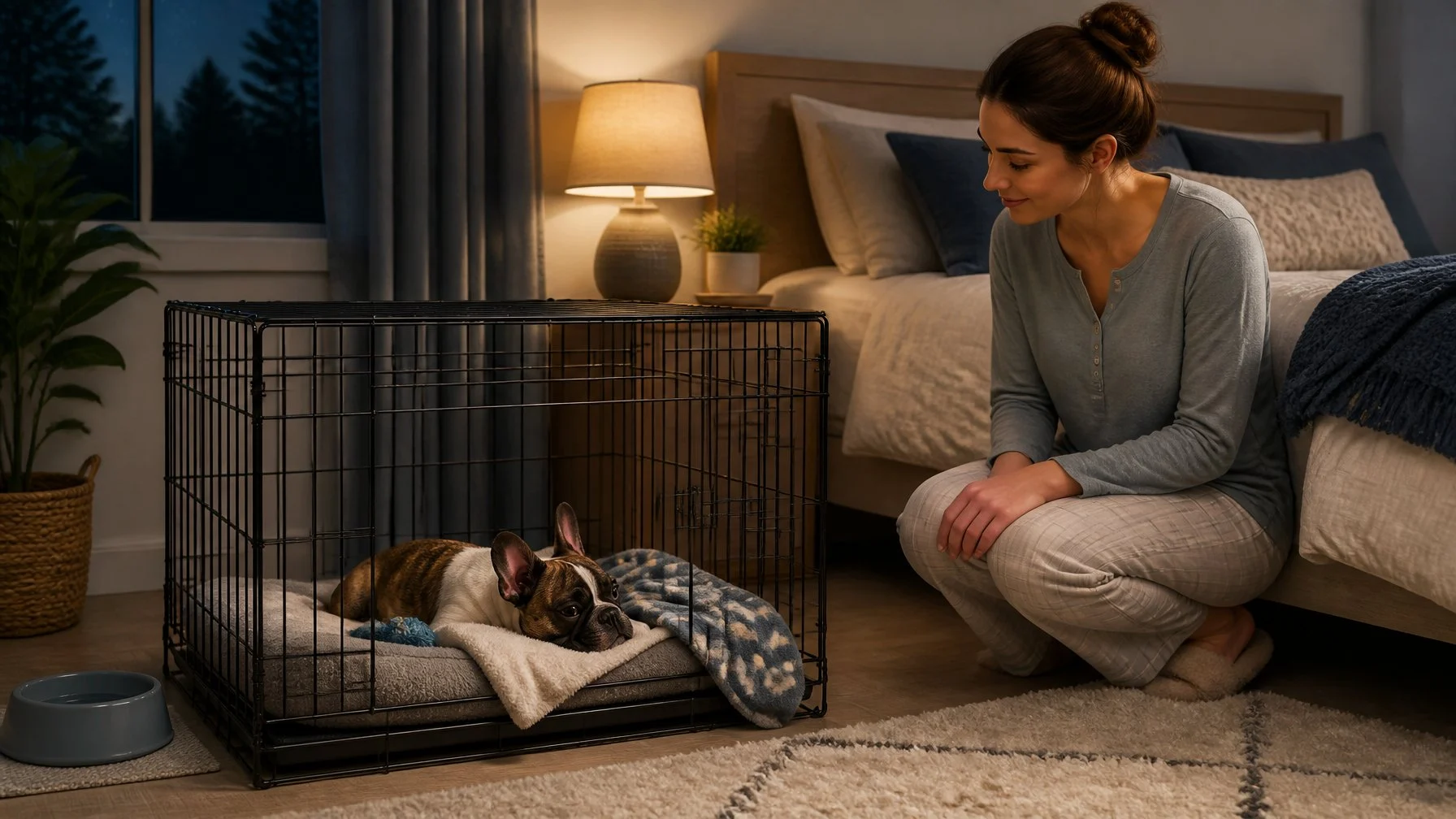
A predictable wind-down beats improvising at 11 p.m.: last meal timed early, one boring potty trip, lights out with minimal fuss, and sound support only if the room feels too silent.
Use an Ordered Step-by-Step Bedtime Plan
- Two to three hours before bed: last full meal, then water available but not unlimited right up to lights out.
- One hour before bed: gentle play or a short sniff session, nothing wild that leaves the puppy overtired.
- 30 minutes before bed: quiet time, lights dimmed, no visitors or new toys.
- Last stop: final potty trip outside, on lead, in the same spot every time.
- Into the crate: treat tossed in, door closed, one calm word, then bed.
- Overnight: one or two potty trips, kept silent and businesslike.
Same order, same words, every night for the first week. Predictability is what tells a puppy it’s safe to switch off.
Take the Final Potty Break Without Starting Playtime
The last toilet trip is a job, not an outing. Lead on, straight to the spot, quiet praise when it happens, straight back inside.
No fetch, no zoomies, no chatting. If nothing happens in five minutes, back in the crate and try again in twenty.
Settle the Puppy With a Quiet Night Routine
Frenchies read energy fast, so a dramatic goodbye creates a dramatic puppy. Put them in, say one short cue like “bedtime,” and get into bed.
Fingers through the crate bars are fine for a moment if it helps. Long, emotional reassurance is not.
Use a Heartbeat Toy or White Noise Only as Support
A heartbeat toy or a white noise machine can soften the silence, but neither replaces good setup. They mask household creaks and stop small sounds from waking a light sleeper.
Keep the volume low and steady. A fan on low often does the same job for less money, and it helps with airflow too.
Handle Nighttime Crying Without Creating Fear
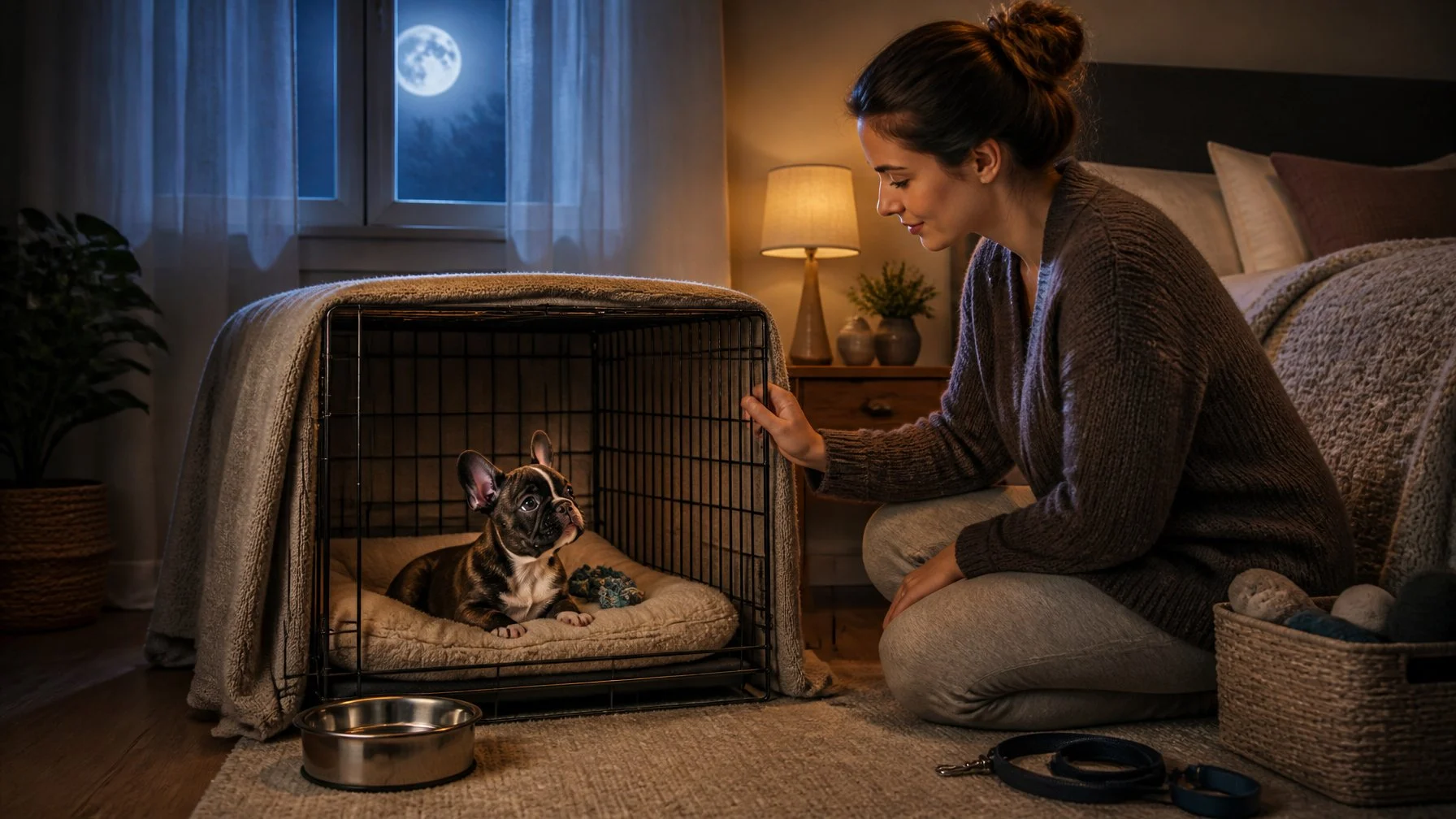
Most crying falls into three buckets: a real potty need, ordinary protest at being alone, or genuine panic. Reading which one is happening decides whether the response is a quick trip outside, a boring pause, or a full stop on the plan.
Tell a Potty Need From Normal Protest
Potty crying usually comes with movement: circling, sniffing, scratching at the crate floor, and a whine that builds rather than fades. Protest crying tends to start the second the door shuts and settles within minutes.
A rough guide:
- Woke after two or more hours of sleep, restless, sniffing: likely potty. Take them out.
- Started crying immediately at lights out, no sniffing: likely protest. Wait for a pause.
- Frantic, non-stop, escalating: distress. Different response entirely.
Respond to Restlessness Calmly and Briefly
When a potty trip is needed, keep it boring on purpose. Lead on, outside, quiet praise, back in the crate, no lights blazing and no conversation.
This is what teaches the useful lesson: crying doesn’t start playtime, but real needs still get met. Dog Fluffy’s training approach leans on exactly this kind of calm consistency rather than tough-love silence.
Avoid Reinforcing Excited Crate Exits
Opening the door mid-scream teaches the puppy that screaming opens doors. Wait for a two or three second gap in the noise, then open.
Same on the way out in the morning. No squealing greetings at the crate door, just a quiet open and straight outside.
Know When Crying Has Become Severe Distress
Panic looks different from protest: drooling, frantic escape attempts, bloody paws or nose, soiling, and crying that doesn’t ease at all after 20 to 30 minutes.
That’s not stubbornness, and it won’t fix itself with more time. Open the crate, keep the puppy near, and rebuild from open-door work the next day.
Persistent panic deserves a vet or a qualified behaviourist, especially in a brachycephalic breed where hard breathing carries real risk.
Use the Crate to Support House Training
The crate and potty training work together. Time trips around waking, meals, play, and drinking, and match your expectations to a tiny bladder.
Clean up accidents calmly. Use a playpen for anything longer than your puppy can hold.
Match Potty Trips to Waking, Meals, Play, and Drinking
Four moments almost guarantee a full bladder. Take the puppy out right after each one:
- Waking up, even from short naps
- Finishing a meal, usually within 10 to 15 minutes
- Any burst of play or excitement
- A big drink of water
Use the same door, the same patch of grass, and the same quiet praise. Honestly, repetition is the whole trick.
Set Realistic Expectations for Bladder Control
A rough rule: a puppy can hold it for about one hour per month of age, plus one. An eight-week-old Frenchie is a two to three hour dog, even overnight.
One or two night trips during week one is normal. Most puppies reach five or six hours by around four months, but it really varies.
Handle Crate Accidents Without Scolding
Scolding a puppy for a crate accident just teaches them to hide the evidence, not to hold it. It also ruins the crate as a safe space.
Clean up with an enzyme cleaner so no scent lingers. Then, tweak your routine—a longer gap than the puppy could handle, too much crate space, or water left out too late could be the culprit.
Use a Playpen for Longer Management Periods
Anything longer than your puppy’s bladder window? Use a playpen, not a crate. Put the open crate inside the pen, plus a toilet area, so your pup has a legal option.
Puppies under six months shouldn’t be crated for long stretches. A dog walker, midday break, or family help is way better than pushing the crate beyond what a small bladder can manage.
Build Daytime Crate Time Over the First Week
Night one is just the start. Daytime practice while someone’s home, gradually longer sessions as the puppy stays relaxed, and keeping crate hours reasonable make week two so much easier.
Start With Short Sessions While Someone Is Home
If the crate only comes out when everyone leaves, the puppy learns it equals abandonment. Use it while you’re cooking, working, or just watching TV.
Three or four sessions of 5 to 15 minutes a day, with you in sight, work better than one long stretch. Toss in a safe chew toy to help.
Increase Duration Only While the Puppy Is Coping
Here’s a simple first-week ladder, borrowed from a popular seven-day Frenchie crate schedule:
- Days 1 to 2: Door open, treats scattered inside, don’t close the door yet.
- Day 3: Feed one meal in the crate.
- Day 4: Close the door for just a few seconds at a time.
- Day 5: Try sessions of 1 to 5 minutes.
- Day 6: Step out of sight briefly, come back calmly.
- Day 7: Short crated periods while life goes on around them.
Only move forward if the last step felt easy. If there’s crying, go back a step for another day.
Practice Calm Departures and Returns
Big goodbyes and hellos actually build separation anxiety, not the crate. Walk out quietly, skip the speech. When you return, ignore the puppy for 30 seconds before saying hi.
Boring departures help make leaving forgettable. That’s what you want.
Know How Long Confinement Is Reasonable
A young Frenchie puppy shouldn’t be crated for more than about an hour at a stretch at first, and never more than three to four hours during the day. Overnight is different, since sleep changes things.
The crate is there to support your routine. It’s not the whole routine.
Watch for Frenchie-Specific Safety Red Flags
Flat faces change the risk game. Heat builds faster, breathing issues can get serious quickly, and some warning signs mean you need a vet, not another training session.
Keep Flat-Faced Puppies Cool and Well Ventilated
Brachycephalic dogs have trouble cooling themselves, and the Royal Veterinary College warns of higher heat stroke risk in flat-faced breeds like French Bulldogs. Poor airflow in a crate makes that worse.
Shoot for a room around 18 to 22°C (64 to 72°F). Skip heavy crate covers, sunny windows, and radiators.
Pause Training for Breathing Trouble or Panic
Noisy, labored breathing, blue or grey gums, heavy drooling, or collapse—stop everything immediately. Open the crate, cool the puppy, and get help.
Loud snorting during a nap is one thing. Fighting to breathe while panicking in a crate is a real emergency.
Call a Veterinarian for Illness or Injury Warning Signs
Call your vet if your puppy shows any of these:
- Repeated vomiting or watery diarrhea overnight
- Blood in urine or stool
- Refusing food or water for more than a day
- Broken nails, bleeding paws, or dental damage from chewing the crate
- Extreme lethargy, or crying that sounds like pain, not protest
If your puppy suddenly hates a crate they liked yesterday, something could hurt.
Track Small Wins and Adjust the Plan
Week one progress looks like slightly longer sleep stretches and faster settling, not perfect silence. Knowing what real improvement is—and what mistakes can stall it—keeps things moving.
What Better Sleep and Settling Usually Look Like
Most French Bulldog puppies settle faster each night, not all at once. Here are some small wins:
- Crying drops from 25 minutes to 5
- The puppy walks into the crate on their own during the day
- Sleep stretches grow from 2 hours to 3, then 4
- Morning wake-ups are less frantic
- One night potty trip instead of two
Jot down times for a week. The trend is more helpful than any single rough night.
Common First-Week Mistakes to Skip
- Using the crate as punishment after chewing
- Buying an adult-sized crate with no divider
- Opening the door while the puppy is crying
- Leaving water out right up to bedtime
- Skipping daytime practice just because nights went fine
- Moving the crate out of the bedroom on night three
Most crate problems come from moving too fast, not from a difficult puppy.
From Fluffy’s Bowl Callout
From Fluffy’s Bowl: let the crate earn its place before you need it. Feed a few meals in there with the door wide open and nothing else happening, so the first time it closes is not also the first time your puppy has been inside it. Most bad first nights are really a crate that arrived and shut on the same evening.
The Crate To Start With
The sizing and airflow points above matter more than the brand. A plain wire crate with a divider covers both, and grows with the puppy.
MidWest 30-Inch Double-Door iCrate with Divider
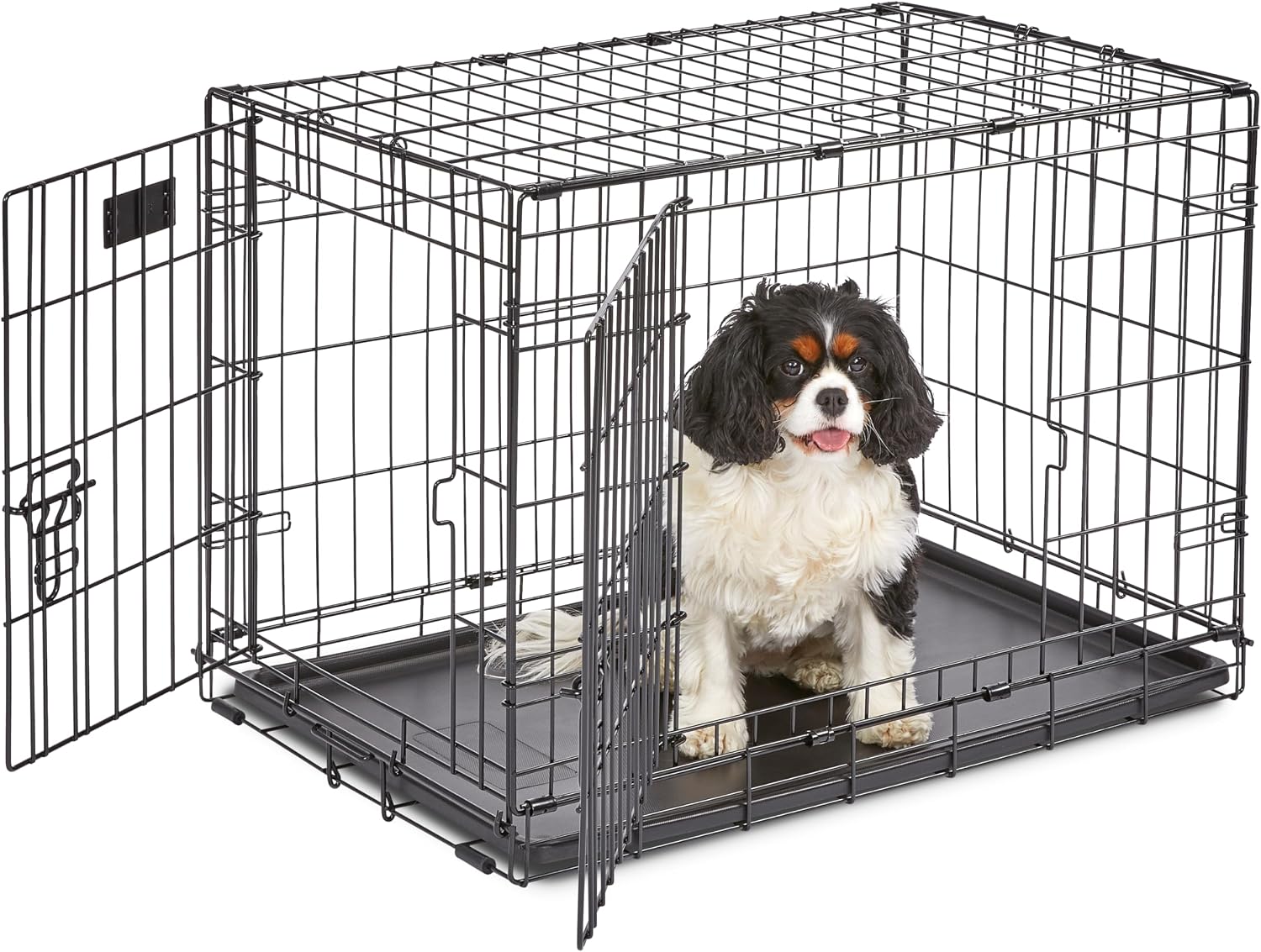
A wire crate with a divider, which is what makes the sizing advice above workable. Check price on Amazon
| Things We Like | Things We Don’t Like |
|---|---|
| The divider lets one crate follow a puppy to adult size | Wire is noisier than a plastic crate when a puppy shifts |
| Wire panels give the airflow this article stresses for a flat-faced breed | The tray can be chewed or scratched by a determined puppy |
| Two doors, so placement near the family is easier | A cover is often needed to make it feel enclosed enough at night |
| Folds flat for travel or storage |
Frequently Asked Questions
Where should a French Bulldog puppy’s crate go on the first night?
Right beside the bed, within reach. The puppy can hear you breathing and smell familiar people, which helps cut the stress of that first night away from littermates. Avoid garages, laundry rooms, and spots near heaters or direct sun. Once nights go smoothly, you can move the crate a little at a time over a few days.
How long is it normal for a Frenchie puppy to cry in the crate overnight?
Ten to thirty minutes of protest crying on night one is common, and it usually shrinks each night. Crying that stops and restarts after a couple hours of sleep often means a potty need. Frantic crying that never eases after 20 to 30 minutes, with drooling or escape attempts, means distress and calls for a different approach.
Should an 8-week-old French Bulldog puppy sleep in a crate on the first night?
Yes, as long as the crate is beside the bed, the right size, and well ventilated. An eight-week-old can usually hold their bladder two to three hours, so expect one or two night trips. Introduce the crate with treats and a meal during the day, so bedtime isn’t the puppy’s first time in it.
Should someone comfort a puppy when it cries in the crate at night?
Brief, calm reassurance is fine. Fingers through the bars or a quiet word can help settle a puppy without teaching them that crying opens the door. Skip lifting them out mid-cry, turning on bright lights, or long cuddle sessions. If a potty trip is needed, keep it silent and businesslike, then right back to the crate.
How often does a French Bulldog puppy need a toilet break during the first night?
Usually once or twice. The usual guide is one hour of bladder control per month of age, plus one, so an eight-week-old manages about two to three hours. Set an alarm for the first few nights rather than waiting for crying. Most puppies get to five or six hours by around four months.
What should be put in a Frenchie puppy’s crate for safe, calm sleep?
Try a flat, chew-resistant mat or maybe just a single towel. If your puppy isn’t a destroyer, a safe chew or a frozen stuffed toy can help too. Skip thick blankets and plush beds—they trap heat and usually end up shredded. Leave out collars, tags, or long-handled toys since those can get caught and cause trouble. Most people don’t leave water in the crate overnight, since it tends to cause accidents. What actually worked for your Frenchie puppy’s first night at home? Drop it in the comments—some desperate new owner reading at 3 a.m. will probably thank you. This is just general guidance, not veterinary advice. Always check with your vet about your own dog’s needs.