When your sweet English bulldog suddenly snaps at your hand or growls during playtime, it can leave you confused and worried. English bulldogs can show aggressive behavior because of their breeding history, territorial instincts, and triggers like resource guarding or overstimulation.
But most aggression issues are totally manageable with the right training and a little understanding. I’ve seen plenty of bulldog owners panic when their gentle companion acts out, but honestly, there’s a lot you can do.

Table of Contents
The truth is, English bulldogs were originally bred for bull-baiting. Some assertive traits are literally in their DNA.
But don’t freak out—your bulldog isn’t doomed to be aggressive. Research shows that male bulldogs are more likely to jump on people and stare at objects compared to females.
These behaviors often get mistaken for aggression, but they’re usually just excitement or focus. It’s easy to misread them if you’re not used to bulldog quirks.
You’re about to learn the real reasons behind bulldog aggression and how to spot warning signs before they get out of hand. I’ll cover what actually works for training and how to create a peaceful home where aggressive episodes fade away.
English Bulldog Aggressive Behavior – Key Takeaways
- English bulldogs show aggression mainly due to their breeding history, territorial behavior, and specific triggers like resource guarding.
- Male bulldogs display more assertive behaviors than females, including jumping and intense staring that can look aggressive.
- Most bulldog aggression problems improve with consistent training, proper socialization, and understanding their unique needs.
Why Do English Bulldogs Show Aggressive Behavior?
English bulldogs can show aggression because of their breeding, health issues, and their environment. If you understand their original purpose and spot common triggers, you’ll have a much easier time handling these behaviors.
Understanding Bulldog Behavior
Let’s be honest—English bulldogs weren’t always the lazy couch potatoes we see today. Their history explains a lot about their quirks and stubbornness.
Originally, English bulldogs were bred for bull-baiting. They had to grab onto bulls and hang on, which took a ton of determination and toughness.
What does this mean for today’s bulldogs?
- They’re naturally stubborn and persistent.
- They can get protective of their space.
- They rarely back down from a challenge.
Many bulldog owners get surprised when their gentle dog suddenly acts territorial. But honestly, it’s right there in their DNA.
Common bulldog behaviors:
- Guarding food, toys, or favorite spots
- Protecting family members
- Not wanting to move when they’re comfortable
- Strong-willed attitude
Think about it: your bulldog’s brain still works like a working dog, even if their body is built for snuggling.
Common Causes of Aggression in English Bulldogs
If your usually sweet bulldog snaps out of nowhere, you’re not alone. There are some usual suspects when it comes to bulldog aggression.
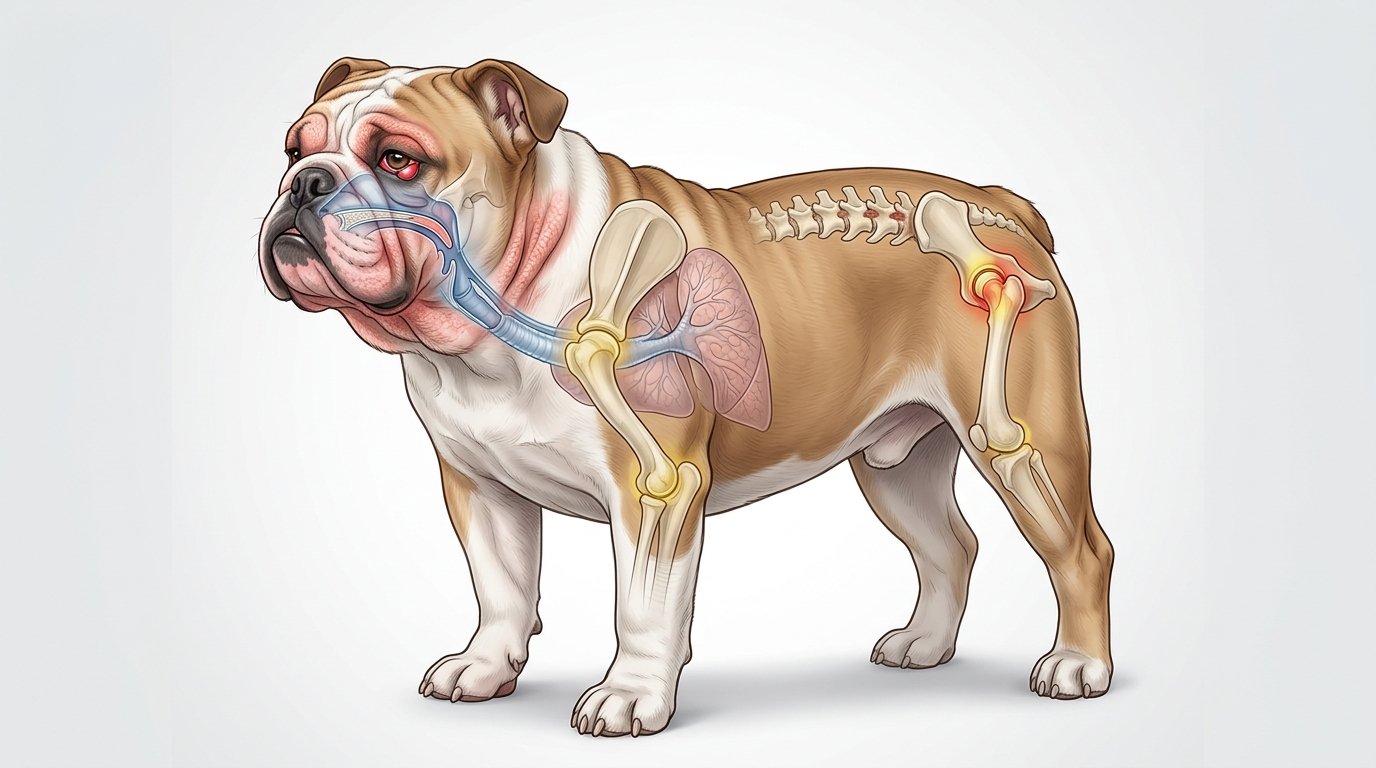
Health-related causes:
- Breathing problems that make them irritable
- Joint pain from hip dysplasia or arthritis
- Skin allergies that just won’t quit
- Eye problems messing with their vision
Research shows that 2.50% of bulldogs react when you put your hand on their head. That’s often a sign of pain or discomfort.
Environmental triggers:
- Sudden loud noises
- Strangers getting too close too fast
- Other dogs invading their space
- Being startled from sleep
Emotional factors:
- Fear of new situations
- Separation anxiety
- Not enough exercise
- Changes in routine causing stress
I always tell bulldog owners to look for patterns. Does your dog get cranky at certain times or around certain people? That detective work pays off.
Fact Versus Myth: Natural Temperament
Let’s clear up some bulldog myths. Despite what you might hear, English bulldogs are actually pretty stable as family pets.
The reality about bulldog temperament:
- They’re usually gentle with children.
- Most aggression is defensive, not mean-spirited.
- Male bulldogs often play rough but aren’t truly aggressive.
- True aggression almost always ties back to health problems.
Common myths debunked:
| Myth | Fact |
|---|---|
| Bulldogs are naturally aggressive | They’re actually calm and friendly |
| All bulldog aggression is genetic | Most comes from pain or poor socialization |
| Bulldogs can’t be trusted with kids | They’re known as excellent family dogs |
| Aggressive bulldogs can’t be helped | Most respond well to training |
Studies on breed-specific aggression show that individual dogs vary much more than breeds do. Your bulldog’s personality depends more on health, training, and life experiences than anything else.
Most of the time, your bulldog’s grumpiness has a reason. They’re not being difficult—they’re probably trying to tell you something’s off.
Types of Aggression Seen in English Bulldogs
English Bulldogs can show several types of aggressive behavior. Each one has its own triggers and warning signs.
It helps to figure out if your bulldog is reacting out of fear, protective instincts, social tension, or resource guarding.
Fear Aggression Explained
I’ve met bulldogs who snap or growl just because they’re scared. Fear aggression pops up when your dog feels trapped and can’t escape.
Your bulldog might tremble, cower, or try to hide before they lash out. It’s their way of saying, “please back off.”
Common triggers include:
- Loud noises or sudden moves
- Strangers who get too close too fast
- Trips to the vet
- Getting cornered in tight spots
You’ll notice fear-aggressive bulldogs often look submissive even while growling. Ears go back, tail tucks, sometimes they even pee from stress.
Don’t punish fear aggression. That just makes things worse. Instead, try slow exposure and lots of treats to build confidence.
Protective Aggression and Triggers
Your bulldog’s protective instincts can turn into a problem if you’re not careful. Research shows bulldogs will defend their owners from anything they see as a threat.
Protective aggression usually comes with confident body language. They stand tall, make direct eye contact, and put themselves between you and the “danger.”
Most common protective triggers:
- Strangers near your home
- Other dogs close to their family
- Kids running or playing loudly
- Delivery people or workers
I see bulldogs start with barking, then ramp up to lunging or snapping if the trigger doesn’t go away. If you don’t set boundaries, this can get out of hand.
Here’s the thing: your bulldog thinks they’re being a good protector. Consistent rules and socialization help them learn when it’s actually needed.
Social and Play Aggression
Social aggression in bulldogs often comes from misreading other dogs. Sometimes they just don’t get the signals and end up in a scuffle.
Play aggression looks scary but isn’t always meant to hurt. Bulldogs can get overexcited and cross the line during play.
Warning signs during play:
- Stiff body instead of bouncy moves
- Mounting or pinning that goes on too long
- Ignoring other dogs’ “stop” signals
- Play that keeps ramping up with no breaks
I’ve noticed male bulldogs jump and stare more, which can spark social problems.
Social aggression usually involves status conflicts—over toys, attention, or space. These dogs look confident and sometimes even seek out confrontation.
Early socialization is your best bet to avoid social aggression. Adult bulldogs need careful introductions with new dogs.
How Resource Guarding Differs
Resource guarding really stands out from other aggression types because it’s completely context-specific. Your usually sweet bulldog can suddenly flip around their food bowl, favorite toy, or even you.
I see resource guarding escalate in predictable stages:
- Freezing over the resource
- Hard staring at approaching threats
- Lip lifting or low growling
- Snapping or biting if warnings are ignored
Bulldogs often guard:
- Food and high-value treats
- Toys or chew items
- Sleeping spots like your bed
- Their favorite human (you!)
The intensity can vary a ton. Some bulldogs just tense up a bit, while others get downright dangerous around their stuff.
You can usually predict what’ll set off resource guarding. Unlike fear or social aggression, it’s not going to take you by surprise.
Counter-conditioning makes a real difference here. Teach your bulldog that people coming near their things means good stuff happens—not that their treasures vanish.
Key Signs Your English Bulldog May Be Aggressive
Spotting English Bulldog aggression early can save you and your dog from a world of trouble. I’ve found that certain warning behaviors and even things like age and gender play a big role in flagging potential issues.
Warning Behaviors to Watch For
Jumping on strangers is one of the first red flags I look for. Research shows that male English bulldogs jump on other people at a rate of 95.8% compared to 68.8% of females.
This isn’t just goofy play—it often means your bulldog is trying to be in charge.
Intense staring is another biggie. The same study found that 62.5% of male bulldogs stare at objects for a long time, compared to only 25% of females.
If your bulldog locks eyes with you or someone else and won’t look away, that’s a warning.
Excessive greeting rituals might seem adorable at first. But I’ve seen these spiral out of control fast.
What looks like pure excitement when you get home could actually be separation anxiety bubbling into aggression.
Watch for obsessive licking of your hands, face, or even feet. Some licking is fine, but bulldogs who can’t stop might be trying to control you.
Resource guarding around food, toys, or sleeping spots is a dead giveaway. If your bulldog growls, snaps, or blocks you from something, don’t ignore it.
How Age and Gender Play a Role
Male bulldogs show way more aggressive behaviors than females. I’ve noticed that intact males, especially, tend to get territorial and pushy.
The numbers are clear—males jump and stare at nearly double the rate of females.
Young bulldogs between 6 months and 2 years are often the most challenging. This is also when female dogs usually start showing aggression, around age 2.
Adolescent bulldogs going through hormonal changes need extra watching. Sudden personality shifts during this time aren’t unusual, so keep an eye out.
Older bulldogs can get aggressive because of pain, confusion, or health problems. What looks like a behavior issue might actually be something medical.
If your senior bulldog suddenly gets snappy, get them checked by a vet. It’s often a sign of something deeper going on.
Training Methods to Curb Aggression
Training that uses positive reinforcement and steady obedience work is hands-down the best way to reduce aggression in English Bulldogs. Sometimes, though, you just need a pro when things get out of hand.
Why Positive Reinforcement Training Works
I’ve watched positive reinforcement turn even the most stubborn Bulldogs around. It works because it builds trust, not fear.
When your Bulldog shows calm behavior near triggers, reward them right away with treats or praise. This helps them link good things to situations that used to make them upset.
Never punish your Bulldog for aggression. It usually makes things worse. Try redirecting their energy instead.
Here are some things worth rewarding:
- Sitting calmly when strangers show up
- Looking at you instead of staring down other dogs
- Walking nicely on a loose leash
- Staying quiet when the doorbell rings
Timing matters a lot. Reward the exact moment your Bulldog does the right thing. If you’re late, even by a second, it doesn’t work as well.
Research backs this up—positive reinforcement training helps prevent aggression by teaching dogs better ways to handle stress.
Obedience Training Essentials
Basic obedience is the backbone of managing aggression in Bulldogs. I always start with these commands.
Sit and Stay are your go-to tools. They give you control when your Bulldog gets worked up. Practice them daily, starting in calm situations.
Leave It helps stop resource guarding before it even starts. Teach your Bulldog to back off from food, toys, or anything they’re eyeing.
Studies show that obedience training can control aggressive animals and cut down on bad behaviors when you pair it with proper restraint.
| Command | Purpose | Practice Time |
|---|---|---|
| Sit | Creates calm focus | 5-10 minutes daily |
| Stay | Builds impulse control | Start with 10 seconds |
| Leave It | Prevents guarding | Use during meals |
| Come | Emergency recall | Practice indoors first |
Consistency is everything. Everyone in your home has to use the same commands and rewards. Mixed messages just confuse your Bulldog and slow things down.
Try training when your dog is a little hungry. Food rewards mean more, and you’ll have their full attention.
When to Seek Professional Help
I always suggest getting professional help as soon as aggression gets unpredictable or scary. Don’t wait for an accident.
Red flags that call for a pro right away:
- Biting that breaks skin
- Growling at family over food or toys
- Lunging at other dogs on walks
- Guarding spots in the house aggressively
A certified dog behaviorist can spot triggers you might miss. They’ll put together a plan that fits your Bulldog’s specific issues.
Professional trainers often use desensitization and counter-conditioning. These take real skill and timing to do safely.
Look for trainers with:
- CCPDT or IAABC certification
- Experience with aggressive dogs
- Positive reinforcement-only methods
- References from vets
Sometimes, training isn’t enough and medication is needed. Only a veterinary behaviorist can prescribe that safely.
Responsible owners get professional advice when facing behavioral problems. There’s absolutely no shame in asking for help with your Bulldog’s aggression.
Raising a Well-Adjusted English Bulldog
Early socialization shapes your bulldog’s personality, and the right home environment stops problems before they start. I’ve seen plenty of English bulldogs develop social aggression just because owners missed some key steps.
Importance of Early Socialization
Ever seen an English bulldog freeze up around strangers? That’s what happens when you skip socialization.
I can’t say this enough—the first 16 weeks are everything. Your bulldog’s brain soaks up experiences like a sponge during this time. Miss it, and you might be dealing with fear-based aggression later.
Critical socialization checklist:
- Different people: Kids, adults, people in uniforms
- Various sounds: Vacuum cleaners, doorbells, traffic
- Other animals: Dogs, cats, even birds
- New environments: Parks, pet stores, busy sidewalks
Start with 5-10 minute sessions. I always tell people to make it positive—bring treats and keep it short and sweet.
The trick is controlled exposure. Don’t just toss your puppy into a wild dog park on day one. That’s how bulldogs end up with social aggression toward other dogs.
Watch for stress signs:
- Panting when it’s not hot
- Hiding behind your legs
- Refusing treats they usually love
If you see those, slow down. Push too hard and you’ll get the opposite of what you want.
Remember—good early development leads to confident, well-adjusted adult dogs who can handle whatever life throws at them.
Creating a Positive Home Environment
Your home shapes your bulldog’s personality. Get this wrong, and even the sweetest pup can turn reactive.
Structure is your secret weapon. English bulldogs really do thrive on routine.
I feed mine at the same times every day. We walk the same routes and keep bedtime consistent.
Here’s what works:
Safe spaces matter:
- Pick a quiet corner just for them with their bed.
- No kids or other pets allowed in this zone.
- Baby gates help create boundaries.
Consistency in rules:
- If jumping isn’t allowed, it’s never allowed.
- Everyone uses the same commands.
- No mixed messages about the furniture.
Positive reinforcement only. Bulldogs really shut down with harsh corrections. I’ve seen too many develop fear-based aggression from old-school training.
Environmental enrichment:
- Puzzle toys keep their brains busy.
- Rotate toys weekly to beat boredom.
- Try background music during thunderstorms.
Temperature control is crucial. Overheated bulldogs get cranky fast.
Keep your home cool and put out multiple water stations.
Tips for Multi-Pet Families
Adding an English bulldog to a home with pets takes strategy. I’ve seen perfect harmony and total chaos—the introduction makes all the difference.
Before bringing your bulldog home:
- Let your current pets sniff a blanket with the new dog’s scent.
- Tire out your current dog first with a good walk or play session.
- Remove food bowls and favorite toys for now.
The introduction process:
Week 1: Keep them separated but let them see and smell each other. Feed on opposite sides of a baby gate.
Week 2: Supervised meetings in neutral territory. Not your backyard—that’s already claimed by your first dog.
Week 3: Short play sessions with both dogs on leash at first.
Resource guarding prevention:
- Feed pets in different rooms.
- Offer multiple water bowls.
- Give treats at the same time, not one after another.
Signs of successful integration:
- They show relaxed body language around each other.
- Play together without constant supervision.
- Sleep in the same room comfortably.
Red flags to watch for:
- Stiff postures during interactions.
- Guarding doorways or favorite spots.
- One pet avoiding common areas.
English bulldogs can be territorial. Catching aggressive behaviors early helps prevent big problems.
Take your time. Rushing things just creates lifelong issues between pets.
Frequently Asked Questions
English Bulldog aggression can come from territorial instincts, fear-based reactions, or just breed tendencies. Knowing what triggers snapping, snarling, and aggressive outbursts helps you get ahead of problems.
Noticed your English Bulldog snarling at the new pup at the park? Let’s talk about what’s triggering aggression towards other dogs.
I’ve seen this plenty—your sweet Bulldog suddenly turns into a growling machine when another dog shows up. Usually, it’s territorial instincts or poor socialization at play.
Research shows that aggression is most severe toward other dogs compared to humans. Your Bulldog might just be protecting their turf or feeling threatened.
Fear-based reactions play a big part. If your Bulldog didn’t meet many dogs as a puppy, they might not know how to read other dogs’ signals.
Start with controlled introductions at a distance where your dog stays chill. Reward good behavior with treats and praise.
Let’s be real, it’s unnerving when your Bulldog starts snapping at visitors. Ever wondered what’s causing that hostility towards strangers?
That protective snarl at guests isn’t just attitude—it’s your Bulldog’s way of saying, “this is my space.” English Bulldogs were bred for guarding, so this runs deep.
Stranger-directed aggression often peaks when your dog feels cornered or when visitors rush into their safe space. I notice it most at doorways or when strangers bend over them.
Studies show that bite attempts toward strangers can hit 20% in some breeds recently.
Teaching the “place” command really helps. When visitors come, send your Bulldog to their spot and reward them for staying calm.
If you’ve ever seen your Bulldog get a little too rough, what steps can you take to curb their aggressive behavior with fellow humans?
I always tell Bulldog owners—consistency is everything when dealing with human-directed aggression. It often starts small, like a growl or snap, but grows if you ignore it.
Remove the triggers first. If your Bulldog gets cranky at meal times, feed them separately. If they guard toys, pick those up when guests visit.
Positive reinforcement training beats punishment every time. Reward calm behavior around people with really good treats and praise.
Call in a certified dog trainer if you see biting or lunging. That stuff needs professional help to handle safely.
Are you picking up on snappy vibes from your female Bulldog? Here’s the scoop on why she might be showing more aggression than usual.
Female Bulldogs can get hormonal aggression during heat cycles or false pregnancies. I’ve seen sweet girls become super territorial and snappy at these times.
Resource guarding pops up more in females, especially with food, toys, or favorite sleeping spots. They can get pretty protective of their stuff.
Spaying can help reduce hormone-driven aggression, but the timing matters. Definitely chat with your vet about the best approach for your dog’s age and behavior.
Pregnancy or nursing makes females extra protective. If your Bulldog just had puppies, don’t be surprised by a spike in aggression toward strangers.
Thinking about why male Bulldogs can get a tad grumpy? What’s the real deal behind their aggression?
Males often show dominance-based aggression, especially if they’re not neutered. You’ll see it as challenging other males or testing boundaries at home.
Territorial marking and guarding spike in unneutered males. I’ve seen them snap when someone gets close to their food or favorite person.
Research says neutered males act differently within breeds, often showing less aggression overall.
Size and strength make male Bulldog aggression a bigger deal. Their power means even play can look rough to others.
Neutering usually lowers testosterone-driven aggression, but you still need solid behavioral training either way.
Does your Bulldog turn into a little Hulk out of nowhere? Let’s dive into what ‘rage syndrome’ means for your furry friend.
Rage syndrome isn’t actually common in English Bulldogs. Still, sudden aggressive outbursts can happen, and they’re nothing to brush off.
This involves unpredictable, intense aggression with no clear trigger. It’s the kind of thing that leaves you scratching your head, wondering what just happened.
True rage syndrome shows specific signs: dilated pupils and disorientation during episodes. Sometimes, your dog seems “not there” mentally at all.
Afterward, they often look confused about what just happened. It’s unsettling for everyone involved.
Medical issues cause many sudden behavior changes. Brain tumors, seizures, or severe pain can trigger aggressive episodes that look a lot like rage syndrome.
I always recommend a complete veterinary workup if your Bulldog suddenly changes personality or acts unpredictably aggressive. Blood work and neurological exams help rule out medical causes.
Most “sudden” aggression actually has subtle warning signs we just didn’t notice. Learning to read your Bulldog’s body language can make a big difference and maybe prevent these scary episodes.


Leave a Reply
You must be logged in to post a comment.