As an Amazon Associate I earn from qualifying purchases.
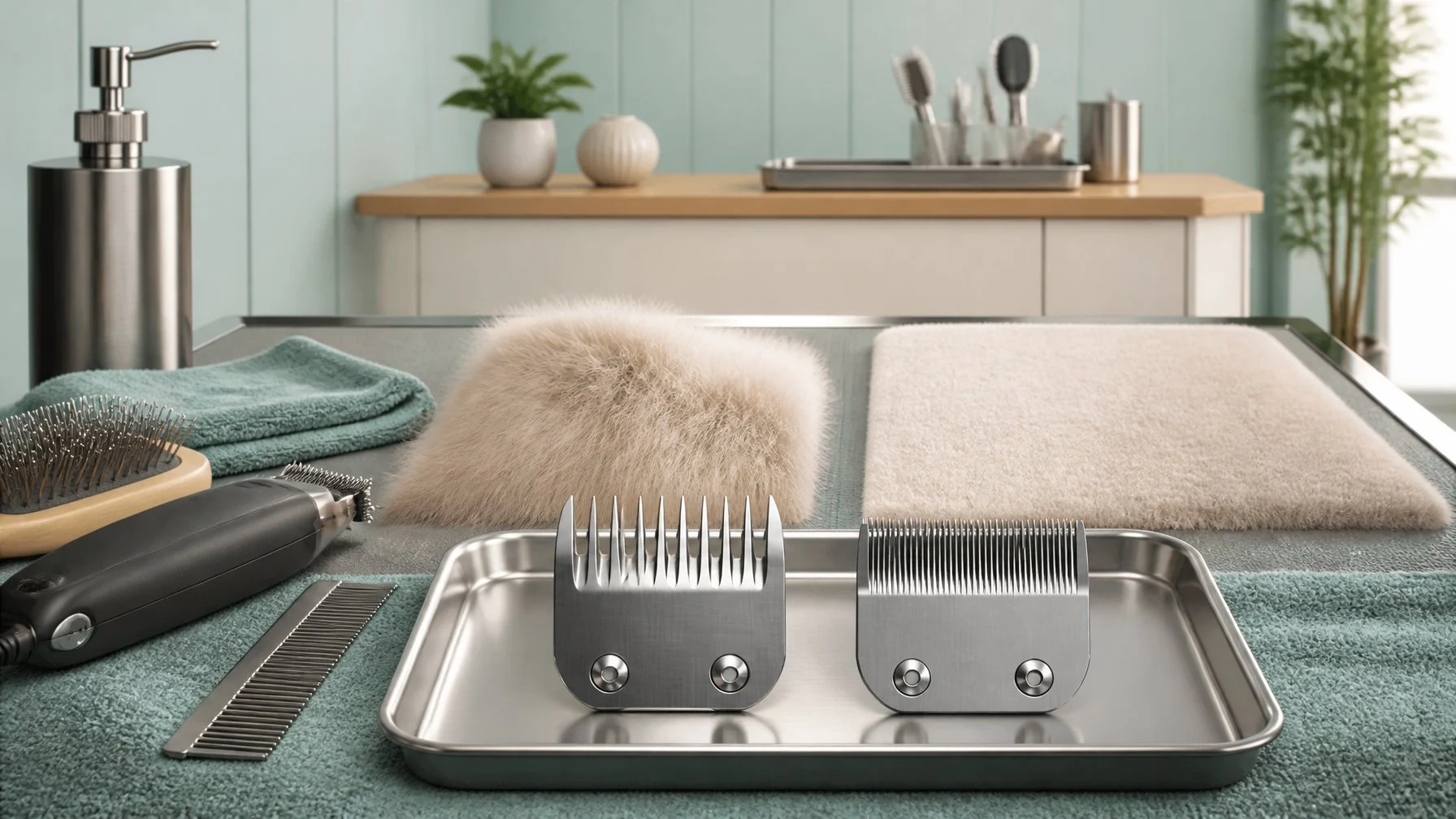
Skip-tooth (ST) blades have wider gaps between teeth. They pull thick or tangled coat in fast for bulk removal.
Finish-cut (FC or F) blades have evenly spaced teeth. These leave a smooth, plush result. For most home groomers, a finish-cut blade is the safer choice, because those wider skip-tooth gaps can catch loose skin and folds.
That’s the short answer. But blade choice gets more interesting once you factor in coat type, blade numbers, and skin condition.
Dog Fluffy digs into the grooming details that actually change outcomes at home. The same blade number can cut the same length and still leave two completely different finishes.
Here’s how the teeth work. Which coats need which tool? And where do French Bulldogs break the usual rules?
How the Teeth Change the Cut
Tooth spacing decides two things: how much coat the blade swallows per pass, and how the surface looks when you’re done.
A #7F and a #7 skip tooth cut to the same length, roughly 3.2 mm (about 1/8 in). But only one of them leaves a coat you’d want to photograph.
Finish-Cut Teeth Create an Even Result
A finish-cut blade has teeth of equal length, spaced closely and evenly. The coat is cut at one consistent height.
Because nothing drops between wide gaps, the blade leaves fewer track marks and a plush surface. Groomers use FC blades after the bath and dry, when the coat is clean and fluffed.
As AllGroom notes about finish cut blades, short blades like #10, #15, #30, #40, and #50 are always finish cut. There’s no skip-tooth version of them.
Skip-Tooth Spacing Feeds in More Coat
Skip-tooth blades alternate long and short tines, which leaves wider gaps. More hair feeds in per pass, so the clipper glides through dense or slightly tangled coat with less drag.
Less drag means less strain on the motor and your wrist. But the trade is real. PetEdge explains that those gaps can catch skin folds and cause a nick where a finish blade wouldn’t.
The finish is also choppier. Usually, you’ll need more scissoring after.
Why F, FC, and Fine Cut Labels Mean the Same Thing
Manufacturers use different letters for the same idea. F, FC, “full tooth,” “finish,” and “fine cut” all mean closely spaced, even teeth.
| Label on blade | What it means |
|---|---|
| #7F, #5F, #4F | Finish cut, smooth result |
| #7, #5, #4 (no letter) | Skip tooth, rougher result |
| FC | Finish cut |
| ST | Skip tooth |
If a blade number has no letter after it, assume skip tooth. Same length, different feel.
Match the Blade to the Coat and Job
Skip-tooth blades earn their keep on thick, overgrown, wool, or double coats where speed matters more than polish.
Finish-cut blades belong on clean, dried coats where the look counts. Some coats shouldn’t meet a clipper at all until you’ve checked them over.
Use Skip Tooth for Bulk Removal and Coat Prep
Skip tooth is a prep tool, not a finishing tool. It’s for the rough cut before the bath, when a doodle or shepherd mix arrives with months of growth.
Common jobs where ST blades shine:
- Pre-clipping a heavy coat before washing
- Reducing bulk on wool or curly coats
- Working through light tangles that brush out partway
- Shaving a dog fully down to start over
Grooming educators warn against using skip tooth on heavily matted coats. Safety drops fast once the blade can’t see skin.
Use Finish Cut for Precision Grooming
FC blades come out after the bath and dry, when the coat is clean and standing up. That’s when the teeth can glide instead of grab.
They’re the pick for pet clips with visible body lines, silky coats, sanitary areas, and anywhere a smooth surface matters. Less scissoring afterward, too, which shortens the whole session for a dog who’s losing patience.
Coats That Need Extra Caution Before Clipping
Some coats say stop. Heavily matted fur that sits tight to the skin traps moisture and hides sores.
Wire-coated breeds are usually hand-stripped, not clipped. And short single coats, like a Frenchie’s, rarely need body clipping at all.
A Safer Clipping Order From Prep to Finish
Safe clipping runs in a fixed order. Check skin first, brush what can be brushed, reduce bulk with light passes, then bathe, dry, and switch to a finish blade.
Skipping the prep is where most nicks and irritation start.
Check the Skin and Brush Out What Can Be Safely Brushed
Run your hands over the whole dog before the clipper comes out. Warts, scabs, hot spots, and skin tags all sit exactly where a blade wants to travel.
Brush out loose coat and light tangles. If the brush stops dead against the skin, that’s a mat, and pulling harder just hurts.
Clipping over dirty or matted coat dulls blades and raises the chance of a cut.
Use Controlled Passes for the Initial Reduction
Light pressure. Let the blade do the work.
Long, slow passes in the direction of coat growth cut cleaner than short, jabby ones.
Here’s a workflow that keeps things predictable:
- Check the skin and note anything raised, sore, or scabbed.
- Brush and comb out loose coat and light tangles.
- Reduce bulk with a skip-tooth blade, using light pressure and keeping it clear of folds.
- Pause every couple of minutes and touch the blade to check the temperature.
- Bathe and dry the coat fully, brushing it up as it dries.
- Switch to a finish-cut blade for the final, even pass.
- Clean and oil the blade before storing it.
Bathe, Dry, Then Switch Blades for the Final Finish
A clean, fully dried coat is what an FC blade is built for. Damp coat clogs teeth and drags.
Blade temperature deserves real attention. Metal heats fast against skin, and a hot blade can burn before a dog reacts.
Test it on the inside of your wrist. Keep a second blade or a coolant spray handy so the work doesn’t stop.
Blade Numbers, Lengths, and Comb Attachments
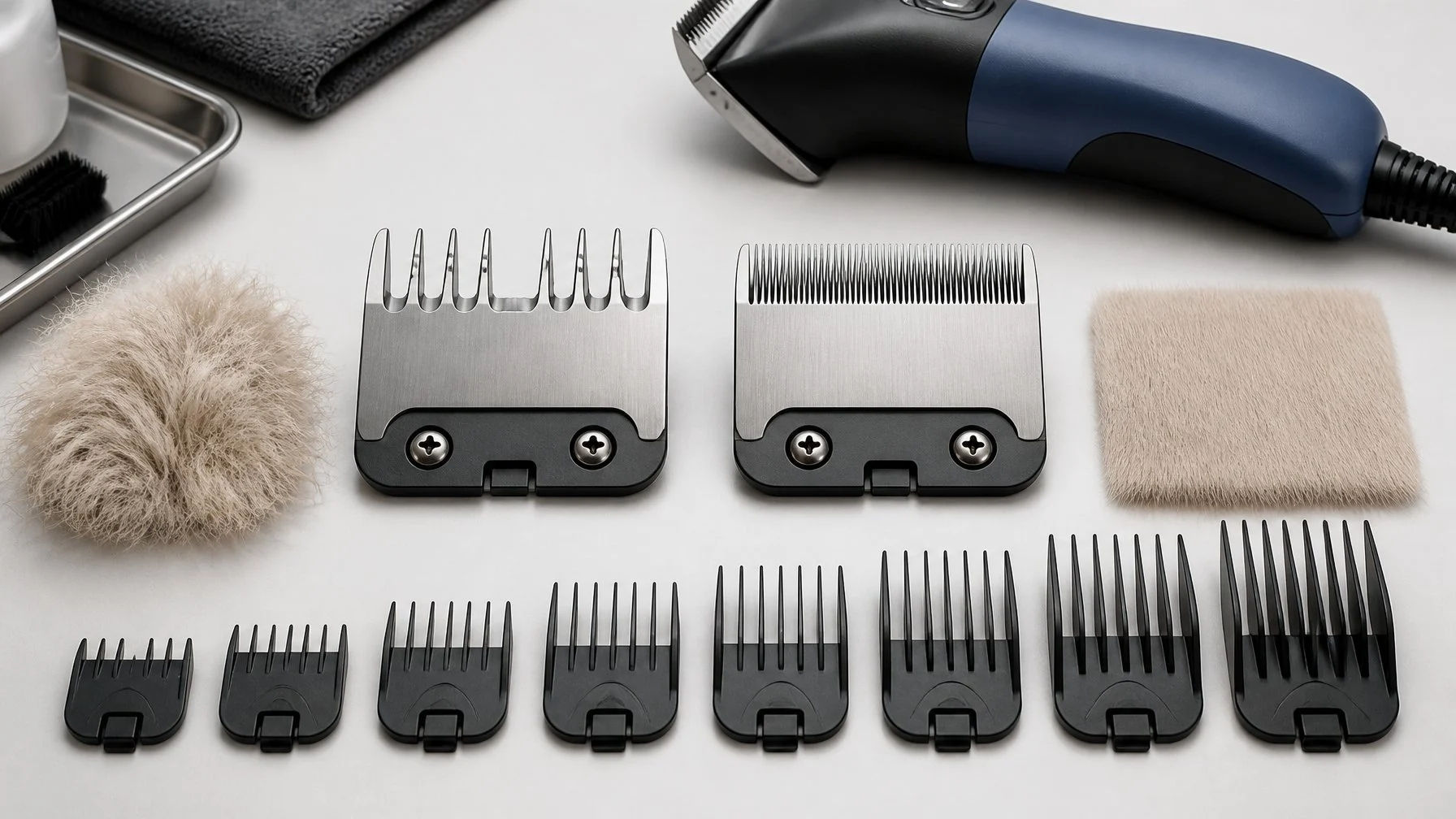
Blade numbers run backwards from what most people expect. Higher number, shorter cut.
Snap-on combs flip that logic. The very short blades only exist as finish cut.
Why Higher Blade Numbers Usually Cut Closer
On A5 detachable clipper blades, a higher number leaves less hair. A #10 leaves about 1.5 mm (1/16 in).
A #4F leaves around 9.5 mm (3/8 in). That trips up beginners constantly.
Someone asks for “a number 10 trim” thinking longer, and gets a near-shave. Dog Fluffy’s hair length dog grooming blade chart breaks the numbers down side by side if the conversions get confusing.
Common Close-Trim Uses for #10, #30, and #40
These three are all finish cut by design. No skip-tooth versions exist.
| Blade | Approx. length | Typical use |
|---|---|---|
| #10 | 1.5 mm (1/16 in) | Sanitary trim, belly, under ears |
| #30 | 0.5 mm (1/50 in) | Base for snap-on combs, poodle feet |
| #40 | 0.25 mm (1/100 in) | Surgical prep, very close work |
A #40 gets close enough that skin shows through. That’s vet-clinic territory, not a body-clip choice.
How Snap-On Combs Change the Finished Length
Snap-on combs clip over a #10 or #30 blade and hold the coat further from the cutting edge. With combs, a higher number means more hair left behind, the opposite of blade numbers.
They’re a friendlier option for home groomers because they physically stop the blade reaching skin. Combs need a clean, brushed coat, though. Any tangle and they jam.
What French Bulldog Owners Should Do Differently
French Bulldogs are kind of outliers in the blade debate. Their short, single coat doesn’t need regular body clipping.
Their skin folds are exactly what skip-tooth gaps can snag. Plus, their heat sensitivity changes how long a session should run.
Why Most French Bulldogs Do Not Need a Body Shave
A Frenchie’s coat is short, single-layered, and already does its job, so shaving it won’t cool them off and just removes sun protection. Weekly brushing and occasional baths usually cover everything.
Clippers only really matter for a quick tidy-up around the sanitary area or clearing hair for a vet. Those are small jobs—nothing major.
A finish blade with a gentle hand, or a #10 for sanitary spots, works fine.
Skin Folds, Hot Spots, and Heat Make Technique Matter
Folds around the face, tail pocket, and neck are the real trouble spots. The skin there is loose and thin.
Wide skip-tooth gaps can grab a fold before you even notice.
Three habits help lower the risk:
- Stretch the skin flat with your free hand before passing near a fold
- Keep sessions short—flat-faced dogs overheat and stress quickly
- Stop right away if the skin looks pink, sore, or irritated
Hot spots and inflamed skin? That’s for a vet, not a clipper.
When a Groomer or Vet Should Take Over
Sometimes, you just need to hand things off. Tight mats close to the skin, any sore or smelly patch, or a dog who panics and can’t be held safely—those all call for a pro.
Professional groomers have restraint tools, sharper blades, and the experience to read skin fast. Vets handle anything that looks infected.
Honestly, paying for one careful groom beats treating a clipper burn.
Practical Choices for Home Grooming
If you’re new, stick with finish-cut blades or snap-on combs. Leave skip-tooth work to pros with proper prep.
Keep detachable blades oiled, cool, and free of packed hair. It’s not glamorous, but it matters.
When Beginners Should Choose a Finish-Cut Blade
Finish-cut blades are more forgiving because their even, closely spaced teeth are much less likely to catch a fold or nipple. For someone learning on their own dog, that margin really matters.
Pair an FC blade with snap-on combs and you lower the risk even more. The comb puts extra space between blade and skin. It’s slower, but there are fewer accidents.
When Skip Tooth Blades Belong in Professional Hands
ST clipper blades are efficiency tools for people who groom all day and can feel resistance change through the handle. Guides from suppliers like LILIPRO PET on FC and ST blades frame them as complementary, not interchangeable.
A pro grabs skip tooth on a heavily coated doodle before the bath, then swaps to finish cut after drying. That two-blade sequence is the whole point.
Using ST alone leaves a choppy coat.
Keeping Detachable Blades Clean, Cool, and Ready
A dull or dirty blade pulls hair, which hurts and makes dogs fight the clipper. Here’s some basic care:
- Brush hair out of the teeth after every dog
- Apply clipper blade oil to the teeth and rails, then wipe off the extra
- Check temperature every few minutes during use
- Rotate between two blades on long sessions
- Send blades for sharpening once they start dragging
From Fluffy’s Bowl: test blade heat on the inside of your own wrist, not the back of your hand. The wrist is thin-skinned and honest about it. If it is too warm for you it is far too warm for skin under a coat, and a blade that has quietly climbed to that temperature is the usual cause of a clipper burn nobody saw coming.
The Same Cut Length, Two Different Blades
This is the clearest way to see the point of this article. Both blades below cut at 1/8 of an inch — about 3.2 mm — so the difference between them really is the teeth, and nothing else.
Andis UltraEdge Skip-Tooth Blade, Size 7 (72610)
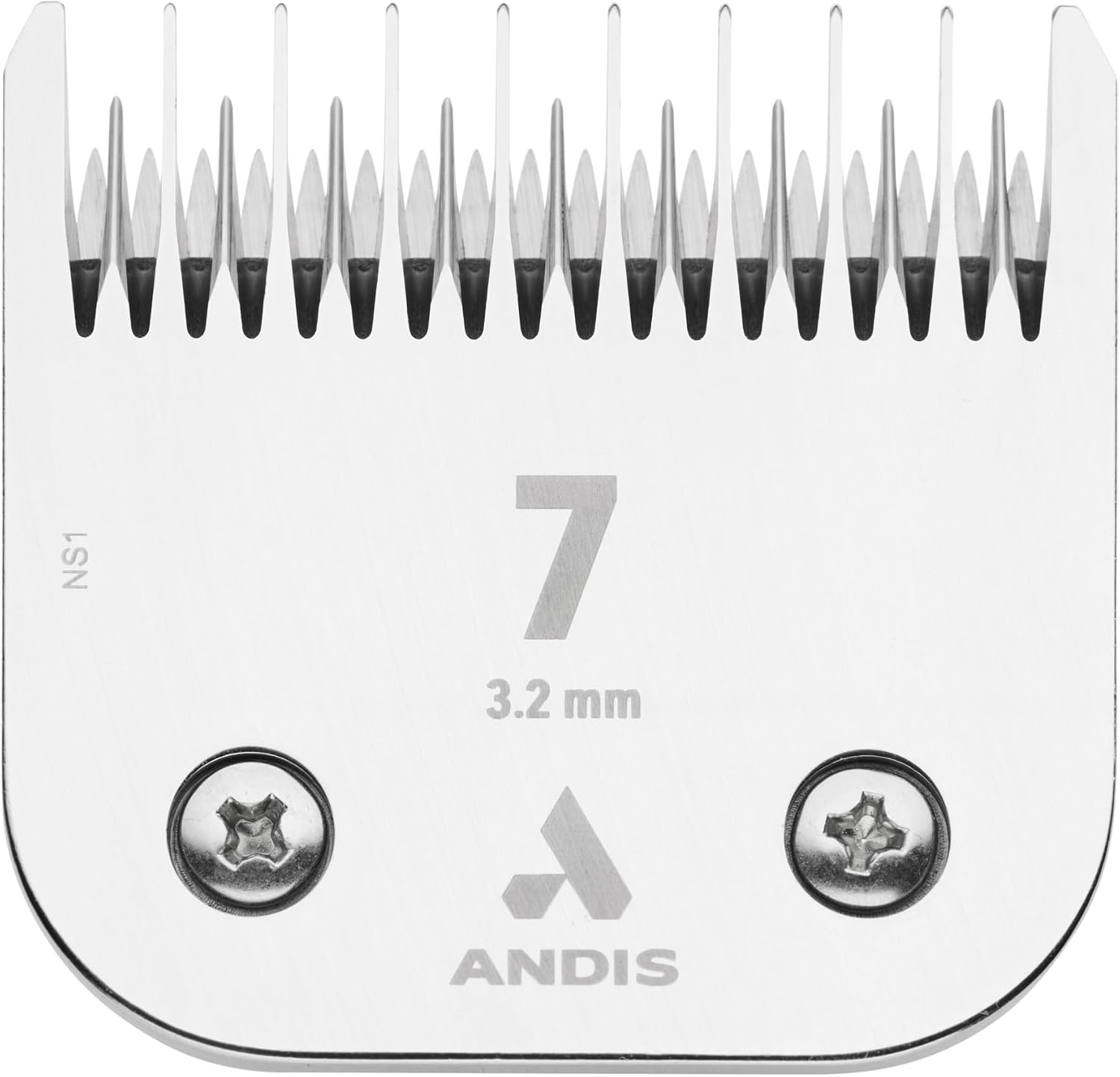
The bulk-removal blade. Wider gaps between the teeth feed dense coat in instead of packing it. Check price on Amazon
| Things We Like | Things We Don’t Like |
|---|---|
| Cuts at the same 3.2 mm as the finish-cut blade below | Those same wide gaps can catch loose or wrinkly skin |
| Wider tooth spacing moves through dense coat without bogging down | Leaves a coarser finish that needs a second pass to tidy |
| The blade this article describes for the first reduction pass | Not a sensible first blade for someone learning at home |
Andis UltraEdge 7FC Finish-Cut Blade (64121)
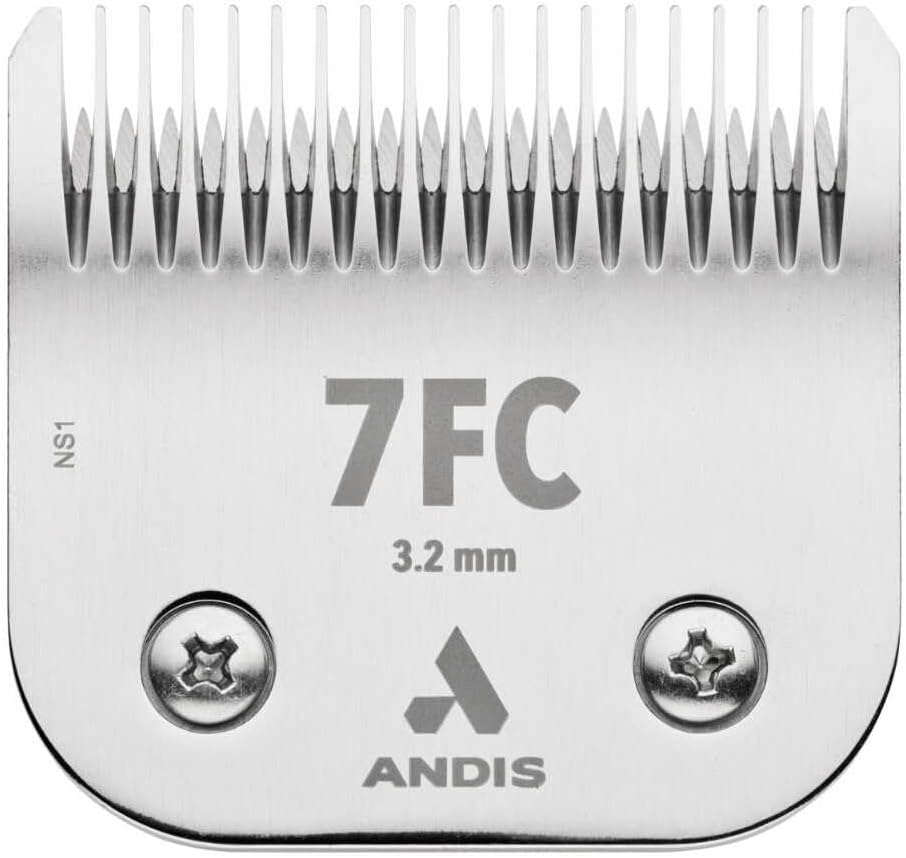
The finishing blade. Identical length, closely spaced teeth. Check price on Amazon
| Things We Like | Things We Don’t Like |
|---|---|
| Same 3.2 mm cut, so switching changes the finish and not the length | Clogs faster in dense or slightly damp coat |
| Closely spaced teeth leave an even surface | Slower to get through bulk, which is what the skip-tooth is for |
| The safer of the two around folds and loose skin | Still 3.2 mm — this is not a light trim |
| The blade this article suggests beginners start with |
Frequently Asked Questions
What’s the difference between a skip-tooth blade and a finish-cut blade for dog grooming?
Skip-tooth blades have alternating long and short teeth with wide gaps, so more coat feeds in per pass. Finish-cut blades have even, closely spaced teeth. Both cut the same length at the same number, but skip tooth leaves a rougher surface while finish cut leaves a smooth, plush result.
When should a groomer use a skip-tooth blade instead of a finish-cut blade?
Early in the groom, before bathing, on thick or overgrown coats that need bulk removed fast. Doodles, spaniels, and dense double coats are common candidates. Skip tooth reduces drag and speeds up the rough cut. Then a finish blade goes on after the bath and dry for the actual finish.
Can a skip-tooth blade safely cut through a dog’s mats and thick coat?
It handles thick coat and light tangles well. Heavy, tight mats are a different story. Once matting sits flat against the skin, no blade can see what’s underneath, and the risk of cutting skin climbs fast. Severe matting should go to a pro, and any sore skin underneath needs a vet.
Which blade leaves a smoother, more even look after grooming?
Finish cut, every time. Even teeth cut all the hair at one height, so there are fewer track marks and less scissoring afterward. A #7F and a #7 skip tooth both cut to roughly 3.2 mm (1/8 in), but the #7F looks blended while the skip-tooth version looks choppy.
Are skip-tooth blades more likely to nick loose or wrinkly skin?
Yeah, they are. The wider gaps between teeth can catch a fold of loose skin and pull it toward the cutting edge. That’s a real concern on French Bulldogs, older dogs with thin skin, and anywhere around the tail pocket or neck. Finish blades sit flatter against skin and are the safer pick there.
What blade length should be used before switching to a finishing blade?
Most groomers rough-cut just a bit longer than their target length. That way, the finish blade has something left to tidy up. If you want a #7F body clip, you usually start with a skip-tooth blade that’s a size or two longer. Make sure to bathe and dry your dog thoroughly before switching to the finishing blade for the last pass. What blade setup have you tried at home? Did it go as planned, or did things get weird? Drop your stories in the comments—honestly, the best tips come from real-life mishaps. This is general guidance, not veterinary advice. Always check with your vet about your own dog’s situation.