As an Amazon Associate I earn from qualifying purchases.
How big does an English Bulldog get? A fully grown adult English Bulldog typically weighs between 40 and 55 pounds and stands 12 to 15 inches tall at the shoulder. Males are generally heavier, weighing 50 to 55 pounds, while females usually weigh between 40 and 50 pounds. Most English Bulldogs reach their full height by 12 months but continue to fill out with muscle until 24 months of age.
If you’ve ever looked at your English Bulldog puppy and thought, “Wait, is this little potato really going to double in size?” you’re not alone.
A good English Bulldog size chart says fully grown adults usually weigh between 40 and 55 pounds and stand about 12 to 15 inches tall at the shoulder, with males running heavier than females.
That’s the quick answer, but honestly, the real story behind those numbers is more interesting than you’d think.
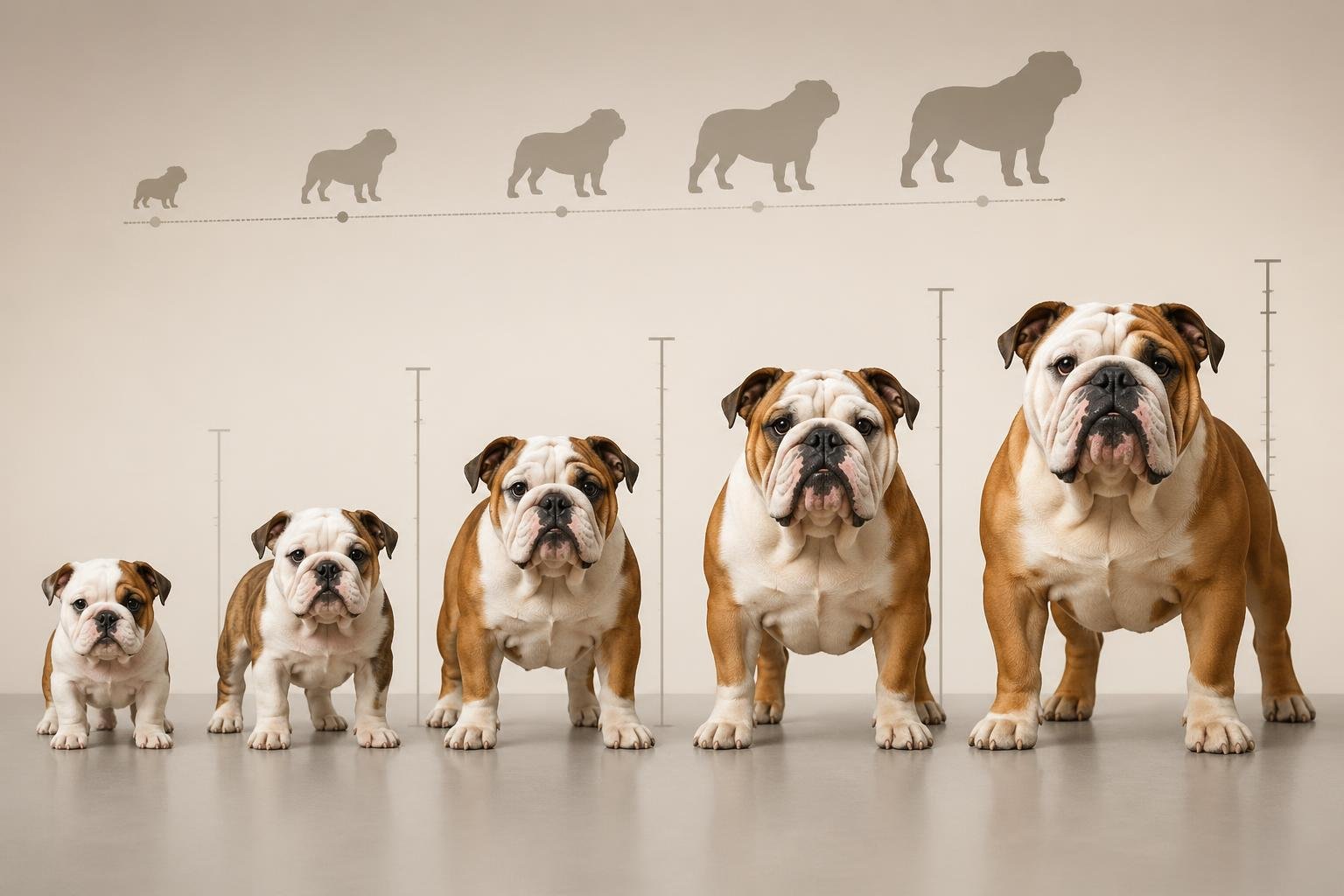
Here’s the thing. Not all Bulldogs grow the same way.
Some pups bulk up fast in the first six months, then barely move the scale for weeks. Others seem to grow in slow, sneaky bursts. It can be confusing, maybe even stressful, if you don’t know what’s normal.
Related reading: Bulldog growth patterns.
You’re about to get the month-by-month milestones, the real differences between male and female sizes, when Bulldogs actually stop growing, and the breed quirks (like being brachycephalic) that make weight management trickier than you’d expect.
Key Takeaways
- Adult English Bulldogs weigh 40 to 55 pounds and stand 12 to 15 inches tall, with the fastest growth happening before 8 months old.
- Genetics, diet, exercise, and brachycephalic traits all shape how big your Bulldog gets and how quickly they get there.
- Tracking your pup’s weight regularly and knowing when to call the vet can prevent obesity and catch growth issues early.
Adult Size at a Glance
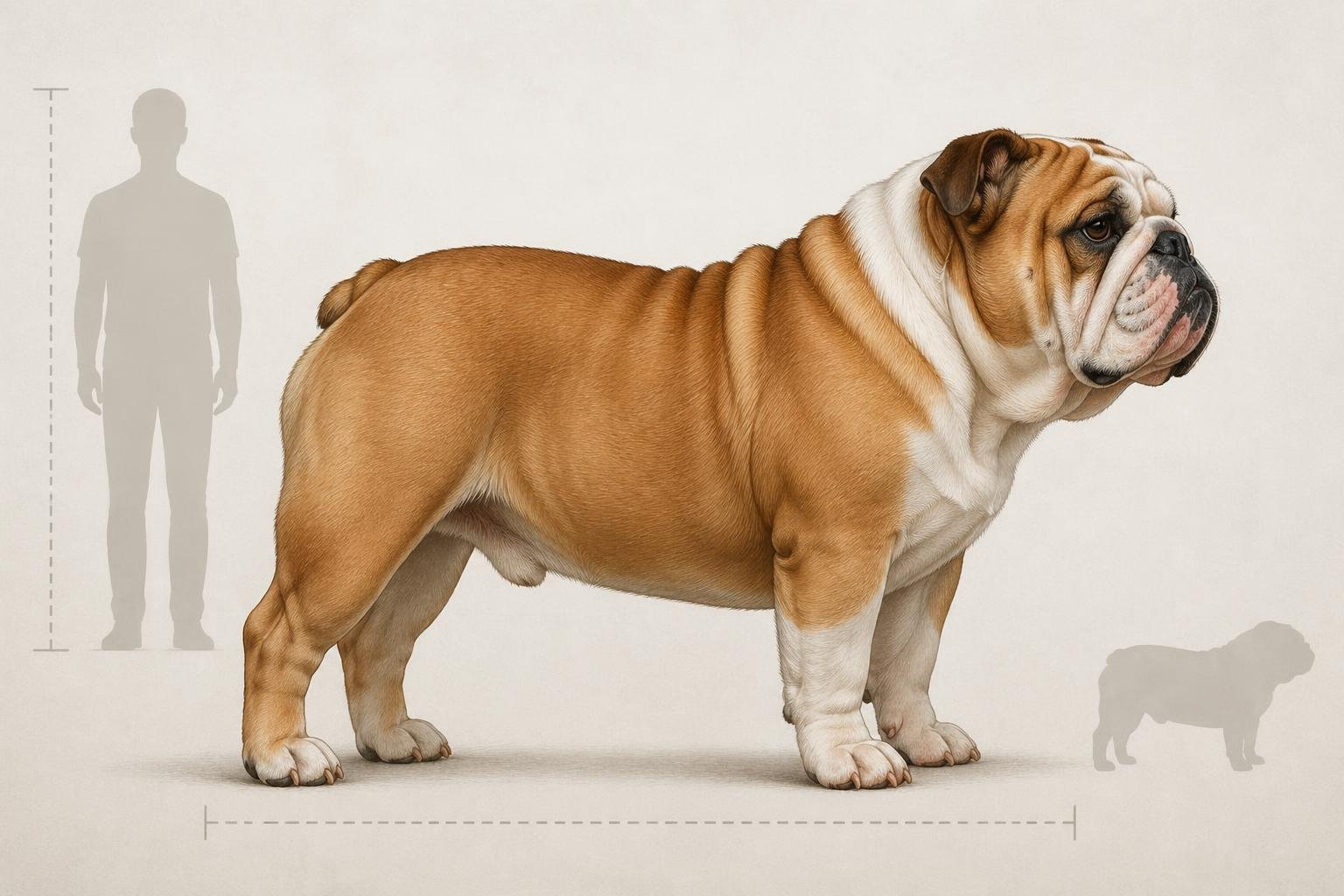
English Bulldog size falls squarely in the medium range. Their stocky, muscular build can make them look bigger (or smaller) than the numbers suggest.
Average Height and Weight
A fully grown English Bulldog typically weighs between 40 and 50 pounds and stands 12 to 15 inches tall at the shoulder. Some males push into the 55-pound range, which is still healthy for a bigger-framed dog.
Here’s a quick snapshot:
| Measurement | Typical Range |
|---|---|
| Weight | 40–55 lbs (18–25 kg) |
| Height | 12–15 inches |
| Neck Size | 18–24 inches |
These numbers aren’t rigid rules. They’re just reference points.
Your Bulldog’s build, bone structure, and overall frame matter just as much as what the scale says.
Male Vs Female Size Differences
Males run noticeably bigger. A male English Bulldog weight typically lands between 50 and 55 pounds, while females usually stay in the 40 to 50 pound range.
Height differences are smaller, usually only an inch or two.
Frame and build vary a lot within the breed.
When an English Bulldog Is Fully Grown
Most English Bulldogs hit their adult height by 12 months. But here’s the surprise: they keep filling out with muscle until about 24 months old.
If your one-year-old Bulldog looks a bit lanky, that’s actually normal. The chest broadens and the body thickens over that second year.
The trick is making sure the weight they’re adding is muscle, not fat.
These are also the measurements to take before buying a harness — girth behind the front legs tells you more than weight does. Our harnesses and collars list is a place to start.
Growth Timeline From Puppy to Adult
An English Bulldog puppy goes through several distinct growth phases. Knowing which months bring the biggest changes helps you spot problems early.
Here’s how the timeline actually plays out from those first wobbly weeks through full maturity.
English Bulldog Puppy Milestones by Age
Most English Bulldog puppies come home around 8 weeks, weighing roughly 7 to 12 pounds. From there, growth moves fast.
| Age | Weight Range | Height Range |
|---|---|---|
| 1 month | 4–7 lbs (1.8–3.2 kg) | 3–4 inches |
| 2 months | 7–12 lbs (3.2–5.4 kg) | 4–6 inches |
| 3 months | 12–18 lbs (5.4–8.2 kg) | 6–8 inches |
| 4 months | 18–25 lbs (8–11 kg) | 7–9 inches |
| 5 months | 25–30 lbs (11–14 kg) | 8–10 inches |
| 6 months | 30–35 lbs (14–16 kg) | 9–11 inches |
| 8 months | 35–40 lbs (16–18 kg) | 10–12 inches |
| 10 months | 40–45 lbs (18–20 kg) | 11–13 inches |
| 12 months | 42–50 lbs (19–23 kg) | 12–15 inches |
| 24 months | 45–55 lbs (20–25 kg) | 12–15 inches |
Seriously, it’s the easiest way to see if your pup is trending in the right direction.
Fastest Growth Months and Slowdown Periods
The biggest jumps happen between 2 and 6 months old. Some pups gain 3 to 5 pounds a month during this window. It’s wild.
Around 6 to 8 months, the pace slows down. Growth gets more gradual, and you might not notice changes week to week anymore.
That slowdown is completely normal, not a reason to start adding extra food.
After 12 months, most of the remaining change is muscle development and body filling, not height gain.
How to Use a Bulldog Size Chart the Right Way
A size chart is a range, not a prescription. Your dog might sit at the lower or upper end and still be perfectly healthy.
What matters more is the trend. Is your pup gaining steadily? Are there sudden drops or spikes?
Weigh your puppy at the same time each day, ideally before meals. Record it weekly.
If anything looks off, bring those numbers to your vet instead of guessing.
Some links below are Amazon affiliate links. If you buy through them, Dog Fluffy earns a small commission at no extra cost to you. We only list gear we would use on our own dogs.
Bulldogs are wide, not tall. Most sizing charts are written for other breeds and get them wrong. Measure your dog’s chest girth at the widest point and buy to that — never to a weight range alone.
| Best for | What to get | Why it suits the breed | Size to pick |
|---|---|---|---|
| Crate Our pick | MidWest iCrate 36" | A broad, low-slung dog needs floor area more than height. Most adults settle at 36". | 36" for 40–70 lb |
| Harness | No-pull front-clip harness | A thick neck and narrow head means collars slip over the head. A harness spreads the load across the chest instead of the throat. | Measure girth, not weight |
| Bed | Memory-foam bolster bed | A heavy frame on short joints. Hip and elbow problems are common enough in the breed to be worth designing around early. | 36" × 27" |
| Travel | Soft-sided carrier | Short-nosed dogs overheat quickly in an enclosed space. Look for mesh on three sides. | Under 25 lb only |
Before you book a flight: most airlines restrict or refuse brachycephalic breeds in cargo, and some in cabin too. Check your specific airline’s current policy before buying any carrier for air travel.
What Changes a Bulldog’s Growth Pattern

No two English Bulldogs grow at the exact same rate. Genetics, daily habits, and even the shape of their skull play a role in how big they get and how fast they get there.
Genetics, Build, and Family Line
This one is pretty straightforward. Your English Bulldog will probably grow to about the same size as their parents.
If the sire was a 55-pound tank, expect a bigger pup. If the dam was on the petite side, your Bulldog might stay closer to 40 pounds.
Asking your breeder about the parents’ sizes gives you the most realistic preview of what’s coming. Breed line matters more than any generic chart.
Feeding, Exercise, and Healthy Muscle Gain
Nutrition makes or breaks healthy bulldog weight. Puppies need a quality puppy formula with the right balance of protein and fat.
Exercise needs to be consistent but moderate. Short daily walks and light play sessions support healthy bone and muscle development without overtaxing their joints.
Too much too soon can cause problems, especially during rapid growth months. Use low-calorie training treats and adjust meal portions accordingly.
It’s one of those small habits that pays off big.
Why Brachycephalic Traits Affect Weight Management
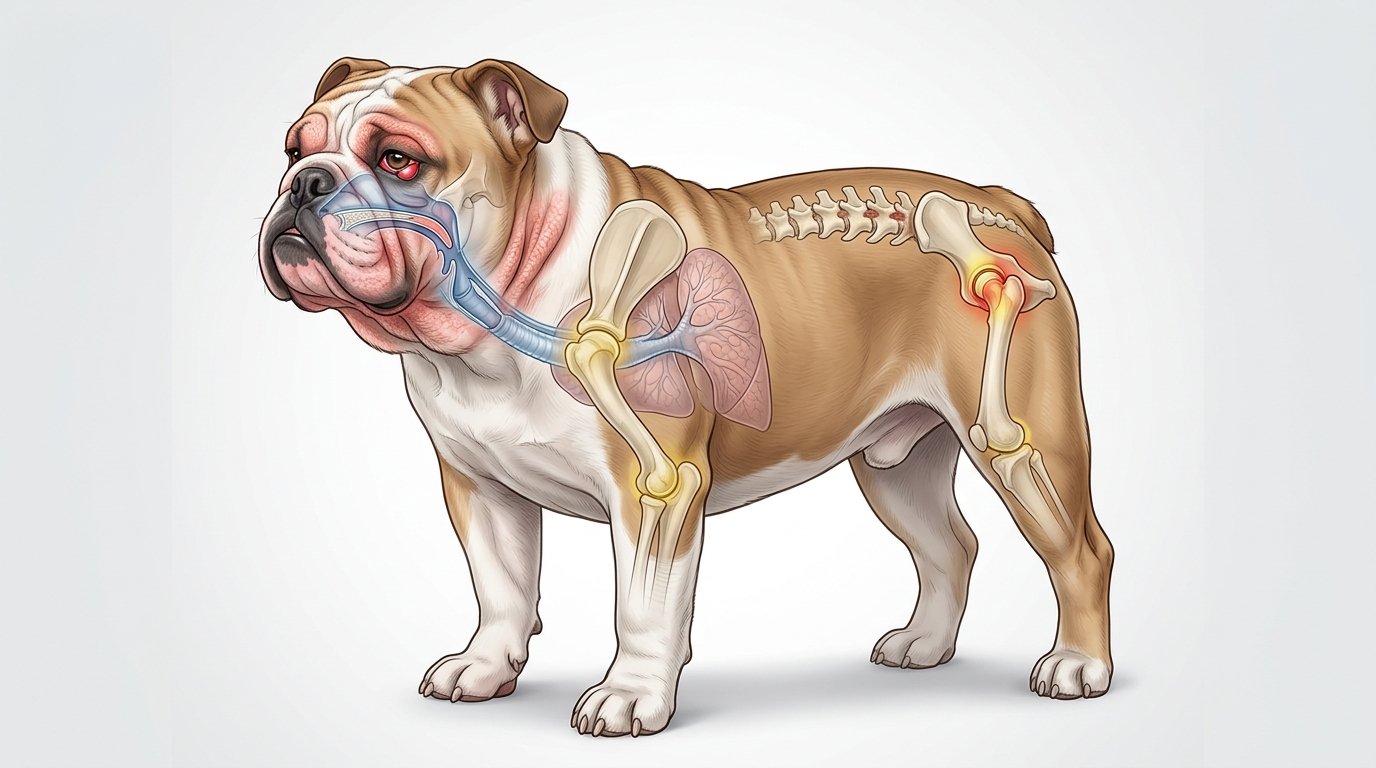
Here’s the kicker. English Bulldogs are brachycephalic dogs, meaning they have that flat face and shortened airway.
This limits their ability to exercise vigorously, so they burn fewer calories than most breeds their size. That combo of lower exercise tolerance and a love of lounging makes them prone to obesity.
You can’t just rely on activity to keep their weight in check. Portion control and food quality are your biggest tools.
If your Bulldog is breathing heavily after a short walk, that’s their limit. Work within it, not against it.
Keeping Your Bulldog on a Healthy Track
Staying on top of your English Bulldog’s weight isn’t just about looks. It’s about joint health, breathing, and quality of life.
Here’s how to spot problems and stay proactive.
Signs Your Dog Is Too Heavy or Too Light
Look at your Bulldog from above. You should spot a slight waist behind the ribs.
If your dog looks like a barrel with legs, they’re probably carrying too much weight.
On the other hand, visible ribs and a sharp belly tuck mean your dog might be underweight.
Run your hands along their sides. You should feel their ribs without pressing too hard.
If you can’t feel the ribs at all, that’s a sign something’s off.
Vet Checkpoints and When to Ask for Help
Regular vet visits keep things on track.
Notice rapid weight gain, sudden weight loss, or a weird growth pattern? Mention it to your vet right away.
For quick questions, services like PangoVet let you talk to a vet online for a reasonable price. Super helpful, especially if you’re new to Bulldogs.
Dog Fluffy Tips for Daily Monitoring at Home
- Weigh weekly at the same time, before meals.
- Take a photo monthly from above and the side—makes it easy to spot changes.
- Use a tape measure from the floor to the shoulder for height checks.
- Watch for behavior changes like less energy or extra panting. Those can mean weight issues.
You don’t need fancy gear. A bathroom scale (just weigh yourself, then weigh while holding your dog, and subtract) and a soft tape measure do the trick.
Consistency matters more than perfection. Checking regularly keeps your British Bulldog on track.
Frequently Asked Questions
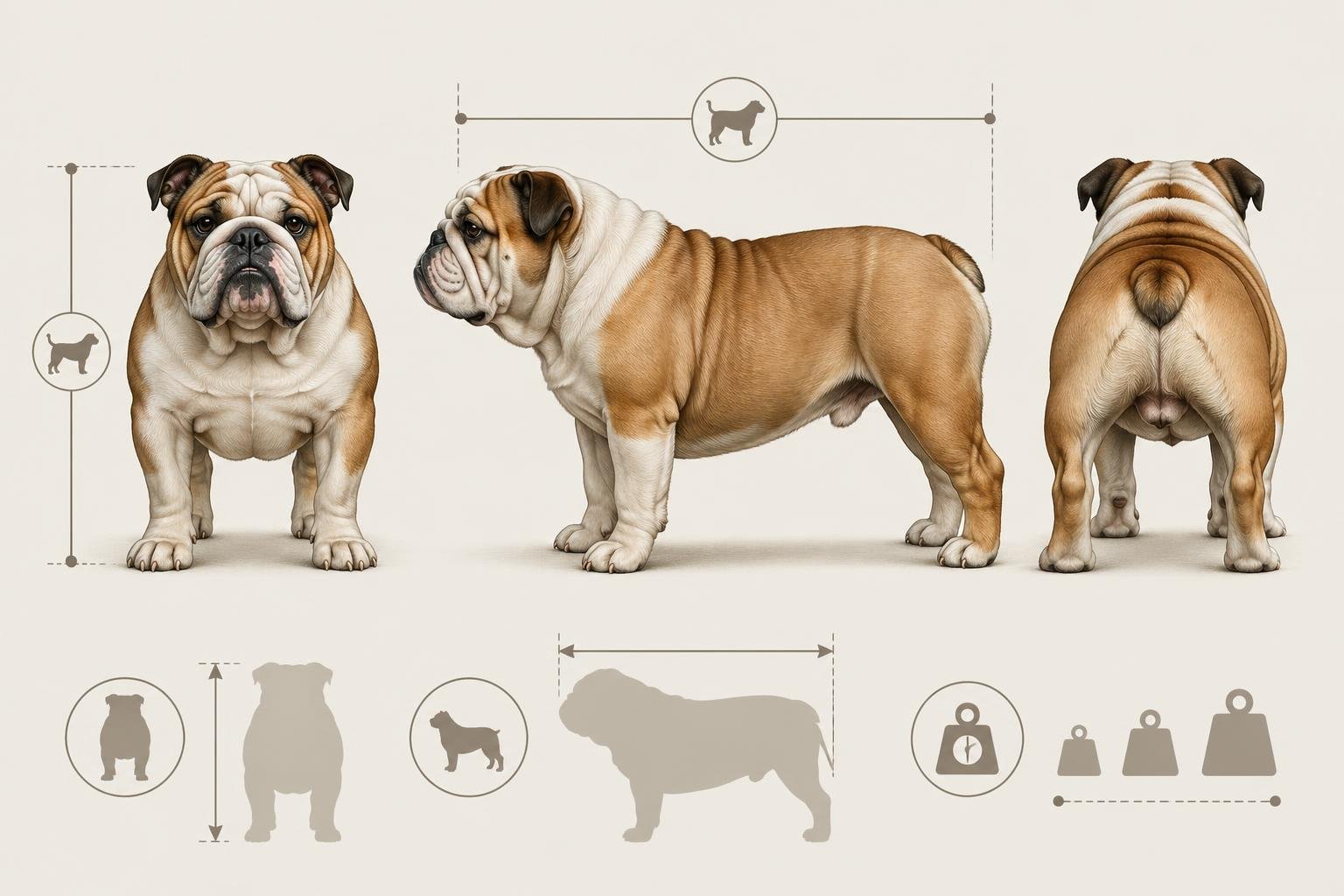
Forecast Your Bulldog’s Adult Weight Curve
Use our interactive veterinary growth tracker to check whether your puppy is tracking properly along healthy breed percentiles.
How big should an adult English Bulldog actually be (weight and height)?
A healthy adult English Bulldog usually weighs 40 to 55 pounds and stands 12 to 15 inches tall at the shoulder. Males are often at the higher end. Your vet can help you figure out what’s ideal for your dog’s build.
If you’ve ever compared pups at the park… what’s the typical size difference between male and female English Bulldogs?
Males usually weigh 50 to 55 pounds, while females weigh 40 to 50 pounds. Height difference is smaller—maybe an inch or two. Both have that stocky, muscular look, so sometimes it’s honestly tough to spot the difference.
What should an English Bulldog weigh at each month as a puppy (and when do they hit their big growth spurts)?
At 2 months, look for 7 to 12 pounds. By 6 months, most pups hit 30 to 35 pounds.
The fastest growth is between months 2 and 6, when they gain 3 to 5 pounds a month. It’s kind of wild how fast they change.
When do English Bulldogs usually stop growing, and what changes after that, muscle vs. fat?
English Bulldogs reach full height around 12 months old. They keep adding muscle and filling out until about 24 months.
After that, extra weight is usually just fat, not healthy growth. Portion control gets more important then.
How do I tell if my Bulldog is underweight or overweight for their age without overthinking it?
Look at your dog from above for a visible waist behind the ribs. Run your hands along their sides—you should feel ribs, but not see them poke out.
If ribs are invisible or sticking out sharply, it’s time to tweak their food or check with your vet. Trust your gut, too. Sometimes you just know when something’s not right.
Okay, numbers time, what’s a normal English Bulldog weight range in kilograms (and how does that translate from lbs)?
A healthy adult English Bulldog weighs around 18 to 25 kilograms. That’s about 40 to 55 pounds.
Males usually land closer to 23 to 25 kg. Females, on the other hand, tend to be a bit lighter, hanging out between 18 and 23 kg.
These numbers can shift a little depending on build and bone structure, but that’s the general ballpark.